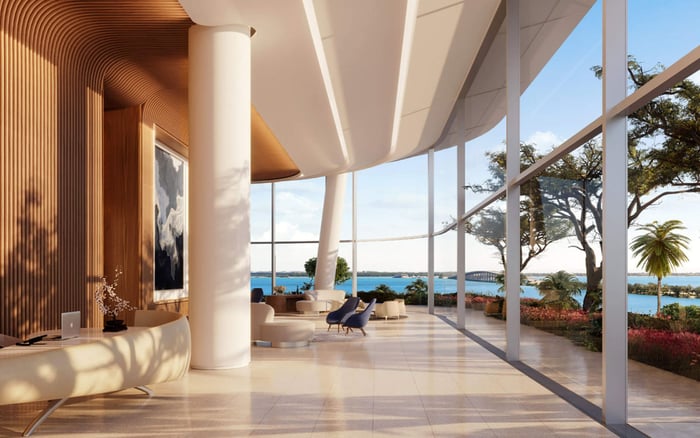
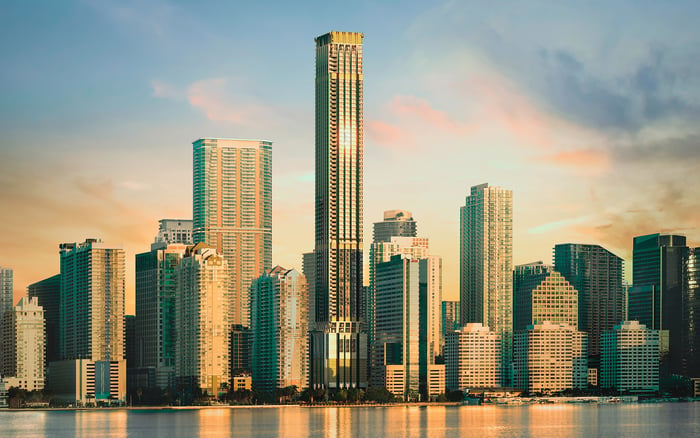
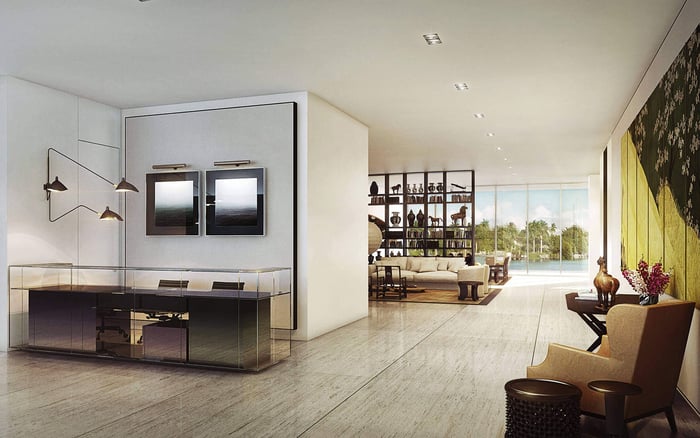
In South Florida, the most persuasive luxury towers are increasingly designed to be lived-in galleries, where curation, materials, lighting, and collector services shape daily experience as much as views. For buyers in Brickell, Miami-beach, and beyond, art integration can signal management sophistication, resident culture, and long-term desirability, but it also introduces practical questions about provenance, installation, insurance, and resale flexibility. This guide outlines how art-forward buildings tend to work, what to ask before you buy, and how to align a home’s architecture with a serious collection.
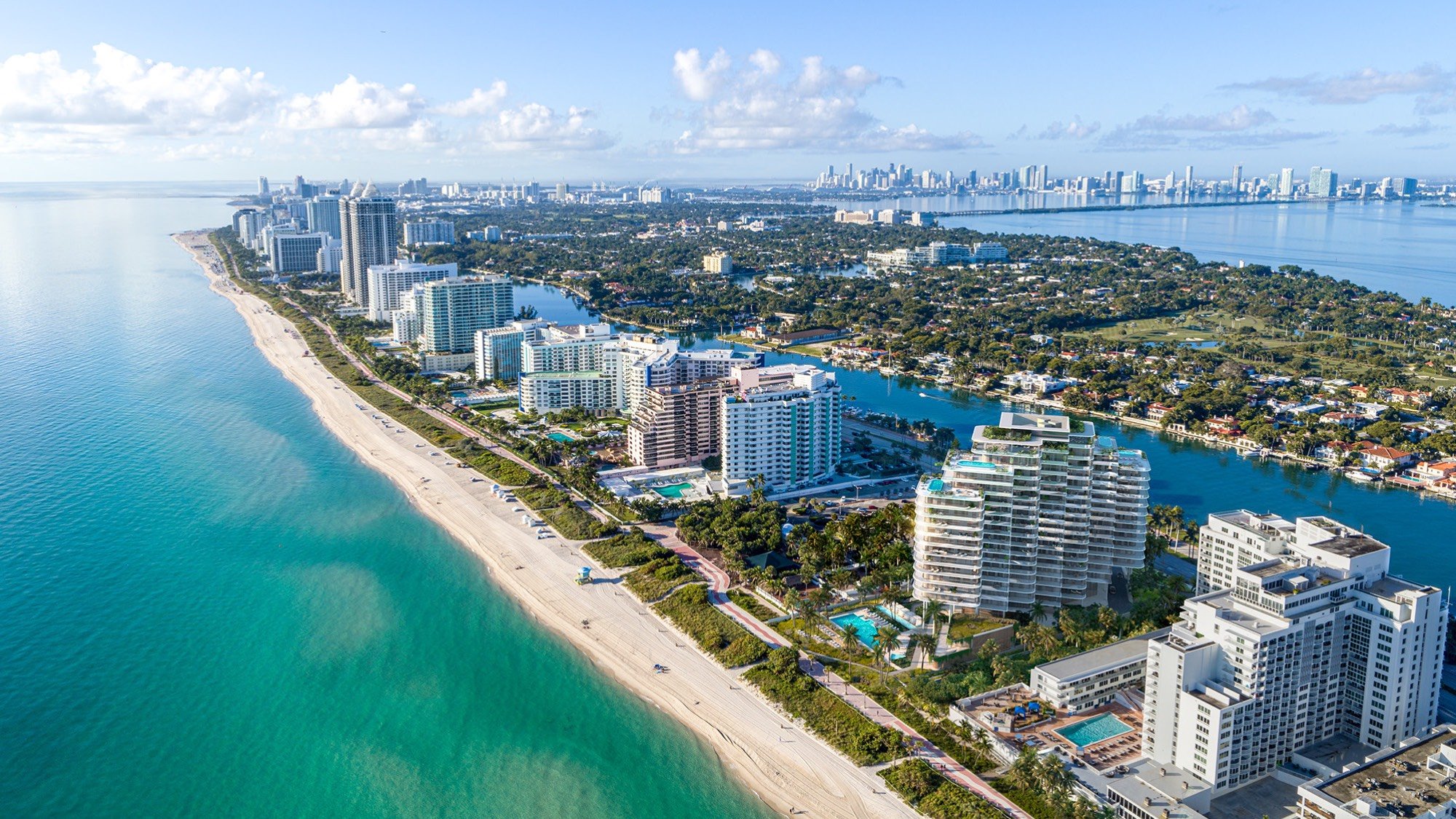
Miami has always understood spectacle. Today’s luxury buyer, however, is often drawn to something quieter: cultural credibility that feels lasting, not performative. In that context, art is no longer confined to a single statement piece in a double-height lobby. Across new and repositioned high-rises, art direction is increasingly treated as part of the residential product itself, shaping how arrival, circulation, and private interiors feel from the first step inside.
For ultra-premium buyers, the appeal is not only aesthetic. A thoughtfully curated environment can signal governance, taste, and restraint. It suggests that ownership is more than square footage, and that the decision-makers behind the building understand how to protect calm, preserve materials, and elevate common spaces without turning them into a set.
This evolution is especially visible across South Florida, where global collecting culture meets second-home lifestyles. During Art Basel season the connection is obvious, but the more meaningful change shows up on ordinary weeks: buyers now ask about lighting quality, wall conditions, and installation rules with the same seriousness they apply to exposure, views, and service.
The practical takeaway is simple. When a tower doubles as a curated gallery, you are buying into a curation framework, not just a residence. At its best, that framework supports your own collection and makes daily life feel composed. At its worst, it delivers beautiful public art while imposing private restrictions that make ownership cumbersome. The difference is not luck. It is due diligence.
Even if you do not consider yourself a collector, art integration can meaningfully influence how a property is experienced, marketed, and remembered. Luxury real estate is emotional. Art can anchor that emotion into a coherent identity, giving a building an immediate visual language that feels intentional rather than generic. Buildings with disciplined aesthetics often photograph and stage more consistently, and they tend to present with greater continuity over time.
Art can also function as a design governor. When a team curates with restraint, it usually aligns finishes, palette, and lighting in a way that reduces visual noise. That does not guarantee quality, but it can indicate that someone is actively steering the building’s narrative. For buyers who value discretion, a cohesive environment matters because it keeps amenities from feeling busy or crowded.
There is a lifestyle dimension as well. Many high-net-worth residents move in and out of Miami with a travel schedule that demands ease. Art-forward spaces can deliver a museum-like calm that supports early mornings, late-night arrivals, and intimate entertaining. In that setting, the building becomes a backdrop that elevates everything from a private dinner to a quiet walkthrough with an architect or designer.
Finally, art intersects with risk management. A visually ambitious tower is not automatically collection-ready. Before you assume a building can responsibly support valuable works, you want clarity on the rules, infrastructure, and responsibilities that govern what can be installed, how it can be installed, and where liability sits.
Not every art-filled lobby reflects a true curated program. In South Florida, you will typically encounter one of three models. Identifying which you are seeing helps you ask better questions and interpret what the building is actually offering.
First is the architectural collection model. Here, art is treated as part of the architecture itself. Works may be integrated into arrival sequences, corridors, and amenity transitions, creating a seamless experience that feels permanent. The advantage is cohesion. The caution is flexibility: integrated pieces can limit how spaces are repurposed later, and they may influence renovation decisions in ways buyers do not anticipate.
Second is the rotating exhibition model. Some towers host changing works in public areas, sometimes with outside advisors involved. The appeal is freshness and cultural relevance, particularly for residents who want their building to feel connected to Miami’s ongoing creative life. The key due diligence point is governance. Rotating art typically requires frequent access, handling, and approvals. Policies should clearly address logistics, security protocols, and resident privacy.
Third is the resident-collector model. In this scenario, the building is designed to welcome private collections inside residences and, in some cases, within select shared spaces. The art is not “provided” by the building so much as supported by it. The appeal is obvious for serious collectors: the home is treated as a legitimate display environment. The caution is equally clear: rules can be strict, and enforcement can vary. Before you commit, confirm what is permitted, what requires prior approval, and what the building expects from owners.
Across all three models, the most sophisticated programs tend to feel understated. They prioritize sightlines, calm, and light. They avoid crowding walls simply to impress. They also take climate, cleaning, and traffic patterns seriously, because art and high-traffic common areas do not naturally coexist without thoughtful management.
A gallery-like tower should reduce friction, not introduce it. When touring in Brickell, Miami Beach, and nearby enclaves, ask questions that translate a building’s aesthetic promise into operational reality.
Start with installation rules. Ask what methods are permitted for hanging and mounting, especially for larger or heavier works. Clarify any restrictions on drilling, adhesives, or hardware, and whether approvals are required in advance. If the residence includes specialty wall materials or integrated panels, confirm how those surfaces can be protected during installation and removal.
Next, ask about freight and delivery protocols. Art moves differently than furniture. Inquire about service elevators, time windows, protective padding requirements, and whether supervision is expected or required. Your goal is simple: avoid a situation where the building’s process increases handling risk, delays delivery, or creates friction with staff.
Climate behavior deserves direct questions. You should not assume museum-grade conditions in a residential tower, but you can ask how temperature stability is managed in common areas and how humid environments are addressed. If management provides any guidance for owners with sensitive works, request it. Even basic clarity helps you set realistic expectations and plan intelligently.
Insurance and liability should be explicit, not implied. Confirm what the building’s insurance typically covers in common areas and what remains the owner’s responsibility within private interiors. If the building hosts rotating works, ask how risk is allocated, who controls access, and what procedures are in place when art is being installed, removed, or serviced.
Security and privacy matter as much as locks. Art-forward buildings can attract attention, especially during seasons when Miami is crowded with cultural visitors. Ask how guest access is managed, how common areas are monitored, and how management prevents casual traffic from turning public space into an unofficial attraction.
Finally, ask about resale flexibility. If a building’s identity leans heavily into a specific aesthetic, understand the renovation guidelines and what personalization is allowed. The most livable gallery-like residences typically balance discipline with discretion, allowing owners to express themselves without disrupting the building’s overall composure.
In private residences, the difference between “art on the walls” and “a gallery home” is rarely the size of the collection. It is infrastructure. The work may be the headline, but the environment is what protects it and allows it to read at its best.
Begin with circulation. A gallery home is experienced in movement. Consider what a guest sees upon entry, where they naturally pause, and what is visible from primary seating. A well-placed work can anchor a room without overwhelming it. In a high-rise, pay particular attention to long corridors and transitional zones. These areas can become elegant exhibition moments when lighting is thoughtful and the surfaces are not compromised by glare.
Lighting is often the most misunderstood variable in Miami living. Natural light is seductive, but direct sun and changing glare can distort how art reads and can challenge long-term preservation for sensitive media. Owners who live well with art typically balance daylight with layered artificial lighting, choosing flexible fixtures that can be adjusted as the collection evolves.
Wall quality matters as much as wall color. In ultra-modern towers, smooth, minimal surfaces can flatter contemporary work. In other residences, texture, paneling, or high-gloss finishes can compete with the art and complicate installation. When you evaluate a unit, assess the wall plane as if it were a frame. Ask whether it can be altered, reinforced, or refinished, and confirm what the building will allow.
Storage is a quiet luxury that serious collecting quickly demands. Rotation creates a need for archival packing materials, crates, and secure resting space. Even a small dedicated storage area can change how confidently you live with art, especially if you plan to rotate works rather than keep everything on display.
Finally, consider the sensory experience beyond sight. A calm, gallery-like interior feels quiet. Hard finishes can look exceptional but may amplify sound. If you entertain, think about how furnishings and finishes can soften acoustics while keeping the aesthetic clean and intentional.
In South Florida, the “gallery tower” concept shifts depending on where you buy and how you live. The same art-forward strategy can feel completely different across neighborhoods, and alignment matters.
In Brickell, the appeal often centers on cosmopolitan polish. Many residents prioritize crisp lines, controlled palettes, and a service rhythm that supports formal entertaining as easily as it supports lock-and-leave travel. A gallery-like home here tends to be about precision: quiet materials, disciplined lighting, and a sense that every element has a designated place.
In Miami Beach, the narrative often leans toward lifestyle and legacy. Buyers may want an environment that reads as a private resort with cultural depth, where arrival feels ceremonial without feeling loud. Art-forward living in this setting often favors mood, softness, and transitions that elevate daily rituals, from coming home at night to welcoming guests for a weekend.
Wynwood’s influence extends well beyond its boundaries. Its creative energy has helped normalize contemporary work, bolder scale, and conversation pieces that might once have felt too daring in a residence. The takeaway is not that every luxury tower should feel like a studio. It is that South Florida buyers are increasingly comfortable making art central to their home identity.
Across all three lenses, the most valuable approach is alignment. Choose a building whose common spaces, policies, and resident culture support the kind of art you actually want to live with, not only the kind you feel you are expected to own.
When you are calibrating what “art-ready” should feel like in a contemporary high-rise search, it helps to keep one consistent reference point on your list, even if it is not your final selection. Explore Una Residences Brickell as a neutral benchmark while you compare how different towers handle arrival, materials, and a sense of curated calm.
Use that benchmark to sharpen your questions. When a lobby reads like a gallery, ask why. Is it the scale, the lighting, the restraint, or simply a single dramatic piece? When a corridor feels quiet, is it because of thoughtful design, or because the space is under-furnished? These distinctions can be subtle, yet they are precisely what separates a truly elevated living experience from a momentary impression.
Keep the art conversation anchored in livability. A residence should support your rhythms: morning light, evening privacy, travel schedules, and effortless entertaining. Art should elevate those rhythms, not complicate them. The right building will make art feel natural, protected, and integrated, while still leaving room for personal expression.
What should I ask a condo about installing large-format art? Ask for the building’s written installation rules and approval process. Clarify what mounting methods are permitted, whether drilling is allowed, and what restrictions apply to heavier pieces. If the residence includes specialty wall materials, confirm how those surfaces must be protected during installation and removal.
How do building rules typically affect lighting changes for artwork? Many towers allow changes inside a residence, but approvals and electrical limitations can shape what is practical. Ask whether fixture swaps require permission, whether ceiling or wall modifications are restricted, and what standards apply if lighting changes affect adjacent materials or common building systems.
If a tower has curated common areas, does that help resale? Curated common areas can strengthen a building’s identity and create a more consistent first impression, which can support marketing. Resale still depends on fundamentals such as livability, policies, and how flexible the residence is for future buyers who may have different tastes.
How can I protect art from sun exposure in a glass-heavy residence? Start by mapping direct sun and glare patterns throughout the day, especially near floor-to-ceiling windows. Place sensitive works away from direct exposure when possible, and consider layered lighting so you are not relying on harsh daylight for presentation. For guidance on art-forward buying and discreet representation, connect with MILLION Luxury.
If branded residences are on your mind — as a home or as an allocation — we would be glad to share what we are seeing, privately.
Begin a quiet conversation