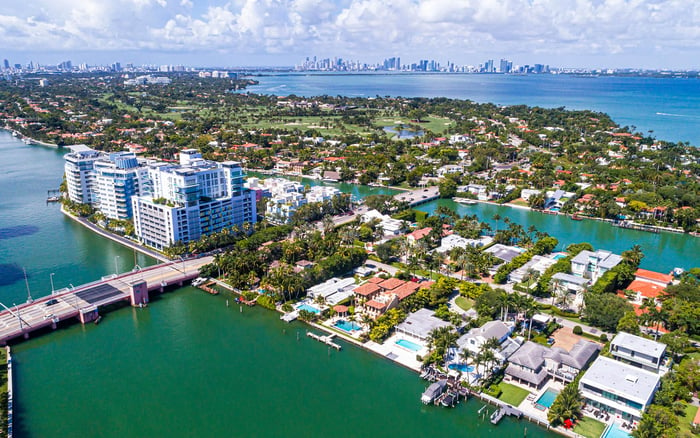
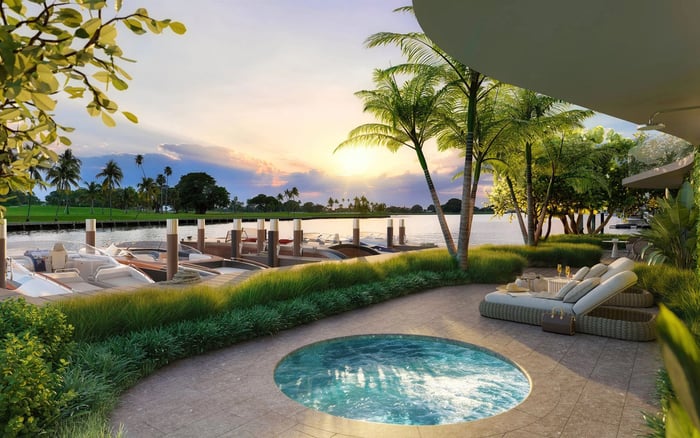
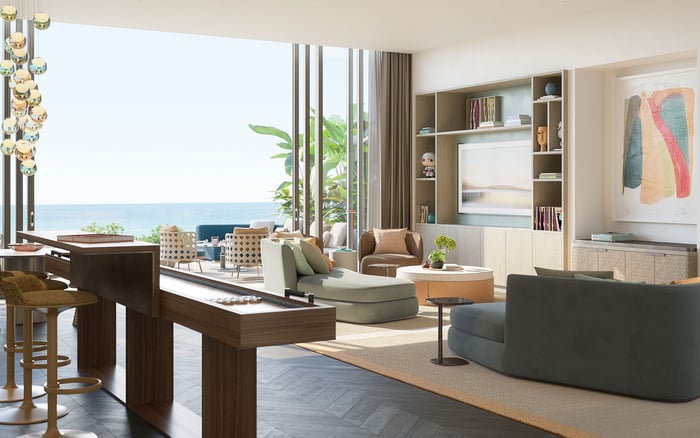
Miami’s Design District has evolved from a day trip into a lifestyle address, and luxury buyers are responding. As fashion houses and hospitality operators lend their codes of service, materiality, and brand discipline to residential development, a new category of ownership emerges: homes that behave like private members’ clubs, with the privacy of a residence and the choreography of a flagship boutique. For South Florida, the implications extend well beyond a single neighborhood. Brand-led residences are re-shaping buyer expectations for staffing, finishes, amenity curation, and even resale storytelling across Brickell, Miami Beach, Bal Harbour, and beyond. The result is a market where identity and experience can matter as much as views, square footage, and floor height. This is the Design District ascension: a shift from shopping destination to branded real estate hub, and a blueprint for how the luxury consumer wants to live in Miami now.
The Miami Design District has long been a place you visited. Increasingly, it’s a place you keep. Its gravitational pull is no longer limited to shopping bags and gallery openings; it’s about immediate access to culture, a walkable luxury streetscape, and environmental design that feels deliberately composed-from curb to courtyard.
That level of composition matters to high-net-worth buyers because it reduces friction. When the best retail, dining, and art programming is already curated beyond your front door, the home can feel quieter and more private, not busier. The most desirable luxury neighborhoods do this well: they deliver energy on demand without asking you to live inside the noise.
In the Design District, the rhythm is also clear. The area is built for being seen, yet it also accommodates discretion. That tension is precisely what branded residences capitalize on-offering a controlled version of glamour through service standards, private arrival sequences, and a managed social environment.
In ultra-premium markets, branding isn’t primarily a logo-it’s a promise that gets operationalized. The strongest fashion-branded residences translate a house’s design language into tangible, ownable elements: material palettes that echo a flagship, furniture-minded proportions, lighting that performs like retail theater, and a consistent point of view carried through the smallest details.
For buyers, the value proposition typically lands in three places:
First, design cohesion. A fashion house’s sensibility can produce interiors that feel edited rather than decorated. The aim isn’t maximalism; it’s control.
Second, service choreography. Many branded offerings borrow the best of hospitality: staffed lobbies, concierge culture, consistent maintenance standards, and an amenity set that functions like a private club.
Third, narrative equity. A residence tied to an enduring luxury brand can carry a story that’s easier to sell, rent, or hold as a second-home asset because the buyer pool recognizes it instantly.
Miami is particularly receptive to this model because the city’s luxury market is international, style-forward, and experience-driven. Buyers are often purchasing not only a plan and a view, but a lifestyle shorthand.
Even when a branded tower sits outside the Design District, the District’s cultural logic is shaping what sells across the county: elevated lobbies, retail-grade finishes, and amenity programming that feels curated rather than generic.
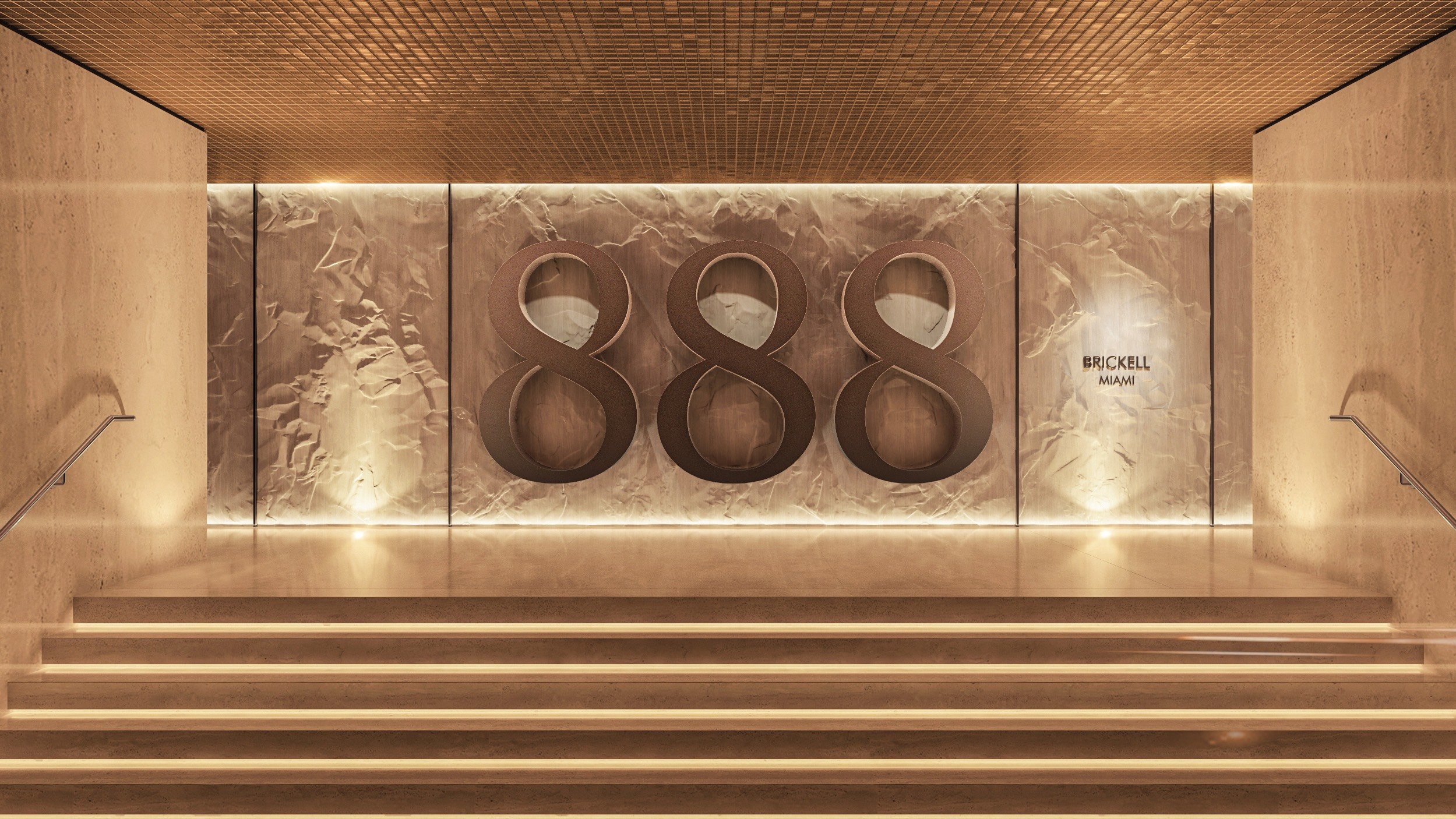
In Brickell, for example, the appetite for fashion-aligned living is explicit. 888 Brickell by Dolce & Gabbana signals how strongly buyers respond to a recognizable aesthetic and a tight brand narrative in a global-facing financial district. The promise is a home that reads as a collectible and functions as a high-service residence.
Hospitality-linked branding is also part of the same movement. The point isn’t whether the brand originated in fashion or hotels; it’s whether the operator can deliver a consistent lifestyle standard. In that sense, Kempinski Residences Miami Design District is a useful reference for how the District’s residentialization can be expressed: service-forward living for owners who want cultural proximity without surrendering privacy.
This is where the Design District becomes a hub rather than a single destination-exporting a preference set now visible in Miami Beach and the coastal markets as well.
The sophisticated buyer can appreciate the romance of the brand while still underwriting the mechanics. Before committing to a fashion-branded property, pressure-test a few deal-critical questions.
Brand-led design is easy at launch; maintaining it is harder. Clarify whether the brand remains involved after closing, and whether that involvement is contractual, reputational, or purely marketing. The long-term experience is shaped by governance: association control, staffing decisions, reserve discipline, and enforcement of house rules.
Some amenity sets are impressive but crowded; others are smaller yet genuinely private. Confirm what is reserved for residents, what is shared with guests, and how access is managed at peak times. In Miami-where second-home and seasonal occupancy patterns are common-the quality of access matters as much as the quality of design.
In a fashion-branded home, the difference between a collectible and a costume is material truth. Look closely at stone selection, millwork quality, and hardware specifications that will hold up over time. Timelessness is a resale strategy.
A recognizable brand can widen the buyer pool, but it can also narrow taste. The best branded residences avoid overly literal motifs in favor of refined, adaptable interiors. Ideally, the brand creates confidence without limiting personalization.
Branded residences are often framed as indulgences, yet many purchases are pragmatic. International buyers and time-compressed executives frequently prioritize reliability: a managed building, consistent standards, and a turnkey ownership experience.
That logic also shows up on Miami Beach, where the premium for lifestyle certainty can be as meaningful as the premium for ocean frontage. Five Park Miami Beach, while not a fashion label, reflects the same contemporary demand: a new-generation building identity anchored in design, amenity programming, and a cohesive resident experience.
A secondary benefit is social signaling. A branded address can communicate taste quickly, especially for buyers who split time across cities. But the most durable value is usually quieter: service reliability, building discipline, and the consistent feel of a well-run property.
As the Design District’s pull strengthens, nearby neighborhoods benefit from spillover demand. Buyers may want the District’s cultural access while preferring different textures of living: waterfront calm, beach adjacency, or a more residential street grid.
Bay Harbor Islands, Surfside, and Bal Harbour belong in that conversation because they offer a close-to-everything posture while still reading as enclaves. Wellness-forward and boutique developments, for instance, can appeal to the same buyer who shops the Design District but sleeps better in a quieter zip code. The Well Bay Harbor Islands captures this shift toward health, design clarity, and curated service as a lifestyle stance.
Further south, oceanfront living remains its own category of brand-especially for buyers who anchor identity in coastline rather than city energy. 57 Ocean Miami Beach speaks to the discreet end of the spectrum: residences where the “brand” is less about a logo and more about restraint, privacy, and the permanence of an ocean address.
In other words, the Design District’s ascension isn’t only creating new options within its own footprint. It’s reshaping how buyers assign value to design, service, and curation across Miami.
The most important takeaway is that the luxury baseline is shifting. Bigger isn’t always better. More amenities aren’t automatically more desirable. The Design District model is teaching the market that what matters is selection: the right art, the right lighting, the right arrival, the right staffing levels, and the right privacy.
Fashion branding accelerates this shift because fashion is, at its core, a discipline of editing. The best branded residences feel the same way: fewer gestures, stronger intent. When executed well, the home becomes an environment that supports daily life-not a showroom that demands performance.
For South Florida, this evolution is worth watching closely. As more branded concepts enter the market, buyers will become more fluent and more selective. The winners will be the buildings that deliver genuine operational excellence, not just launch-week buzz.
If you’re evaluating the Design District as a lifestyle base-or buying into the broader branded-residence trend it represents-keep your decision anchored to three pillars:
Design integrity: Does the building feel timeless, or time-stamped?
Operational reality: Are staffing, maintenance, and governance aligned with the promise?
Location logic: Will you actually use the neighborhood’s walkability, culture, and dining, or is your daily life anchored elsewhere?
When those pillars align, the Design District narrative becomes more than a trend. It becomes a long-term way to live well in Miami.
What makes the Design District different from other luxury Miami neighborhoods? It is defined by curated culture and walkability, with luxury retail and art as daily infrastructure.
Are fashion branded residences only about aesthetics? No. The strongest projects translate brand standards into service, materials, and operations.
Do branded residences always command a premium? Often they do, but the premium is justified only when the experience is maintained post-closing.
What should I review first in a branded condo purchase? Focus on governance, staffing commitments, and what amenities are truly resident-exclusive.
Can branded residences be a good second-home strategy? Yes, especially for buyers who value turnkey ownership and predictable service standards.
Is Brickell part of this same branded-living trend? Yes. Brickell increasingly pairs global branding with high-service residential positioning.
How does Miami Beach fit into the Design District lifestyle equation? It offers a different rhythm, often prioritizing ocean adjacency and resort-caliber living.
Are wellness concepts competing with fashion branding? They are complementary, and many buyers now rank health-oriented programming highly.
Will branding help or hurt resale value? It can help liquidity through recognition, but overly literal design can narrow buyer appeal.
What is the simplest way to tour branded options across Miami? Compare how each building delivers privacy, service, and finish quality in real life.
To compare the best-fit options with clarity, connect with MILLION Luxury.
If branded residences are on your mind — as a home or as an allocation — we would be glad to share what we are seeing, privately.
Begin a quiet conversation