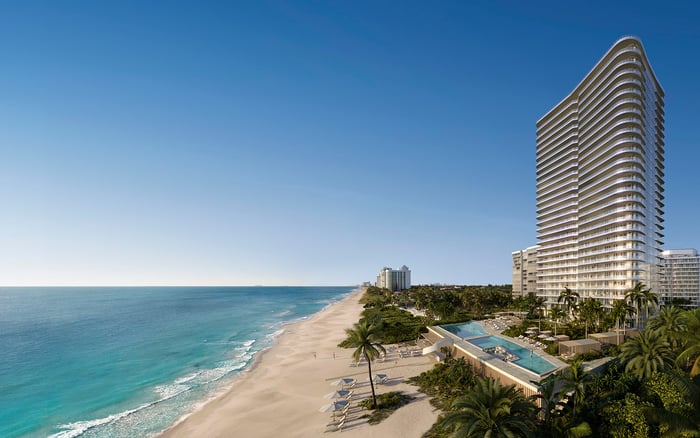
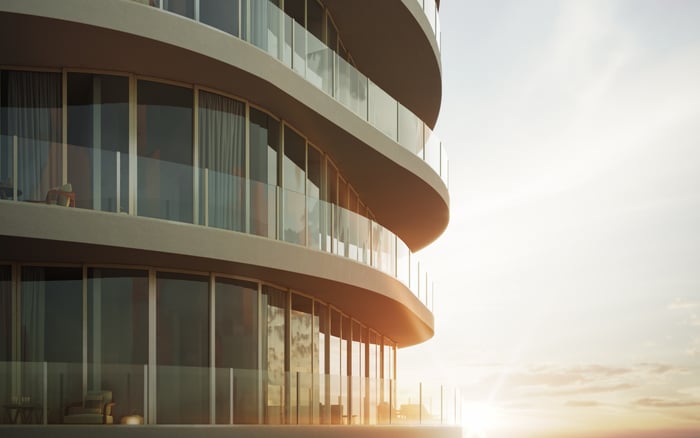
A buyer-oriented, design-literate comparison of what makes an outdoor summer kitchen truly functional in Pompano Beach, using Ocean 580 and Armani/Casa as the reference points.

In South Florida, an outdoor summer kitchen is not a novelty. It is an extension of the home’s social core, a practical response to indoor cooling loads, and-at the ocean’s edge-a front-row seat to the elements. The question is not whether a terrace or deck can fit a grill. It is whether the space can support real cooking, real hosting, and real day-to-day use without becoming a high-maintenance showpiece.
Evaluating the functionality of outdoor summer kitchens at Ocean 580 Pompano Beach against Armani Casa Residences Pompano Beach starts with a simple premise: you are buying a workflow, not an appliance package. The best outdoor kitchens feel inevitable-everything sits where your hands expect it to be, wind is accounted for, surfaces tolerate salt, and the space still reads elegant when it is not “on.”
A serious outdoor kitchen evaluation in Pompano Beach deserves the same discipline you would apply to an indoor chef’s kitchen-plus an additional layer for coastal conditions.
First, confirm the kitchen’s role: is it a true cooking station, or a reheat-and-serve counter? Function reveals itself in fundamentals.
Work triangle and landing zones. Look for clear landing space on both sides of the primary heat source, a stable prep zone, and an obvious serving path to dining. If guests have to squeeze behind the cook to reach seating, the plan will feel tense.
Ventilation and wind behavior. Ocean breezes are part of the lifestyle, but they can disrupt burners, push smoke into seating, and accelerate wear. Favor placements that keep heat and smoke away from doorways, operable windows, and upholstered outdoor lounges.
Shade and thermal comfort. A grill under relentless sun is not “resort living”-it is an avoidance zone. Overhangs, pergola-like protection, or smart orientation often determines whether a kitchen is used weekly or photographed once.
Storage and cleaning reality. Outdoor kitchens fail when there is nowhere for tools, platters, trash, towels, or a backup propane tank where permitted. Ask yourself where the mess goes when the evening ends. If the answer is “inside,” the outdoor kitchen is not doing its job.
Materials chosen for salt air. Salt, humidity, and UV exposure can leave the wrong metals dull and pitted, and the wrong countertops chalky or stained. Function is longevity. A luxury outdoor kitchen should age gracefully-not require constant touch-ups to look presentable.
Pompano Beach oceanfront living is a productive contradiction: you want openness, but you also need control. Outdoor kitchens are where that tension becomes most visible.
Expect stricter limitations than you would encounter inland. Building rules often govern open flame, smoke drift, grease management, and what may be installed on private terraces versus what must remain on an amenity deck. Even when a space is physically capable, policy can quietly reduce it to a decorative feature.
Functionality also depends on whether the kitchen is:
Private and adjacent to your living space, making it part of your daily routine, or
Centralized as an amenity, which can be beautifully executed but is inherently shared, scheduled, and dependent on building etiquette.
The most candid way to compare Ocean 580 Pompano Beach and Armani Casa Residences Pompano Beach is to think in scenarios: a casual midweek dinner, a Sunday brunch with multiple courses, and a holiday gathering where the cooking continues even if weather shifts.
Without leaning on brochure-level claims, you can still assess these two addresses with a clear framework that surfaces practical differences quickly.
If the outdoor kitchen lives on your terrace, count the doors and the steps. Can you move from fridge to prep to grill to table without backtracking through interior thresholds? The best arrangements let the cook stay outside while guests circulate naturally. In functional terms, the terrace should feel like a continuation of the great room-not a separate destination.
When touring Ocean 580 Pompano Beach and Armani Casa Residences Pompano Beach, think like a host: Where would drinks be staged? Where would hot trays land? How do you keep traffic away from heat?
Outdoor kitchens are often labeled “summer kitchens,” but that phrase can mean everything from a single grill to a true multi-element station. The functional question is simple: what can you comfortably cook at once-and does the design support that without crowding?
Assess:
Is there meaningful prep space that stays out of direct wind?
Is there dedicated refrigeration that reduces trips indoors?
Is there a sink or a clear cleaning strategy, so dirty items are not carried through the home?
If the kitchen is intended primarily for light grilling, that can still be ideal. The misstep is paying for a show kitchen when you will only ever use one burner.
A functional outdoor kitchen must be pleasant enough that you want to linger after the last plate is served. In oceanfront towers, wind noise and ocean sound can be sublime, but balcony geometry can amplify or distort it.
Sit where dining would occur. If conversation feels strained, you will migrate indoors-and the outdoor kitchen becomes a ceremonial backdrop. True function includes the comfort of the people you entertain.
Salt air does not negotiate. Choosing an outdoor kitchen also means choosing how often you will wipe surfaces, cover equipment, and refresh finishes.
The most functional outdoor kitchens share two traits:
They are easy to reset after use (hidden storage, simple surfaces, logical trash handling).
They are durable enough that you do not feel anxious using them.
The luxury signal is not a pristine grill. It is a space designed so you can cook confidently without worrying about damage from normal living.
For certain owners, the most functional “outdoor kitchen” is not the one on the terrace. It is the one managed as part of the building’s hospitality experience. Shared outdoor cooking areas can offer scale, separation of smoke from residences, and a more robust setup for larger gatherings.
The trade-off is spontaneity. If you value a quiet, unscheduled sunset dinner, private use wins. If you host larger groups and prefer not to maintain equipment yourself, an amenity-forward model can be more functional in practice.
In broader South Florida comparisons, it is useful to notice how different brands treat outdoor living as a program, not a detail. For example, the outdoor lifestyle expectations at W Pompano Beach Hotel & Residences often center on a hospitality-minded approach to shared spaces, while other residential-only buildings may emphasize private terraces as the primary stage for entertaining.
When you tour, the following cues often signal a kitchen designed for genuine use.
Clearances you can feel. You should be able to open doors and drawers fully, pass behind someone at the grill without turning sideways, and set down platters without hunting for space.
A dining zone that is protected. If the only dining area is exposed to full wind and sun, you will not use it at the hours you most want to.
Lighting that works at night. Outdoor kitchens fail when task lighting is missing. If you cannot check doneness without pulling food indoors, it is not functional.
Logical power and charging. Entertaining today includes music, warming trays, and devices. Discreet, well-placed outlets support modern hosting.
An intentional “off mode.” The best designs conceal utilitarian elements so the terrace still looks serene when no one is cooking.
These are buyer-side indicators that translate across buildings, including Ocean 580 Pompano Beach and Armani Casa Residences Pompano Beach.
Filter the decision through your personal operating style.
Choose a more private, terrace-centric outdoor kitchen if you:
Cook outdoors midweek, not just on holidays.
Prefer intimate hosting where the cook stays part of the conversation.
Value immediate access from the interior kitchen to the terrace setup.
Favor a more amenity-dependent approach if you:
Host larger groups and want more separation between cooking and lounging.
Prefer not to manage coastal wear and ongoing cleaning.
Value concierge-like support and a shared, hospitality-forward environment.
For buyers also considering other coastal submarkets, it can be useful to compare how outdoor living performs across different tower typologies. A Fort Lauderdale benchmark like Four Seasons Hotel & Private Residences Fort Lauderdale tends to highlight a service-driven lifestyle layer, whereas certain boutique projects place more emphasis on private outdoor rooms that operate like extensions of the residence.
A tour can be polished; functionality shows up in operational details. Ask direct, practical questions.
What fuel types are permitted, and where is equipment located?
Are there restrictions on open flame, smoking, or cooking intensity?
How is grease and smoke managed to minimize impact on neighbors?
What maintenance is owner responsibility versus building responsibility?
Can you add or upgrade components later, or is the outdoor kitchen fixed?
If answers are vague, assume the most restrictive interpretation until clarified. In luxury real estate, clarity is part of the product.
Are outdoor summer kitchens actually usable year-round in Pompano Beach? Yes, but comfort depends on wind, shade, and how protected the dining zone is.
What makes an outdoor kitchen feel “functional” rather than decorative? A usable prep zone, safe clearances, smart storage, and a clean serving path.
Is a private terrace kitchen better than an amenity kitchen? Private is better for spontaneity; amenity can be better for scale and upkeep.
How do I evaluate wind impact during a showing? Stand where the grill and dining would be and note smoke paths and comfort.
What materials hold up best near the ocean? Prioritize finishes designed for salt air and UV exposure, with easy cleaning.
Do building rules commonly limit outdoor cooking? Yes, policies on open flame, smoke, and equipment can meaningfully restrict use.
How important is outdoor task lighting? Critical, since nighttime cooking is common and poor lighting reduces usability.
Should an outdoor kitchen include a sink? It is not mandatory, but it materially improves cleanup and reduces indoor trips.
Can I upgrade an outdoor kitchen after purchase? Sometimes, but approvals can be strict; assume changes require building consent.
What is the simplest way to compare Ocean 580 and Armani/Casa tours? Use the same hosting scenario in both and see which layout feels effortless.
For a tailored shortlist and next-step guidance, connect with MILLION Luxury.
If branded residences are on your mind — as a home or as an allocation — we would be glad to share what we are seeing, privately.
Begin a quiet conversation