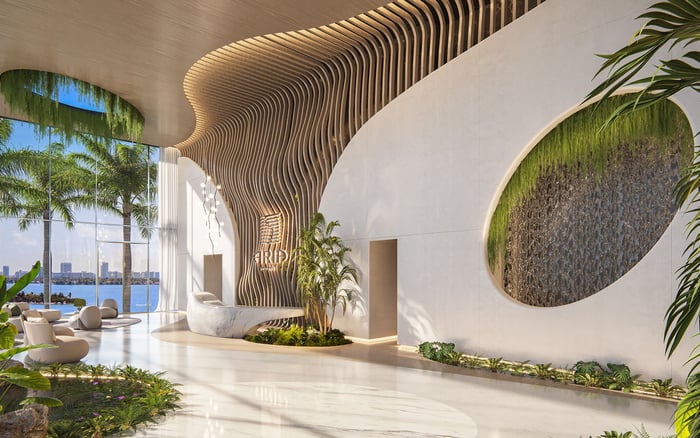
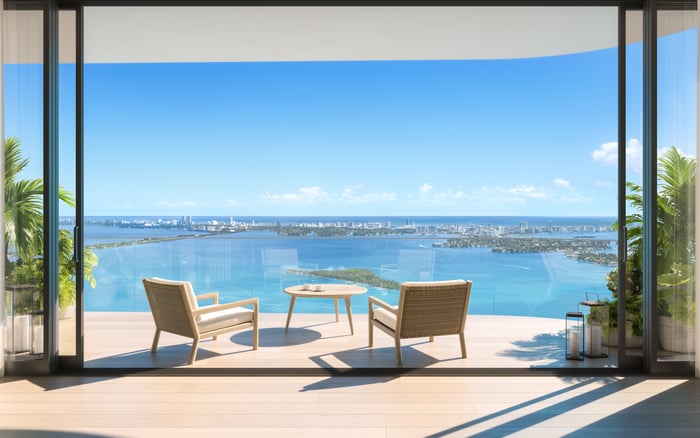
In Edgewater, view value is rarely about a single panorama. It is about how a tower’s architecture, unit plan, ceiling height, and outdoor depth choreograph the daily light, the horizon line, and the sense of privacy. Aria Reserve and Villa Miami both promise Biscayne Bay as a permanent backdrop, yet they take fundamentally different paths: one is a two-tower, high-inventory waterfront statement with real-world sightlines now emerging; the other is a boutique, hospitality-led high-rise still in its pre-completion phase, selling a tightly curated promise of 360-degree outlooks. For buyers who equate “best views” with livability as much as spectacle, the decision comes down to three things: whether you prioritize verified, in-person perspective today; whether you want flow-through exposure and deeper terraces; and whether you prefer a quieter, more serviced atmosphere with fewer neighbors.
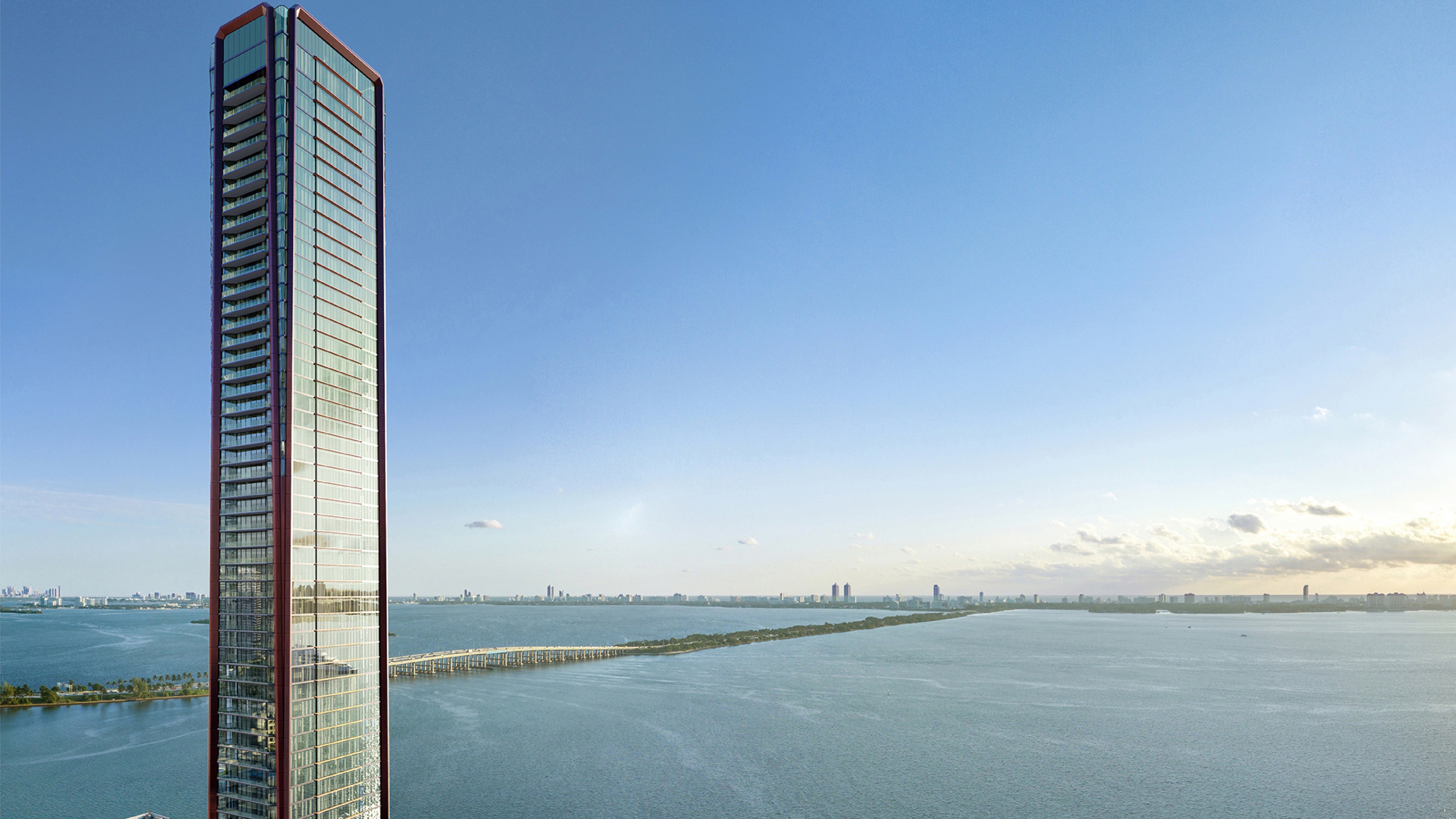
In Edgewater, “best views” is shorthand for a layered experience: a clean horizon over Biscayne Bay, enough altitude to clear nearby rooflines, and interiors that keep the water visually present even when you are not standing at the glass. The strongest view residences treat light and outdoor space as core architecture, not an afterthought.
That is why this comparison is less about dramatic imagery and more about composition. Aria Reserve and Villa Miami both speak the language of Biscayne Bay, but they use different instruments.
A practical truth: inventory size shapes how “great” versus “good” views are distributed.
Aria Reserve is planned as a large, multi-residence waterfront development. That scale can introduce more variation by stack and floor, with a wider range of orientations and sightline conditions. In a large-format property, buyers can often refine the brief-higher floors for horizon dominance, or specific lines that frame Downtown Miami or Miami Beach. The trade-off is dispersion: with more homes, the gap between the most compelling exposures and more compromised angles can be meaningful.
Villa Miami, by contrast, is positioned as a boutique-scale building with fewer residences. Boutique scale typically concentrates the view story: fewer stacks, fewer neighbors, and a more curated set of exposures. The project’s marketing centers on a 360-degree outlook spanning bay and city.
For the buyer, this is a personality decision as much as a technical one. Do you want a larger ecosystem with more choice, or a smaller collection that aims for consistency?
Views are built, not found.
Aria Reserve emphasizes floor-to-ceiling glass and expansive terraces as part of its view experience, along with flow-through layouts intended to deliver both sunrise and sunset exposures. Terrace depth matters: a shallow balcony reads like a perch, while a deeper terrace functions like an exterior room.
Villa Miami’s architectural story is different. The tower is described as wrapped by a structural exoskeleton, positioned as enabling large openings and outdoor living. The intent is an immersive panorama where the boundary between interior and exterior reads less like a window wall and more like a continuous frame.
What this means in practice:
When “best views” is the core purchase rationale, verification matters.
Aria Reserve is further along in the real-world lifecycle, which can allow buyers to evaluate sightlines rather than relying exclusively on renderings. That does not automatically make every view superior, but it changes the decision dynamic: you can confirm the horizon line, the degree of openness, and the terrace experience in real light.
Villa Miami remains a forward-looking purchase decision today, with the view promise rooted in plans and marketing descriptions. For some buyers, that is acceptable-even preferred-because it can mean earlier selection leverage and alignment with a future design vision. For others, especially those sensitive to micro-sightlines, it introduces a degree of projection.
Even with the same skyline, two residences can feel radically different.
Aria Reserve markets different ceiling-height groupings depending on residence type and elevation. That extra volume can materially change the perception of panorama, especially when paired with floor-to-ceiling glass.
Villa Miami similarly positions ceiling height and outdoor living as part of the immersive outlook. With fewer residences, the project reads as more uniform in intent-even if final stack-by-stack nuance will only be fully understood when completed.
For buyers comparing “best views,” ceilings should be treated like a lens: they do not create the view, but they can make the view feel wider, calmer, and more architectural.
In ultra-prime towers, views and amenities are inseparable. They determine how often you are in the places where the view is best.
Aria Reserve positions its lifestyle around waterfront living and outdoor engagement, extending the view experience beyond the residence.
Villa Miami’s branding centers on a hospitality-led, club-like atmosphere designed to make views feel social, serviced, and intentional.
In neighboring submarkets, similar lifestyle distinctions show up in how residents talk about their buildings. A buyer considering Edgewater for its urban-waterfront balance may also compare it to Downtown icons like Aston Martin Residences Downtown Miami or design-led new construction such as Casa Bella by B&B Italia Downtown Miami.
Rather than asking which tower has “the” best view, sophisticated buyers typically decide which view experience best matches their priorities.
Choose Aria Reserve if you value:
Choose Villa Miami if you value:
For some buyers, this decision also intersects with where they keep a second base in South Florida. Those who prioritize a quieter shoreline may benchmark against Surfside, where projects like The Surf Club Four Seasons Surfside have long defined the idea of a view as a lifestyle asset.
Aria Reserve and Villa Miami both aim to deliver Biscayne Bay as a daily possession. The deciding factor is not simply what you see, but how you inhabit it.
Aria Reserve’s strengths are straightforward: a waterfront profile in Edgewater; flow-through residences intended to span sunrise and sunset; and terraces designed to function as true outdoor living.
Villa Miami is a more distilled statement: fewer residences, an architecture-forward identity, and a hospitality-led approach designed to make views feel social, serviced, and intentional.
For buyers who want to keep the comparison within Edgewater’s newest waterfront narratives, it is worth exploring both Aria Reserve Miami and Villa Miami with a view-first checklist: exposure, terrace depth, ceiling height, and how the building’s lifestyle makes you actually use the vantage points.
What does “best views” usually mean in Edgewater? It typically means a clean Biscayne Bay horizon, enough elevation to clear nearby rooflines, and interiors that keep water and sky in your line of sight throughout the day.
Which project is positioned as more boutique: Aria Reserve or Villa Miami? Villa Miami is positioned as the more boutique option, with a smaller residence count and a more curated view narrative.
What is a “flow-through” layout, and why does it matter for views? A flow-through layout is designed to capture multiple exposures (often east and west), which can create a sunrise-to-sunset relationship with the bay and skyline.
How do terraces change the day-to-day experience of a view? Deeper terraces can function like an outdoor room, making it more likely you will use the view as living space rather than only looking at it through glass.
Do ceiling heights materially affect how a view feels? Yes-more vertical volume can make a panorama feel wider and calmer, especially when paired with floor-to-ceiling glass.
Why can a larger building create bigger differences between “great” and “good” views? More stacks and orientations can introduce more variety in sightlines, so choosing the right line and floor can matter more.
Why do some buyers prefer to verify views in person before committing? Seeing sightlines in real light can reduce uncertainty around the horizon line, nearby obstructions, and how terraces actually live.
What is the appeal of a hospitality-led tower for view-focused buyers? Hospitality-led programming can make views feel more “usable” for entertaining, with service-oriented spaces that emphasize hosting.
If I want both sunrise and sunset, what should I prioritize? Prioritize multi-exposure layouts and a floor plan that keeps the main living areas aligned with both light and water at different times of day.
What is a simple checklist for comparing view quality between these two towers? Compare exposure, floor level, terrace livability, ceiling height, and whether the building’s amenities make you spend time where the views are best.
If you'd like a private walkthrough and a curated shortlist, connect with MILLION Luxury.
If branded residences are on your mind — as a home or as an allocation — we would be glad to share what we are seeing, privately.
Begin a quiet conversation