A buyer-focused comparison of two branded towers reshaping Miami’s urban core, from neighborhood positioning and amenity philosophy to pricing posture, scale, and development risk.

Miami’s luxury residential market has moved well beyond simple waterfront prestige. The city’s newest statement towers are increasingly defined by brand ecosystems, where architecture, service, identity, and buyer psychology converge into a single proposition. In that context, Mercedes-Benz Places Miami and Waldorf Astoria Residences Downtown Miami stand out as two of the most closely watched names in the urban core.
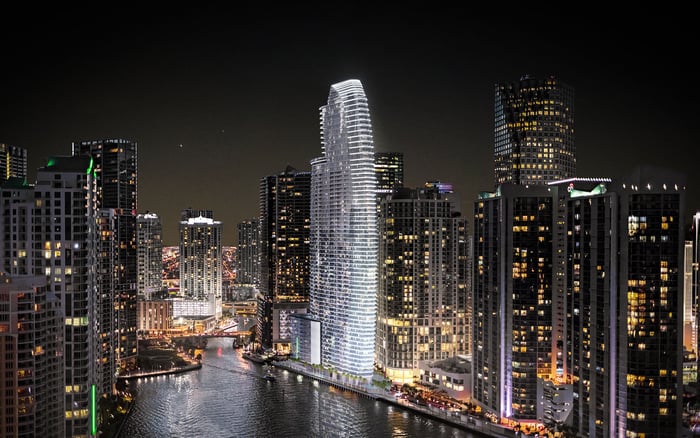
Both projects participate in the branded-supertall conversation, yet they do so from very different foundations. Mercedes-Benz Places Miami brings an automotive luxury label to Brickell, pairing substantial scale with a design language tied to the marque. Waldorf Astoria Residences Downtown Miami, by contrast, is rooted in an established hospitality tradition, translating five-star hotel expectations into a residential format in Downtown.
For buyers working with MILLION Luxury, the distinction is not merely aesthetic. It touches neighborhood identity, service philosophy, risk profile, and the kind of luxury each address is designed to deliver. It also places both towers in dialogue with other branded and design-forward projects shaping the city, from 888 Brickell by Dolce & Gabbana to Aston Martin Residences Downtown Miami.
The first dividing line is geographic, and in Miami that matters more than it may appear on a map. Brickell remains the city’s financial and residential nerve center, where global capital, walkability, restaurants, and a polished vertical lifestyle create a distinctly metropolitan rhythm. Mercedes-Benz Places Miami enters that environment with a broad, high-visibility presence that aligns naturally with Brickell’s appetite for new-construction prestige.
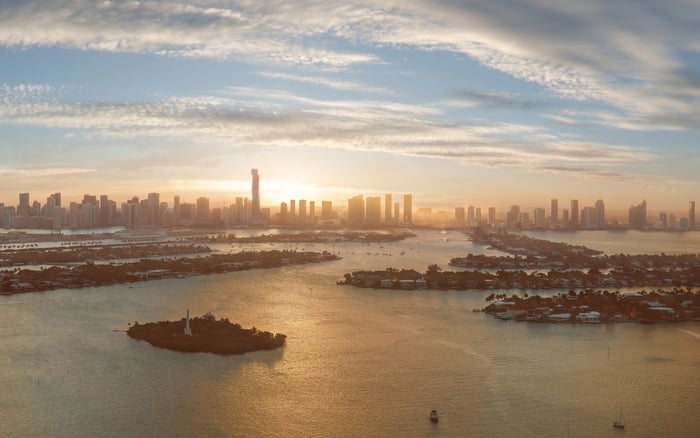
Downtown offers a different expression of urban luxury. It is more civic, more skyline-driven, and often more monumental in feel. Waldorf Astoria Residences Downtown Miami belongs to that setting, where the architecture reads as part of the city’s larger silhouette rather than simply as a neighborhood addition. Buyers comparing the two are often choosing between Brickell’s immediate, high-energy convenience and Downtown’s more iconic, hospitality-oriented sensibility.
That broader urban divide is visible across nearby competition. In Brickell, projects like Baccarat Residences Brickell and The Residences at 1428 Brickell reinforce the district’s concentration of branded and design-led inventory. Downtown, meanwhile, continues to cultivate landmark status through trophy addresses and skyline-defining towers.
One of the clearest differences between the two properties is scale. Mercedes-Benz Places Miami is planned at roughly 700 residences, giving it a notably larger footprint and broader market reach. In practical terms, that density suggests a project designed to appeal to a wider cross-section of luxury buyers, particularly in the mid-to-upper tier of the market.
Waldorf Astoria Residences Downtown Miami is far more limited by comparison, with 247 ultra-luxury residences in a 61-story tower. Scarcity changes the way the asset is perceived. A lower unit count can support a more intimate ownership profile while reinforcing a stronger sense of exclusivity within the building itself.
For buyers, this is not simply a matter of unit count. It shapes everything from the atmosphere of common areas to the likely cadence of turnover, the perceived rarity of ownership, and the way a building sits within its competitive set. Larger scale can create energy and flexibility. Smaller scale can heighten privacy and collectability.
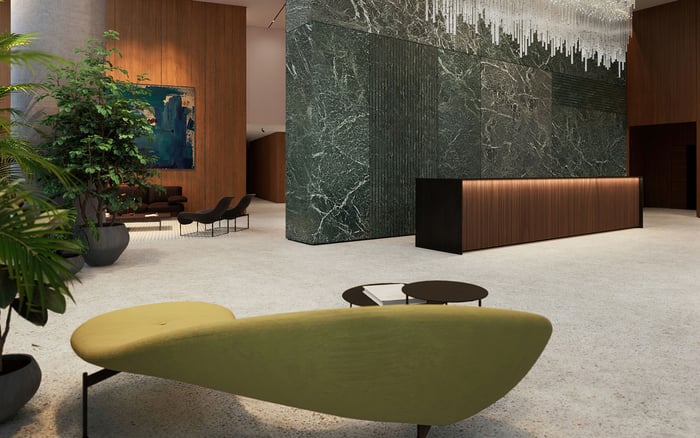
The more compelling comparison lies in brand DNA. Mercedes-Benz Places Miami is not a hotel-derived residence. Its identity comes from automotive luxury, design precision, and lifestyle programming tied to the Mercedes-Benz name. Reported features include branded concierge offerings, automotive-themed experiences, and interiors shaped by the company’s design language.
That approach feels fresh in the Miami context. It positions the residence less as an extension of traditional hospitality and more as a curated lifestyle product for buyers who value brand alignment and contemporary design culture. It joins a growing conversation that includes fashion- and automotive-inflected projects such as Mercedes-Benz Places Miami itself and other identity-rich residences across the region.
Waldorf Astoria Residences Downtown Miami takes the opposite path. Here, the value proposition is hotel-grade service. The residential experience is shaped by expectations associated with a five-star hospitality brand, with reported amenities including a Guerlain spa, culinary service, a 24-hour concierge, and a private restaurant. For many ultra-luxury buyers, that distinction is decisive. Service is not an accessory. It is the product.
This is where Waldorf Astoria feels more mature as a branded-residence concept. The hospitality model is already familiar to the global luxury buyer, while automotive branding in residential real estate remains newer and more experimental. One offers a known ritual of service. The other projects a future-facing lifestyle identity.
Publicly disclosed pricing places Mercedes-Benz Places Miami from around the $500,000 range to above $2 million, though details remain preliminary while the project is still in development and sales. That spread suggests meaningful accessibility within the luxury spectrum, especially for buyers seeking entry into a branded tower in Brickell without immediately moving into the highest ultra-prime category.
Waldorf Astoria Residences Downtown Miami is positioned higher, with reported pricing from about $500,000 to above $4 million and premium valuations at the penthouse level. Even where entry pricing may appear to overlap on paper, the upper bound tells the more important story. Waldorf Astoria is aimed more directly at the ultra-luxury buyer who prioritizes service depth, established brand familiarity, and a stronger sense of rarity.
That difference in posture mirrors what MILLION Luxury sees across the market. Some buyers are drawn to scale, momentum, and the promise embedded in pre-construction. Others prefer the assurance of a more established hospitality-backed concept. Both are luxury decisions, but they are not the same decision.
For sophisticated purchasers, timing is often as important as design. Mercedes-Benz Places Miami is in the development and sales phase, with launch timing described in the 2023 to 2024 window and anticipated completion in the 2026 to 2027 period. As with any pre-completion purchase, this introduces the usual considerations around delivery, final specifications, and the evolution of the finished product.
Waldorf Astoria Residences Downtown Miami is framed as the more established and operationally mature asset. That distinction affects buyer comfort. A functioning luxury residence tied to an existing hospitality framework can feel inherently more legible than a future tower whose final lived experience is still taking shape.
This does not make one choice superior in every case. Pre-construction can offer early positioning in a new icon, while a more mature branded residence can offer clarity and a more immediate understanding of service standards. The buyer’s objective matters: capitalizing on a project’s narrative arc, or stepping directly into a known luxury environment.
Mercedes-Benz Places Miami is likely to resonate with buyers who want a current expression of branded living in Brickell, appreciate larger-scale mixed-use energy, and are comfortable with the forward-looking nature of a project still taking shape. It is a compelling proposition for design-conscious purchasers who see brand identity itself as a lifestyle asset.
Waldorf Astoria Residences Downtown Miami is better suited to the buyer who views service as the defining ingredient of luxury. Its appeal lies in hospitality pedigree, a more limited residential count, and a Downtown address that reads as iconic rather than simply convenient. It is the more traditional ultra-luxury choice, even as its architecture remains distinctly contemporary.
In the end, these are not interchangeable towers. They represent two different answers to the same question: what should a branded supertall in Miami actually deliver? One answer is scale, momentum, and automotive-led design in Brickell. The other is service, scarcity, and hotel-rooted prestige in Downtown.
What is the main difference between Mercedes-Benz Places Miami and Waldorf Astoria Residences Downtown Miami? Mercedes-Benz Places Miami is centered on automotive luxury branding in Brickell, while Waldorf Astoria Residences Downtown Miami is built around hotel-style service in Downtown.
Which project has more residences? Mercedes-Benz Places Miami is planned with roughly 700 residences, versus 247 at Waldorf Astoria Residences Downtown Miami.
Is Mercedes-Benz Places Miami completed? No. It is in development and sales, with completion anticipated in the 2026 to 2027 period.
Is Waldorf Astoria Residences Downtown Miami more established? Yes. It is presented as the more mature and operationally established branded residence in this comparison.
Which tower is in Brickell? Mercedes-Benz Places Miami is in Brickell, a core district known for finance, dining, and high-rise living.
Which tower is in Downtown? Waldorf Astoria Residences Downtown Miami is located in Downtown Miami, an area defined by landmark skyline presence and urban accessibility.
What amenities define Mercedes-Benz Places Miami? Reported highlights include branded concierge services, automotive-themed programming, and Mercedes-Benz-led design elements.
What amenities define Waldorf Astoria Residences Downtown Miami? Reported offerings include a Guerlain spa, culinary service, a private restaurant, and 24-hour concierge support.
Which project appears more ultra-luxury in pricing posture? Waldorf Astoria Residences Downtown Miami reaches a higher reported upper pricing range, with penthouses commanding a premium.
Who should consider each tower? Buyers drawn to Brickell, new-construction energy, and automotive branding may prefer Mercedes-Benz Places Miami, while service-driven ultra-luxury buyers may lean toward Waldorf Astoria Residences Downtown Miami.
To compare the best-fit options with clarity, connect with MILLION Luxury.
If branded residences are on your mind — as a home or as an allocation — we would be glad to share what we are seeing, privately.
Begin a quiet conversation