A discreet investment reading of Miami’s $3M+ condo market in 2026, focused on buyer discipline, building quality, liquidity, carrying costs, and exit strategy.
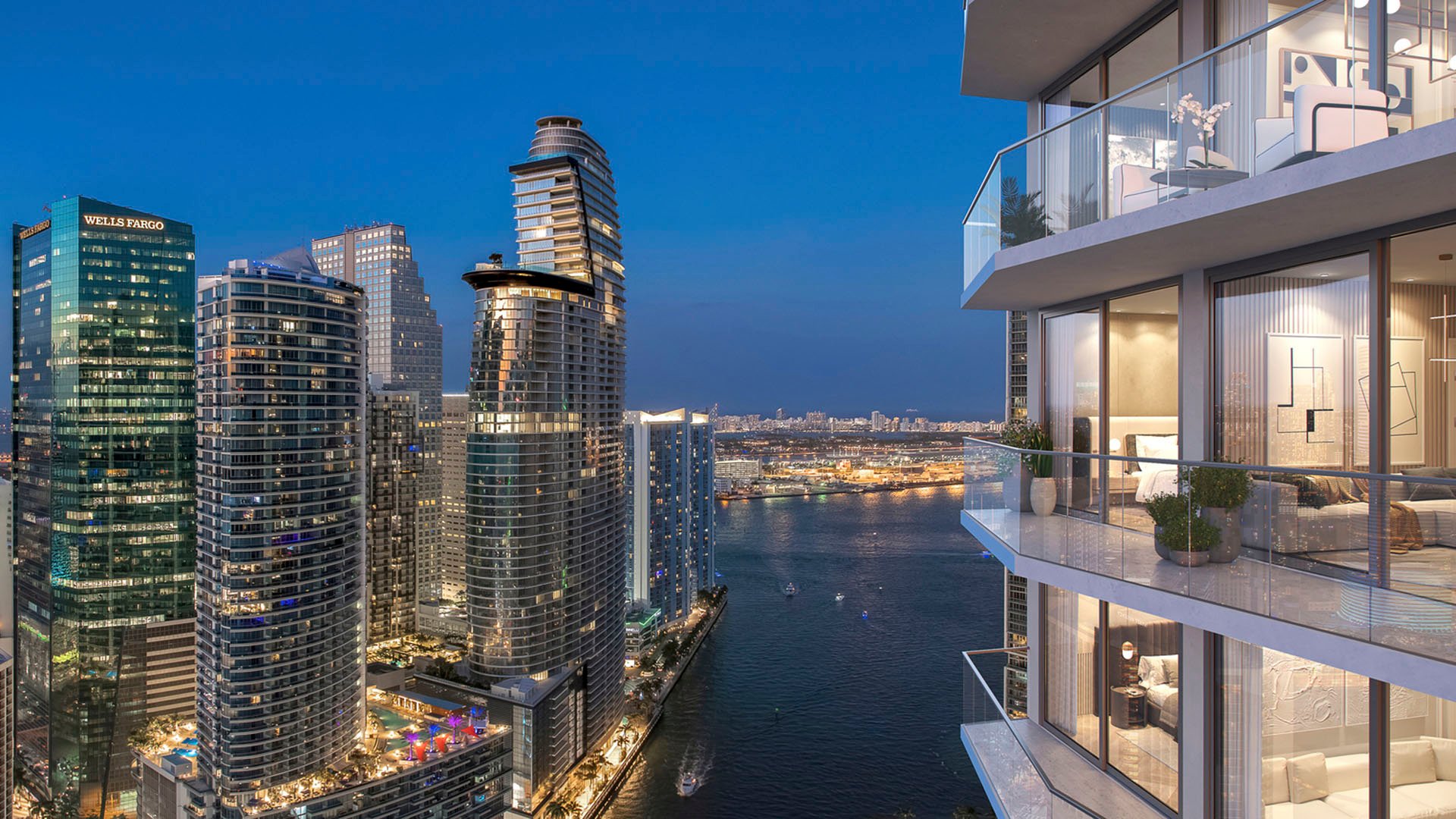
Are Miami's $3M+ condos a good investment in 2026? Selectively, yes. Not because every luxury tower, view line, or amenity deck merits a premium, but because the upper end of the market rewards discipline over enthusiasm. At this level, the investment case is less about chasing a broad market narrative and more about securing the right residence, in the right building, with the right cost structure and a credible exit path.
For a $3M+ buyer, the purchase is rarely a pure yield exercise. It often sits at the intersection of lifestyle, capital preservation, tax planning, family use, and optional rental income. That makes the decision more nuanced. A strong acquisition should feel exceptional on day one, but it also needs to hold up on the spreadsheet on day 365.
The most useful conclusion is simple: a Miami luxury condo can be a strong investment when the buyer avoids average inventory. The market does not assign the same premium to every large floor plan, every water view, or every branded lobby. It pays for scarcity, condition, privacy, efficient ownership, and a building future buyers will still want when it is time to sell.
At the $3M+ threshold, “the data” is not one number. It is a matrix. Serious buyers should compare acquisition price, monthly carrying costs, insurance exposure, association strength, reserve posture, rental flexibility, resale depth, and the number of competing units that could be available in the same building or submarket.
Price per square foot can be useful, but only when interpreted with precision. Two residences with similar pricing can have very different investment quality if one offers a superior view, more usable interior volume, stronger parking, better outdoor space, or a layout that appeals to both primary residents and second-home buyers. A discount on an awkward plan is not always value. A premium for a genuinely scarce line can be rational.
Resale should be studied before purchase, not after. The strongest luxury condos tend to have a clear future buyer: an international second-home owner, a relocating executive, a downsizing local homeowner, or a family seeking lock-and-leave waterfront living. If the next buyer is difficult to define, the asset deserves greater scrutiny.
In 2026, carrying costs deserve a front-row seat in the conversation. Even for cash buyers, monthly obligations can affect liquidity and resale appeal. Association fees, assessments, insurance, property taxes, maintenance standards, and staffing levels are not background details. They shape the true cost of ownership.
A building with polished service but weak financial discipline can become less attractive over time. A building with transparent governance, consistent upkeep, and realistic budgeting may not sound glamorous, but it is often easier to own and easier to resell. In the luxury segment, discretion includes knowing what happens behind the lobby doors.
The best buyers ask uncomfortable questions early. How predictable are monthly costs? Is the building maintaining itself at the level future luxury buyers will expect? Are common areas aging gracefully? Is there a history of sudden assessments? These questions do not diminish the romance of a residence. They protect it.
Miami is not one condo market. Brickell, Downtown, Aventura, Miami Beach, Sunny Isles, Coconut Grove, and the barrier island enclaves all behave differently because their buyers use property differently. A full-time resident may value walkability and services. A seasonal buyer may prioritize views, security, and ease of arrival. A family may focus on space and privacy. An investor may care most about rental permissions and liquidity.
Brickell can appeal to buyers who want urban energy, financial district proximity, and high-service vertical living. Downtown may attract those comfortable with a more evolving city-center profile. Aventura can offer a different rhythm, with access, shopping, and residential convenience playing larger roles. Oceanfront property carries its own logic, where view quality, beach access, building condition, and exposure to maintenance costs become central.
The right question is not “Which area is best?” It is “Which area creates the clearest match between how I will use the property and who will buy it from me later?” A trophy residence in the wrong context can underperform a quieter property with a more obvious buyer pool.
New-construction can be compelling because buyers often respond to fresh design, current amenities, modern systems, and the psychological ease of being the first owner. It can also involve premiums that require patience. If the purchase basis assumes everything will appreciate simply because the building is new, the buyer is relying on hope, not underwriting.
Resale can offer more visibility. The buyer can walk the actual unit, study the actual view, understand the association, and evaluate how the building lives over time. The tradeoff is that older inventory may require renovation, may face higher maintenance needs, or may compete with newer product that feels more current.
Neither category is automatically superior. New-construction should be judged by design relevance, developer execution, floor plan strength, delivery risk, and total cost of ownership. Resale should be judged by condition, line scarcity, renovation potential, building reputation, and how easily the residence can be repositioned when it returns to market.
For some $3M+ buyers, rental income matters. For others, it is simply optionality. Either way, the rental thesis must be conservative. Luxury rental demand can be seasonal, tenant expectations are high, and building rules may limit frequency, duration, or use. A projected rent that ignores downtime, furnishings, management, wear, taxes, and fees is not a serious number.
The best investment cases are not dependent on aggressive rental assumptions. They are supported by intrinsic qualities: a desirable address, a graceful plan, strong views, privacy, parking, services, and a building that remains relevant. Rental income can improve the ownership picture, but it should not be the only reason to buy.
Buyers should also distinguish between a residence that rents well and a residence that preserves capital well. Sometimes they overlap. Sometimes they do not. A short-term income strategy may create operational complexity, while a quieter long-term hold may produce a cleaner ownership experience.
A disciplined 2026 buyer should begin with basis. Is the asking price justified by comparable quality, not just comparable size? Then comes liquidity. How many likely future buyers exist for this residence, at this price point, in this building? Then comes cost. Does the monthly ownership profile feel sustainable, transparent, and defensible?
Next, study physical scarcity. True waterfront, protected views, private outdoor space, corner exposure, generous ceiling height, and efficient layouts can matter more than decorative finishes. Finishes can be changed. Orientation, light, and proportion cannot.
Finally, consider emotional durability. The best luxury properties are not only impressive during a showing. They remain satisfying after repeated use. They are easy to arrive at, easy to host in, easy to maintain, and easy to imagine owning for longer than originally planned.
Miami’s $3M+ condos can be a good investment in 2026, but only when the buyer refuses to treat the category as uniform. The opportunity is not simply “Miami luxury.” It is the specific unit, in the specific building, with the specific cost basis and a credible future buyer.
The strongest acquisitions will combine pleasure and prudence. They will offer a life the owner actually wants, while preserving enough architectural, locational, and financial logic to appeal to the next discerning buyer. In the ultra-premium market, that is the real definition of safety.
Are Miami's $3M+ condos a good investment in 2026? They can be, but only when the purchase is supported by location, building quality, carrying-cost discipline, and a clear resale audience.
Is price per square foot enough to judge value? No. It should be considered alongside view quality, floor plan efficiency, outdoor space, building condition, and future liquidity.
Should I prioritize Brickell or the beach? It depends on use. Brickell may suit urban living, while beach and waterfront areas often appeal to privacy, views, and seasonal use.
Is new-construction safer than resale? Not automatically. New-construction can offer freshness, while resale can offer more visibility into the actual unit and building performance.
How important are monthly carrying costs? Very important. High or unpredictable costs can affect both ownership comfort and eventual buyer demand.
Can rental income justify a $3M+ condo purchase? It can help, but it should not be the only thesis. Luxury rentals require conservative assumptions and careful review of building rules.
What makes an oceanfront condo more defensible? Strong view corridors, beach access, privacy, building condition, and manageable ownership costs all matter.
Does Aventura work for luxury condo investors? It can, particularly when the residence matches a buyer seeking convenience, services, access, and a more residential rhythm.
Is Downtown a long-term investment play? It may suit buyers comfortable with city-center living and future resale to purchasers who value access, height, and urban energy.
What is the biggest mistake buyers make? Treating all $3M+ condos as equivalent. The right asset is defined by specificity, not by price alone.
If you'd like a private walkthrough and a curated shortlist, connect with MILLION.
If branded residences are on your mind — as a home or as an allocation — we would be glad to share what we are seeing, privately.
Begin a quiet conversation
.jpg&width=700&height=438&fit=cover)