A discreet buyer’s guide to separating genuine residential service planning from glossy staff-parking claims in South Florida luxury real estate.
In South Florida’s highest tier of residential real estate, buyers are conditioned to study views, finishes, ceiling heights, wellness amenities, marina access, and private elevators. Yet one quieter detail can reveal more about a building’s lived experience than the glossiest amenity deck: staff parking.
For a luxury residence, parking is not simply vehicle storage. It is choreography. Residents, household staff, valet teams, private chefs, trainers, dog walkers, nurses, security personnel, maintenance crews, vendors, delivery drivers, and visiting guests all move through the property at different times and with different levels of discretion. When a developer treats that movement seriously, the building feels composed. When it is reduced to a marketing phrase, daily life can become congested, visible, and improvised.
Marketing theater around staff parking usually begins with elegant language and ends with vague operational answers. A sales presentation may promise seamless service, white-glove handling, or discreet staff accommodation without explaining where people actually arrive, wait, park, check in, and depart. For buyers comparing Brickell, Aventura, Downtown, oceanfront, new-construction, and investment opportunities, that gap matters. It can affect privacy, building efficiency, household routines, and long-term desirability.
A staff-parking claim is useful only when it belongs to a larger system. The essential question is not whether staff parking exists. The question is how it works when the building is full, when multiple residences are entertaining, when weather is poor, when deliveries overlap, or when service staff arrive before dawn and leave late at night.
A credible plan has clear circulation logic. Residents should not feel that service movement is competing with their arrival sequence. Staff should not be forced into ad hoc solutions that depend on curbside waiting, informal valet favors, or constant calls to management. Vendors should have a defined path that protects residential privacy. Security should understand who is entering, where they are going, and how they are documented without making the property feel institutional.
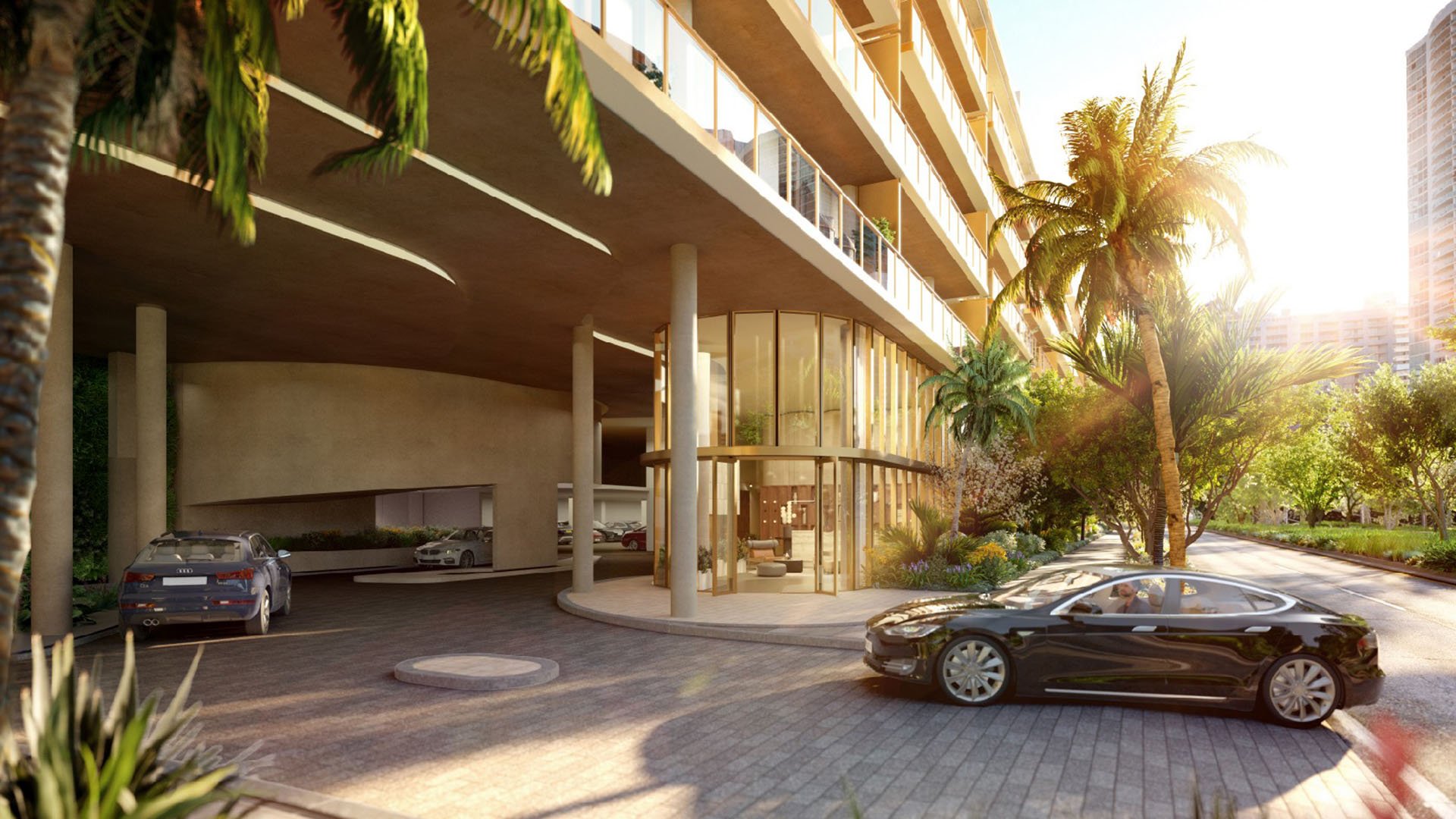
In the best buildings, service planning is almost invisible. The lobby remains calm because pressure has been absorbed elsewhere. The porte cochere does not become a holding pen. Elevators are not constantly interrupted by operational traffic. The resident sees polish, not the scramble required to create it.
The first warning sign is language that sounds luxurious but explains nothing. Phrases such as “fully accommodated,” “handled by the building,” or “no issue at all” should prompt more questions, not fewer. Luxury buyers do not need theatrical reassurance. They need specifics.
Ask where staff vehicles go during routine visits. Ask whether the building distinguishes between short-term service visits and longer household staff schedules. Ask how it handles overlapping private events. Ask whether outside vendors use the same access sequence as residents and guests. Ask where rideshare, delivery, and temporary service vehicles are expected to pause without disrupting the front drive.
Another red flag is overreliance on valet as the answer to every scenario. Valet can be an elegant part of the solution, but it is not a substitute for capacity, routing, policy, and staffing discipline. If every operational question is answered with “valet will handle it,” the buyer should press further. Who authorizes staff access? Where are keys held? What happens during peak arrival windows? How does management prevent the front of house from becoming a staging area?
The most effective questions are practical. How many categories of parking are recognized by the property: residents, guests, building staff, household staff, vendors, deliveries, and valet overflow? Are those categories physically separated, operationally separated, or merely described as separate in concept? Is there a written policy for domestic staff who work recurring schedules? Can residents pre-authorize regular personnel? How is access handled for temporary staff during events?
Buyers should also ask about vertical movement. Staff parking is only half the story if staff then pass through highly visible resident areas. A sophisticated plan considers the full journey from arrival to destination. That includes entry points, elevators, corridors, back-of-house access, package areas, service rooms, and exit procedures.
For large residences, the issue becomes even more important. A home with a private office, staff quarters, multiple terraces, extensive wardrobe storage, or entertaining space may generate daily service activity. The building must support that lifestyle without making it feel public. In ultra-premium living, privacy is not a single feature. It is the cumulative result of many small separations working correctly.
One of the simplest ways to detect marketing theater is to ask about a private dinner, holiday gathering, or charity evening hosted by several residents on the same night. This test quickly exposes whether the building has a true operating model.
Where do caterers arrive? Where do florists unload? Where do musicians, drivers, private security, and household staff wait? How are guest vehicles sequenced? What happens if a resident returns while vendors are unloading? Does the building protect resident arrival dignity, or does it ask everyone to tolerate temporary disorder?
A credible answer will not be vague. It may not need to be lengthy, but it should show that the property has imagined real life. Great residential service is not improvised in the moment. It is designed, staffed, and governed.
Staff parking may seem like a niche concern until it becomes part of everyday inconvenience. Buyers at the top of the market are not purchasing only square footage. They are purchasing ease. If a property creates repeated friction around arrivals, service access, or front-drive congestion, that friction can become part of the building’s reputation.
Resale confidence is shaped by more than views and finishes. It is shaped by how well the building performs after the first residents move in. A residence that supports private staff, family offices, wellness professionals, pet care, entertaining, and security with quiet competence will often feel more durable than one that relies on surface-level luxury language.
For investment-minded buyers, the lesson is clear: operational design is a value signal. It may not photograph as beautifully as a sunrise terrace, but it influences how sophisticated owners talk about the building after living there.
A polished sales gallery can make every operational promise feel resolved. The buyer’s task is to translate hospitality language into physical reality. If the presentation mentions discretion, ask where discretion is created. If it mentions service, ask how service is routed. If it mentions convenience, ask whose convenience is being protected during the busiest hours.
Look for alignment between architecture, staffing, and policy. A building can have beautiful design but weak procedures. It can have attentive staff but inadequate space. It can have written rules that collapse when residents begin entertaining at scale. The strongest properties integrate all three.
The most telling answer often comes from confidence without performance. A serious team can explain the plan plainly. A theatrical one leans on adjectives.
Why is staff parking important in luxury real estate? It affects privacy, arrival flow, service quality, and the day-to-day calm of a building.
Is valet service enough to solve staff parking? Not always. Valet helps, but it must be supported by capacity, policy, routing, and management.
What is a sign of marketing theater? Vague assurances without details about where staff arrive, park, wait, and access the building are a warning sign.
Should buyers ask for written parking policies? Yes. Written policies can reveal whether the building has a repeatable operating model.
Does staff parking matter for second homes? Yes. Second homes often rely on caretakers, cleaners, security, and other recurring personnel.
How does staff parking affect privacy? Poor planning can route service traffic through visible resident areas or congest front entrances.
What should event hosts ask about? Ask how caterers, drivers, florists, musicians, and guests are staged during overlapping events.
Can this issue affect resale confidence? It can influence buyer confidence because operational friction often becomes part of a building’s reputation.
Is this only relevant in large buildings? No. Boutique properties also need disciplined planning because smaller footprints can magnify friction.
What is the best buyer mindset? Treat staff parking as a service system, then ask practical questions until the choreography is clear.
When you're ready to tour or underwrite the options, connect with MILLION.
If branded residences are on your mind — as a home or as an allocation — we would be glad to share what we are seeing, privately.
Begin a quiet conversation