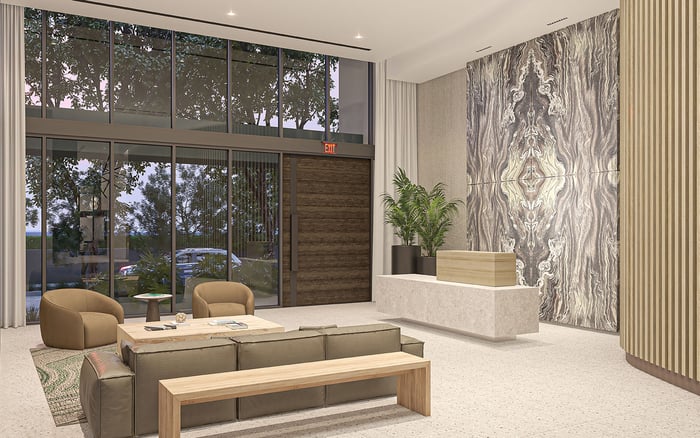
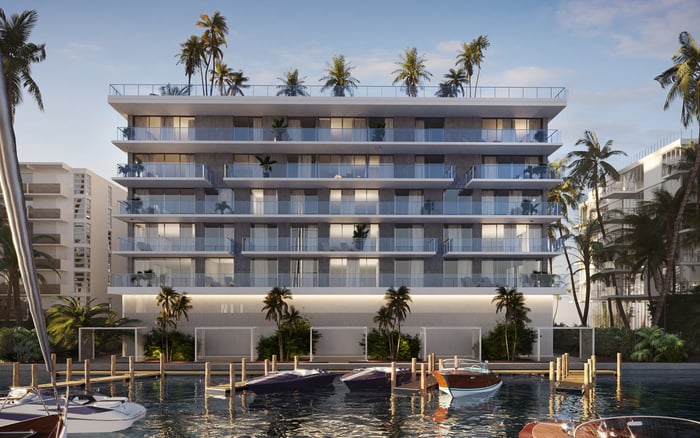
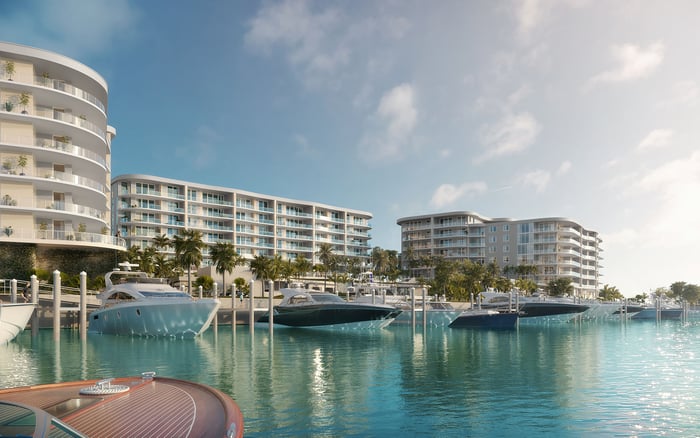
A buyer-focused comparison of Arbor Coconut Grove and Origin Bay Harbor Islands, framed around access, privacy, neighborhood rhythm, and the lifestyle priorities that shape a refined South Florida residence decision.
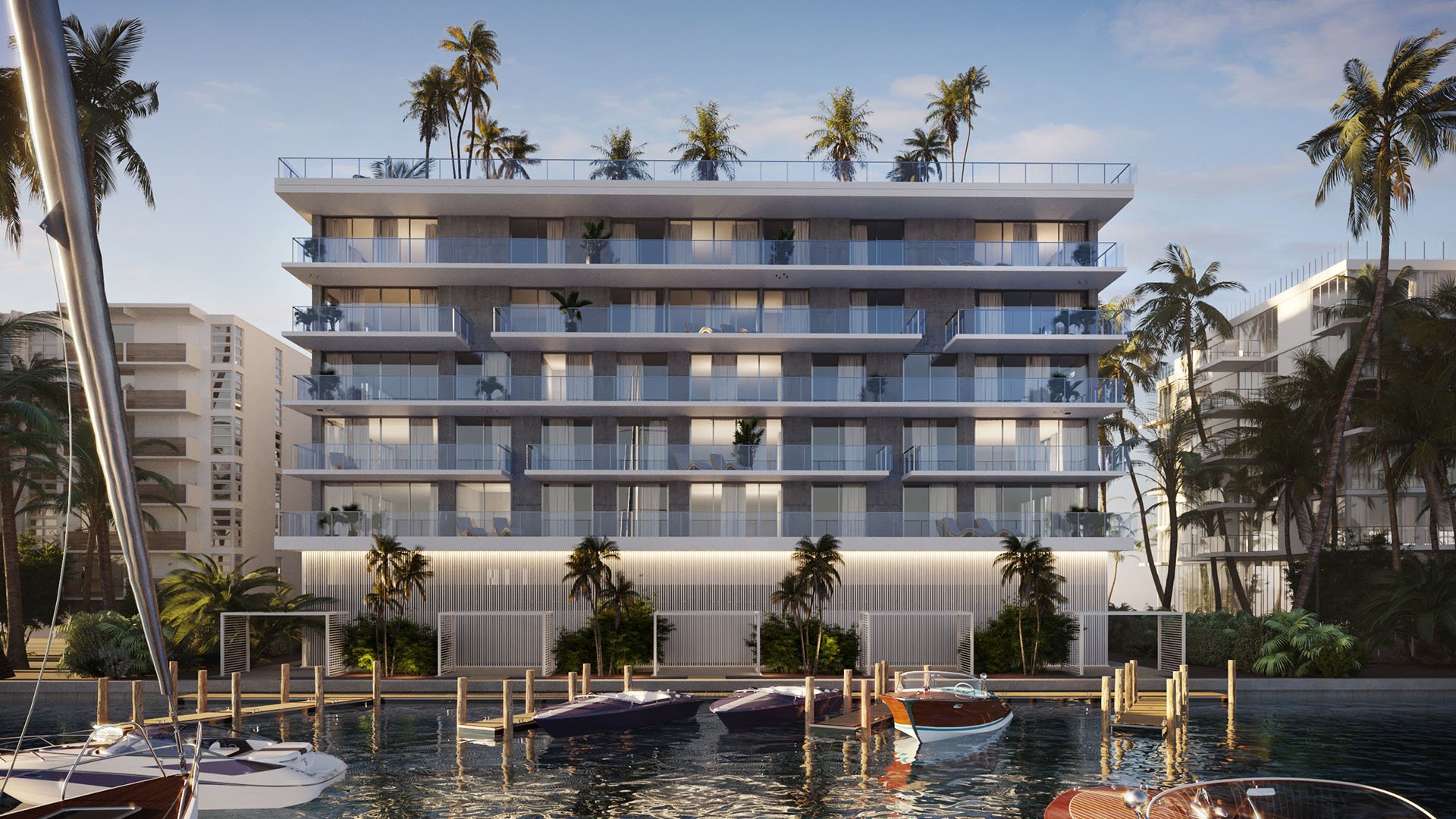
For a globally mobile buyer, the right South Florida residence is not simply the one that feels luxurious on arrival. It is the one that makes a demanding life feel composed. That is the useful lens for comparing Arbor Coconut Grove and Origin Bay Harbor Islands: two residences that step away from the obvious spectacle of Miami’s marquee high-rise towers, but do so in very different ways.
Arbor Coconut Grove is the Coconut Grove choice, shaped by a mature, leafy urban fabric and a village-like residential environment. Its appeal rests on walkability, proximity to established marinas, access to private school corridors, and connections to Brickell and Coral Gables. It reads as a residence for buyers who want city access without a city-tower temperament.
Origin Bay Harbor Islands is the Bay Harbor Islands choice, conceived as a contemporary waterfront boutique building in a low-rise island setting. Its character is quieter, design-forward, and more insulated. Rather than placing the buyer in a village grid, it emphasizes a private island-residential rhythm, with water woven into the daily atmosphere.
For buyers weighing boutique scale, marina adjacency, Coconut Grove, and Bay Harbor filters, the language is more than taxonomy. It describes two distinct ways of living privately while remaining connected.
Arbor Coconut Grove is best understood as a softer access play. Its Coconut Grove setting gives buyers a residential base that feels established rather than newly staged. The neighborhood’s mature landscape, quieter streets, and village-like cadence create the day-to-day ease many buyers seek when they are not interested in the scale or tempo of Miami’s larger luxury towers.
The access story is practical and multidirectional. Coconut Grove walkability gives the buyer a daily neighborhood experience, while access to Brickell and Coral Gables keeps the residence connected to important business, dining, cultural, and social nodes. For families, the appeal may also include proximity to private school corridors, a factor that can matter as much as architecture when the residence is meant to support a primary lifestyle rather than only a seasonal one.
Arbor’s proximity to established marinas adds another layer. It does not make the residence a conventional waterfront proposition in the way an island building might be, but it does place boating culture within the broader neighborhood equation. For buyers moving between school calendars, professional commitments, dining reservations, and marina plans, Arbor Coconut Grove can feel quietly efficient.
The strongest Arbor buyer is likely someone who wants privacy without isolation. They want a refined address, but also the option to step into a neighborhood rhythm. They may value greenery, school access, village texture, and the ability to move toward Brickell or Coral Gables without reorienting the entire day around a tower district.
Origin Bay Harbor Islands begins from a different premise. Instead of the leafy urban village, it offers the privacy of a low-rise island setting. It is positioned as a boutique, design-forward alternative to Miami’s larger luxury-tower lifestyle, with a contemporary waterfront identity central to how the residence should be read.
The Origin buyer is likely drawn to calm before convenience, although the two are not mutually exclusive. Bay Harbor Islands has its own residential cadence, quieter and more contained than Miami’s most visible luxury corridors. For a buyer who spends time between multiple cities and wants a South Florida home that feels like a retreat, that island-residential context may be the point.
Where Arbor gives access through adjacency to Coconut Grove’s village pattern, Origin gives access through controlled separation. The buyer comes home to a waterfront boutique environment rather than a dense skyline setting. The experience is less about walking into a historically layered neighborhood fabric and more about entering a refined pocket where scale, water, and discretion set the tone.
This distinction matters for households that use a residence as a decompression point. Origin Bay Harbor Islands suits buyers who want a private rhythm without adopting the vertical intensity associated with larger towers. It also suits those who prefer a design-forward building language in a setting that feels residential first.
The phrase global access can be misleading if reduced to drive times or airport assumptions. For ultra-premium buyers, access is often more nuanced. It includes how quickly a household can resume its preferred routine after travel, how easily family logistics are handled, and whether the residence supports both public-facing commitments and private recovery.
At Arbor Coconut Grove, access feels integrated into the city’s southern residential pattern. The buyer can live within Coconut Grove’s leafy structure, benefit from walkability, remain close to established marinas, and move toward Brickell or Coral Gables with relative ease. It is an excellent fit for those whose South Florida life involves schools, professional appointments, dining, boating, and neighborhood presence.
At Origin Bay Harbor Islands, access is more about maintaining a calm base while remaining within the broader Miami orbit. The buyer is not choosing the center of a tower corridor. They are choosing a quieter waterfront setting in Bay Harbor Islands, where the residential mood is protected by scale and geography. For some global buyers, that kind of pause is more valuable than being closest to every appointment.
The question, then, is not which residence has more access. It is which form of access is more valuable to the buyer. Arbor offers access through an established village connected to major nearby districts. Origin offers access from a more private island-residential frame.
Choose Arbor Coconut Grove if the priority is a cultivated neighborhood life with urban usefulness. It fits buyers who appreciate mature greenery, village-like surroundings, walkability, proximity to established marinas, and the ability to move toward Brickell and Coral Gables without living inside either district. It also has particular resonance for families who value proximity to private school corridors and want a residence that supports daily structure.
Choose Origin Bay Harbor Islands if the priority is discretion, waterfront calm, and boutique scale. It fits buyers who want a design-forward residence in a low-rise island setting, away from the larger-tower lifestyle. It is especially compelling for those who want their South Florida home to feel private the moment they arrive, with water and residential quiet shaping the experience.
The difference is subtle but important. Arbor is private by temperament within an active, leafy neighborhood. Origin is private by setting, with the island context doing much of the work. Arbor feels like a refined village address. Origin feels like a contemporary waterfront retreat.
For a buyer who wants global access with a private residential rhythm, both can be correct. The deciding factor is whether life should unfold outward from Coconut Grove’s walkable village fabric or inward from Bay Harbor Islands’ low-rise waterfront calm.
Is Arbor Coconut Grove more urban than Origin Bay Harbor Islands? Yes, but in a residential way. Arbor is tied to Coconut Grove’s walkability and leafy village environment rather than a dense high-rise district.
Is Origin Bay Harbor Islands considered a boutique residence? Yes. Origin Bay Harbor Islands is positioned as a boutique, design-forward alternative to Miami’s larger luxury-tower lifestyle.
Which residence better suits buyers who value walkability? Arbor Coconut Grove is the stronger fit for buyers prioritizing walkability within a mature neighborhood setting.
Which residence better suits buyers who want waterfront privacy? Origin Bay Harbor Islands is better aligned with buyers drawn to a contemporary waterfront boutique building in a low-rise island setting.
Does Arbor Coconut Grove offer access to Brickell and Coral Gables? Yes. Arbor’s access story includes connections to both Brickell and Coral Gables.
Is Origin Bay Harbor Islands a larger luxury-tower lifestyle? No. Its appeal is specifically framed as an alternative to Miami’s larger luxury-tower environment.
Which option may appeal more to families considering school proximity? Arbor Coconut Grove may appeal more to buyers who value proximity to private school corridors.
How should a buyer compare the two residences? Compare lifestyle rhythm first: Coconut Grove’s leafy walkable village versus Bay Harbor Islands’ quieter waterfront residential setting.
Is this mainly a price comparison? No. The decision framework is lifestyle-based, focused on access, privacy, neighborhood rhythm, and residential character.
Which residence is more private? Both offer privacy differently. Arbor is quieter within a village context, while Origin emphasizes privacy through its low-rise island setting.
For a confidential assessment and a building-by-building shortlist, connect with MILLION.
If branded residences are on your mind — as a home or as an allocation — we would be glad to share what we are seeing, privately.
Begin a quiet conversation