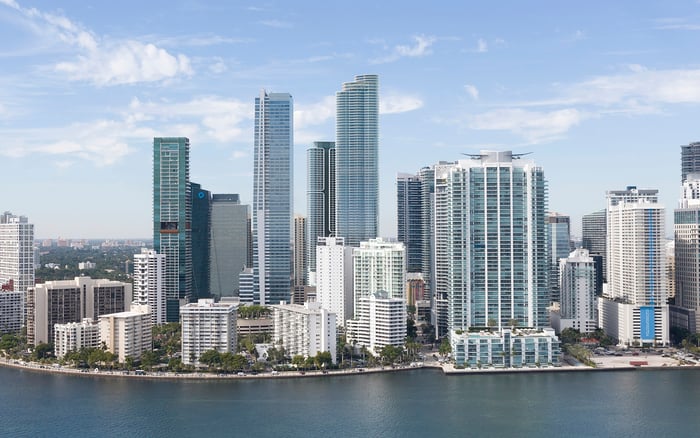
A discreet buyer-focused comparison of Apogee South Beach and Cipriani Residences Brickell through the lens of privacy, service infrastructure, staff movement, delivery flow, maintenance, concierge reliability, and long-term household operations.
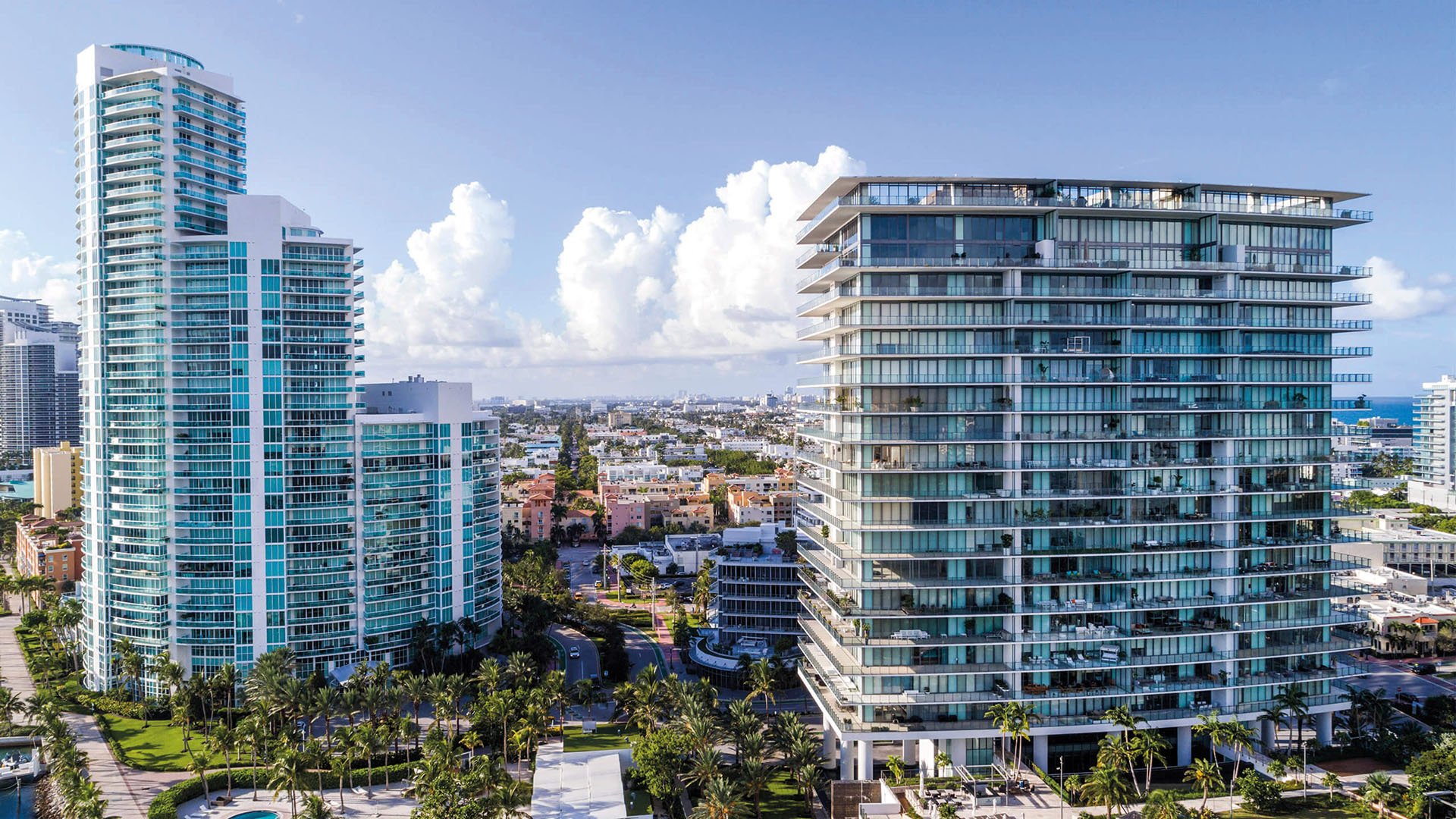
For a certain South Florida buyer, the question is not whether Apogee South Beach or Cipriani Residences Brickell has design appeal. Both sit in the upper register of Miami luxury, yet they represent very different operating philosophies. One is the quiet, established, ultra-boutique condominium model. The other is the branded-hospitality tower model, conceived around service programming, amenity depth, and a more urban vertical-resort rhythm.
That distinction matters because serious households do not live in renderings. They live through arrivals, valet patterns, elevator timing, staff access, package flow, vendor coordination, maintenance requests, privacy controls, and concierge reliability. A residence may photograph beautifully and still strain under the weight of daily logistics. Conversely, a quieter building with fewer moving parts can become more valuable to an owner whose life requires discretion and predictability.
This comparison sits at the intersection of Apogee South Beach, Cipriani Residences Brickell, Brickell, boutique, new-construction, and resale considerations. The useful question is not simply which address feels more glamorous, but which one can support the household’s operating system with the least friction.
Apogee South Beach is best understood as the established, ultra-boutique side of the comparison. Its appeal is not theatrical scale. It is privacy, a lower-density feel, and the practical discipline that can develop inside a mature luxury condominium.
For buyers with a strong need for discretion, this matters. Fewer moving parts can mean simpler coordination around elevators, amenity use, front-of-house security, service appointments, and building-staff familiarity. The day may feel less choreographed, but also less crowded. A private arrival can remain private. A vendor visit can be managed without being absorbed into a hotel-like traffic pattern. An owner returning from travel may value that quiet rhythm more than another layer of branded programming.
Apogee’s operational strength is simplicity. There are fewer elements competing for attention: fewer resort-style touchpoints, and a more residential cadence. For a household that already has personal staff, travel support, private dining relationships, or family-office infrastructure, the building does not need to perform every lifestyle function. It needs to be secure, calm, consistent, and easy to manage.
That is why Apogee often reads as a known operational quantity. The appeal is not novelty. It is the confidence of a building culture already shaped by resident expectations, association practice, and established routines.
Cipriani Residences Brickell belongs to a different category: the branded-residence tower designed for buyers who want a broader service ecosystem. Its positioning is rooted in hospitality influence, new-generation high-rise living, and the idea that a residence can borrow the cadence of a private club or international hotel environment while remaining residential.
For some households, that is precisely the point. Cipriani’s operational promise is service depth. The building model is intended to formalize hospitality-style consistency at scale, with programmed amenities and a more extensive service platform than a quiet boutique condominium typically offers. In Brickell, where the lifestyle is urban, vertical, and highly connected, that approach can feel natural.
The tradeoff is complexity. A larger service ecosystem has more to coordinate: staff layers, amenity scheduling, guest movement, vendor access, valet rhythm, elevator usage, and long-term association expectations. When executed well, that infrastructure can make daily life feel remarkably supported. When governance or staffing standards drift, the same complexity can become visible.
Cipriani should therefore be viewed as a newer branded-residence proposition whose long-term association culture and service consistency will matter after delivery. Buyers drawn to the brand should ask not only what services are promised, but how those services will be managed, staffed, funded, and protected over time.
For ultra-prime households, privacy is rarely a single feature. It is the cumulative result of access control, garage and valet discipline, elevator separation, front-desk judgment, vendor protocols, package handling, and the social density of common areas.
Apogee’s likely advantage is that privacy may be easier to preserve in a smaller, more controlled residential environment. A household with domestic staff, private security, chefs, drivers, art handlers, stylists, medical support, or frequent maintenance vendors may prefer a building where movement is quieter and more legible. In that context, operational simplicity becomes a luxury material in its own right.
Cipriani’s advantage is different. A more service-intensive environment may offer broader support for guests, dining-related preferences, amenity scheduling, and everyday requests. For buyers who want the building to absorb more lifestyle management, that can be compelling. The question is whether the household prefers a discreet stage with fewer actors or a polished service theater with greater scope.
This is where touring becomes more than a visual exercise. Buyers should observe arrival sequencing, ask about vendor check-in, understand elevator protocols, examine service corridors where relevant, and evaluate how staff communicate under pressure. A beautiful lobby is not the same as a reliable operating model.
The most revealing luxury-building test is often mundane: what happens on a busy afternoon, during a delivery surge, or when several owners return at once. Valet and elevator performance shape how a residence feels every day.
At Apogee, the boutique model may reduce overlapping demands. Fewer simultaneous arrivals can support a calmer entrance experience and a less compressed elevator environment. The value is not only speed. It is composure, recognition, and fewer moments when the private life of the household becomes visible to strangers.
At Cipriani Residences Brickell, the promise is not minimalism. It is orchestration. A branded hospitality framework should be judged by how gracefully it handles scale. If a building offers more amenities and service touchpoints, the operational question becomes whether vertical movement, valet systems, concierge staffing, and resident communications can remain consistent when the tower is active.
For buyers comparing the two, the friction test is simple: which property is more likely to make a complicated day feel easier? The answer will vary by household. A couple using the residence seasonally may value service programming. A family with staff and sensitive privacy needs may value fewer transitions and less exposure.
Operating performance is not static. It depends on association culture, staffing retention, budget priorities, repair protocols, and the willingness of ownership to preserve standards over time.
Apogee’s established character gives buyers a clearer sense of the building’s lived-in discipline. Mature routines can be an advantage because the association, staff, and residents already understand the rhythm of the property. For a resale buyer, that visibility can be useful: one can assess how the building actually functions rather than relying solely on projected service concepts.
Cipriani’s new-construction positioning offers the appeal of freshness, contemporary systems, and a new service proposition. Yet buyers should be rigorous about the transition from launch vision to long-term operations. The strongest branded residences are not defined only by logos or finishes. They are defined by whether service standards remain consistent after the building is fully occupied and the association culture has matured.
Neither model is inherently superior. Apogee favors fewer moving parts. Cipriani favors a broader platform. The sharper buyer will ask which operating burden they want to own: the self-contained discipline of a quieter building, or the governance and staffing complexity of a more amenitized vertical village.
Apogee South Beach is better aligned with buyers who prioritize privacy, discretion, established routines, and a more controlled residential environment. It is well suited to owners who already know how they live, who do not need constant programming, and who view low-density simplicity as part of the luxury proposition.
Cipriani Residences Brickell is better aligned with buyers who want a service-rich tower, hospitality influence, and the energy of Brickell’s urban high-rise lifestyle. It is likely to appeal to owners who want the building to provide more structure, more amenities, and a brand-led service experience.
The decision should separate aesthetic prestige from operating performance. Design pedigree creates desire, but household operations create satisfaction. The right building is the one that protects the buyer’s time, privacy, staff rhythm, and daily composure.
Is Apogee South Beach more private than Cipriani Residences Brickell? Apogee is better positioned for buyers prioritizing discretion, lower density, and mature residential routines.
Is Cipriani Residences Brickell more service-oriented? Yes. Its appeal centers on branded hospitality, amenity depth, and a more formalized service platform.
Which building is better for a household with staff? Apogee may suit households seeking simpler staff movement, while Cipriani may suit those wanting more building-level service support.
Should buyers compare more than floor plans? Yes. Access control, valet, elevators, vendor management, concierge response, and maintenance systems are essential.
Is Apogee considered a boutique option? Yes. Its ultra-boutique profile supports a quieter and more controlled daily residential rhythm.
Does Brickell favor the Cipriani lifestyle? Brickell’s vertical urban setting aligns naturally with Cipriani’s service-rich, high-rise hospitality proposition.
Is new construction always operationally better? Not always. New systems can be attractive, but long-term service consistency and association culture still matter.
Can resale buildings offer operational advantages? Yes. Established buildings can reveal how they actually operate through mature routines and resident expectations.
Which building is better for privacy-sensitive buyers? Apogee is the clearer fit for privacy-sensitive buyers who prefer fewer moving parts and less resort-like activity.
Which building is better for amenity-focused buyers? Cipriani is better positioned for buyers who want broader programming, branded service depth, and a vertical-resort feel.
To compare the best-fit options with clarity, connect with MILLION.
If branded residences are on your mind — as a home or as an allocation — we would be glad to share what we are seeing, privately.
Begin a quiet conversation