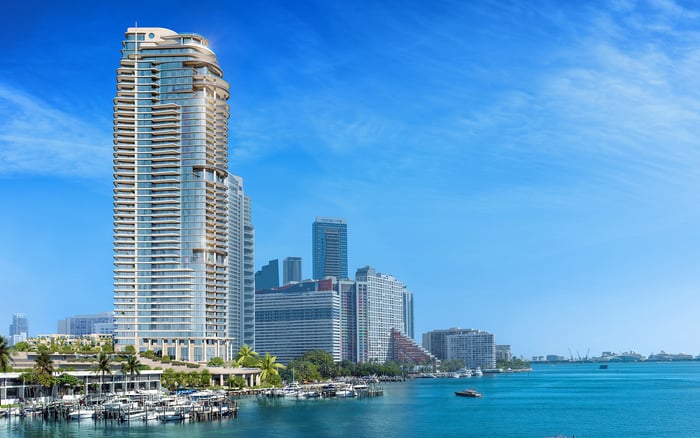
A buyer-focused South Florida comparison of Continuum on South Beach and the Viceroy Brickell decision frame, centered on pets, service-elevator access, vendor control, house rules, and the documents that shape daily flexibility.

For buyers weighing Continuum on South Beach against Viceroy Brickell, the most sophisticated question is not which address feels more polished. It is whether the building’s operating culture supports the way you actually live. Pets, assistants, trainers, chefs, drivers, contractors, luggage deliveries, and visiting family all move through the machinery of a residence. In a luxury environment, those interactions should feel invisible, but they are never rule-free.
Continuum on South Beach belongs in the Miami Beach side of this comparison, while Viceroy Brickell belongs in the urban Brickell decision frame. The difference is not only neighborhood energy. It is how each ownership environment may handle governance, management discretion, owner requests, and the daily movement of people who support a high-service household.
A Viceroy Brickell evaluation should therefore stay practical. Brand service may be compelling, but buyers should verify how that service model interacts with condominium documents, management policies, pet rules, and service-elevator scheduling. The key question is whether the service culture enhances private life or creates another layer of protocol.
Pets are often the first stress test. A building can be elegant in the lobby and still be awkward for owners who walk dogs at unusual hours, employ pet sitters, use grooming services, or travel with staff. The issue is not simply whether pets are permitted. It is how the building handles routes, elevator access, lobby expectations, outdoor transitions, visitor handlers, and incident enforcement.
For Continuum on South Beach, buyers should review the current written pet rules and compare them with their actual routines. Can a dog walker be pre-authorized? Are pet-service providers treated as guests, staff, or vendors? Are there specific routes or elevator expectations? The answers matter most for owners who split time between residences or rely on household support when they are away.
For Viceroy Brickell, buyers should ask the same questions without assuming that brand service automatically means broader discretion. Can staff enter without the owner present? Are there limits on pet-related vendors? Are building rules different for residents, guests, and service providers? Small access rules can determine whether a second home operates smoothly in the owner’s absence.
The service elevator is one of the least glamorous and most important assets in a luxury tower. It governs moves, art installation, tailoring deliveries, catering, dog grooming, housekeeping, repairs, and the flow of people who support a high-service life. A buyer who entertains frequently or maintains multiple residences should treat elevator policy as a core lifestyle term.
At Continuum on South Beach, the diligence question is how service access is reserved, supervised, and enforced. Buyers should ask whether reservations are required, whether time windows apply, whether fees or deposits are charged, and whether recurring household vendors can be recognized in advance.
In Brickell, the calculus can be different because building density and urban routines can make logistics feel more scheduled. Buyers weighing Viceroy Brickell should ask whether service-elevator bookings are first-come, priority-based, fee-based, time-restricted, or subject to management approval. The correct answer depends on lifestyle. A buyer who values formal coordination may welcome structure. A buyer who values last-minute flexibility may prefer a looser framework.
Luxury buyers often read declarations and bylaws for rental limits, assessments, and ownership rights. Fewer read house rules as lifestyle documents. They should. House rules determine the daily texture of ownership: where vendors enter, when work can occur, how staff are registered, how packages are handled, whether private instructors are permitted, and how complaints become enforcement.
For Continuum on South Beach, buyers should evaluate how the condominium documents, board practices, management procedures, and current rules work together. The goal is not to find a rule-free environment. The goal is to understand whether the building’s rules support the buyer’s household without constant friction.
For Viceroy Brickell, the essential question is hierarchy. If a brand standard, condominium rule, management policy, and owner preference collide, which one controls? Buyers should request the governing documents, current house rules, resale disclosures where applicable, and management policies before treating brand service as a proxy for flexibility.
South Beach and Brickell create different operating pressures. South Beach ownership is often evaluated through privacy, beach-area routines, visitor flow, and leisure-oriented living. Brickell is more urban and logistics-intensive, with a daily cadence shaped by offices, dining, traffic, and building density.
That difference matters for pet logistics and service access. In South Beach, the question may be how smoothly a building supports outdoor movement, household staff, and quiet residential routines. In Brickell, the question may be how management controls the volume of vendors, deliveries, guest arrivals, and professional services moving through the building. For investment-minded buyers, these rules also affect long-term desirability because ease of living can be as important as finishes.
The most useful comparison is therefore not simply Continuum on South Beach versus Viceroy Brickell as names. It is Miami Beach operating culture versus Brickell operating culture, tested against the exact documents that will govern the buyer after closing.
Before choosing between Continuum on South Beach and Viceroy Brickell, buyers should move beyond amenity tours and ask operational questions in writing. What are the pet rules today? How are service elevators reserved? Can staff and vendors be pre-authorized? What insurance is required for vendors? Who approves move-ins, deliveries, and installations? How often are house rules amended, and how are owners notified?
The strongest purchase process will also test edge cases. If an owner’s chef arrives while a dog walker is leaving and an art handler needs the service elevator, does the building solve the problem gracefully or make the owner negotiate every step? Service is valuable when it reduces friction. Personal control is valuable when it preserves privacy and pace. The best choice is the building whose rules match the buyer’s household, not merely the buyer’s taste.
Is this comparison mainly about amenities? No. The central issue is how each building’s rules, management practices, and access procedures shape daily control.
What should pet owners verify first? They should request the written pet policy and confirm routes, elevator expectations, walker permissions, and vendor access rules.
Why do service elevators matter so much? They control the movement of staff, deliveries, contractors, art handlers, caterers, luggage, and household support.
Should Viceroy Brickell buyers assume brand service means flexibility? No. Brand service may be polished, but buyers should verify how management policies and house rules affect personal discretion.
What should Continuum on South Beach buyers review? They should review the governing documents, current house rules, management procedures, and any pet or vendor-access forms.
Is this only relevant for full-time residents? No. It can matter even more for second-home owners who rely on pre-authorized staff, vendors, walkers, and household managers.
Can house rules affect resale appeal? Yes. Rules that make daily living easier may support buyer confidence, while rules that create friction can narrow the audience.
What documents matter most for flexibility? Buyers should review the declaration, bylaws, current house rules, management policies, resale disclosures, and applicable access forms.
Is South Beach or Brickell better for personal control? The answer depends on the specific building documents and management culture, not only the neighborhood or brand presentation.
What is the smartest next step before making an offer? Ask for the operating rules in writing and compare them against a normal week in your household, including staff, pets, guests, and vendors.
For a confidential assessment and a building-by-building shortlist, connect with MILLION.
If branded residences are on your mind — as a home or as an allocation — we would be glad to share what we are seeing, privately.
Begin a quiet conversation