A collector-focused ownership audit for La Baia North, separating advertised amenities from the unit-level power, delivery protocols, and climate records buyers should verify before moving a collection.
For a wine collector, ownership readiness begins where the amenity presentation ends. A beautifully integrated cooler is only one component. The more consequential questions concern what happens during a power interruption, who receives a shipment when the owner is away, and whether storage conditions can be reconstructed afterward.
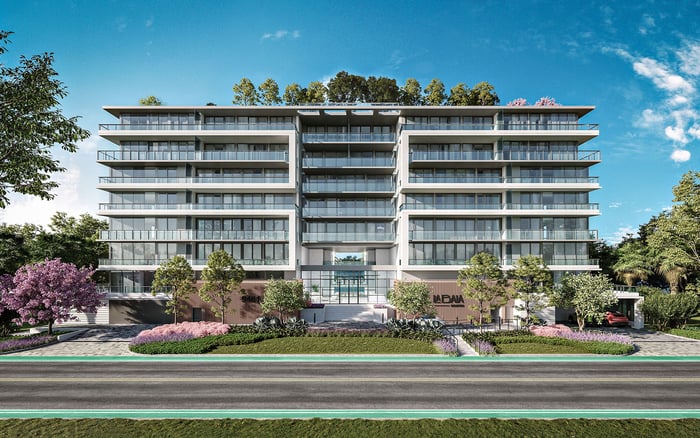
At La Baia North Bay Harbor Islands, those questions warrant a dedicated document review. The eight-story, 57-residence waterfront condominium at 9481 East Bay Harbor Drive pairs development by Continuum Company with architecture by Luis Revuelta. Construction topped off on April 25, 2026, but that milestone does not establish completion or occupancy. The property remains under construction.
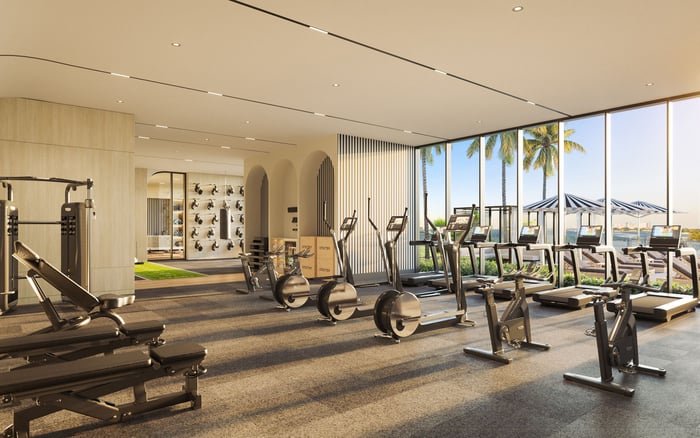
More than 20,000 square feet of advertised amenities, including private boat slips and waterfront recreation, define the lifestyle offering. They do not establish the operating arrangements for a private collection. Backup power, delivery handling, and accessible climate records require confirmation; neither their presence nor their absence should be assumed.
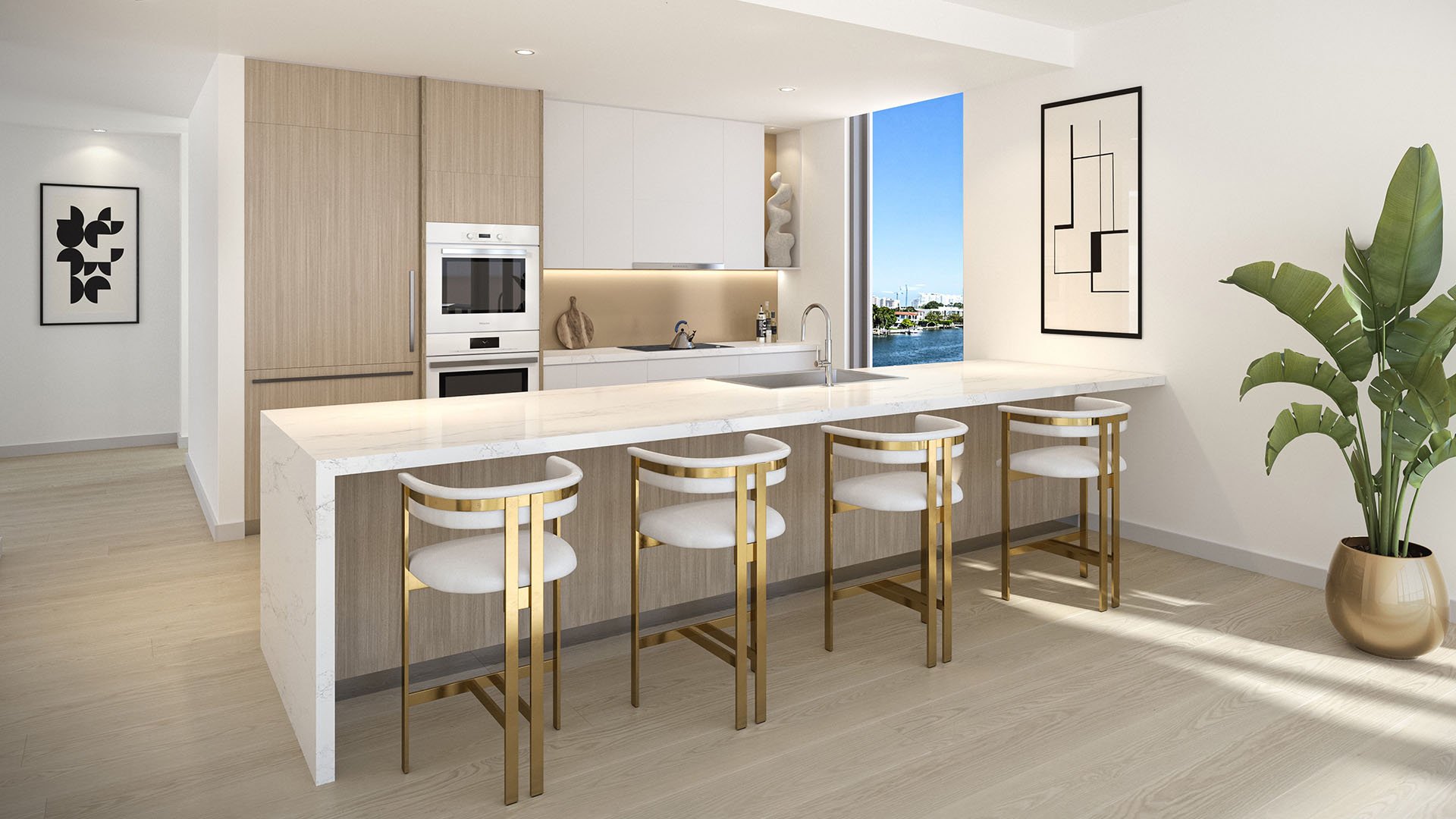
Begin with the residence rather than the building brochure. Miele wine coolers have been advertised exclusively for North's penthouses, but buyers should verify inclusion against the contractual appliance schedule for their residence. The brand alone does not resolve the model, installation requirements, warranty, or electrical connection.
The address distinction also matters: specifications carrying 9201 East Bay Harbor Drive should not be treated as confirmation of those for North at 9481. Require every relevant schedule and specification to identify the correct project and residence.
Request the appliance schedule, electrical schedule, model documentation, and applicable warranty together. Ask whether the proposed installation comes with the residence or requires owner work. A dedicated wine-storage room or monitored cellar system has not been clearly established, so communal storage should not substitute for a documented private-unit plan.
The useful question is not simply whether the property has a generator. It is whether the circuit serving the intended wine-storage equipment receives emergency power, under what conditions, and with what limitations. Whole-building generator coverage and emergency power to private-unit receptacles have not been established.
Ask the development team for a written response supported by the relevant electrical documents. The request should cover:
The wine appliance's circuit and any proposed emergency-power connection.
Generator specifications and the loads designated for backup service.
Transfer arrangements, operating limitations, and the intended outage procedure.
Available commissioning records and the schedule for any outstanding testing.
Treat a planned connection and a tested installation as different levels of assurance. Where testing is not yet available, ask who will provide the results and when. Have a qualified electrical professional review any proposed owner-installed alternative rather than assuming compatibility with the appliance or building rules.
The same circuit-level inquiry belongs in a comparison with Bay Harbor Towers. A consistent checklist supports the comparison; it does not imply that the two properties' emergency-power arrangements are equivalent.
A collector's delivery plan should trace the journey from carrier arrival to controlled storage. A dedicated package room, refrigerated delivery storage, wine-intake rules, and concierge chain-of-custody procedures have not been established for La Baia North.
Request written acceptance hours and policies for alcohol shipments, including signature requirements and any necessary owner authorization. Then ask where an accepted shipment waits, who moves it indoors, and whether temperature-controlled holding is provided. Indoor acceptance and refrigerated storage are separate commitments.
After-hours handling deserves equal attention. Establish what happens when a carrier arrives outside staffed hours, when an owner cannot be reached, or when a shipment is visibly damaged. Ask who records receipt, how the owner is notified, and how the governing documents or service agreements assign responsibility for delay or damage.
Before scheduling an important shipment, seek a clear sequence of acceptance, notification, holding, and handoff. Buyers also considering La Maré Bay Harbor Islands can use the same sequence to assess proposed service commitments without assuming a particular delivery service at either address.
Evaluate monitoring as both a response system and a record. Owner-accessible, time-stamped climate-monitoring records and a retention policy have not been confirmed at La Baia North.
If monitoring is proposed, ask what is measured, where sensors are located, and which conditions trigger an alert. Clarify whether the system belongs to the appliance, the owner, or the building, and identify who is expected to respond when the owner is unavailable.
The records request should be equally specific: time stamps, recording intervals, retention periods, remote access, and export capability. Ask for a sample export or demonstration when available. A current reading cannot answer the same questions as a retained history.
Finally, assess the proposed system against two separate scenarios: loss of electrical power and loss of internet connectivity. Ask whether sensing, local recording, and notification continue in each case. Do not assume that an appliance connection, building generator, or remote application resolves all three functions.
For an owner dividing time between Bay Harbor Islands and Miami Beach, the practical objective is continuity without constant personal intervention. Review the declaration, bylaws, rules, proposed budget, warranties, service agreements, and storm-response plan before treating an amenity description as an operating commitment.
Review hurricane-protection obligations separately from the wine-storage electrical plan. Do not treat hurricane-protection specifications as confirmation that the intended appliance receives emergency power.
Before planning electrical changes or built-in wine storage, ask which association approvals and local permits apply to the proposed work. Have the installation reviewed for applicable code requirements rather than assuming that a private-unit modification needs no further approval.
Organize the audit around three deliverables: a documented power arrangement for the intended appliance, a written delivery protocol, and a clear monitoring-and-records specification. For each, distinguish a contractual inclusion from a proposed service or an unanswered question.
If an item remains unresolved, ask for a responsible party and a date for clarification. Ownership readiness does not require every collector to choose the same solution. It requires the chosen solution to be documented before the collection depends on it.
For a discreet perspective on ownership readiness and South Florida residences, connect with MILLION.
If branded residences are on your mind — as a home or as an allocation — we would be glad to share what we are seeing, privately.
Begin a quiet conversationLa Baia North is at 9481 East Bay Harbor Drive in Bay Harbor Islands, Florida. It is an eight-story waterfront condominium with 57 residences.
No. The April 25, 2026 topping-off milestone does not establish completion or occupancy, and the property remains under construction.
Miele wine coolers have been advertised exclusively for penthouses. Buyers should verify inclusion and model details in their residence's contractual appliance schedule.
No. Specifications identifying 9201 East Bay Harbor Drive should not be used as direct confirmation of those for North at 9481.
Emergency power to private-unit receptacles has not been established. Request circuit-specific electrical documentation and available commissioning or test records.
A dedicated wine-storage room or monitored cellar system has not been clearly established. This remains an item to verify rather than proof that no such facility will be provided.
Refrigerated delivery storage and a dedicated package room have not been established. Buyers should request written acceptance, holding, notification, and handoff procedures.
Ask for time-stamped readings, recording intervals, retention periods, export capability, and remote access. Also clarify alert responsibility and what continues during power or internet loss.
No. Verify emergency power for the intended wine-storage circuit separately from hurricane-protection specifications.
Yes. Before planning electrical changes or built-in wine storage, confirm applicable permits, code requirements, and association approvals for the proposed work.