Shoma Bay’s asking price per square foot is only the opening figure. Buyers should reconcile published association charges, service scope, staffing assumptions and reserve treatment before comparing its residences with other South Florida offerings.
At Shoma Bay North Bay Village, cost per square foot offers an immediate way to position a residence within Miami’s new-development market. Asking-price averages stand at approximately $1,223 to $1,250 per square foot. Three marketed residences, ranging from 1,085 to 1,443 square feet, equate to roughly $1,140 to $1,251 per square foot.
Those figures are useful, but incomplete. They capture the acquisition price of private interior space-not the operating cost of a mixed-use waterfront destination with resort-style amenities, retail and a substantial service platform. For a buyer evaluating Shoma Bay North Bay Village, the more revealing question is not simply what each square foot costs to purchase. It is what the full ownership experience is designed to require each month, and how reliably those requirements have been budgeted.
Cost per square foot prices the residence, not the operating promise around it.
The product range reinforces the breadth of the offering: studios have started around $475,000, one-bedrooms around $725,000, two-bedrooms around $954,000, three-bedrooms around $1.308 million and two-level penthouses around $2.8 million. Different entry prices may broaden the owner mix, but every purchaser remains exposed to the association’s shared operating decisions.
The most consequential fine-print issue is the gap between an estimated maintenance figure of $0.85 per square foot per month and the association charges attached to two individual listings. Unit 307, at 750 square feet, carries a monthly HOA fee of $1,208, or approximately $1.61 per square foot. Unit 412, at 1,443 square feet, carries a monthly fee of $2,323-also approximately $1.61 per square foot.
That difference is material. On its own, it does not establish which figure will govern at closing or throughout ownership. The figures may reflect different inclusions, assumptions or stages of the offering. What they do establish is the need for a written reconciliation.
A buyer should request the proposed association budget and identify every applicable condominium, master-association, amenity, parking and reserve charge. The review should also clarify whether internet, utilities, valet or other services are included, excluded or billed separately. For a pre-construction acquisition, the relevant number is not the most attractive estimate. It is the complete schedule of recurring obligations tied to the specific residence and ownership structure.
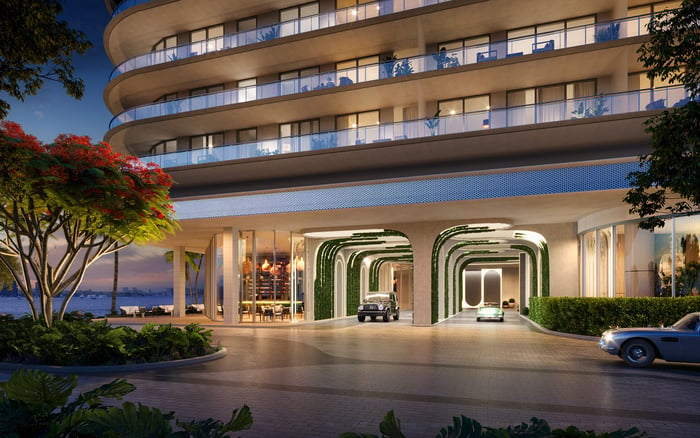
Shoma Bay’s planned amenity program is extensive. It includes an owners’ lounge with a bar and golf simulator, a heated pool, cabanas, a summer kitchen, spa, hammam, sauna, steam room, treatment room, salon and nail stations. Fitness spaces encompass a gym as well as yoga and Pilates facilities. A wine cellar, cigar lounge, cinema, children’s club, Zen garden and coffee bar extend the experience beyond conventional common areas.
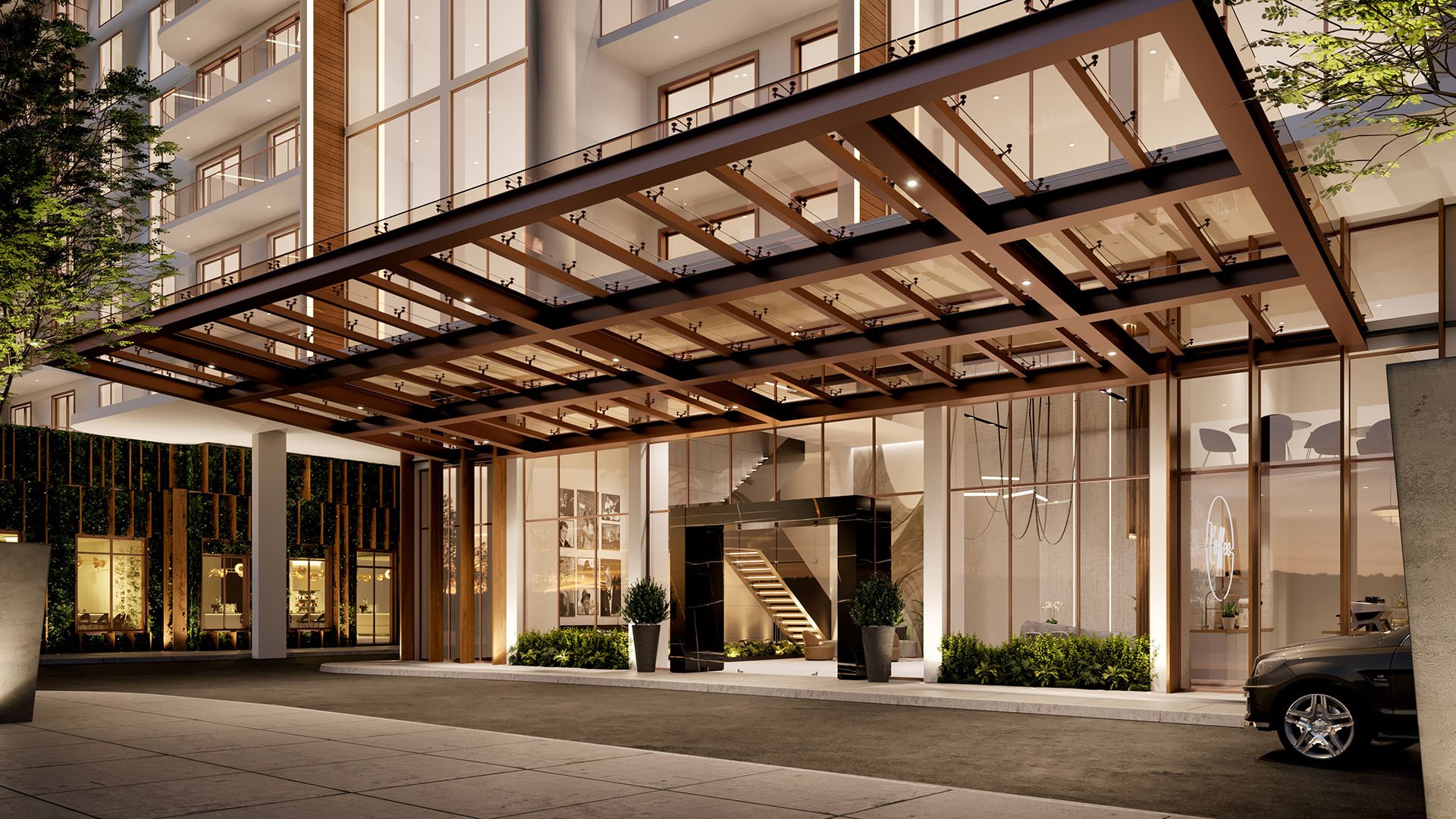
The plans also call for a 6,030-square-foot bayfront pool deck and a 2,600-square-foot business lounge with coworking areas, private offices and a library. Pet facilities, EV charging, assigned gated parking, a porte cochere, bike storage and paddleboard storage add further systems to manage.
Amenities do not operate themselves. Pools require routine care. Wellness spaces demand cleaning and maintenance. Access technology, video surveillance, an enclosed garage and package functions depend on equipment, monitoring and response protocols. Concierge service and 24-hour security create staffing or outsourced-contract obligations. Headcount, service hours, compensation, vendor pricing and the division between employees and contractors are not disclosed.
That distinction matters. A polished amenity inventory may be prominent in a presentation, while its operating architecture remains buried in a budget. Buyers should ask which spaces will be staffed, during what hours, at what service level and under which contracts. They should also determine whether opening-year assumptions account realistically for payroll, benefits, replacements, supplies and contract escalations.
Monthly assessments fund current operations; reserves address the long life of shared assets. Shoma Bay’s amenity breadth means the association will oversee numerous physical systems and finish-intensive spaces. The question is not whether those features are desirable. It is whether their eventual repair and replacement have been identified, timed and funded.
No line-item reserve study, reserve schedule, insurance allocation or major service contracts are disclosed in the supplied information. A serious review should therefore request the reserve assumptions and identify which components are included. Buyers can look for planned contributions associated with pool equipment, elevators, access systems, garage infrastructure, fitness equipment, spa components, common-area furnishings and other shared assets-without assuming that any particular item is already funded.
The budget should also distinguish operating expenses from reserve contributions. A low opening assessment can appear efficient if future replacement costs are deferred. Conversely, a more substantial contribution may indicate that long-term obligations are being recognized earlier. Neither conclusion should be drawn from a headline fee alone. The documents must show the treatment.
Insurance warrants the same discipline. Buyers should determine what the association expects to insure, how premiums and deductibles are allocated, and what coverage owners must obtain individually. The objective is a clear map of exposure, not a single reassuring total.
North Bay Village gives buyers more than one point of reference. Reviewing the offering materials for Continuum Club & Residences North Bay Village and Tula Residences North Bay Village can help frame questions about service scope, common areas and recurring charges. The purpose is not to declare one model superior, but to normalize what is included before comparing monthly figures.
The same principle applies when a buyer’s search extends to Miami Beach and projects such as The Perigon Miami Beach. Location, residence size and asking price remain central, but the association structure can materially alter the carrying-cost profile. Pricing and trends analysis is strongest when purchase price, recurring assessments and potential reserve exposure are considered together.
For practical buyer’s guides, the most useful comparison is a multi-year view of ownership. Start with the contract price and stated association charges. Add separately billed services, parking obligations, insurance and anticipated reserve contributions where disclosed. Then test how the budget responds if payroll, service contracts, insurance or repairs cost more than projected. This is not a prediction of an assessment. It is a disciplined way to understand sensitivity.
Before signing, buyers should obtain the latest proposed budget, fee schedule, declaration and relevant association documents. They should request written confirmation of every charge applicable to their unit, the basis for allocations, the reserve contribution and any master-association relationship. They should also verify which amenities are expected to be operational at closing and whether service levels may phase in.
Shoma Bay’s extensive program is central to its appeal. The fine print determines how that promise is funded, staffed and preserved. Cost per square foot remains a valuable market shorthand, but informed buyers will pair it with a close reading of the operating plan and appropriate legal, financial and insurance advice.
For discreet guidance on evaluating Shoma Bay and comparable South Florida residences, connect with MILLION.
If branded residences are on your mind — as a home or as an allocation — we would be glad to share what we are seeing, privately.
Begin a quiet conversationPublished averages are approximately $1,223 to $1,250 per square foot, while three marketed residences calculate to roughly $1,140 to $1,251.
An estimated maintenance figure of $0.85 per square foot per month has been published, but buyers should verify its inclusions and current applicability.
Unit 307 is listed at $1,208 monthly and Unit 412 at $2,323 monthly. Both equal approximately $1.61 per square foot per month.
The approximately $1.61 listing calculations materially exceed the separate $0.85 estimate. The difference may reflect inclusions, assumptions or offering stages that require written clarification.
No. It measures acquisition price relative to residence size, not association assessments, insurance, separately billed services or reserve exposure.
Its planned concierge, security, spa, pool, fitness, coworking, children’s, pet, parking and package functions require ongoing operation and maintenance.
No line-item staffing budget is disclosed in the supplied information. Buyers should request headcount, service hours and outsourcing assumptions.
No reserve study or detailed reserve schedule is disclosed in the supplied information. Buyers should request the applicable assumptions and contribution schedule.
Buyers should confirm condominium, master-association, amenity, parking and reserve charges, along with any services billed separately.
Buyers should obtain the latest proposed budget, fee schedule, declaration and relevant association documents. They should also confirm unit-specific charges, reserve contributions and expected amenity availability.