Aman Miami Beach vs Rosewood The Raleigh: Two New Benchmarks for Branded Living on Collins Avenue
Quick Summary
- Two brands, two distinct buyer profiles
- Boutique counts, high-conviction pricing
- Heritage restorations meet new towers
- Wellness and dining shape the amenity bar
The new luxury language on Miami Beach
Miami Beach has never lacked for spectacle. What is shifting is what the top of the market rewards: discretion, operational ease, and a sense of being insulated from the noise. Buyers who already rotate through global addresses are less focused on visibility and more focused on being quietly managed. In that environment, branded residences function less like a passing trend and more like an operating system, with service, wellness, and privacy built into the ownership experience.
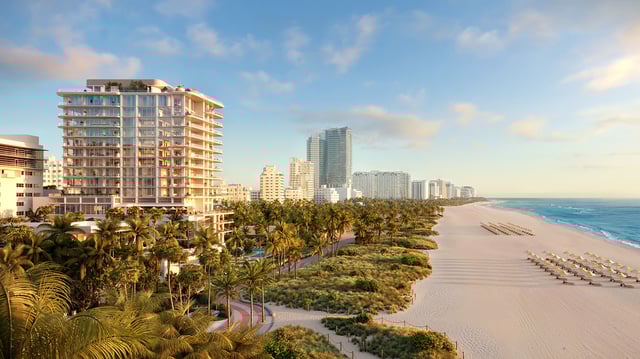
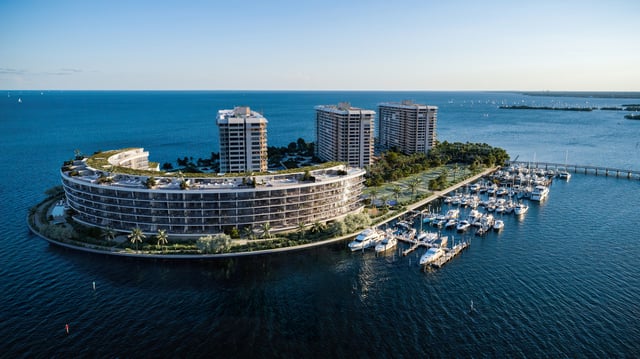
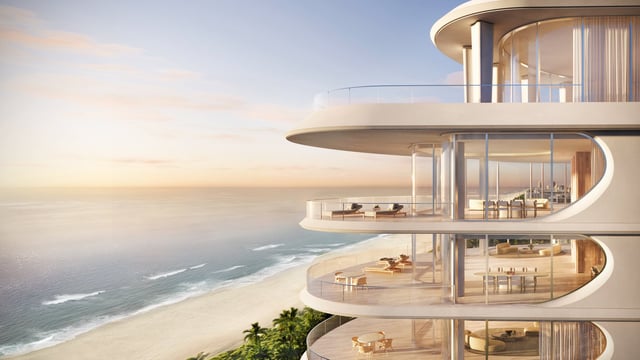
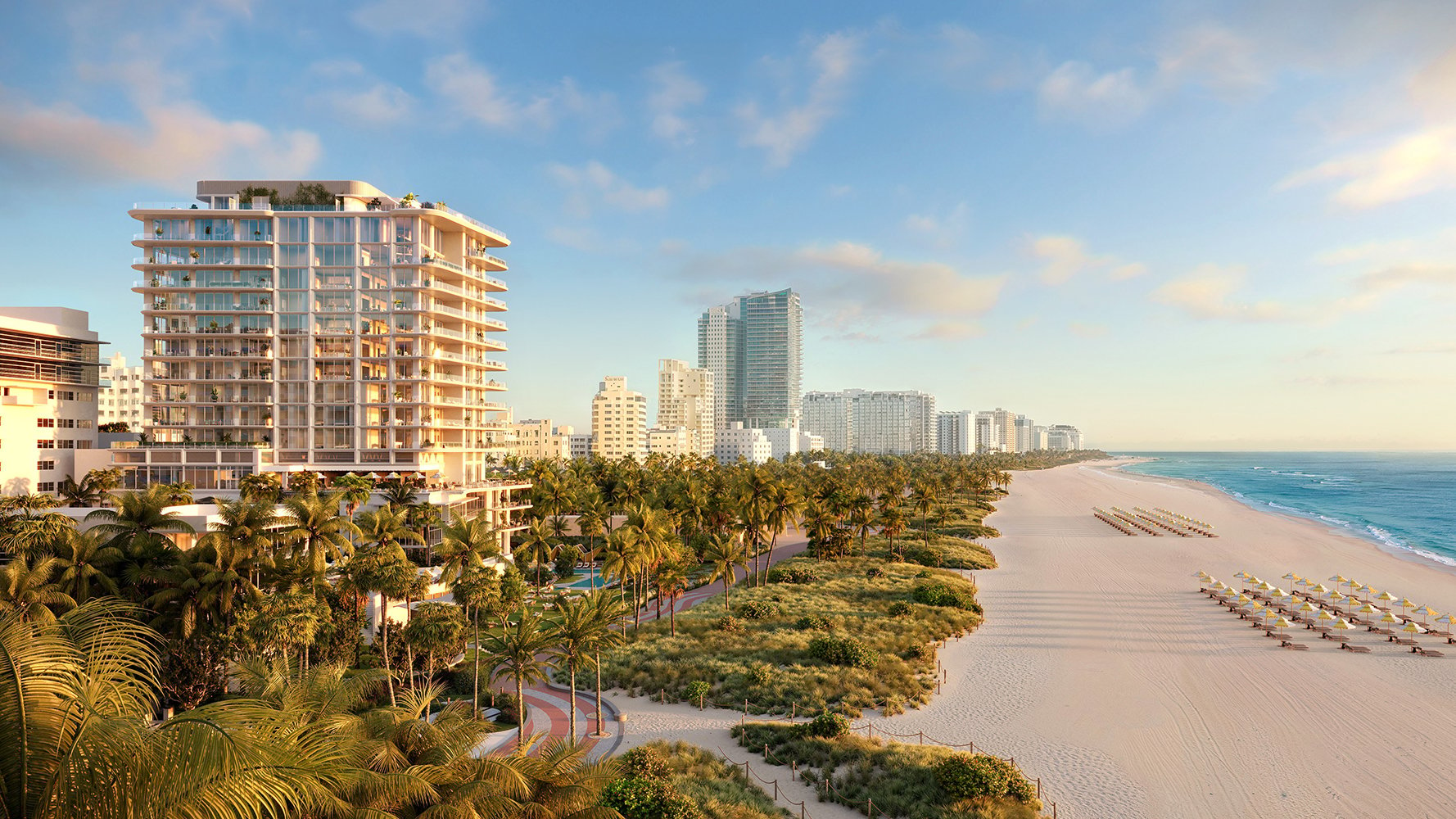
Two highly watched projects illustrate the change. Aman Miami Beach is planned for 3425 Collins Avenue in the Faena District, with an ultra-low-density program marketed at 22 residences. Farther south, Rosewood The Raleigh is planned for 1775 Collins Avenue as a SHVO-led redevelopment and a new Rosewood Hotel & Residences campus described as spanning roughly three acres oceanfront, with a new residential tower planned for 44 branded residences.
For Miami Beach buyers, the comparison is not simply finishes and views. It is about archetype: the private sanctuary versus the restored icon.
Why branded residences command attention now
At the top tier, a brand is not a logo on a facade. When it works, it institutionalizes the hard-to-replicate elements of a truly great building: service culture, consistent food and beverage programming, spa and wellness standards, and a globally recognizable cadence that reduces uncertainty.
That consistency matters in Miami Beach, where many purchasers use a residence as a second-home base. The value proposition is also practical and psychological. A boutique inventory typically means fewer owners to coordinate, fewer unknown neighbors, and less congestion in elevators, lobbies, and amenity spaces. Pair that scale with oceanfront land and a hospitality operator, and the result is a quieter form of luxury that often carries stronger pricing.
Aman Miami Beach in the Faena District: privacy as a plan
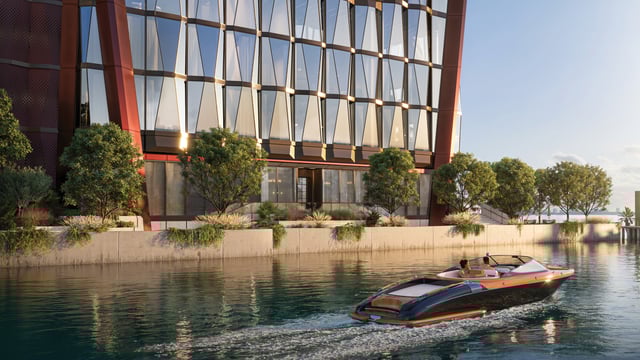
Aman Miami Beach is planned at 3425 Collins Avenue in the Faena District, a Mid-Beach pocket that has become shorthand for a curated, design-forward version of Miami. Public reporting describes an 18-story Aman-branded tower designed by Kengo Kuma. The residential program is marketed as 22 residences, a number that signals intent: fewer owners, fewer moving parts, and a social atmosphere that can remain intentionally minimal.
The plan also includes restoration of the historic Versailles Hotel. On Miami Beach, restoration is not just nostalgia. It is a strategy for entitlement, identity, and long-term relevance. When a development takes on a historic structure, it often indicates a longer horizon and a willingness to do the complex work that trophy real estate demands.
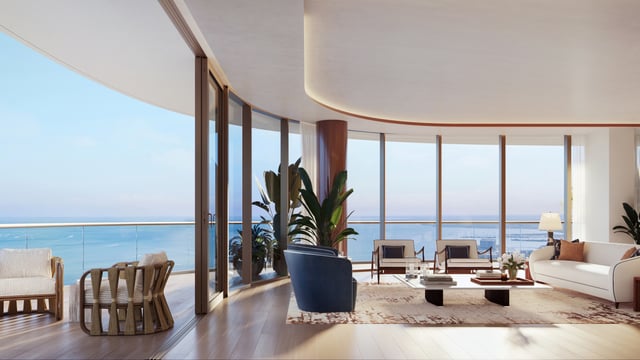
Aman’s public positioning emphasizes privacy, understated luxury, and wellness. In practical terms, that usually points to calmer arrival sequences, a spa-first hierarchy, and residences that read more like a private club than a conventional high-rise.
Pricing has been publicly marketed as starting around $4 million, with the standard caveat that layouts and market conditions change. The number matters less than the thesis: tightly held new construction where scarcity is central to the proposition.
In Mid-Beach, existing ultra-luxury product provides context for what buyers already view as possible. Properties such as Faena House Miami Beach have helped define the district as art-led and service-conscious, making Aman’s arrival feel less like an outlier and more like a logical escalation.
Rosewood The Raleigh: a historic icon, rewritten for today
Rosewood The Raleigh is planned at 1775 Collins Avenue and is presented by SHVO as a Rosewood Hotel & Residences redevelopment spanning from Collins Avenue to the beach across a roughly three-acre oceanfront campus. The plan includes a new residential tower with 44 branded residences, still intimate by Miami standards while allowing for a broader mix of layouts and lifestyles.
Design stewardship sits at the center of the narrative. Project materials attach Peter Marino as the designer for the redevelopment and the new residential component. In the luxury category, Marino’s involvement is widely read as a promise of discipline: calibrated materials, fashion-level detailing, and interiors that feel as deliberate at night as they appear in daylight.
The Raleigh Hotel itself is historic, originally completed in 1940. Its fleur-de-lis swimming pool is frequently cited as iconic, including a long-circulated reference to Life magazine’s 1947 description of it as “the most beautiful pool in America.” That kind of cultural memory creates a narrative premium that cannot be manufactured quickly, and it gives owners a sense of place that extends beyond the unit.
Hospitality here is meant to be specific, not generic. Marketing highlights a private beach-club and dining concept associated with Langosteria, a hospitality brand originating in Milan. For buyers, this signals a campus designed to function as a destination, not simply a building with amenities.
The market has also noted SHVO’s promotion of a marquee $150 million penthouse for the new Raleigh condo tower. Whether or not that residence ultimately sets a record, the message is clear: the developer is publicly defining the ceiling.
For buyers weighing South Beach legacy properties against the next wave, nearby campuses like Shore Club Private Collections Miami Beach reinforce the broader pattern: the most valuable Miami Beach addresses increasingly behave like private resorts that happen to include homes.
Architecture and identity: from Art Deco to contemporary restraint
Any serious conversation about Miami Beach luxury has to acknowledge architectural heritage. The Art Deco Historic District is promoted as one of the world’s most prominent concentrations of Art Deco buildings, and the City of Miami Beach positions Art Deco as a defining legacy supported through preservation and public education.
That context shapes what contemporary buildings can be. The strongest new work on the Beach rarely competes with history through ornament or volume. Instead, it leans on restraint, proportion, and confidence that feels inevitable rather than attention-seeking.
Architect Lawrence Murray Dixon, historically associated with major Miami Beach Art Deco-era hotels, is often cited for his influence on the city’s resort architecture. The buyer takeaway is straightforward: on Miami Beach, design is not decoration. It is identity, and identity supports long-term value.
For clients who want a proven, hotel-driven lifestyle now while the new pipeline evolves, Setai Residences Miami Beach remains a reference point for hospitality-grade operations and privacy expectations in a central Beach location.
A buyer’s decision framework: two brands, two moods
Choosing between Aman and Rosewood at The Raleigh is less a binary than a question of how you want your Miami Beach life to feel.
Aman’s case is purity. A marketed 22-residence program and wellness-forward positioning suggest a building designed to reduce friction: fewer neighbors, fewer variables, and a strong preference for quiet. The Faena District setting also appeals to buyers who want culture within walking distance without committing to South Beach’s higher-energy rhythm.
The Raleigh’s case is narrative. A storied 1940 hotel, an iconic pool, and a campus scale that reads like a private resort create an arrival experience that is difficult to replicate. Add the Langosteria association and a publicly promoted $150 million penthouse, and the project is clearly aiming to build social gravity.
In both cases, the most valuable diligence is operational: how resident access is separated from hotel flow, how privacy is enforced day to day, and how the brand’s service promises are delivered over time.
Where the corridor is headed: edited supply, sharper segmentation
From Mid-Beach through South Beach, the corridor is increasingly defined by a simple equation: oceanfront land plus a recognizable service platform equals pricing power. At the same time, the market is segmenting into sharper niches. Some buyers want Mid-Beach calm, others want South Beach walkable glamour, and many want both depending on season and mood.
New-construction product beyond the headline brand campuses also clarifies the direction. Along the Beach, newer offerings such as 57 Ocean Miami Beach show how strongly the market rewards boutique scale and direct-to-sand positioning, even without a legacy hotel narrative.
The practical takeaway is to treat Miami Beach not as one market, but as micro-markets stitched together by Collins Avenue. The strongest acquisitions tend to be the ones that understand the stitching: how art districts, preservation zones, and resort campuses each create a distinct version of long-term desirability.
FAQs
What is Aman Miami Beach and where is it planned? Aman Miami Beach is an Aman-branded development planned at 3425 Collins Avenue in the Faena District of Miami Beach.
How many residences are marketed at Aman Miami Beach? The condominium program has been marketed as 22 residences, reflecting an intentionally low-density approach.
Who is designing the Aman-branded tower? Public reporting attaches Kengo Kuma to the design of the 18-story tower.
Is there a historic component to Aman Miami Beach? Plans include restoration of the historic Versailles Hotel as part of the overall development.
Where is Rosewood The Raleigh planned? Rosewood The Raleigh is planned at 1775 Collins Avenue in Miami Beach.
Who is leading the Raleigh redevelopment and what is the brand? The redevelopment is led by SHVO and is branded as Rosewood Hotel & Residences.
How large is the Raleigh site and how many residences are planned? The site is presented as a roughly three-acre oceanfront campus, with a new residential tower planned for 44 branded residences.
What makes the Raleigh Hotel historically significant? The Raleigh dates to 1940 and is known for its iconic fleur-de-lis pool, often cited as a cultural landmark.
What is the dining and beach-club concept associated with the Raleigh project? Marketing highlights a private beach-club and dining concept associated with Langosteria, a Milan-origin hospitality brand.
What is the headline pricing that has been publicly promoted at The Raleigh? SHVO has promoted a marquee penthouse priced at $150 million for the new condo tower.
For discreet guidance on Miami Beach branded residences and comparable opportunities, connect with MILLION Luxury.

Million Luxury
Million Luxury
Welcome to MILLION, an exclusive luxury real estate boutique nestled in the heart of South Florida’s most desirable locations. Specializing in high-end properties, we provide a sanctuary for discerning clients including top Fortune 500 executives, affluent families, celebrities, and professional athletes from across the globe. At MILLION, we understand the unique demands of our elite clientele and offer a seamless blend of confidentiality and personalized attention. Our commitment to privacy is unwavering; we ensure that every transaction and interaction is handled with the utmost discretion and according to stringent confidentiality protocols. Our concierge service embodies the pinnacle of white-glove care, offering tailored assistance that transcends traditional real estate support.