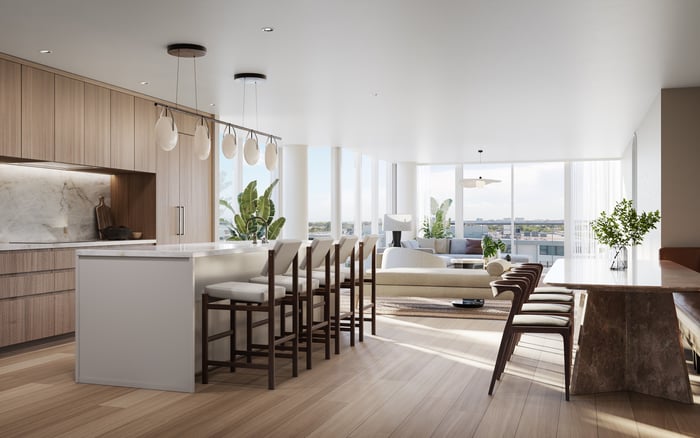
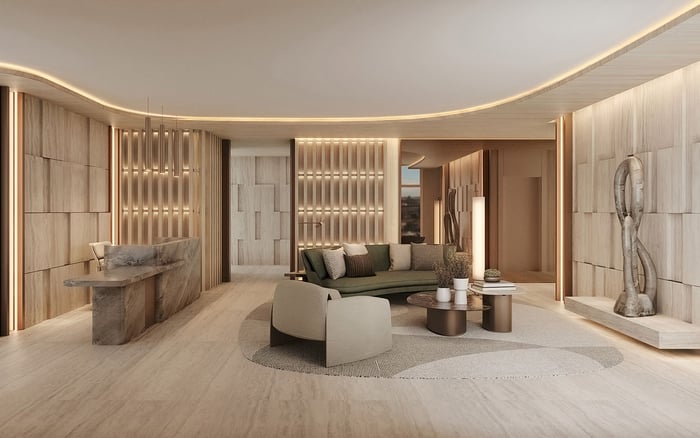
A discreet buyer-focused look at Alma Bay Harbor Islands and why boutique waterfront living can support private, in-residence wellness without turning care into spectacle.
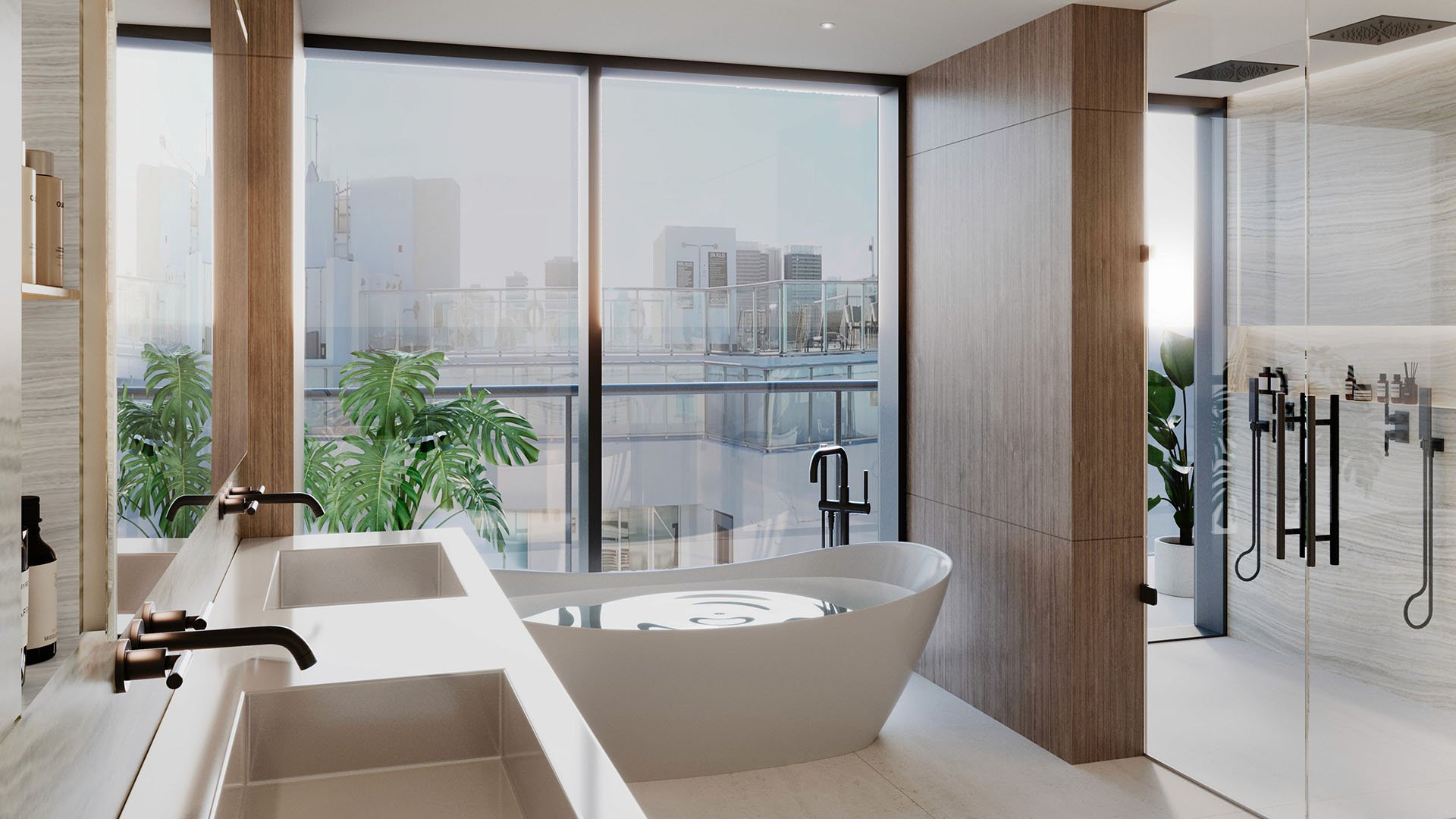
In South Florida luxury real estate, wellness is often presented as a visible amenity: the branded spa, the recovery room, the dramatic pool deck, the social fitness lounge. Those elements have appeal, but they are not the only way affluent buyers define well-being. For a certain resident, the higher form of luxury is not being seen entering the wellness suite. It is having the option to receive high-touch care quietly, in a controlled residential environment, without turning a personal routine into a public performance.
That is the lens through which Alma Bay Harbor Islands becomes particularly interesting. The property is not best understood as a loud resort-style tower competing on spectacle. It is framed as a boutique, design-driven waterfront residence in Bay Harbor Islands, a Miami-area submarket where residential calm matters as much as proximity. In that context, IV-treatment privacy is not a claim about a formal building program. It is a practical use case: a resident who values mobile wellness access may prefer a home where provider arrival, in-residence treatment, and departure can happen discreetly.
For ultra-premium buyers, that distinction matters. A building does not need to advertise every intimate service as an amenity to support a better lifestyle. Sometimes the more refined proposition is the opposite: architecture, scale, and residential control that allow private routines to remain private.
Bay Harbor Islands occupies a specific place on the Miami luxury map. It is residential, waterfront, and quieter than many of the city’s more theatrical luxury corridors. For buyers who want access to the broader Miami lifestyle without living inside its most visible social stage, that balance can be compelling.
Alma Bay Harbor Islands fits that mood. Its boutique residential character supports a quieter reading of luxury, one that does not depend on density or constant amenity activation. The design-driven positioning also shifts attention away from ostentation and toward atmosphere: scale, privacy, arrival, water, and the feeling of being removed from unnecessary exposure.
Buyers searching in shorthand for Bay-harbor, Boutique, Waterview, New-construction, and Exclusive-area property are often describing this same mood: low-friction privacy rather than theatrical amenity visibility. The wellness conversation in the area also benefits from nearby name recognition around The Well Bay Harbor Islands, though Alma’s case is different. It is about the private residential setting, not a declared IV-treatment amenity.
That is why the property works as a quiet-luxury case study. It shows how privacy can be embedded in the experience of living rather than packaged as a branded feature. The point is not to broadcast access to wellness. The point is to make wellness easier to receive without broadcasting anything at all.
IV-treatment privacy is a narrow but revealing lens. It speaks to a buyer who values convenience and wellness access but does not want medical-adjacent services turned into a public building ritual. In a highly visible tower, a provider arrival may feel conspicuous. In a boutique residential environment with a calmer rhythm, the same appointment can feel more natural, more controlled, and less exposed.
The appeal begins with in-residence service. A resident arranging a mobile wellness visit may prefer to remain at home rather than move through a shared spa corridor or wait in a communal setting. The value is not simply comfort. It is discretion. A private residence allows the service to be absorbed into ordinary domestic life, whether that means a morning appointment after travel, a recovery-focused visit after a demanding week, or a wellness routine the resident simply does not wish to discuss.
Provider arrival is the second consideration. Quiet luxury depends on choreography. The less a resident has to explain, stage, or manage publicly, the stronger the experience becomes. Alma’s broader positioning as a boutique waterfront property supports the editorial case for a more controlled arrival environment than a high-density, high-visibility luxury address built around constant social circulation.
The third consideration is emotional privacy. Many affluent buyers are comfortable paying for exceptional services, but they may be less comfortable having those services noticed, discussed, or implicitly marketed by the building around them. In that sense, the absence of spectacle becomes a feature. Alma’s privacy argument is not that everything is hidden. It is that the property’s quiet residential posture can better support the kind of private wellness routines sophisticated buyers increasingly expect.
A branded wellness amenity can be powerful when it is designed with real expertise, operational clarity, and resident trust. But it can also create a social stage. The more a service is marketed, photographed, and placed within shared amenity space, the less private it may feel to the resident who views wellness as personal rather than performative.
Alma Bay Harbor Islands is more persuasive when discussed in a different register. Rather than treating IV therapy as a building promise, the stronger argument is that Alma is well-suited to private, in-residence wellness services because of its boutique and residential nature. This is a more precise claim and a more elegant one. It respects the difference between an official amenity and a lifestyle condition enabled by the property’s setting.
That difference is especially relevant for buyers comparing Miami-area options. Some residents want the energy of a building where everything is visible: the pool, the wellness floor, the lounge, the arrivals, the social calendar. Others want design and waterfront living without the sense that personal routines have become part of the property’s public identity. Alma speaks to the latter buyer.
This is the quiet-luxury logic: the most valuable services do not always need the most visible stage. For the right resident, privacy is not the absence of amenity. It is the condition that makes the amenity feel truly personal.
A buyer who cares about IV-treatment privacy should ask practical questions early. The first is whether mobile wellness providers can enter and serve residents in a manner consistent with building rules. Not every residential property treats outside providers the same way, and policies may differ by service type.
The second question concerns arrival and access. How are guests announced? Where do providers wait, if at all? Is there a discreet path from arrival to residence? The answers matter because privacy is not abstract. It is operational. A beautiful residence can still feel exposed if every service interaction is routed through a highly public sequence.
The third question is about in-residence comfort. Buyers should consider whether the residence layout supports a calm, private appointment without disrupting family, staff, or guests. This is less about square footage as a number and more about the choreography of daily life: entry, seating, views, bedroom separation, and the ability to keep a personal wellness routine contained.
Finally, buyers should maintain the distinction between suitability and guarantee. Alma’s boutique waterfront positioning supports a compelling privacy case, but any specific wellness provider, medical service, or treatment protocol should be verified independently. Quiet luxury is strongest when it is precise. The most sophisticated buyer does not need exaggerated claims. They need the right environment, the right rules, and the discretion to live well without explanation.
Does Alma Bay Harbor Islands officially offer IV therapy? No. The privacy case is about Alma as a setting that may suit private, in-residence wellness services, not an official IV-treatment amenity.
Why is Alma relevant to IV-treatment privacy? Its boutique, residential, waterfront positioning supports a quieter environment where personal services can feel less exposed than in more public amenity settings.
Is Bay Harbor Islands a quieter alternative to louder Miami luxury areas? Yes. Bay Harbor Islands is positioned as a residential waterfront submarket, which supports a more discreet lifestyle reading.
What type of buyer is most aligned with this privacy case? The strongest fit is an affluent resident who values wellness access but does not want medical-adjacent care turned into a social amenity.
Does boutique scale matter for wellness privacy? It can. A boutique residential property may reduce the sense of crowding and visibility that can come with high-density resort-style towers.
What should buyers verify before arranging mobile wellness services? They should confirm building rules, provider access procedures, guest protocols, and any restrictions related to in-residence services.
Is this article making a medical recommendation? No. It discusses real estate privacy and lifestyle suitability, not medical advice, treatment quality, or provider selection.
Why not simply use a shared wellness amenity? Some residents enjoy shared amenities, while others prefer personal services to remain private and separate from communal building life.
How does waterfront living support the privacy narrative? A waterfront residential setting can reinforce calm, retreat, and separation from the more visible parts of the Miami luxury scene.
What is the main takeaway for buyers? Alma’s appeal is less about spectacle and more about the controlled residential conditions that can make private wellness routines feel effortless.
When you're ready to tour or underwrite the options, connect with MILLION.
If branded residences are on your mind — as a home or as an allocation — we would be glad to share what we are seeing, privately.
Begin a quiet conversation