A discreet buyer’s guide to choosing between Las Olas energy and broader Fort Lauderdale privacy, with emphasis on whole-floor layouts, neighbor exposure, terraces, glass comfort, and daily livability.
Las Olas and greater Fort Lauderdale offer two versions of the same luxury promise: water, light, convenience, and a sense of arrival. Yet the most sophisticated buyers are rarely choosing between neighborhoods alone. They are choosing between degrees of privacy, the choreography of neighbors, the behavior of glass walls in South Florida sun, and the daily rhythm created by elevators, terraces, corridors, parking, and service access.
In the Fort Lauderdale luxury conversation, “whole-floor privacy” carries unusual weight. It suggests a residence that feels less like a vertical apartment and more like a private home suspended above the city or water. But privacy is not created by square footage alone. It comes from how the floor plate is composed, where the elevator opens, what one sees from the kitchen after sunset, and whether the primary suite feels insulated from both public rooms and adjacent buildings.
Las Olas brings an urban advantage. It is social, walkable, and expressive, with a lifestyle that can feel immediate and connected. The broader Fort Lauderdale market, including quieter waterfront and beach-adjacent settings, can offer a softer form of discretion. For a buyer evaluating Broward at the highest level, the important distinction is not which setting is more prestigious. It is which version of privacy supports the way the residence will actually be used.
Las Olas appeals to buyers who want their residence close to restaurants, galleries, marinas, offices, and evening movement without feeling absorbed by them. It is the right setting for someone who values energy at the base of the building, yet wants calm upstairs. That tension is the essence of the Las Olas purchase.
The best Las Olas layouts solve for transition. A private elevator foyer, a controlled entry sequence, and a clear division between entertaining and sleeping zones can make a high-rise residence feel composed even in an active district. Buyers should study whether guests step directly into the main living area or pass through a proper arrival moment. That detail can separate true residential elegance from simple convenience.
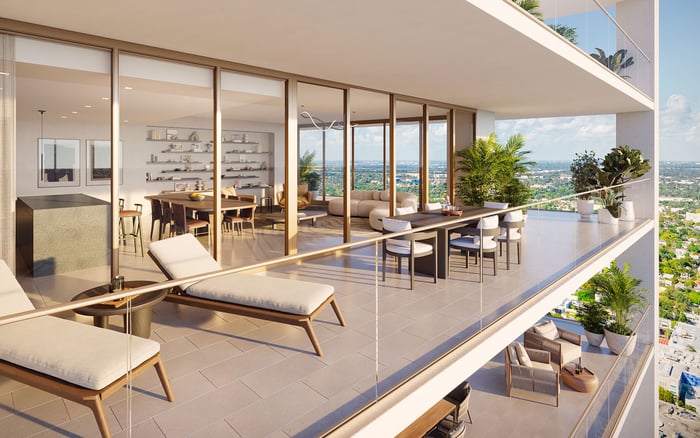
Neighbor exposure is also more nuanced in an urban setting. Buildings may face other towers, streets, rooftops, or water corridors. A dramatic wall of glass can be extraordinary during the day, then feel overly visible at night if the residence lacks depth, layered lighting, or terrace buffers. This is where balcony design and terrace depth become more than amenities. They are privacy instruments, creating distance between interior life and the outside gaze.
For Las Olas buyers, the goal is not to avoid urbanity. It is to buy the urban experience with control.
Beyond the immediate Las Olas core, Fort Lauderdale offers a different buying language. The mood can be more residential, more water-oriented, and less dependent on a street-level social scene. Buyers often find the appeal in distance: fewer visual confrontations, more breathing room between buildings, and a stronger sense of retreat.
This does not automatically mean better privacy. A low-slung waterfront residence can still be exposed to passing boats, neighboring pools, or homes across a canal. A high residence can still look directly into another tower if the orientation is wrong. The buyer’s task is to distinguish between perceived privacy and lived privacy.
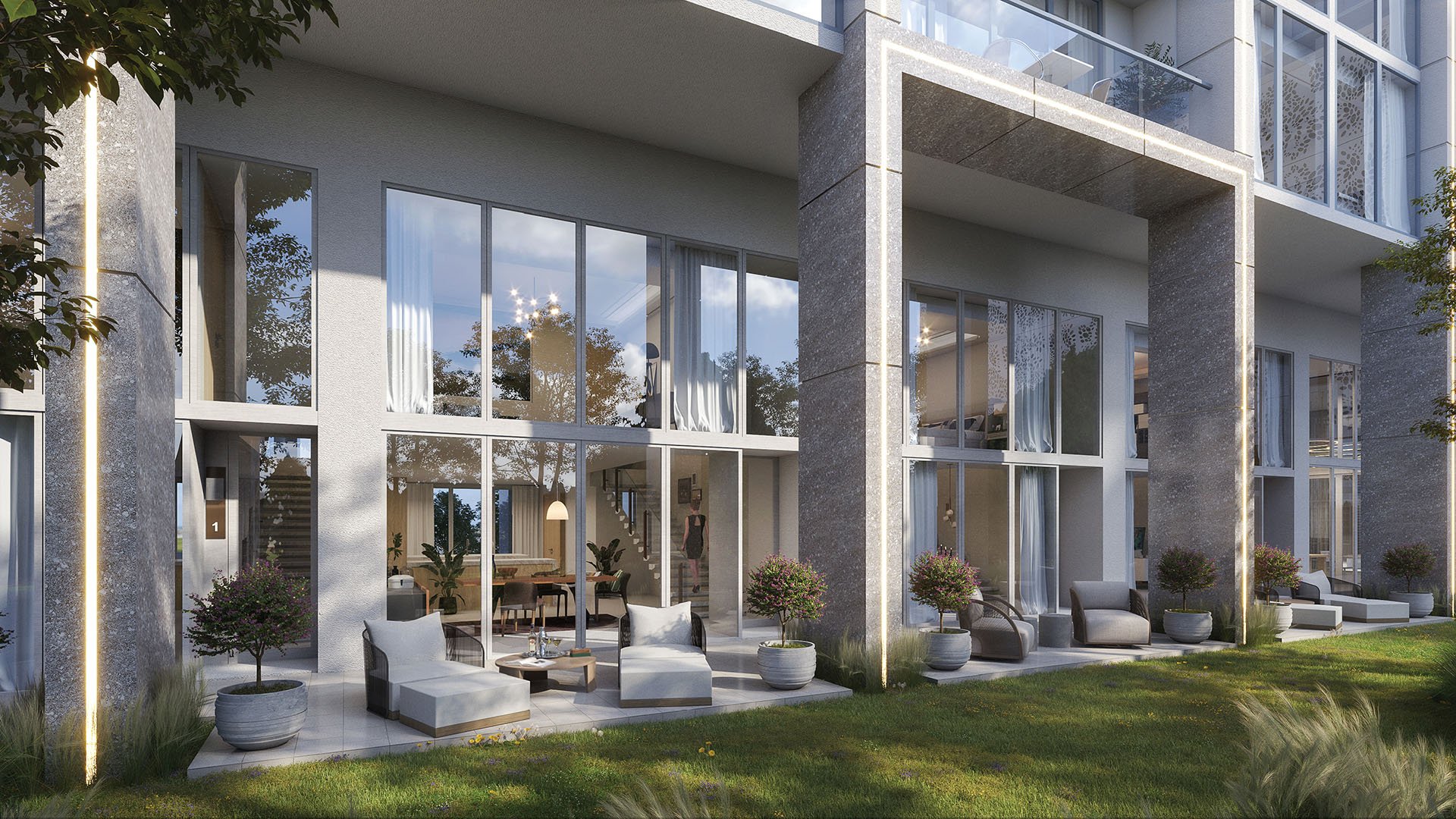
High floors can help by elevating sightlines above immediate activity, but height alone is not a complete answer. Wind, sun, glare, and terrace usability all change with elevation. A residence that looks serene on a floor plan may feel bright to the point of fatigue in late afternoon if the glass and shading strategy are not well considered. Conversely, a lower residence with thoughtful setbacks and landscaping may deliver greater comfort and less performance anxiety.
In this broader Fort Lauderdale context, the most desirable homes often feel less observed. They allow a buyer to enjoy water and sky without constantly managing blinds, lighting, and social exposure.
A whole-floor residence should be evaluated like a private house. Where do family members enter after a beach day or boat outing? Can service move discreetly? Are the public rooms impressive without forcing everyday life into view? Is the primary suite isolated enough to feel ceremonial rather than merely large?
The elevator is central. A private elevator that opens into a dedicated foyer can create a sense of possession, but only if the foyer has proportion and purpose. If the elevator opens too abruptly into the living room, the residence may feel dramatic but not necessarily private. If the service path crosses the formal entertaining route, the plan may become less elegant in practice.
Flow-through units deserve close attention because they can provide cross-light, cross-breezes, and a more complete sense of place. They may also improve privacy by distributing views across more than one exposure, allowing daily life to shift with sun and mood. Still, a flow-through plan should be studied for bedroom placement, acoustic separation, and whether the secondary exposure is truly pleasant or merely functional.
The best whole-floor homes create choice. They let owners entertain at scale, withdraw quietly, host family without crowding, and live behind glass without feeling displayed.
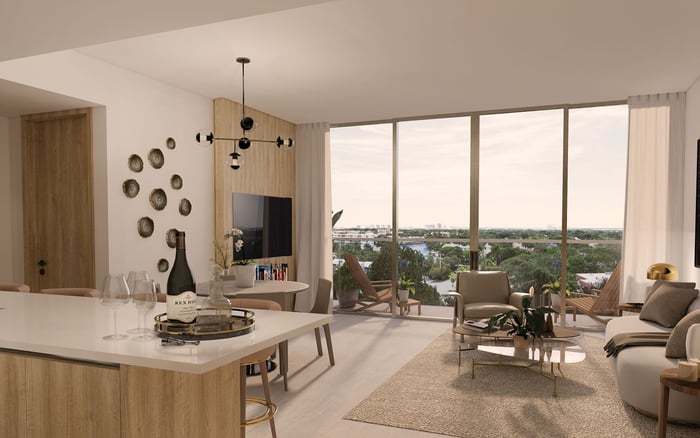
In South Florida, glass is emotional. It frames water, turns weather into theater, and brings the horizon into the room. But glass-wall comfort is technical as much as visual. Buyers should think about orientation, overhangs, terrace depth, window treatments, air-conditioning zoning, and how rooms feel at different hours.
A residence can photograph beautifully and still be uncomfortable if glare controls the afternoon or if seating areas become too exposed after dark. The most refined interiors use layered lighting, material warmth, and shaded transitions to soften the glass. Stone, wood, textured walls, and deeper terraces can help a residence feel grounded rather than showroom-like.
Acoustics matter as well. Urban streets, boat traffic, pool decks, and amenity levels can influence how serene a glass residence feels. Buyers should stand quietly in the living room and bedrooms, not just admire the view. The luxury test is simple: does the room invite lingering after the first impression has passed?
The Las Olas buyer often wants proximity without surrender. This buyer values an active dinner life, easy hosting, and a residence that feels connected to the city. For this profile, the strongest purchase is not necessarily the quietest one. It is the one that manages arrival, vertical privacy, and nighttime exposure with the greatest sophistication.
The broader Fort Lauderdale buyer may prioritize retreat, water orientation, and less visible daily living. This buyer should focus on setbacks, neighboring uses, terrace privacy, and the way the residence behaves during ordinary mornings and evenings. The more private-feeling choice may not be the most theatrical. It may be the one where the owner forgets to perform for the view.
Both buyers should resist choosing from renderings or first impressions alone. The right home is the one whose plan, glass, outdoor space, and neighbor relationships work together. In a market shaped by water and light, privacy is not absence. It is design intelligence.
Is Las Olas better for buyers who want walkability? Yes. Las Olas is generally the more urban-feeling choice, with a lifestyle shaped by proximity and daily convenience.
Does a whole-floor residence always feel private? No. Privacy depends on elevator access, sightlines, neighboring buildings, service paths, and bedroom separation.
Are high floors always preferable in Fort Lauderdale? Not always. They can improve views and reduce some exposure, but sun, wind, glare, and terrace usability must be weighed.
Why do buyers focus so much on glass-wall comfort? Glass defines the South Florida luxury experience, but comfort depends on shading, orientation, acoustics, and interior warmth.
Can a balcony improve privacy? Yes. A well-proportioned balcony can create a visual buffer between interior rooms and neighboring sightlines.
Is a terrace different from a balcony in buyer value? Often, yes. A terrace may support larger outdoor living, deeper furniture placement, and stronger indoor-outdoor privacy.
Are flow-through units worth considering? Yes. They can offer better light, ventilation, and spatial separation, especially when the secondary exposure is attractive.
Should Broward buyers prioritize views or privacy first? At the top end, privacy should usually be tested first, then views, amenities, and finish quality.
What is the biggest risk with an urban Las Olas residence? The main risk is visual or acoustic exposure that is not obvious until evening use, traffic patterns, or nearby activity are considered.
What should a buyer do before choosing between Las Olas and wider Fort Lauderdale? Walk the plan mentally from arrival to bedtime, then evaluate where neighbors, glass, light, and service will intersect with daily life.
If you'd like a private walkthrough and a curated shortlist, connect with MILLION.
If branded residences are on your mind — as a home or as an allocation — we would be glad to share what we are seeing, privately.
Begin a quiet conversation