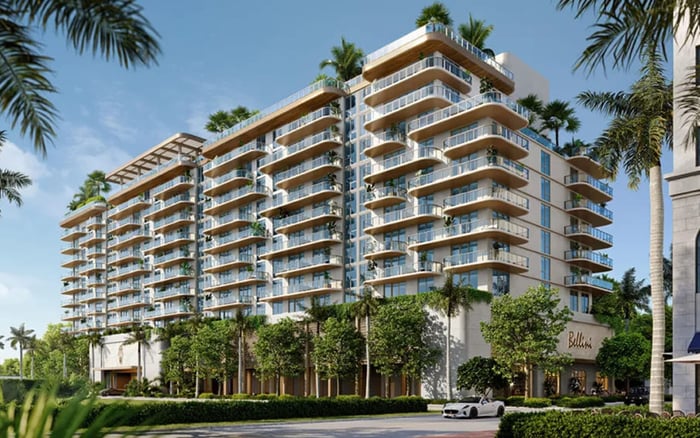
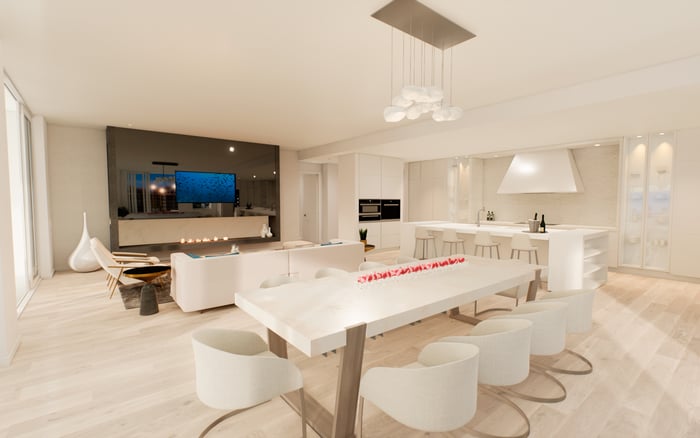
A buyer-focused comparison of two luxury Boca Raton condominium propositions: Alina Residences for those who want Downtown convenience and Glass House for those drawn to privacy, intimacy, and boutique ownership.
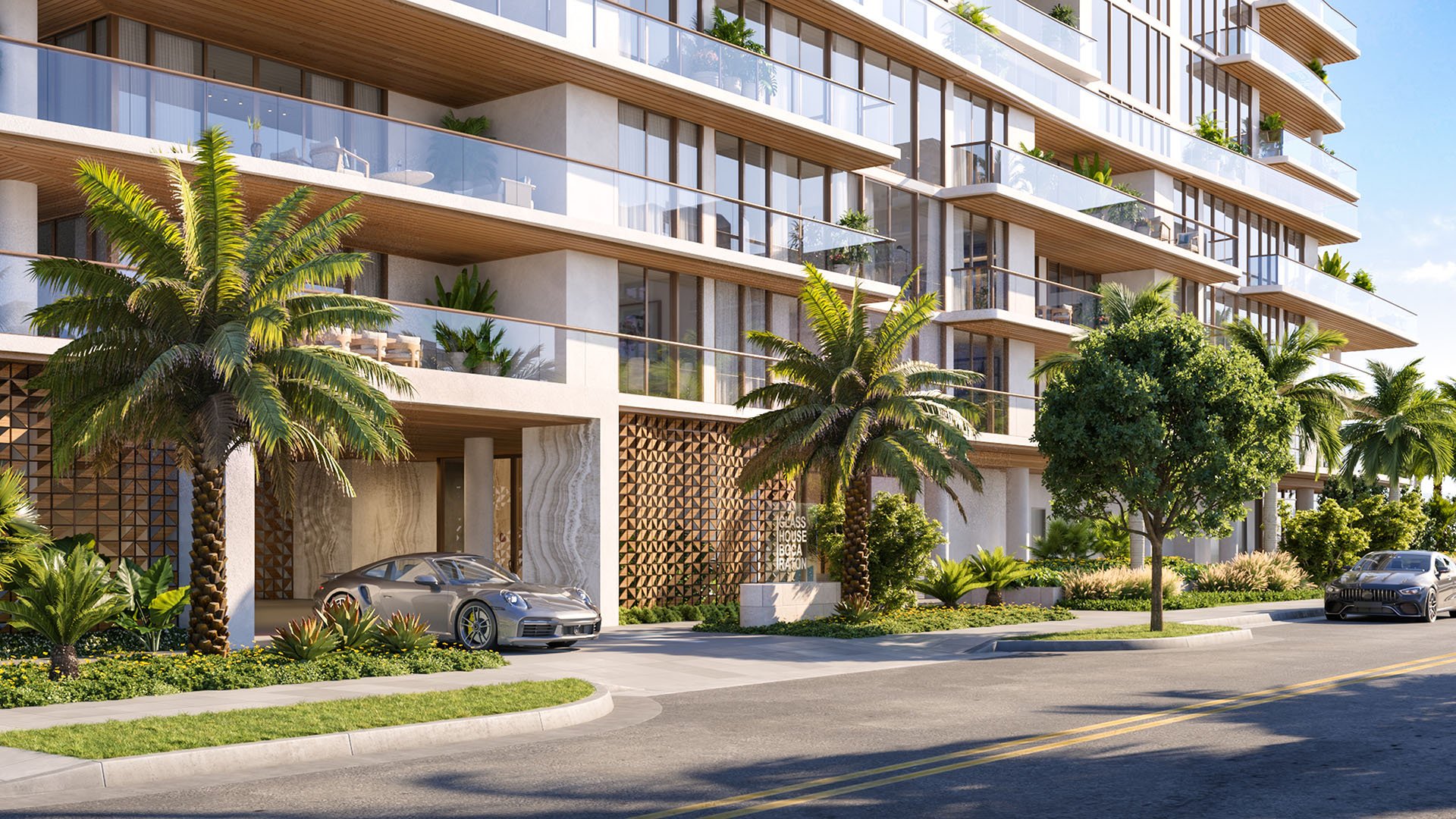
In Boca-ratón, luxury condominium comparisons often begin with architecture, amenity programs, and finish palettes. Yet the sharper distinction between Alina Residences Boca Raton and Glass House Boca Raton is not primarily decorative. It is experiential.
Alina aligns with Downtown Boca’s evolving urban rhythm: walkable restaurants, nearby retail, cultural access, and the convenience that comes with a full-service tower environment. Glass House is shaped around a different kind of luxury, defined by privacy, a quieter daily cadence, and the intimacy that often comes with a boutique ownership model.
For affluent buyers, that is what makes the choice unusually clear. These are not two buildings competing for the exact same resident. They are two answers to a more personal question: do you want your home to place you inside the social current of Downtown, or slightly apart from it?
Alina Residences is part of Boca Raton’s broader Downtown residential evolution, where luxury living is increasingly tied to proximity and convenience rather than distance and seclusion. That matters to buyers who see their residence as both home and launch point.
The appeal is straightforward. A larger-scale, full-service environment typically brings broader inventory, more expansive common programming, and a sense of movement within the building itself. In practical terms, that can translate into a living experience that feels connected to the city, with service, activity, and social possibility close at hand.
Design also plays a role. Alina is associated with a contemporary high-rise expression, glass-forward architecture, and a polished modern aesthetic that fits naturally into a Downtown setting. For buyers who prefer a residence that feels current, visible, and integrated into the urban core, that combination carries clear weight.
Buyers who are evaluating Boca Raton luxury options may also compare The Residences at Mandarin Oriental Boca Raton as part of a broader search for refined residential experiences in the city.
Glass House Boca Raton enters the market from nearly the opposite direction. Instead of emphasizing tower-scale energy, it leans into privacy, exclusivity, and a quieter ownership experience. That positioning is especially compelling for buyers who have already experienced large-building luxury and are now looking for something more edited.
Boutique scale changes everyday life in subtle but meaningful ways. Fewer residences generally create a more curated residential atmosphere, a stronger sense of discretion, and less of the ambient movement that naturally comes with a larger building. For some owners, that is the ultimate expression of luxury: not more buzz, but less interruption.
Architecturally, Glass House is framed as modernist and more intimate in footprint than a major Downtown tower. That distinction matters because intimacy itself has become both a design and ownership value. The building is not trying to replicate the social energy of a large-scale project. It is trying to shield residents from it.
When buyers compare these two properties side by side, scale becomes one of the most important filters. Alina operates on a larger residential scale, with the broader inventory and fuller-service character many purchasers expect from a luxury high-rise. Glass House, by contrast, is defined by a more selective residential environment.
This difference has emotional consequences. Larger-scale living can feel energizing, especially for owners who enjoy arriving to an active lobby environment, making spontaneous dinner plans nearby, or having a home that feels connected to the pulse of Downtown. Boutique living can feel restorative, particularly for owners who value discretion, controlled traffic, and a stronger sense that the building belongs first to its residents rather than to its own social scene.
Neither model is inherently superior. The advantage depends on the buyer’s internal definition of comfort. Some equate luxury with access and animation. Others equate it with retreat.
The temptation in any luxury comparison is to reduce the conversation to amenities. That is too narrow here. Alina’s amenity story is best understood as an extension of active Downtown living, where convenience-oriented services support a mobile lifestyle. The building fits buyers who want the infrastructure of a polished tower paired with nearby restaurants, retail, and cultural options.
Glass House presents amenities through a more resident-exclusive lens. The emphasis is less on social buzz and more on quiet enjoyment, architectural coherence, and the sense that shared spaces remain controlled rather than performative. For some buyers, that distinction can matter more over time than any specific room count or feature list.
This is why comparing checklists can miss the point. At this level of the market, both projects sit firmly within the luxury segment. The difference is not whether either residence feels premium. It is whether premium should feel public-facing or private.
A buyer well suited to Alina is often looking for full-service tower living with immediate access to the best of Downtown. That owner may entertain frequently, enjoy walking to dinner, or simply prefer a residence that feels immersed in Boca-ratón’s urban core. The home functions as part of a larger lifestyle ecosystem.
A buyer well suited to Glass House is often prioritizing seclusion, boutique management, and architectural intimacy. This owner may still want proximity to Boca’s best offerings, but not necessarily the sensation of being in the center of them. Home is expected to feel more shielded than connected.
That distinction also explains why hard comparisons based on public metrics can be less useful than expected. The more reliable point of comparison is the lived experience each project is designed to deliver.
The most accurate way to frame Alina versus Glass House is as a choice between two mature interpretations of luxury ownership in Downtown Boca. One is urban, service-driven, and socially connected. The other is edited, private, and intentionally quieter.
Buyers who want energy, walkability, and the confidence of a full-service high-rise will likely find Alina the more natural fit. Buyers who view exclusivity through the lens of lower density and calmer residential life may see Glass House as the more compelling address.
In other words, this is not a debate over which building is better. It is a decision about which version of luxury feels more personal.
Is Alina Residences Boca Raton better for buyers who want Downtown access? Yes. Alina is positioned around walkable access to Boca Raton’s urban core, including dining, retail, and daily convenience.
Is Glass House Boca Raton the more private option? Yes. Its boutique ownership model aligns with privacy, exclusivity, and a quieter daily experience.
Are both projects considered luxury condominiums? Yes. Both sit in Boca Raton’s luxury condo conversation, but they present different lifestyle priorities.
What is the biggest difference between the two? Scale and atmosphere. Alina reads as a fuller-service high-rise, while Glass House emphasizes a more intimate boutique setting.
Does Alina appeal more to buyers who enjoy an active social setting? Generally, yes. It is better suited to owners who value walkability, service, and a stronger sense of Downtown connection.
Does Glass House appeal more to buyers seeking calm? Yes. It is better aligned with owners who prioritize discretion, lower-density living, and a more serene residential feel.
Can buyers compare the two purely by amenities? Not really. The more meaningful comparison is how each building supports a different mode of living.
Is Alina tied to Downtown Boca’s residential evolution? Yes. It fits the broader shift toward luxury living that emphasizes convenience and central location.
Does boutique scale change the ownership experience? Often, yes. Smaller residential communities can feel more curated, more exclusive, and less trafficked day to day.
Which residence may suit a second-home buyer better? It depends on personal preference: Alina may appeal to buyers wanting connected convenience, while Glass House may suit those wanting quieter boutique ownership.
For a confidential assessment and a building-by-building shortlist, connect with MILLION Luxury.
If branded residences are on your mind — as a home or as an allocation — we would be glad to share what we are seeing, privately.
Begin a quiet conversation