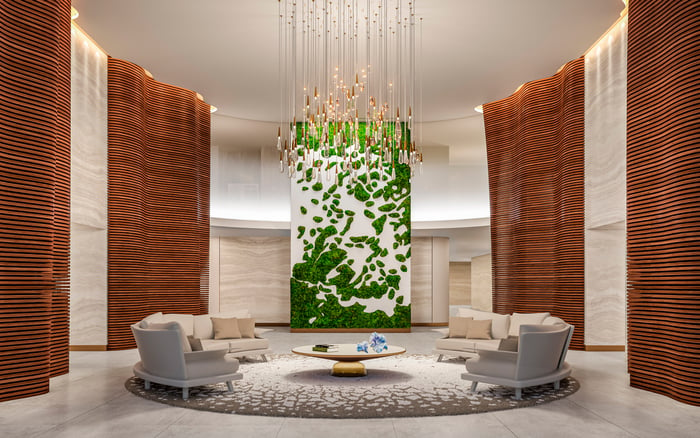
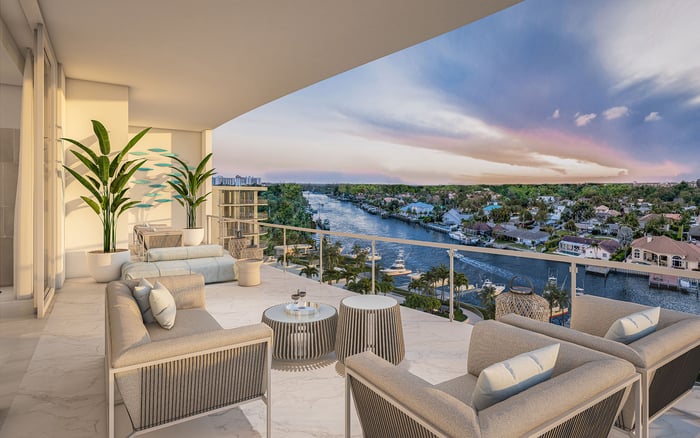
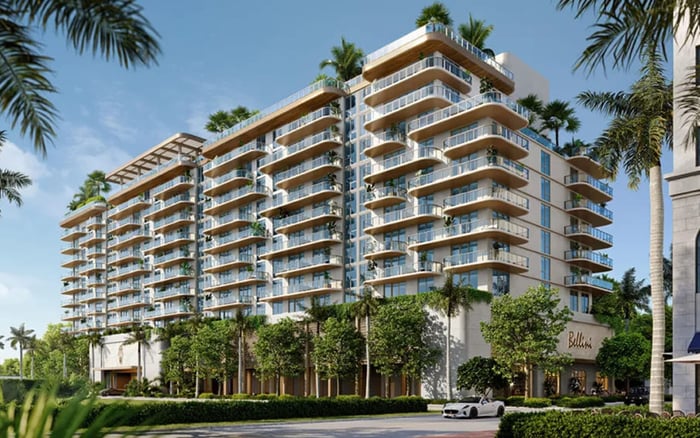
A buyer-focused comparison of Alina Residences and Glass House Boca Raton, examining how each address performs on downtown walkability, cultural access, and day-to-day urban convenience in Boca Raton.
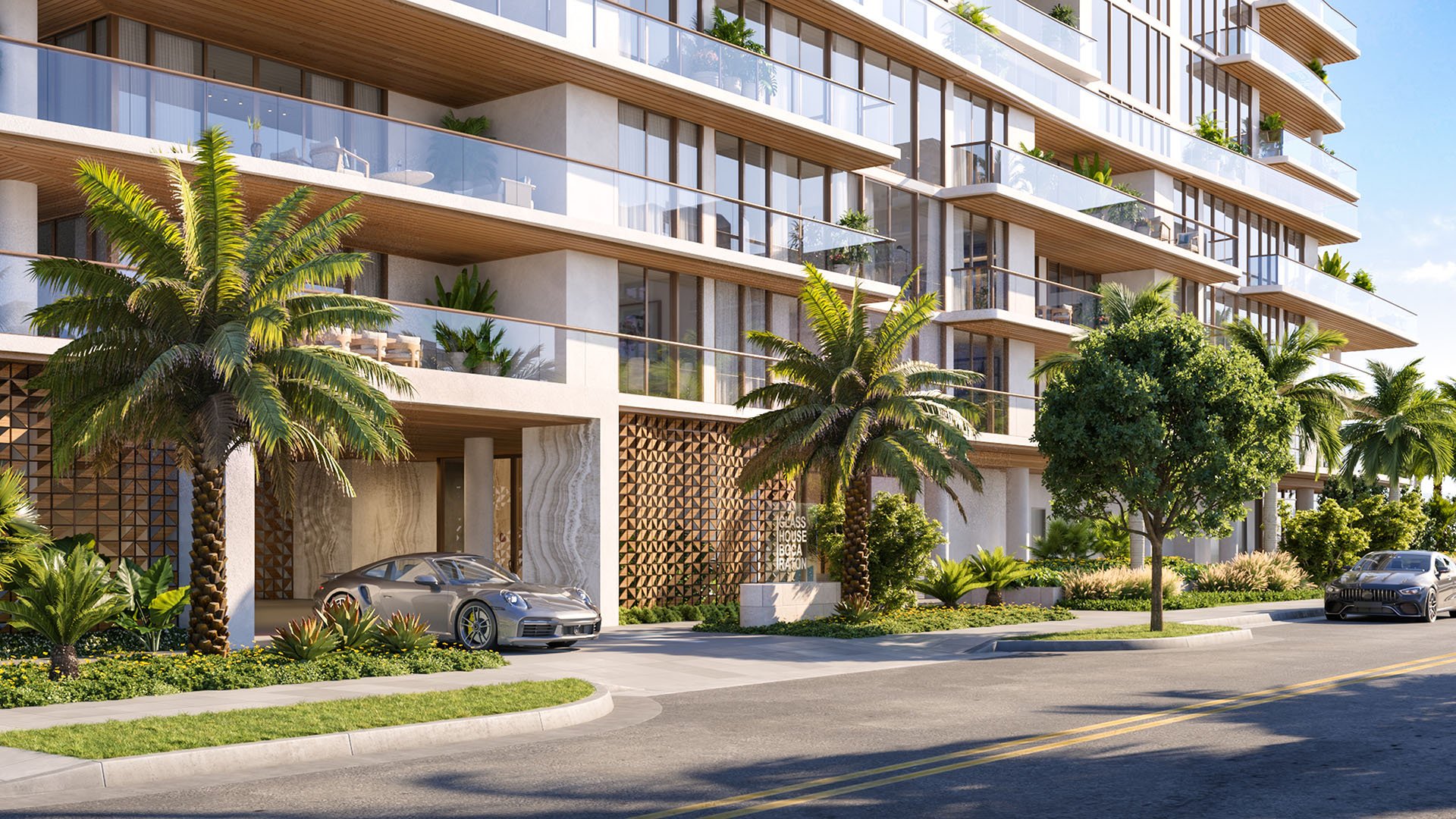
In Boca-ratón, the walkability conversation at the upper end of the market is rarely about whether an owner can stroll out for coffee. It is about what kind of urban life takes shape once the car is left behind. For buyers comparing Alina Residences Boca Raton with Glass House Boca Raton, that distinction matters.
Both communities sit in Downtown rather than in a more car-dependent edge location. That immediately places them within the small group of Boca-ratón addresses where daily movement can feel more continental than suburban. Restaurants, boutiques, services, public spaces, and evening destinations are part of the appeal for both. The comparison is not between urban and non-urban. It is between two versions of the same Downtown lifestyle.
The practical difference is modest, but meaningful. Glass House Boca Raton, positioned at 101 E. Palmetto Park Road, has the more immediate relationship to one of the city center’s primary pedestrian corridors. Alina Residences Boca Raton, also on East Palmetto Park Road, sits slightly outside the main flow of foot traffic, which can create a more composed frontage while preserving easy access to the same district.
For the luxury buyer, that creates a very specific choice: immediate immersion versus a touch more remove.
Downtown Boca-ratón has evolved into a more pedestrian-oriented environment, and that matters because true walkability at the luxury level depends on more than distance alone. It depends on whether the streetscape genuinely supports repeated use on foot. Here, both projects benefit from improvements that have strengthened the district’s urban rhythm.
Palmetto Park Road functions as one of the area’s dining and retail spines, and that gives Glass House Boca Raton a clear, if slight, advantage in pure doorstep convenience. Residents would be directly on a corridor that concentrates restaurant traffic, storefront activity, and the ambient energy many buyers seek when they say they want to live Downtown.
Alina Residences Boca Raton offers a different reading of the same geography. Because it is slightly removed from the most active frontage, the experience may feel more private on approach while remaining well within a short walk of Downtown essentials. For some owners, especially those using Boca-ratón as a refined second-home base, that tradeoff can be more appealing than being fully on the corridor itself.
This is also where project scale subtly shapes lifestyle. Alina includes 235 residences and a mixed-use program with retail and office components, reinforcing a live-work-play sensibility that extends beyond the residential envelope. Glass House Boca Raton is the smaller development, with 117 residences and ground-floor retail, suggesting a more boutique profile paired with direct city-center placement.
Buyers considering other urban South Florida products often face similar tradeoffs between immediacy and composure. In Boca-ratón, that conversation also touches The Residences at Mandarin Oriental Boca Raton, where brand hospitality and city access form a different kind of Downtown proposition.
If walkability is close between the two projects, cultural access is where the comparison sharpens. Downtown Boca-ratón’s Cultural Trail, a 1.6-mile route connecting parks, public art, and civic spaces, strengthens the case for both addresses. It gives the district an identifiable framework for strolling rather than simply moving from point A to point B.
The center of gravity, however, remains Mizner Park, the 30-acre mixed-use district that concentrates shopping, dining, entertainment, and cultural venues in one of Boca-ratón’s most recognizable settings. Within that ecosystem, the Boca Raton Museum of Art serves as a key cultural anchor, and the Royal Poinciana Playhouse adds another performance destination to the broader Downtown scene.
Glass House Boca Raton has the clearer edge for buyers who want to feel most immediately adjacent to this cultural cluster. Its placement on Palmetto Park Road puts it in slightly closer relationship to Mizner Park and the surrounding arts-and-dining network. That does not make Alina a disconnected address. It simply means the walk from Glass House begins from a more central point in the Downtown fabric.
Alina’s appeal is more nuanced. It still participates fully in the same cultural ecosystem, but it frames access through a residential environment that emphasizes luxury living and mixed-use convenience rather than explicit cultural programming. Neither project identifies a dedicated on-site museum, theater, or formal cultural venue. The cultural proposition for both is therefore neighborhood-based, not in-building.
That distinction matters because sophisticated buyers often value authentic district access more than packaged programming. The best comparison is not whether either tower contains culture. It is whether each residence places owners within effortless reach of it.
For a purchaser who wants the strongest sense of being in the Downtown current, Glass House Boca Raton is the more persuasive choice. Its frontage along the main corridor gives daily life a more immediate connection to dining, boutiques, and the cultural pulse centered around Mizner Park. If the goal is to maximize spontaneity on foot, this is the address with the cleaner case.
For a purchaser who wants Downtown access without feeling fully absorbed by its busiest frontage, Alina Residences Boca Raton becomes highly compelling. The project’s larger mixed-use character adds another layer to its appeal, especially for owners who prize convenience and a polished live-work-play structure as much as direct adjacency to the cultural core.
This is the same kind of distinction seen in other refined, walkable districts across the region. In West Palm Beach, for instance, Alba West Palm Beach appeals to buyers seeking waterfront calm near city activity, while denser downtown-core concepts offer a more immediate urban tempo. In Fort-lauderdale, Andare Residences Fort Lauderdale speaks to a similar luxury preference for proximity without surrendering privacy.
For Boca-ratón buyers, the decision is less about a dramatic winner and more about residential temperament. Glass House leans more urban. Alina feels more integrated and slightly more buffered.
Measured strictly on Downtown walkability, both properties perform well because both are genuinely embedded in Boca-ratón’s most foot-friendly setting. The difference is real, but narrow.
Measured on cultural access, Glass House Boca Raton earns the stronger distinction because its location gives it a more immediate relationship to the city’s central dining-and-arts corridor and to the venues clustered around Mizner Park. Buyers who place a premium on stepping into Boca-ratón’s social and cultural life with minimal transition will likely prefer that positioning.
Alina Residences Boca Raton remains a serious alternative, particularly for buyers who want the advantages of Downtown with a slightly quieter frontage and the added utility of a larger mixed-use environment. For many affluent purchasers, that combination may prove more livable over time than the purest version of centrality.
The most accurate conclusion is also the most useful one: choose Glass House Boca Raton for the sharper cultural adjacency, choose Alina Residences Boca Raton for Downtown access with more integrated mixed-use convenience. In a market where subtle differences define long-term satisfaction, that is a meaningful distinction.
Is Glass House Boca Raton more walkable than Alina Residences Boca Raton? Slightly, yes. Its direct placement on Palmetto Park Road gives it a modest edge in immediate access to Downtown dining and retail.
Does Alina Residences Boca Raton still offer walkable Downtown living? Yes. It remains within Downtown Boca-ratón and keeps shops, restaurants, and daily conveniences within a short walk.
Which project is closer to Mizner Park? Glass House Boca Raton has the clearer proximity advantage to Mizner Park and the surrounding cultural cluster.
Are either of these developments in car-dependent parts of Boca-ratón? No. Both are positioned in Downtown, where on-foot living is more practical than in outer neighborhoods.
Do either properties have an on-site museum or theater? No dedicated on-site cultural venue has been identified for either project.
What is the Cultural Trail and why does it matter? It is a 1.6-mile Downtown route linking parks, public art, and civic spaces. It enhances the everyday cultural experience for both addresses.
Is Alina better for buyers who want a quieter setting? Potentially, yes. Its slightly off-corridor position may feel more composed while still preserving Downtown access.
Is Glass House Boca Raton a smaller project than Alina? Yes. Glass House has 117 residences, while Alina includes 235 residences with retail and office components.
How important is project size in this comparison? It matters mainly in lifestyle terms. A smaller building may feel more boutique, while a larger mixed-use project can offer more integrated daily convenience.
Which residence is better for culture-focused buyers? Glass House Boca Raton. For buyers prioritizing immediate cultural adjacency, it has the more compelling location within Downtown.
To compare the best-fit options with clarity, connect with MILLION Luxury.
If branded residences are on your mind — as a home or as an allocation — we would be glad to share what we are seeing, privately.
Begin a quiet conversation