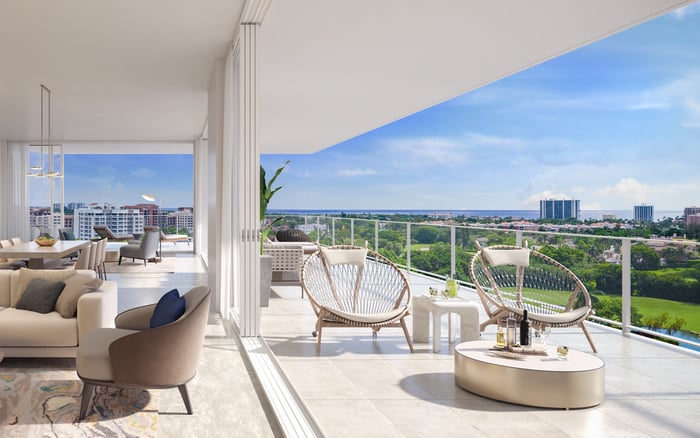
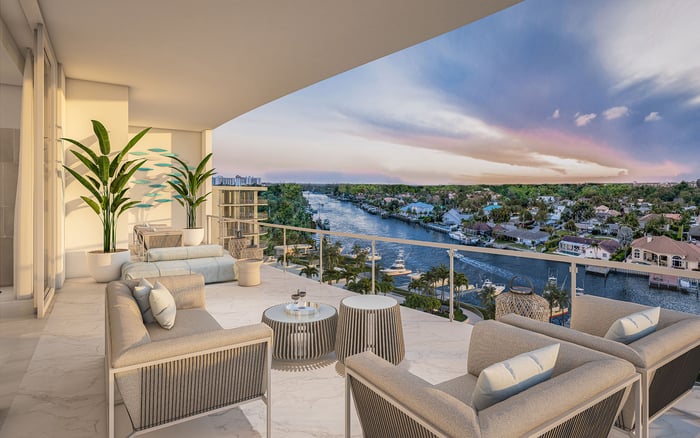
In Boca Raton, the richer daily experience depends on how one defines walkability. Downtown Boca delivers the stronger everyday-use mix, with dining, retail, culture, and social energy clustered in a compact mixed-use district. The beachfront offers something different: scenic walking, ocean access, privacy, and a quieter residential cadence. For buyers choosing between the two, the real distinction is not whether both are attractive, but whether luxury means errand efficiency and street life or a more resort-like rhythm shaped by shoreline leisure.
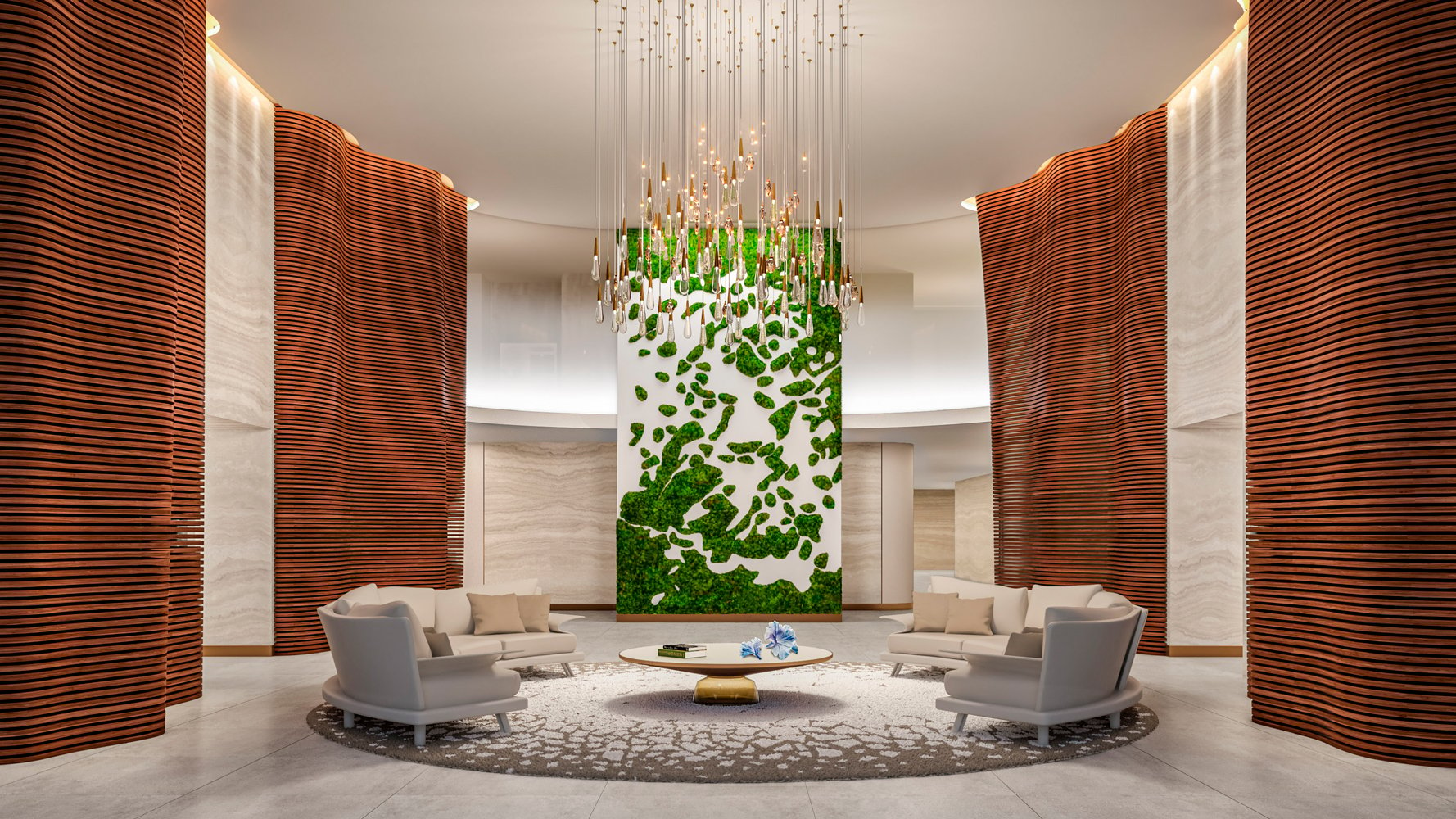
In Boca Raton, the debate between beachfront living and downtown living is not really about whether one is more prestigious. Both carry cachet. The sharper question is which feels richer in everyday use.
If daily luxury means stepping out for coffee, dinner, a gallery stop, a few errands, and a late stroll without planning around the car, downtown Boca makes the stronger case. Its core is organized around a compact, mixed-use district centered near Mizner Park, Palmetto Park Road, Federal Highway, and the surrounding blocks. That concentration matters because it turns walkability from a pleasant extra into a practical habit.
If, instead, everyday richness means starting the morning by the ocean, taking an unhurried walk near the sand, and returning to a quieter residential setting with less street activity, the beachfront has its own advantage. It simply expresses luxury through atmosphere rather than convenience.
That distinction is especially relevant for buyers considering residences such as Alina Residences Boca Raton, Glass House Boca Raton, Mr. C Residences Boca Raton, or The Residences at Mandarin Oriental Boca Raton. In this part of the market, lifestyle value is often measured less by headline amenities and more by how naturally the neighborhood supports daily life.
Downtown Boca is the city’s clearest expression of walkable mixed-use planning. Shops, restaurants, offices, residences, and cultural venues are grouped in a way that creates real day-to-night use, not just visual charm. In practical terms, that means a resident can leave home on foot and accomplish several purposes in one outing.
This is where downtown feels richer in the most literal daily sense. A lunch meeting can turn into browsing, a museum visit can turn into dinner, and a simple coffee run can become an impromptu social lap through the neighborhood. The district’s retail mix supports both leisure and routine use, which is a meaningful distinction in luxury residential decision-making. A neighborhood that walks well only for recreation does not function the same way as one that walks well for real life.
Cultural access also strengthens downtown’s position. The presence of the Boca Raton Museum of Art within the larger walkable core adds a refined stop that fits naturally into an ordinary afternoon. That creates a broader idea of convenience, one that includes not just necessities but a more layered urban rhythm.
For residents who want energy without the scale of Miami, Downtown Boca offers one of South Florida’s more polished versions of compact luxury walkability. The experience is not frenetic. It is curated, social, and legible.
Beachfront Boca should not be judged by the same metric. Its appeal is not the density of errands completed on foot. Its appeal is the quality of open-air life.
Along the shoreline, the walk itself is the destination. Parks, beach access, and coastal paths create a resort-like pattern to the day. South Beach Park and Red Reef Park are central to that feeling, offering oceanfront movement, natural scenery, and a more relaxed tempo than downtown’s café-and-retail circulation. Red Reef, in particular, reinforces the beachfront’s leisure-first identity with boardwalk-style coastal walking and nature-oriented surroundings.
This is why some buyers will still say the beachfront feels richer. They are talking about sensory luxury: salt air, horizon lines, quieter streets, and the psychological value of living near the water. For owners who place privacy, calm, and ocean proximity above spontaneity in dining and shopping, the beachfront can feel more exclusive precisely because it is less activated.
The trade-off is simple. Beachfront Boca offers a beautiful walk, but not the same concentration of storefronts, services, and social anchors that make a district useful throughout the day. In many cases, routine errands still tilt back to the car.
For high-end buyers, the phrase richer in everyday use usually comes down to one of two definitions.
The first is efficiency with elegance. That means being able to walk to meals, pick up a few things, meet friends, enjoy culture, and remain engaged with the city within a compact radius. By that definition, downtown Boca is stronger.
The second is ambiance with ease. That means waking up to a quieter setting, walking for pleasure rather than purpose, and making the ocean the organizing feature of daily life. By that definition, the beachfront may feel more emotionally luxurious.
The important point is that these are not interchangeable experiences. Downtown rewards residents who want layered daily optionality. The beachfront rewards those who prefer ritual, privacy, and scenic consistency.
In Boca-ratón, many sophisticated buyers are not choosing between good and bad walkability. They are choosing between different categories of walkability.
The downtown advantage extends beyond errands. It also creates social visibility. A denser café and restaurant environment tends to generate more movement in the mornings, more destination dining in the evenings, and more ambient activity on weekends. That can make daily life feel fuller, particularly for part-time residents who want a neighborhood to meet them halfway.
Beachfront living, by contrast, often offers a more private script. You walk for air, for light, for the sea. The setting can feel more residential and less performative. For some households, that is the greater luxury. For others, it becomes limiting once the initial glow of oceanfront living settles into routine.
This is where purchase intent matters. A primary residence often benefits from downtown’s mixed-use practicality. A second-home buyer may place a higher premium on the beachfront’s decompression effect. Neither is universally superior, but only one is more likely to simplify ordinary life on foot.
For most buyers asking a practical real estate question rather than a poetic one, downtown Boca feels richer in everyday use. It offers the more complete walking ecosystem, with dining, retail, culture, and social movement assembled in one coherent district.
The beachfront remains the more atmospheric choice. It delivers scenic walking, a quieter cadence, and a distinctly oceanfront frame of mind. But it is thinner as an all-purpose daily environment.
So the answer depends on what a resident wants luxury to do. If luxury should remove friction from the day, Downtown Boca wins. If luxury should mute the day and place the horizon at its center, the beachfront has the more evocative hold.
For buyers weighing new-construction opportunities, that is the distinction worth keeping in focus: downtown tends to enrich routine, while the beach tends to elevate retreat.
Is downtown Boca more walkable than beachfront Boca for daily life? Yes. Downtown generally offers a tighter mix of dining, retail, culture, and everyday activity within a shorter walk.
Does beachfront Boca still feel walkable? Yes, but more for scenic leisure than for combining errands, meals, and services in one outing.
Which area feels more luxurious day to day? Downtown feels richer in practical use, while the beachfront feels richer in atmosphere and calm.
Is Mizner Park the center of downtown Boca walkability? Broadly, yes. It sits within the city’s main pedestrian-oriented mixed-use core and anchors much of the experience.
Who should choose downtown Boca? Buyers who value spontaneous dining, shopping, culture, and social energy on foot tend to prefer downtown living.
Who should choose beachfront Boca? Buyers who prioritize ocean access, privacy, open-air walking, and a quieter residential rhythm often prefer the beach.
Are beachfront areas less convenient for errands? In general, yes. The beachfront is more leisure-oriented and often less efficient for routine daily needs.
Does downtown Boca feel urban? It feels more activated and mixed-use, but still polished and relatively contained rather than intensely urban.
Is the beachfront better for a second home? It can be, especially for owners who want a retreat-like environment centered on the water and recreation.
What is the clearest takeaway for buyers? If walkability means everyday usefulness, downtown leads. If it means scenic walking and beach access, the beachfront is more compelling.
For a discreet conversation and a curated building-by-building shortlist, connect with MILLION.
If branded residences are on your mind — as a home or as an allocation — we would be glad to share what we are seeing, privately.
Begin a quiet conversation