A buyer-focused look at why private dining at Alba West Palm Beach should be evaluated as an operating system, not merely an amenity label.
At the highest end of South Florida real estate, buyers rarely decide on finishes alone. Stone, glass, water views, and sculptural lobbies may shape the first impression, but the final decision often turns on a quieter question: how easily will life work here?
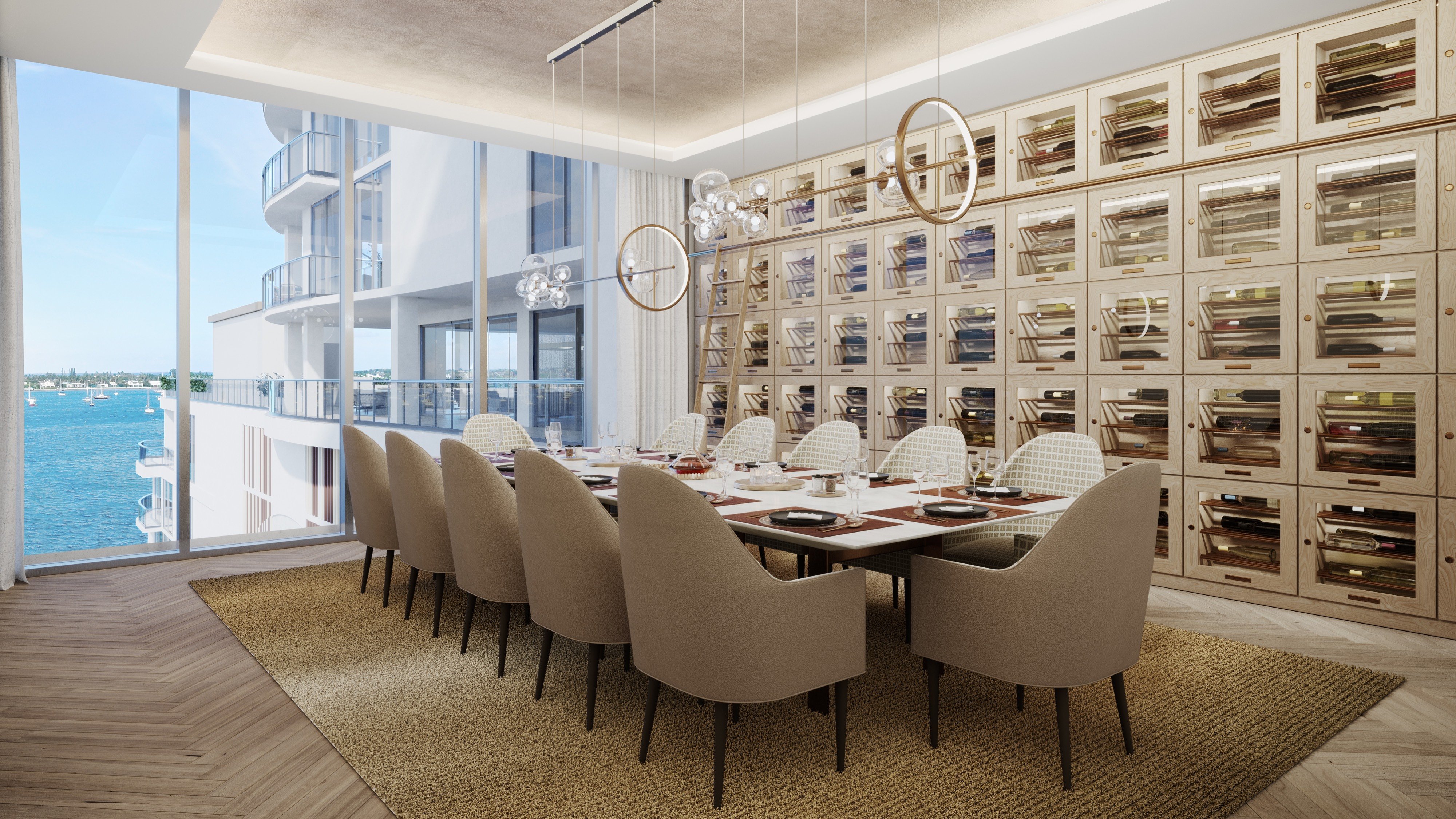
That question is especially relevant at Alba West Palm Beach, a boutique waterfront condominium where shared amenity spaces are expected to deliver the polish of a private club with the convenience of a hotel residence. In this context, private dining is not simply a photogenic room with a table. It is an operating system. It involves reservations, preparation, service flow, catering access, staffing, cleanup, and the ability to host without turning residents into event managers.
For a seasonal owner arriving for a month, a local upgrader trading a single-family routine for lock-and-leave ease, or an international buyer seeking a low-friction West Palm Beach base, those details matter. The promise is not only a beautiful setting on the water. The promise is that the building can support the way affluent residents actually entertain.
Boutique luxury has a specific appeal: intimacy, discretion, and a more residential rhythm. Yet that same boutique scale makes amenity planning more demanding. A larger tower may have multiple hospitality zones, duplicated lounges, or several layers of staff coverage. A smaller, more curated building has to make each shared space work harder.
At Alba West Palm Beach, the dining conversation should therefore be practical. Can the private dining area support a seated dinner without disturbing other residents? Is there adequate preparation capacity, or does every event depend on outside catering? How do service staff enter, stage, clear, and exit? Is the space appropriate for birthdays, chef-led dinners, casual family meals, and small wellness-focused gatherings, or is it limited to one type of use?
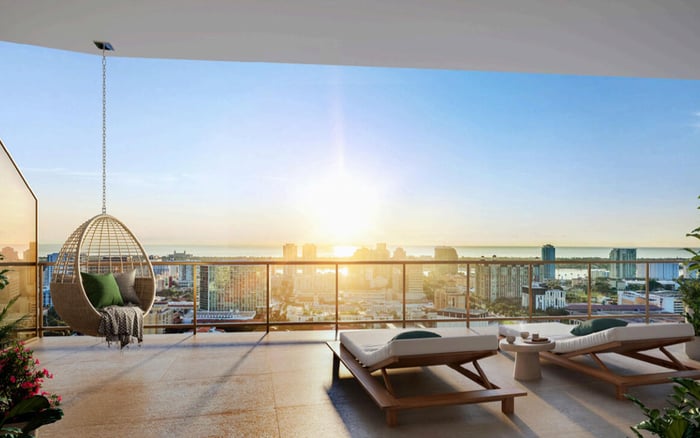
This is where the distinction between luxury and operational luxury becomes visible. A waterview terrace may capture attention, but the hidden choreography determines whether the evening feels effortless. Boutique living can be deeply compelling when the service model is precise. It can feel constrained when the amenity looks finished but functions like an afterthought.
Private dining becomes especially influential when waterfront residences begin to look comparable on paper. Architecture may be refined. Views may be strong. Pricing may occupy a similar luxury band. In that environment, operational details become differentiators.
A buyer considering Alba is not only asking whether there is a private dining room. The more useful question is whether the building can reliably support real use. A couple may want to bring in a private chef for visiting family. A resident may prefer catered dinners that do not require restaurant reservations during peak season. A wellness-focused owner may want prepared meals after training or quiet weekday dining without leaving the property. A host may want a private celebration that feels polished, discreet, and simple.
Each scenario depends on logistics. If booking rules are unclear, setup windows are too narrow, catering deliveries are complicated, or cleanup responsibility falls awkwardly on the resident, the amenity begins to lose value. If the building has clear procedures, thoughtful service pathways, reasonable access rules, and staff who understand event flow, the private dining experience can become a defining reason to buy.
The best private dining questions are not decorative. They are operational.
Buyers should ask how the dining space is reserved, how far in advance it can be booked, and whether multiple residents can use adjacent amenities at the same time. They should understand guest policies, food and beverage rules, preferred vendor access, insurance requirements, and whether outside chefs can work on-site. If catering is expected, the delivery path matters: loading access, service elevators, staging areas, and trash removal can determine whether an event feels seamless or improvised.
Kitchen access is another key issue. A true entertaining platform requires more than a table and chairs. It needs a realistic answer for refrigeration, warming, plating, glassware, service ware, and post-event cleaning. Even when the building is not promising restaurant-level operations, the private dining area should be designed around how hosts and vendors actually move.
Staffing costs should also be part of the conversation. A polished event may require building personnel, contracted service staff, or approved vendors. None of that is inherently negative. Many affluent buyers prefer paying for reliability. What matters is transparency. A luxury residence feels stronger when the owner understands the rules, fees, timing, and support before the first dinner is planned.
The strongest version of private dining changes the emotional register of a building. It makes the property feel less like a condominium with shared rooms and more like a private club layered into a residential waterfront setting.
That feeling is not created by formality. It is created by confidence. Residents know they can invite friends without worrying about awkward access. They know a chef can be coordinated without confusion. They know cleanup will not undermine the evening. They know the space can support both special occasions and the quieter rituals of daily life.
For Alba West Palm Beach, this is central to the full-service question. Buyers will read the building through more than architecture and location. They will evaluate whether the lifestyle has been engineered. A private dining program that supports entertaining, routine meals, wellness preferences, and seasonal hosting can help bridge the gap between resort-style living and urban convenience.
That is particularly important in West Palm Beach, where many luxury buyers are seeking ease as much as beauty. The right residence should let them arrive, settle in, and live well immediately. In a boutique, second-home, new-construction, Palm Beach, West Palm Beach conversation, the most persuasive features are often the ones residents barely notice because they work.
Poorly planned private dining does not usually fail dramatically. It fails quietly.
A resident cannot secure the room on a preferred evening. A caterer arrives with no clear staging point. Food must be carried through areas that were not designed for service. The room looks impressive, but preparation capacity is limited. Cleanup takes longer than expected. Rules differ depending on whom the resident asks. The result is not catastrophe, but hesitation. The owner hosts less often. The amenity becomes a brochure feature rather than a lived advantage.
In a luxury setting, that gap can influence value perception. Buyers are increasingly attentive to whether a building’s promises can be delivered repeatedly, not merely displayed during a tour. Private dining is one of the clearest tests because it combines architecture, service, management, and resident culture in a single experience.
Alba West Palm Beach is best understood through this lens of practical lifestyle delivery. Its boutique waterfront positioning gives it an intimate, elevated framework, but the buyer decision depends on execution. Private dining logistics help answer whether the building can perform as a true full-service residence or simply present attractive common spaces.
The most discerning buyers will look past the render-ready moment and ask how the evening unfolds. Where does the chef arrive? Who opens the space? How are deliveries handled? What happens when two residents want peak-time access? Who resets the room? How does the building protect privacy while still enabling hospitality?
These are not minor questions. They are the difference between ownership that feels managed and ownership that feels burdensome. In the ultra-premium segment, luxury is increasingly measured by the removal of friction. At Alba, private dining can become a decisive signal of whether the building’s lifestyle is not only beautiful, but operationally mature.
Why does private dining matter at Alba West Palm Beach? It matters because buyers are evaluating whether the building can support real entertaining, not just display an attractive amenity space.
Is private dining mainly about having a beautiful room? No. The room is only one element; booking, preparation, catering access, service flow, and cleanup determine the experience.
What should buyers ask before relying on a private dining amenity? They should ask about reservation rules, guest policies, kitchen access, vendor procedures, fees, staffing, and cleanup responsibility.
Why is this especially important in a boutique building? Boutique properties often have fewer duplicated amenity spaces, so each shared area needs to be flexible and well managed.
Can private dining affect the perception of full-service living? Yes. Smooth dining logistics can make a residence feel closer to a private club or hotel-style home.
What kinds of buyers may care most about dining logistics? Seasonal residents, second-home buyers, local upgraders, and international purchasers may all value low-friction entertaining.
What creates friction in private dining amenities? Common issues include unclear rules, limited prep space, scheduling conflicts, difficult deliveries, and weak service coordination.
Should buyers consider operating costs? Yes. Staffing, vendor requirements, and event fees can affect how often and how comfortably residents use the space.
Does private dining influence resale appeal? It can support appeal when buyers see that the building’s amenities function well in daily and social use.
What is the best way to shortlist comparable options for touring? Start with location fit, delivery status, and daily lifestyle priorities, then compare stacks and elevations to validate views and privacy.
For a confidential assessment and a building-by-building shortlist, connect with MILLION.
If branded residences are on your mind — as a home or as an allocation — we would be glad to share what we are seeing, privately.
Begin a quiet conversation