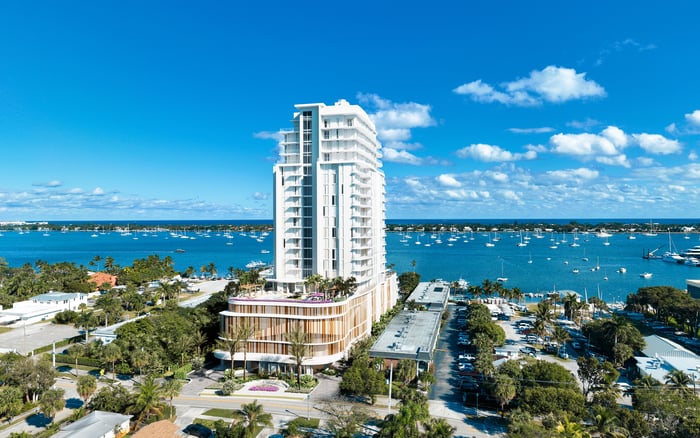
A buyer-focused look at how private elevator openings can shape arrival, privacy, staffing, entertaining, security, and long-term livability when evaluating Alba West Palm Beach.
When evaluating Alba West Palm Beach, private elevator openings deserve more scrutiny than a standard amenity checklist allows. The moment the elevator doors part is not merely a mechanical convenience. It is the transition between the shared realm of the building and the private world of the residence.
That threshold can shape the entire rhythm of the home. It influences how owners return from dinner, how guests are received, how deliveries are handled, how staff move through the residence, and how secure the home feels when the household is away. For buyers considering Alba West Palm Beach, the useful question is not simply whether private elevator access appears in a particular layout. The more practical question is how the opening performs in real life.
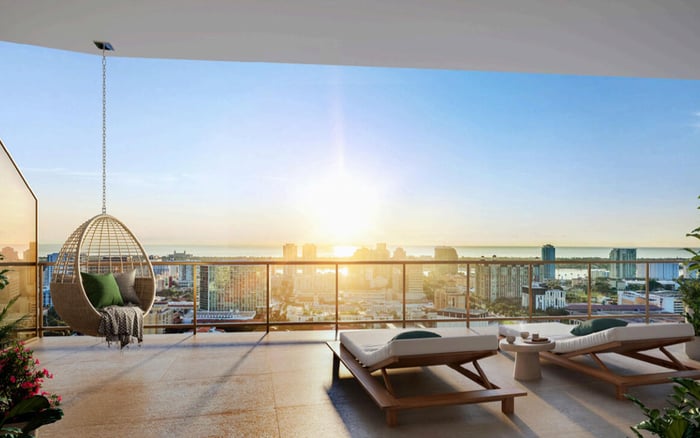
For many luxury buyers, the relevant lens is West Palm Beach living: view priorities, second-home ease, privacy expectations, and daily operational comfort. Private vertical circulation belongs within that broader conversation because it influences both atmosphere and function.
Luxury condominium buyers often focus on views, terraces, finishes, amenities, and building services. Those elements matter, but the elevator opening is one of the few details that changes how the residence behaves every day. It is where privacy either begins gracefully or feels compromised.
A private elevator opening can help a condominium residence feel more individualized than a conventional shared-corridor arrival. Instead of moving through a common hallway, the household may arrive through a more controlled threshold. The difference can be subtle, yet it carries emotional weight. Arrival feels curated, contained, and personal.
Buyers should avoid assuming that every reference to a private elevator means the same thing. Some layouts may open to a private foyer. Others may involve a vestibule, a semi-private landing, or a point close to the residence interior. Each version changes how privacy, sound, sightlines, and circulation are experienced.
The first question is simple: where do the elevator doors open?
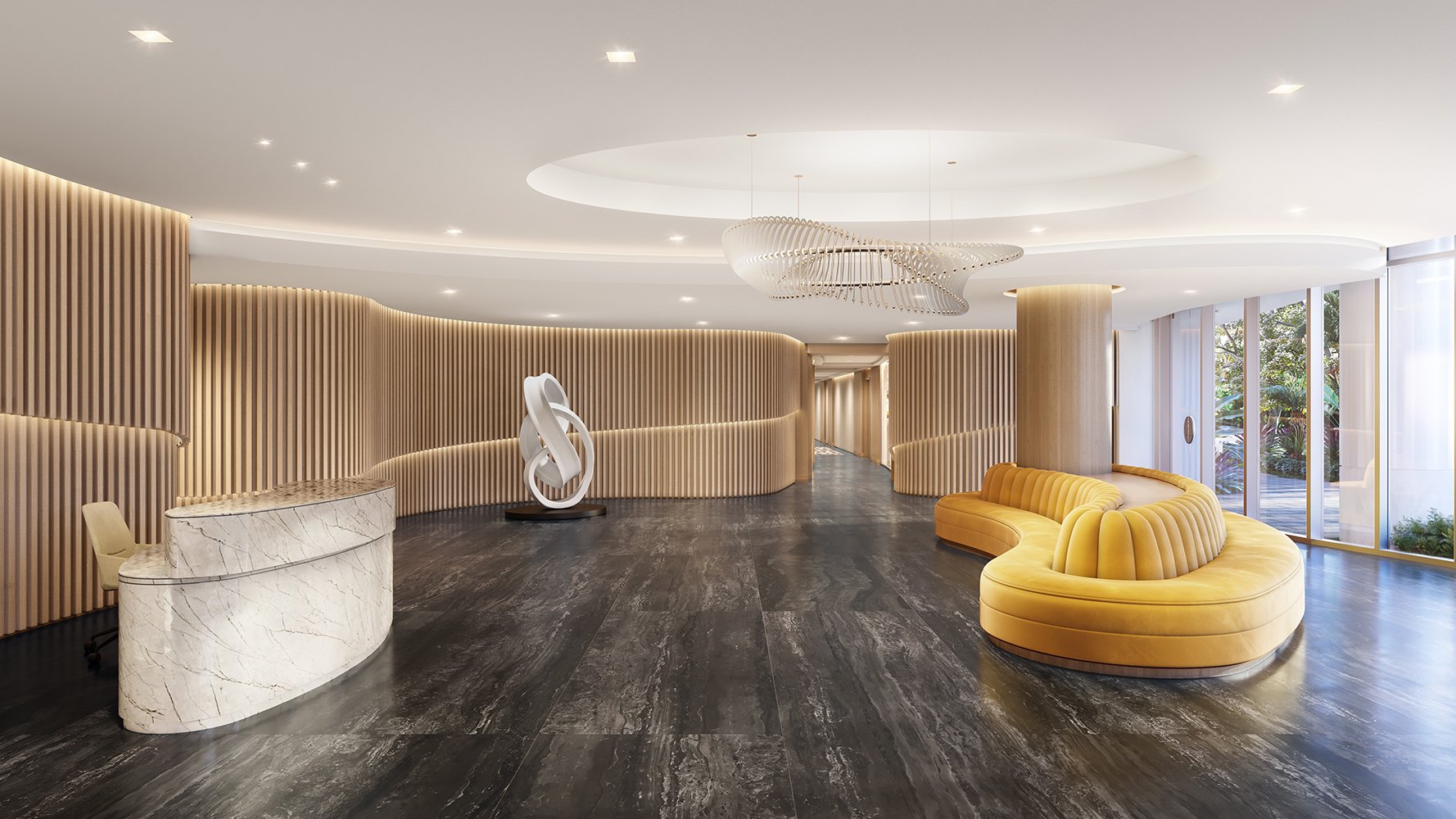
A private foyer can create a composed pause before the home reveals itself. It may allow art, lighting, console storage, or discreet drop zones to frame the arrival. It can also separate the elevator from main living areas, which helps when guests, vendors, or staff arrive.
A vestibule can perform a similar role, though its success depends on scale, door placement, and how it connects to the rest of the plan. A well-considered vestibule gives the household a moment of control. A tight or awkward one can feel more like leftover space than a true arrival gallery.
A direct opening into or near the residence interior can feel dramatic, especially if the view is immediately revealed. But drama should be balanced against privacy. If the elevator opens near living space, dining space, or a bedroom corridor, buyers should consider what a guest sees in the first three seconds and whether that exposure suits everyday life.
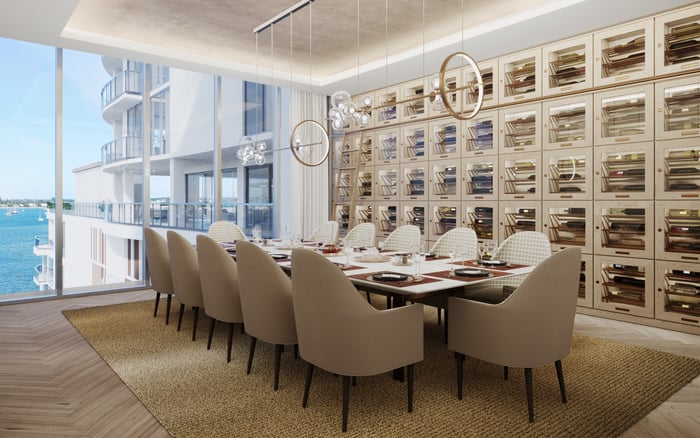
For households that entertain, the elevator opening becomes part of the hospitality sequence. A private arrival can be elegant, but only when paired with clear building procedures.
Buyers should ask how guests are announced, approved, escorted, and received. Does a concierge call ahead? Is the guest sent directly up only after authorization? Is there a waiting point at the lobby level? How does the household prevent an unexpected arrival from appearing too close to private living space?
The most polished residences separate ceremony from exposure. Guests can arrive with a sense of occasion while the household retains control over what is visible. In a West Palm Beach setting, that may mean using the elevator opening to create a graceful first impression, but not at the expense of privacy or family circulation.
Private elevator access should also be evaluated through the lens of the people who support the household. Housekeepers, caregivers, assistants, maintenance personnel, florists, caterers, and other vendors all need a practical path through the building and residence.
A beautiful elevator opening is less successful if every service function crosses the most formal living areas. Buyers should understand whether staff can arrive through a service route, whether a service elevator is available, and how maintenance visits are scheduled and authorized.
The goal is not to make the home feel overly procedural. It is to preserve ease. A residence with thoughtful circulation allows the household to live normally while support functions happen discreetly. In that sense, the private elevator opening is both architectural and operational.
Families should study what lies immediately beyond the elevator opening. The issue is not only guest arrival. It is also how the opening relates to children’s rooms, service areas, bedroom wings, and secondary living spaces.
If the elevator opens close to private bedroom zones, the household should consider whether doors, corridors, or transitional spaces create enough separation. If children or guests use different parts of the residence at the same time, sightlines and acoustics matter. The best layouts make arrival feel intuitive without turning private rooms into pass-through territory.
Security is part of this discussion, but so is comfort. A family residence should not feel exposed every time the elevator opens. The threshold should support calm, not tension.
For seasonal residents, private elevator access can reduce friction during arrival and departure periods. Luggage, garment bags, pets, provisions, and household items all move through the same sequence. The better that sequence works, the easier the residence feels to own.
A private opening can make returns feel seamless after time away. It can also help maintain discretion when the building is busy. Still, buyers should examine the operational details: delivery procedures, package permissions, valet or arrival coordination, and concierge communication.
The most valuable version of convenience is predictable convenience. Seasonal owners should know exactly how the building handles authorization, access, luggage carts, service scheduling, and after-hours arrivals.
Private elevator access is only as strong as the systems around it. Buyers should evaluate the elevator opening alongside lobby control, concierge procedures, arrival management, access permissions, and emergency protocols.
Important questions include how elevator permissions are granted, how guest authorization works, what happens during maintenance, and how service interruptions are handled. In South Florida, buyers should also ask about storm procedures, power outages, emergency operations, and stair access.
Redundancy matters. A residence may feel beautifully private in normal conditions, but it should also function under pressure. Buyers should understand the relationship among private elevators, service elevators, emergency stairs, and building staff procedures before treating the feature as a settled advantage.
Not every luxury buyer needs the same arrival model. A fully private threshold may appeal to households that value seclusion, entertain frequently, or employ regular staff. A semi-private arrangement may still feel refined if the landing serves very few residences and circulation is well controlled. A corridor-based layout can be efficient, especially when building operations are excellent.
The key is comparison. Buyers should walk through the sequence mentally and physically: lobby to elevator, elevator to residence, residence to service areas, residence to emergency stairs, and residence back to the lobby. The private elevator opening is not an isolated design note. It is one link in a chain.
At Alba West Palm Beach, that chain should be considered in the context of the household’s actual lifestyle. More individualized vertical circulation can support a sense of exclusivity, but performance depends on how consistently the building operates.
Private elevator openings may support luxury positioning because they change the perception of exclusivity. They reduce or eliminate the feeling of shared corridor arrival and can create a more personal residential experience. For buyers accustomed to estate homes, that distinction can be meaningful.
Long-term value, however, should be discussed with restraint. A private opening is not valuable simply because it sounds exclusive. Its value depends on maintenance quality, elevator reliability, staff training, security consistency, and the everyday usefulness of the layout.
A beautiful threshold that functions poorly will disappoint. A well-run arrival sequence can become one of the home’s quietest luxuries. The most sophisticated buyers will study both the architecture and the operating culture behind it.
Before committing to a residence, households should ask a focused set of questions. Does the elevator open into a private foyer, vestibule, semi-private landing, or directly near living space? What does a guest see on arrival? How are visitors announced and authorized? How do staff, caregivers, vendors, and maintenance personnel circulate?
Buyers should also ask about elevator redundancy, service-elevator access, emergency stair access, security permissions, delivery procedures, guest authorization, maintenance protocols, storm operations, and power-outage planning. These questions may seem technical, but they define daily comfort.
The best private elevator opening is not necessarily the most theatrical one. It is the one that makes the household feel composed, secure, and well served every day.
Does Alba West Palm Beach have private elevator openings? Buyers should confirm the current residence plans and offering materials for the specific layout they are considering, because elevator access can vary by plan.
Why does the elevator opening matter so much? It is the transition between shared building space and private residential space, so it affects privacy, arrival, security, and daily circulation.
Is a private foyer better than a direct interior opening? Not always. A private foyer often creates more privacy and control, while a direct interior opening can feel dramatic if sightlines and procedures are carefully managed.
What should entertaining households ask first? They should ask how guests are announced, authorized, escorted, and received when the elevator opens close to private living areas.
How should families evaluate the layout? Families should look at whether the elevator opening is separated from children’s rooms, service areas, and bedroom zones by clear circulation or doors.
Does private elevator access help seasonal owners? It can improve lock-and-leave convenience by simplifying arrivals, departures, luggage movement, and household provisioning when building procedures are well organized.
What operational questions matter most? Buyers should ask about elevator redundancy, service access, emergency stairs, guest permissions, delivery procedures, maintenance schedules, and storm protocols.
Are all private elevator layouts the same? No. Private, semi-private, vestibule-based, and corridor-based arrangements can feel very different in daily use.
Can a private elevator opening support resale positioning? It may support luxury positioning, but long-term appeal depends on maintenance quality, security consistency, and how well the layout functions.
What is the simplest way to evaluate the feature? Walk the full arrival sequence from lobby to residence and ask whether it feels private, intuitive, secure, and practical for the household’s actual routines.
For a confidential assessment and a building-by-building shortlist, connect with MILLION.
If branded residences are on your mind — as a home or as an allocation — we would be glad to share what we are seeing, privately.
Begin a quiet conversation