A discreet buyer’s guide to choosing between Miami Design District and West Palm Beach for a weekly travel lifestyle, with emphasis on rhythm, privacy, services, and residential fit.
For buyers who travel every week, the choice between Miami Design District and West Palm Beach is less about civic preference than personal operating system. Both can support a refined South Florida life, but they deliver it at different tempos. One is immediate, social, design-forward, and close to Miami’s cultural charge. The other is calmer, more residential in spirit, and better suited to buyers who want homecoming to feel like an exhale.
A weekly traveler should begin with a candid inventory. How often do you leave before sunrise? Do you return with clients in tow, or do you want to disappear for forty-eight hours? Is the home a base for dinners, openings, and meetings, or a retreat from all of it? The answer will usually reveal the right geography before any floor plan does.
The best purchase is not necessarily the most dramatic residence. It is the one that makes repetition feel elegant. That means easy arrivals, a trusted building team, strong privacy, resilient storage, secure parking, and spaces that do not punish absence. A South Florida home for a weekly traveler should live beautifully when occupied and remain composed when closed.
Miami Design District best fits the traveler who returns from a trip and still wants momentum. This buyer values proximity to art, fashion, dining, galleries, and the city’s creative conversation. The appeal is not only what is nearby, but how little ceremony is required to rejoin the scene. A meeting can become dinner. Dinner can become a collector’s conversation. A short stay in town can still feel culturally dense.
For buyers who keep a Miami-centered social or professional calendar, the Design District offers an urban lifestyle without defaulting to a conventional financial-district routine. It is polished, but not corporate in feeling. It suits those who care about interiors, architecture, lighting, curation, and the pleasure of walking into a room where design literacy is assumed.
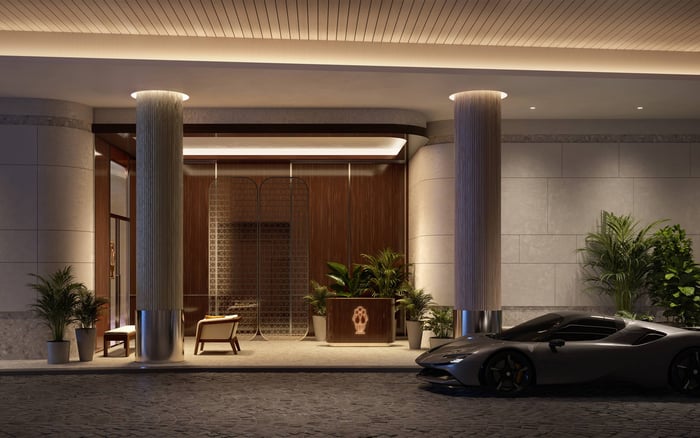
Residentially, the area works best for buyers who want a controlled private sphere within a highly activated neighborhood. The appeal of Kempinski Residences Miami Design District is precisely that tension: a home base positioned for access, yet framed around the expectation of service, privacy, and ease. Nearby, Miami Design Residences Midtown Miami speaks to a buyer who wants the surrounding creative corridor to be part of daily life rather than an occasional destination.
The tradeoff is intensity. If you come home from travel depleted, the energy that makes the Design District compelling may feel like too much. If, however, travel is part of a larger public-facing life, the neighborhood can compress a week’s worth of Miami into a single evening.
West Palm Beach favors the traveler who wants a different kind of luxury: composure. It is not about opting out of culture or dining, but about choosing a softer home rhythm. The weekly traveler who is constantly moving through terminals, hotels, meetings, and changing time zones may prefer a place where the first sensation on return is quiet order.
This is where West Palm Beach can be especially persuasive. The lifestyle reads as more residential, more measured, and often more private in mood. A buyer can still maintain a serious South Florida presence, but the home does not have to perform at all hours. For many frequent travelers, that distinction is profound.
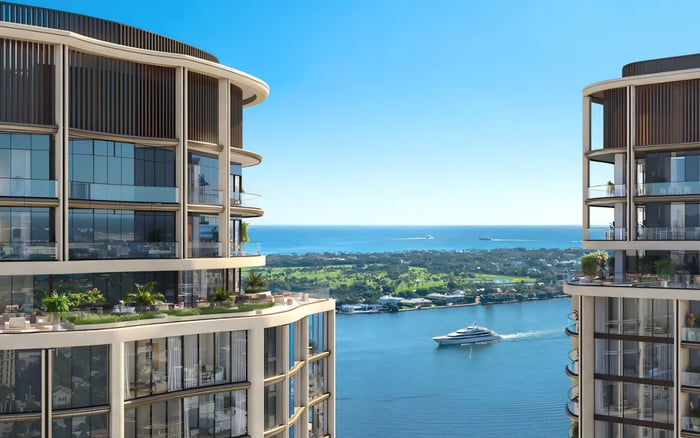
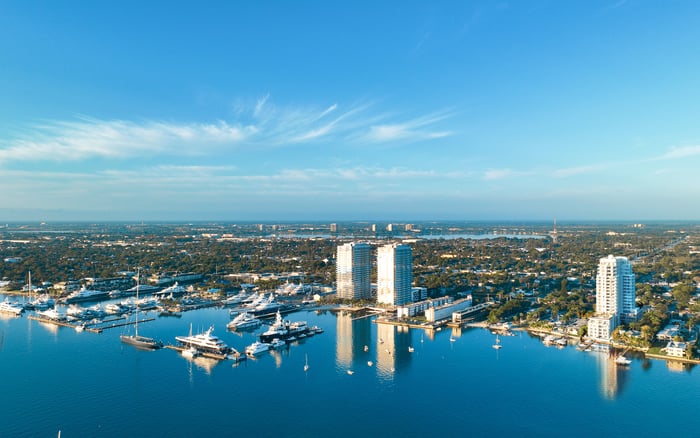
Projects such as Alba West Palm Beach align with buyers who want water-oriented calm and a lock-and-leave sensibility without surrendering polish. Mr. C Residences West Palm Beach offers a hospitality-minded residential proposition for those who value service as part of the daily equation. Forté on Flagler West Palm Beach may appeal to buyers who want a more serene, established-feeling address profile.
A West Palm Beach search often becomes a second-home search in practice, even when the residence is used frequently. The buyer is not asking for isolation. The buyer is asking for re-entry that feels civilized.
The simplest test is to imagine three moments: Sunday night packing, midweek departure, and Friday return. In Miami Design District, the advantage is energy and immediacy. The neighborhood rewards buyers whose travel schedule is intertwined with Miami’s cultural and commercial life. If you want to land, change, and be at dinner with people who matter to your world, it is a strong fit.
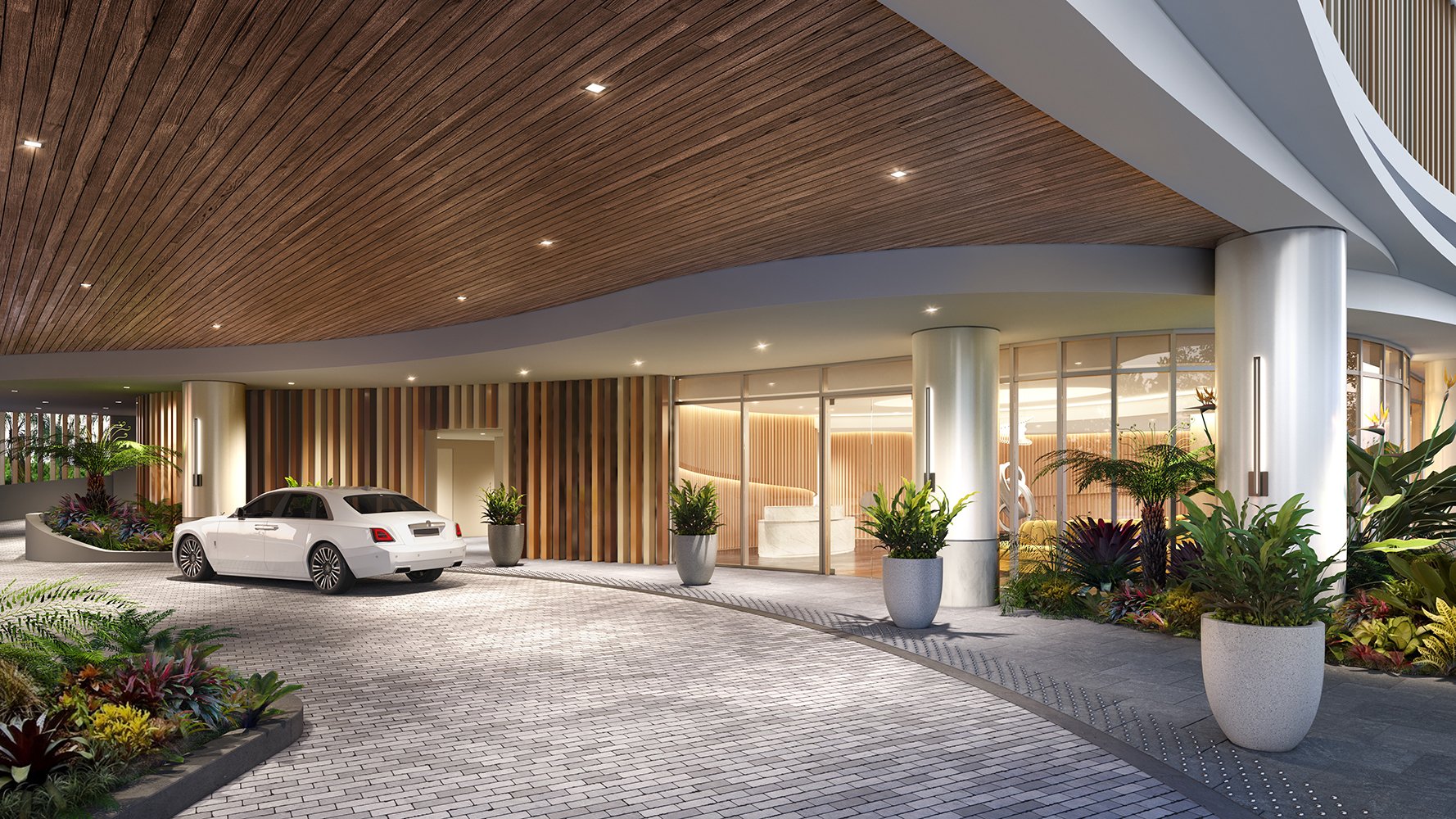
In West Palm Beach, the advantage is recovery. It favors buyers who want the residence to function like a private reset chamber. The building, the valet experience, the elevator sequence, the view, the bedroom acoustics, and the morning ritual all matter. For these buyers, the best home is not the one closest to the action, but the one that restores them fastest.
There is also a household dimension. Couples sometimes divide on this issue. One partner may crave the Design District’s stimulation, while the other prefers West Palm Beach’s quieter cadence. In that case, the decision should focus on who travels more, who uses the home during the week, and whether the residence is meant to host or heal.
A boutique building can be attractive in either market if it provides a strong sense of recognition and continuity. Larger amenity-rich properties may suit buyers who want more staff depth and service redundancy. The right answer depends less on scale than on execution.
Weekly travelers should be unusually disciplined about the details. A beautiful home that requires constant management is the wrong purchase. Prioritize practical elegance: secure receiving, reliable package handling, intuitive parking, guest access protocols, maintenance coordination, and a floor plan that does not depend on daily use to feel alive.
Storage matters more than many buyers expect. Luggage, garment bags, golf clubs, presentation materials, seasonal wardrobes, and duplicate essentials all need a discreet place to live. So does technology. The residence should support remote work, private calls, and smooth transitions between travel mode and home mode.
Outdoor space is another dividing line. In Miami Design District, a terrace may function as an urban pause, a place to reset before stepping back into the city. In West Palm Beach, outdoor space may become part of a slower morning and evening routine. Neither is inherently better. The question is which one you will actually use after a flight.
Service is the final filter. The weekly traveler benefits from a building that anticipates absence. That includes staff who understand recurring patterns, vendors who can be coordinated without friction, and a residence that feels cared for even when the owner is away.
Choose Miami Design District if weekly travel feeds a Miami-facing life of meetings, art, dinners, and design culture. Choose West Palm Beach if weekly travel creates a need for privacy, softness, and a more restorative return.
The two lifestyles are not competitors so much as different definitions of time. Miami Design District makes limited time feel full. West Palm Beach makes limited time feel protected. For the right buyer, that distinction is everything.
Is Miami Design District better for buyers with active social calendars? Often, yes. It suits buyers who want dining, design, and cultural energy close to their residence.
Is West Palm Beach better for a quieter return after travel? It can be. West Palm Beach tends to appeal to buyers who want a calmer residential rhythm between trips.
Should airport routine decide the purchase? It should be part of the decision, but not the only factor. The more important question is how the full departure and return experience feels.
Which area is better for a lock-and-leave residence? Either can work if the building service model is strong. Weekly travelers should prioritize staff, access, maintenance, and security.
Is Miami Design District too active for a primary residence? Not for the right buyer. It works best for someone who sees neighborhood energy as a benefit rather than a disruption.
Can West Palm Beach still feel sophisticated? Yes. Its appeal is a more composed version of sophistication, with privacy and ease playing a central role.
What floor plan works best for frequent travelers? Look for efficient circulation, strong storage, a calm primary suite, and flexible space for work or guests.
Are branded residences useful for weekly travelers? They can be, especially when service, hospitality, and maintenance are central to the ownership experience.
Should buyers choose lifestyle before architecture? Yes. Architecture matters deeply, but the wrong neighborhood rhythm will eventually outweigh a beautiful room.
What is the best way to compare both markets? Tour each area around the times you would actually depart, return, dine, and rest. The right answer usually becomes clear through use.
If you'd like a private walkthrough and a curated shortlist, connect with MILLION.
If branded residences are on your mind — as a home or as an allocation — we would be glad to share what we are seeing, privately.
Begin a quiet conversation