Surfside offers a refined oceanfront base, but major event periods make transportation planning part of ownership. Buyers arriving from Montreal should treat airport choice, driver coordination, route monitoring and yacht movements as one integrated household protocol.
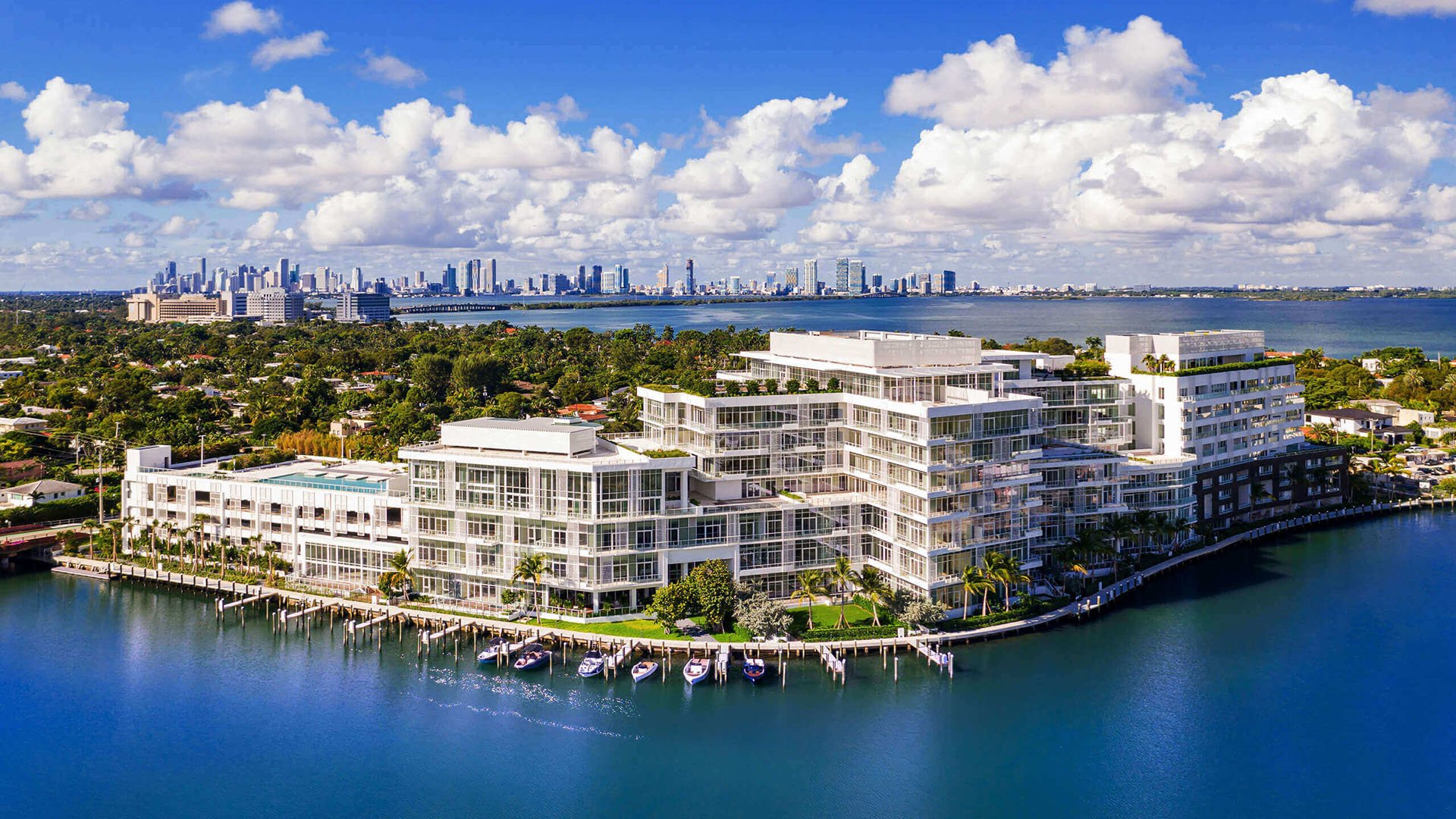
For buyers leaving Montreal, Surfside can feel immediately legible: a quieter oceanfront town between Miami Beach and Bal Harbour, removed from the rhythm of the major districts to its south. Yet geographic proximity does not guarantee predictable movement during Miami's most visible event periods. Formula 1 weekends and the Discover Boating Miami International Boat Show belong on the household calendar before flights, dinners or yacht outings are confirmed.
That distinction matters for anyone evaluating Arte Surfside, The Surf Club Four Seasons Surfside or another residence in town. The purchase decision is not simply about architecture and the water. It is also about how effectively a household can move among the oceanfront, the airports, Miami Beach and the mainland when demand intensifies across the region.
In Surfside, mobility during major events is a household protocol, not an afterthought.
Surfside is approximately 16 miles northeast of Miami International Airport and 17 miles south of Fort Lauderdale-Hollywood International Airport. From The Surf Club, Miami International is 15.6 miles away, with a typical drive of 30 to 35 minutes, depending on traffic. Another normal-traffic baseline puts the trip at about 35 minutes.
Fort Lauderdale-Hollywood is about 20 miles from The Surf Club, while Miami-Opa Locka Executive Airport is about 12 miles away. The baseline for Fort Lauderdale-Hollywood is approximately 55 minutes before event-related delays. These figures are planning references, not promises.
A Montreal arrival should therefore be organized around more than the shortest scheduled flight. Commercial travelers need to consider which airport offers the cleaner ground transfer at their specific arrival hour. Private aviation users may wish to discuss Miami-Opa Locka Executive Airport with their flight team, recognizing that the final road segment still requires monitoring.
For a second-home owner, the prudent approach is to give the household manager or concierge the flight number, passenger count, luggage profile and desired residence arrival time well in advance. The driver should receive the building's approved arrival instructions and maintain live communication rather than rely on a single static route.
Traffic patterns do not support a fixed Formula 1 delay allowance or a universal route prescription. Buyers should resist both. Instead, treat the event as a signal to verify current road conditions, airport advisories and pickup timing for the precise day and hour of travel.
That means confirming the airport choice before tickets are finalized, reserving the primary driver early and identifying a backup vehicle. It also means avoiding tightly sequenced commitments after landing. A transfer, residence arrival, change of clothes and dinner should not be planned as though each step will take its normal minimum duration.
The same discipline applies when comparing Surfside with nearby The Delmore Surfside or considering a broader Miami Beach lifestyle. F1 is relevant to ownership not because every trip follows a predictable pattern of disruption, but because a globally prominent weekend can place unusual pressure on transportation services and schedules. Current advisories-not assumptions based on a previous year-should govern the plan.
The Boat Show spans the Miami Beach Convention Center and waterfront venues, so its transportation effects extend beyond a single address. Attendance has been projected at roughly 100,000 people, and congestion can build near the convention center, yacht displays and surrounding streets during show hours.
Collins Avenue may have no show-related lane closures, but that does not make every Surfside journey routine. Cross-bay movement can be delayed at the Julia Tuttle and MacArthur causeways. Delays can also affect 79th Street, I-195, I-395 and the Venetian Causeway.
Recurring controls have included the closure of Convention Center Drive from 18th Street to Dade Boulevard and the eastern section of 19th Street between Meridian Avenue and Convention Center Drive. Officers may manage Washington Avenue, 17th Street, Dade Boulevard, Fifth Street and other key corridors. A street can remain technically open while vehicle flow is heavily controlled.
Familiar detours warrant equal caution. Event-week plans can include turning restrictions around 41st Street at Sheridan and Royal Palm avenues. For owners at Ocean House Surfside or elsewhere in town, the practical lesson is clear: a driver's local knowledge is valuable, but it must be paired with current event instructions.
Waterfront ownership introduces a second transportation clock. During Boat Show periods, temporary restrictions on East Venetian Causeway drawbridge openings can help stabilize afternoon and evening road traffic. The 63rd Street Bridge may also remain closed to marine openings during morning and afternoon rush periods.
Those measures can support road capacity while constraining vessel movement. A yacht departure and an airport transfer should never be treated as unrelated calendar entries. Captains, drivers and household staff need the same approved itinerary, including bridge constraints, passenger handoff points and a decision time for changing the plan.
Complimentary shuttles and shared transportation between Boat Show venues can reduce the need to drive into the most congested districts. A polished plan may pair a private car to a sensible transfer point with event transportation for the final segment. Door-to-door driving is not always the most efficient expression of luxury.
The strongest setup is simple enough to repeat. Forty-eight hours before a critical movement, the household team should reconfirm the flight, airport, show schedule and municipal traffic advisory. On the day, the driver should inspect both the preferred route and a viable alternative before leaving the garage.
For airport pickups, build a buffer around the normal 30-to-35-minute MIA reference or the approximately 55-minute FLL reference. The appropriate margin will vary and should be set according to live conditions rather than an invented universal number. Keep the arriving passenger informed before boarding in Montreal, especially if the selected airport or meeting point changes.
A reserve driver can protect against extended wait times, vehicle issues or overlapping household requests. Buyers should also ask a prospective building how valet communication, guest arrivals and professional drivers are handled during high-demand weekends. These operational details belong in serious buyer's guides alongside privacy, service and carrying costs.
Surfside's appeal remains its oceanfront position between two well-known coastal districts. Event traffic does not diminish that advantage; it simply rewards preparation. Buyers focused on F1 weekends, the Boat Show and frequent Montreal travel should assess each residence through three practical questions: Which airport works for the trip? Who controls the ground itinerary? How quickly can the plan adapt?
For a waterfront residence, those questions should extend to marine movements. For a Miami Beach engagement, they should include causeway and street controls. For Surfside itself, they should recognize that Collins Avenue can remain open while the cross-bay network slows elsewhere.
The result is not a more complicated lifestyle, but a more composed one. When aviation, chauffeured transport, residence access and yacht timing are managed as a single system, Surfside becomes a highly workable South Florida base for an internationally mobile household.
To evaluate Surfside residences through both a property and lifestyle lens, connect with MILLION.
If branded residences are on your mind — as a home or as an allocation — we would be glad to share what we are seeing, privately.
Begin a quiet conversationSurfside is approximately 15 to 16 miles from MIA. A typical drive from The Surf Club is about 30 to 35 minutes depending on traffic.
One normal-traffic baseline is approximately 55 minutes. Event congestion can make the journey less predictable.
Miami-Opa Locka Executive Airport is listed at about 12 miles from The Surf Club, making it relevant for private aviation planning.
Boat Show guidance has indicated no show-related lane closures on Collins Avenue. Congestion can still affect surrounding streets and cross-bay routes.
The Julia Tuttle and MacArthur causeways are major pressure points. The Venetian Causeway and routes linked to I-195 and I-395 can also be affected.
Officers may actively control intersections and vehicle flow on key corridors. Open access does not necessarily mean normal travel speed.
No fixed Formula 1 delay is supported here. Travelers should use current advisories and live conditions to set an appropriate buffer.
A reserve driver can protect against overlapping requests, long waits or vehicle issues. It is especially useful during high-demand event periods.
Yes. Restrictions on drawbridge openings can support road traffic while limiting when vessels can pass, so captains and drivers should coordinate.
Complimentary shuttles and shared transportation can reduce the need to drive into the busiest venue districts. A private car can be used for the less congested portion of the trip.