A practical comparison of Surfside and Miami Beach for buyers weighing daily walkability, airport flexibility, building choice, and low-friction second-home ownership.
The choice between Miami Beach and Surfside is less about distance than the rhythm a buyer wants upon arrival. Both place the ocean at the center of daily life, but they organize convenience differently. Surfside concentrates essentials within a narrow residential town. Miami Beach, particularly South of Fifth, offers a broader mix of restaurants, recreation and luxury-building formats.
For a second-home buyer, the decisive question is simple: What should happen without planning? If the ideal morning includes walking to the beach, collecting groceries and returning home without calling a car, Surfside presents a compelling proposition. If the priority is choosing between boutique residences and large, full-service towers while remaining close to a more active social landscape, Miami Beach has the advantage.
Surfside is home to nearly 6,000 residents and combines multifamily housing with a compact business district, restaurants, resorts, spas, public art and recreation. Its slender footprint along Collins and Harding avenues places many homes within a short walk of the beach. Groceries, dining, boutiques, salons and jewelers are concentrated nearby, while Bal Harbour shopping is close to the town’s northern end.
That compactness gives Surfside a naturally car-light quality. Around The Surf Club Four Seasons Surfside, private residences at 9001 and 9111 Collins Avenue sit approximately half a mile from Bal Harbour Shops and near everyday services. The associated hotel occupies a nine-acre beachfront site at 9011 Collins Avenue. This is walkability expressed through a small number of useful, repeatable routes rather than an expansive entertainment district.
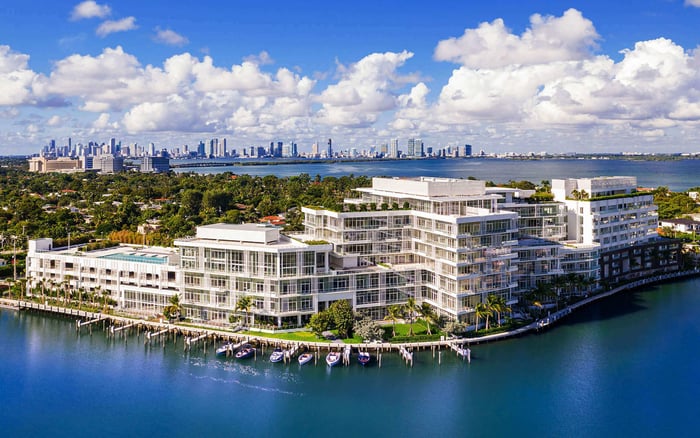
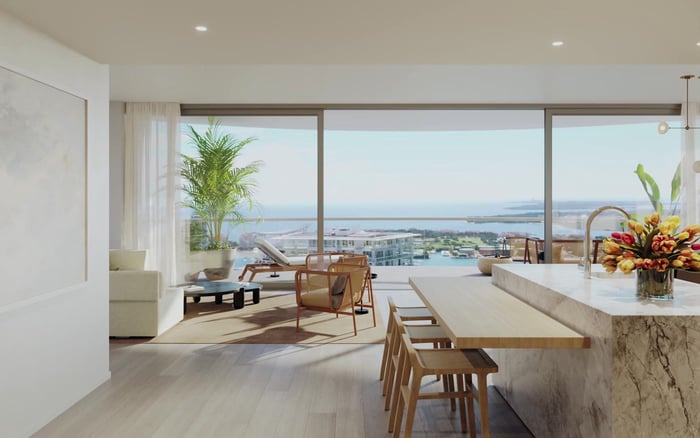
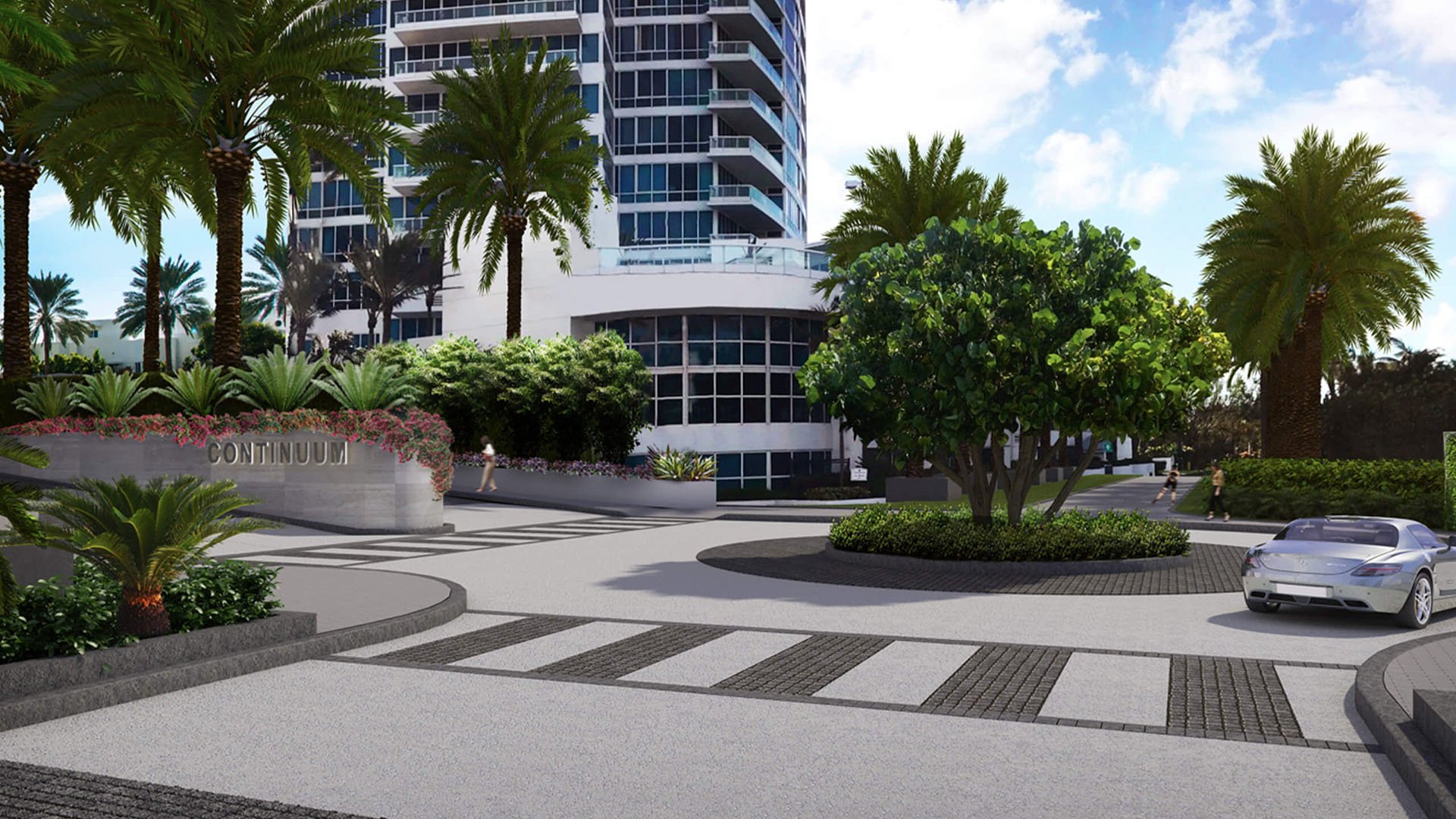
Miami Beach presents a different proposition. In South of Fifth, the appeal lies in having several residential formats within a single luxury submarket. Apogee South Beach and Continuum on South Beach illustrate the landmark-building side of that choice, while the neighborhood also includes boutique inventory. Marea, for example, contains just 19 residences.
In either location, buyers should time the walk from the exact residential entrance. An oceanfront address does not automatically make groceries or dining equally convenient. Parcel depth, wide roads, garage access and the placement of service entrances can subtly alter the experience.
Surfside offers useful airport flexibility. Miami International Airport is approximately 11.2 miles away, while Fort Lauderdale-Hollywood International Airport is approximately 13.5 miles away. Typical transfer estimates range from 25 to 35 minutes for MIA and 30 to 40 minutes for FLL, although estimates can extend to roughly 35 minutes for MIA and 55 minutes for FLL.
The variation matters more than any single figure. Surfside’s road distance to FLL is approximately 16.6 miles, with an estimated drive of about 31 minutes, but congestion can materially alter the journey. Its strategic benefit is access to two airports at relatively similar geographic distances, giving frequent travelers options when schedules or fares differ.
For Miami Beach, the road distance to FLL is approximately 22.4 miles, with an estimated drive of about 42 minutes. Estimates range from about 35 minutes without traffic to 40 to 55 minutes in normal conditions, with longer journeys possible during events and busy weekends.
A serious buyer should test airport runs at the hours that reflect actual travel habits. A weekday-morning departure, Friday-evening arrival and event-weekend transfer can produce three very different ownership experiences.
Lock-and-leave convenience is not a neighborhood feature alone. It is an operating standard delivered by the building. At The Surf Club, residents have access to Four Seasons services, a private pool and a fitness center, supporting a serviced ownership model. That framework may suit an owner who expects the residence to be ready after an extended absence.
Still, branding should not replace diligence. Buyers should compare staffing schedules, security coverage, maintenance access, valet procedures, hurricane protocols and minimum lease rules. They should also ask how each building handles deliveries, owner authorizations, preventive inspections and access for household staff while a residence is vacant.
The strongest building is the one whose operating procedures match the owner’s tolerance for coordination. Some buyers want comprehensive service. Others prefer the privacy and lower circulation of a boutique property. South of Fifth’s mix of larger towers and smaller buildings makes Miami Beach particularly useful for comparing those models within the same neighborhood.
Choose Surfside when a quiet routine, concentrated errands and airport optionality carry the most weight. Its residential character and modest commercial core create convenience without the scale of a major entertainment district. Proximity to the beach and Bal Harbour further reduces the number of trips requiring advance planning.
Choose Miami Beach, especially South of Fifth, when building choice is the primary luxury. The ability to compare full-service towers with boutique properties allows a buyer to prioritize privacy, amenity depth, staffing style or residence count without abandoning the broader neighborhood.
Before making an offer, score each candidate on five points: the walk from the actual entrance to daily essentials, travel times to both airports, staffing while the owner is absent, storm procedures and restrictions affecting occupancy or leasing. This buyer’s-guide approach turns an emotional coastal choice into a disciplined ownership decision.
Which area is better for a car-light routine? Surfside generally has the advantage because the beach, groceries, neighborhood retail and nearby Bal Harbour shopping are concentrated within a compact footprint.
Does Miami Beach offer more building choice? Yes. South of Fifth includes both large, full-service towers and smaller boutique residences within one luxury submarket.
Which airport is closest to Surfside? MIA is approximately 11.2 miles from Surfside, compared with approximately 13.5 miles for FLL.
How long can Surfside airport transfers take? Typical estimates range from 25 to 35 minutes to MIA and 30 to 40 minutes to FLL, but traffic can produce longer journeys.
How long is the Miami Beach drive to FLL? Estimates range from about 35 minutes without traffic to 40 to 55 minutes in normal conditions, with event traffic potentially adding time.
Is Surfside walkable from every condominium? Not equally. Buyers should test routes from the precise entrance because parcel design, road crossings and service access affect practical walkability.
What defines a strong lock-and-leave building? Reliable staffing, security, maintenance access, clear valet procedures and established hurricane protocols are central considerations.
Are branded services enough to make a residence effortless? No. Buyers should verify the exact services available to residents and understand how the building operates during an owner’s absence.
Who should favor Surfside? Buyers seeking a quieter residential setting, compact daily convenience and flexible access to two airports should give it serious consideration.
Who should favor Miami Beach? Buyers who value a wider choice of luxury-building formats and proximity to a more active setting may prefer Miami Beach.
When you're ready to tour or underwrite the options, connect with MILLION.
If branded residences are on your mind — as a home or as an allocation — we would be glad to share what we are seeing, privately.
Begin a quiet conversation