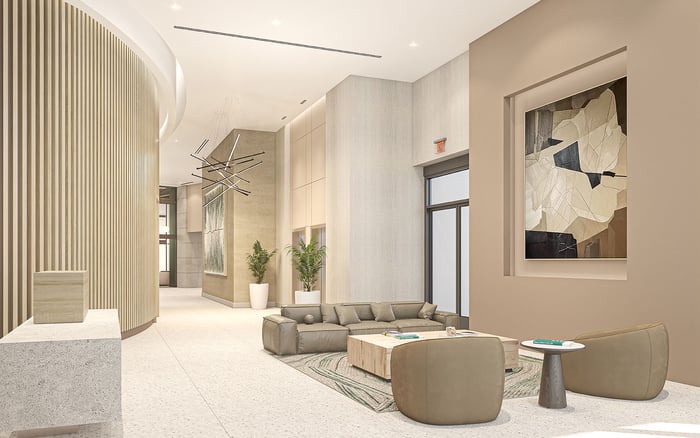
A disciplined acquisition file for Arbor Coconut Grove should distinguish vacancy from abandonment, verify lawful pest-control access, and connect service invoices with unit-specific inspection evidence before closing.

A discreet residence should offer more than an elegant arrival. For a family office, the practical question is whether the home can remain properly maintained, securely accessed, and demonstrably cared for while its owner is elsewhere. At Arbor Coconut Grove, marketed as a boutique, 45-residence condominium at 3034 Oak Avenue, Miami, FL 33133, that question belongs in the acquisition file alongside the governing documents.
A rigorous diligence file separates three matters: the association’s authority to enter, the qualifications of those performing treatment, and evidence of what occurred. A paid invoice can support one part of that file without resolving the others. Buyers should establish Arbor’s actual procedures in writing rather than assume an inspection schedule, vendor arrangement, or access policy.
An unoccupied residence is not automatically an abandoned unit. Before applying access provisions, request the declaration, bylaws, rules, amendments, and management policies addressing vacant, unoccupied, and abandoned residences. Have counsel evaluate the relevant provisions against the unit’s circumstances.
Florida condominium law gives an association an irrevocable right of access during reasonable hours when necessary to maintain, repair, or replace common elements or portions of a unit that the association maintains. That right is purpose-specific-not unrestricted permission to enter whenever convenient.
A separate statutory provision permits an association, at its board’s discretion, to enter an abandoned unit to inspect it and adjoining common elements, perform necessary repairs, address mold or deterioration, or otherwise preserve and protect the property. Except in an emergency, that entry requires at least two days’ notice, mailed or hand-delivered to the owner’s address in association records. Utilities may be turned on when necessary for preservation or protection.
The two-day rule is not a universal notice standard for every condominium entry. Identify the legal basis for each proposed visit and the applicable governing-document requirements. Association conduct must remain reasonable and within its authority, with necessity established rather than merely asserted.
For an owner who travels, access should be workable and accountable. Request a written protocol identifying authorized entrants, permitted hours, notice procedures, emergency contacts, and the person responsible for confirming security after departure.
The file should also address key or lockbox custody, alarm instructions, entry logs, and the recording of incomplete visits. Ask how management distinguishes a scheduled service appointment from an emergency or preservation entry. These are diligence requests, not representations of Arbor’s current practices.
A family office comparing Arbor with Opus Coconut Grove can ask the same questions without assuming identical answers. The useful comparison is the clarity of each property’s written responsibilities, not an implied equivalence between their service arrangements.
Pair the protocol with a maintenance-responsibility matrix. It should distinguish owner obligations from association obligations and identify who authorizes work, who pays, and who follows up when access is denied or a condition remains unresolved.
Common-area pesticide work and treatment inside an individual condominium unit are not interchangeable. Association maintenance staff or other association employees may apply pesticides in common areas, including hallways, lobbies, elevators, utility rooms, laundry rooms, and exterior grounds. That allowance does not extend to applications inside individual units, which require appropriately licensed pest-control services.
Property-management and janitorial companies cannot apply pesticides at properties they manage or service unless licensed by Florida as a pest-control business. A management contract alone does not establish treatment authority.
Request the pest-control business license, applicable technician credentials, insurance certificate, service agreement, treatment scope, product labels, and safety-data sheets. Confirm whether the contract covers common areas, private residences, or both, and whether it includes return visits.
If an owner proposes using a separate exterminator, ask counsel to assess whether that arrangement is permitted and what documentation would demonstrate compliance. Do not assume a right to substitute vendors or a monthly treatment requirement at Arbor; check any proposed arrangement against applicable documents and legal requirements.
Request at least three years of available pest-service records and invoices, along with relevant work orders, entry notices, denied-access records, water-loss claims, and mold-remediation documentation. This is a recommended diligence period, not a blanket statutory retention requirement for routine pest services.
The legal distinction is specific: licensees must retain covered wood-destroying-organism inspection reports for at least three years. That requirement should not be extended to every invoice or treatment record.
For each relevant visit, seek a unit-specific record identifying the date, technician, areas inspected, findings, products used, incomplete work, and follow-up. An invoice may establish that treatment occurred without documenting the inspection scope. Reconcile invoices with visit records rather than treating either as a complete account.
The same documentary discipline can guide a review of Four Seasons Residences Coconut Grove. No project name, however distinguished, substitutes for written evidence of the particular residence’s care.
Association official records are available for inspection and copying by an association member or the member’s authorized representative, subject to statutory restrictions and reasonable procedures. A prospective purchaser should not assume the same independent access rights. Arrange seller cooperation and, where appropriate, authorized representation to obtain relevant material.
Structural and life-safety inspection reports belong in the broader review. Owners have rights to inspect and copy those condominium records. If structural concerns arise, an owner or association may commission a structural engineer before a municipal recertification inspection is mandated. That does not establish that recertification is currently required for Arbor.
Separately, arrange an independent pre-closing inspection covering moisture, HVAC, plumbing, appliances, pest evidence, odors, utilities, and security. Distinguish conditions inside the unit from those affecting adjoining common elements. Ask inspectors to identify inaccessible areas and recommend specialist follow-up where warranted.
For buyers also evaluating The Well Coconut Grove, separating association records from residence-level verification provides a consistent diligence standard without implying shared policies.
Translate unresolved findings into written transaction terms. Consider seller disclosures, record-delivery deadlines, explicit cost allocation, and negotiated repair holdbacks where appropriate. Counsel should tailor those protections to the contract and the condition involved.
Before closing, the family office should know who may enter, under what authority, what service was performed, what remains outstanding, and who is responsible for completion. The objective is not a thicker binder. It is a residence whose maintenance and access can be managed with the same discretion and discipline as the acquisition itself.
For a considered approach to your next South Florida residence, explore MILLION.
If branded residences are on your mind — as a home or as an allocation — we would be glad to share what we are seeing, privately.
Begin a quiet conversationArbor Coconut Grove is marketed as a boutique, 45-residence condominium at 3034 Oak Avenue, Miami, FL 33133.
No. Review the governing documents, management policies, and applicable law before treating an unoccupied residence as abandoned.
Florida law provides access during reasonable hours when necessary to maintain, repair, or replace common elements or association-maintained portions of a unit. The association’s conduct must be authorized and reasonable.
Except in an emergency, at least two days’ notice must be mailed or hand-delivered to the owner’s address in association records. This is not a universal notice rule for every type of entry.
Yes, when necessary to preserve or protect the unit or adjoining common elements under the statutory abandoned-unit access provision.
The employee allowance for common-area applications does not extend to individual condominium units. In-unit applications require appropriately licensed pest-control services.
Not necessarily. Request a unit-specific record describing areas inspected, findings, treatment, incomplete work, and follow-up.
The three-year requirement applies to covered wood-destroying-organism inspection reports retained by licensees, not every routine pest-service record. Requesting three years of available service history is a diligence recommendation.
A prospective buyer should not assume those rights. Arrange seller cooperation and, where appropriate, authorized representation, subject to statutory restrictions and reasonable procedures.
Recommended checks include moisture, HVAC, plumbing, appliances, pest evidence, odors, utilities, and security. The inspection should distinguish unit conditions from adjoining common-element conditions.