For Manhattan buyers establishing a Bal Harbour base, the most consequential decisions extend beyond the residence. Test everyday walking routes, match driver coverage to school schedules, verify building logistics, and measure private-aviation transfers from the actual front door.
For a Manhattan buyer, establishing a Bal Harbour base is as much a scheduling decision as a residential one. The question is not simply whether a home feels effortless during a viewing, but whether ordinary mornings, overlapping appointments, school pickups, and flight departures remain effortless once the household is in residence.
Local transportation convenience is not the same as Manhattan-style transportation independence. A complimentary ride can simplify an errand without replacing the need for a car at a particular hour. An airport can look close on a map without offering a predictable journey from your building entrance.
Begin with the week you actually intend to live. Separate walkable routines from journeys requiring transport, then identify when family members need to travel in different directions. That exercise turns an attractive address into a practical shortlist without assuming a universal vehicle count or driver arrangement.
Treat walkability as a personal route assessment, not a neighborhood promise. From each shortlisted residence, walk to the destinations you expect to use at the times you expect to visit. Assess crossings, the route itself, and the comfort of the return journey with shopping bags or children.
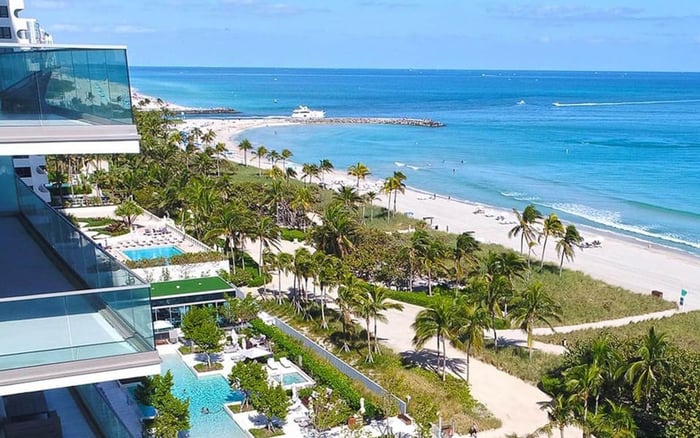
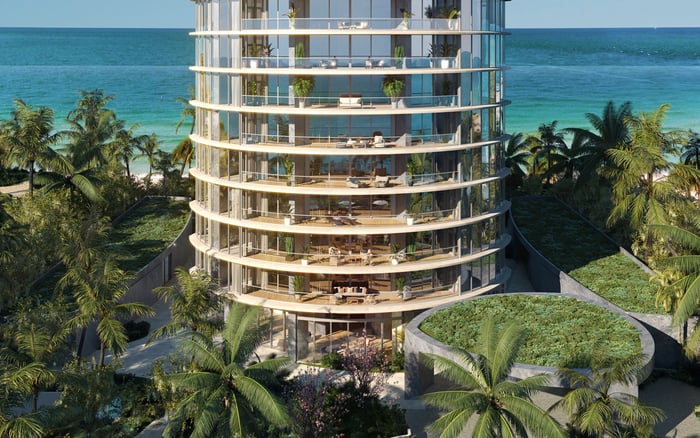
Pair a viewing at Oceana Bal Harbour with this everyday rehearsal. Rather than assigning the property an unsupported walkability score, test your routine from its actual entrance. The distinction matters: a pleasant recreational walk does not necessarily make a grocery, appointment, or school journey convenient.
Repeat the exercise for the household member least inclined to walk. Ask whether each outing remains appealing when carrying something, heading to a fixed appointment, or returning after dark. Build the walking plan around those answers, and retain a transport alternative for journeys that do not pass the test.
Freebee provides complimentary, on-demand, door-to-door transportation for Bal Harbour residents and visitors within its service area. It can be a useful layer of local mobility, but its operating windows belong in the household calendar; they should not be mistaken for continuous coverage.
The schedule is Monday through Thursday, 10 a.m. to 3 p.m. and 4 to 9 p.m.; Friday and Saturday, 10 a.m. to 3 p.m. and 4 to 10 p.m.; and Sunday, 10 a.m. to 3 p.m. and 4 to 7 p.m. The daily 3 to 4 p.m. gap and absence of overnight service require another arrangement during those windows.
A local Citi Bike station offers another short-trip option. Transit Route 100 provides a north-south connection, while Route 125 provides an east-west connection. Confirm current hours, service boundaries, and routes before relying on them. None of these options alone establishes that every household obligation can be met without a vehicle.
For families, school logistics deserve their own inspection. Test each residence-to-school route during actual drop-off and pickup windows, not during a convenient midday viewing. Record the complete sequence: leaving the residence, reaching the car, driving, entering the school queue, and completing the handoff.
Ask shortlisted schools about early drop-off, after-school care, activity transportation, and pickup authorization. Those answers should come before decisions about driver hours. A school day with dependable extended care presents a different scheduling problem from one with several tightly timed pickups.
When comparing a Bal Harbour residence with Ocean House Surfside, rerun the same school itinerary from each address. Do not transfer assumptions between Bal Harbour and Surfside, even when the destinations remain unchanged.
Then test the difficult day: one child has an activity, another needs pickup, and an adult has an appointment. Decide who covers each journey and what happens if the primary driver is unavailable. The objective is reliable coverage, not an arbitrary number of cars.
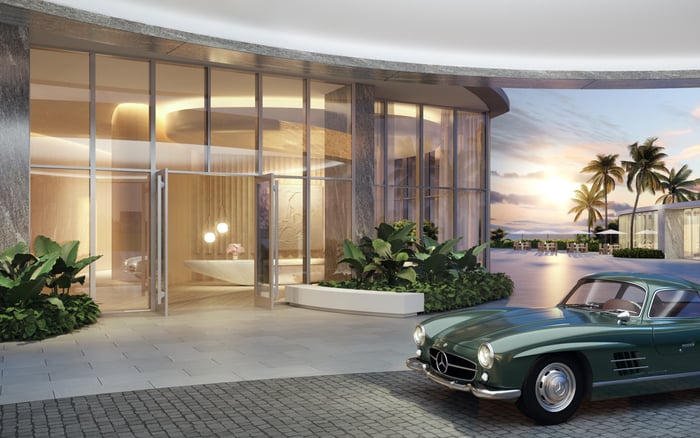
Building operations belong in transportation due diligence. Ask the property manager about valet capacity, guest-car rules, EV charging, service access, and chauffeur waiting arrangements. Establish where a vehicle may stage and how to coordinate a departure with luggage or children.
At Rivage Bal Harbour, make these questions part of the purchase conversation rather than assuming particular policies or facilities. Where operating arrangements remain unsettled, distinguish proposed procedures from confirmed ones.
If the search extends to The Well Bay Harbor Islands, apply the same checklist. A different address requires its own verification, not inherited expectations about vehicle access or waiting space.
Ask how simultaneous household departures would be handled. Compare the complete door-to-road experience, including retrieval and loading, rather than the drive alone. Request clear answers before committing to a staffing or vehicle plan.
Miami-Opa Locka Executive Airport, or OPF, is a reliever airport for Miami International Airport and an option to evaluate for private-aviation travel. An indicative transfer estimate between OPF and Bal Harbour is approximately 13 miles and 20 to 25 minutes. Treat that as a planning reference, not a guaranteed peak-hour journey.
The approximately 20-minute figure associated with OPF's connection to Miami International Airport is not a Bal Harbour transfer estimate. Nor does a general description of proximity establish the travel time from your residence to your selected fixed-base operator, or FBO.
Test that exact journey in the relevant departure window. Confirm chauffeur staging, luggage capacity, passenger procedures, and the flight operator's required arrival time. Include the building departure sequence and any necessary terminal procedures when setting the household departure time.
The absence of landing fees at OPF does not mean there are no FBO, handling, parking, or other charges. Confirm the applicable costs separately. Compare OPF, Miami International, and Fort Lauderdale-Hollywood International using complete door-to-door itineraries for the particular flight; none should be assumed universally fastest.
Before committing, assemble a household transport plan covering ordinary weekdays, weekends, school activity days, and flight days. Identify which journeys can be walked, which fit local service hours, and which require reserved transport. Mark every overlapping obligation and assign a backup.
The purchase decision then becomes more precise. You are choosing not only a residence, but a workable pattern of arrivals, departures, and daily freedom. For a Manhattan household, that clarity can be more valuable than a reassuring but untested travel-time estimate.
Explore your South Florida residential options with MILLION.
If branded residences are on your mind — as a home or as an allocation — we would be glad to share what we are seeing, privately.
Begin a quiet conversationNo. Test personal walking routes and transportation windows before deciding which obligations can be met without a vehicle.
Freebee provides complimentary, on-demand, door-to-door transportation for residents and visitors within its service area. Confirm current boundaries and hours before relying on it.
Monday through Thursday hours are 10 a.m.–3 p.m. and 4–9 p.m.; Friday and Saturday extend to 10 p.m. Sunday hours are 10 a.m.–3 p.m. and 4–7 p.m.
No. Its published schedule includes a daily 3–4 p.m. gap and no overnight service, so those windows require another arrangement.
Bal Harbour has a local Citi Bike station. Transit Route 100 provides a north–south connection and Route 125 an east–west connection; verify current routes before planning trips.
Travel from each shortlisted residence during actual drop-off and pickup windows. Include building departure, school queues, and the handoff rather than measuring driving alone.
Ask about early drop-off, after-school care, activity transportation, and pickup authorization. Use those answers to plan overlapping journeys and backup coverage.
No. The approximately 13-mile, 20 to 25-minute estimate is an indicative planning reference, not a guaranteed peak-hour transfer.
No. FBO, handling, parking, and other charges may still apply and should be confirmed separately.
Confirm valet capacity, guest-car rules, EV charging, service access, and chauffeur waiting arrangements. Verify the departure sequence for children and luggage before finalizing transport plans.