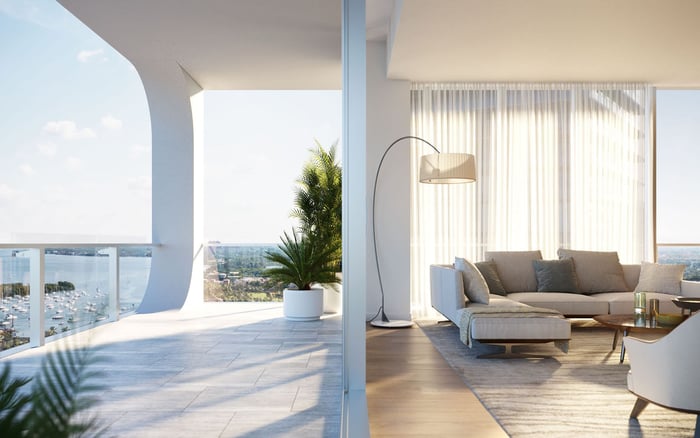
A practical comparison of 888 Brickell by Dolce & Gabbana and The Lincoln Coconut Grove for internationally mobile buyers weighing air transfers, marina access, guest arrivals, and operational privacy.
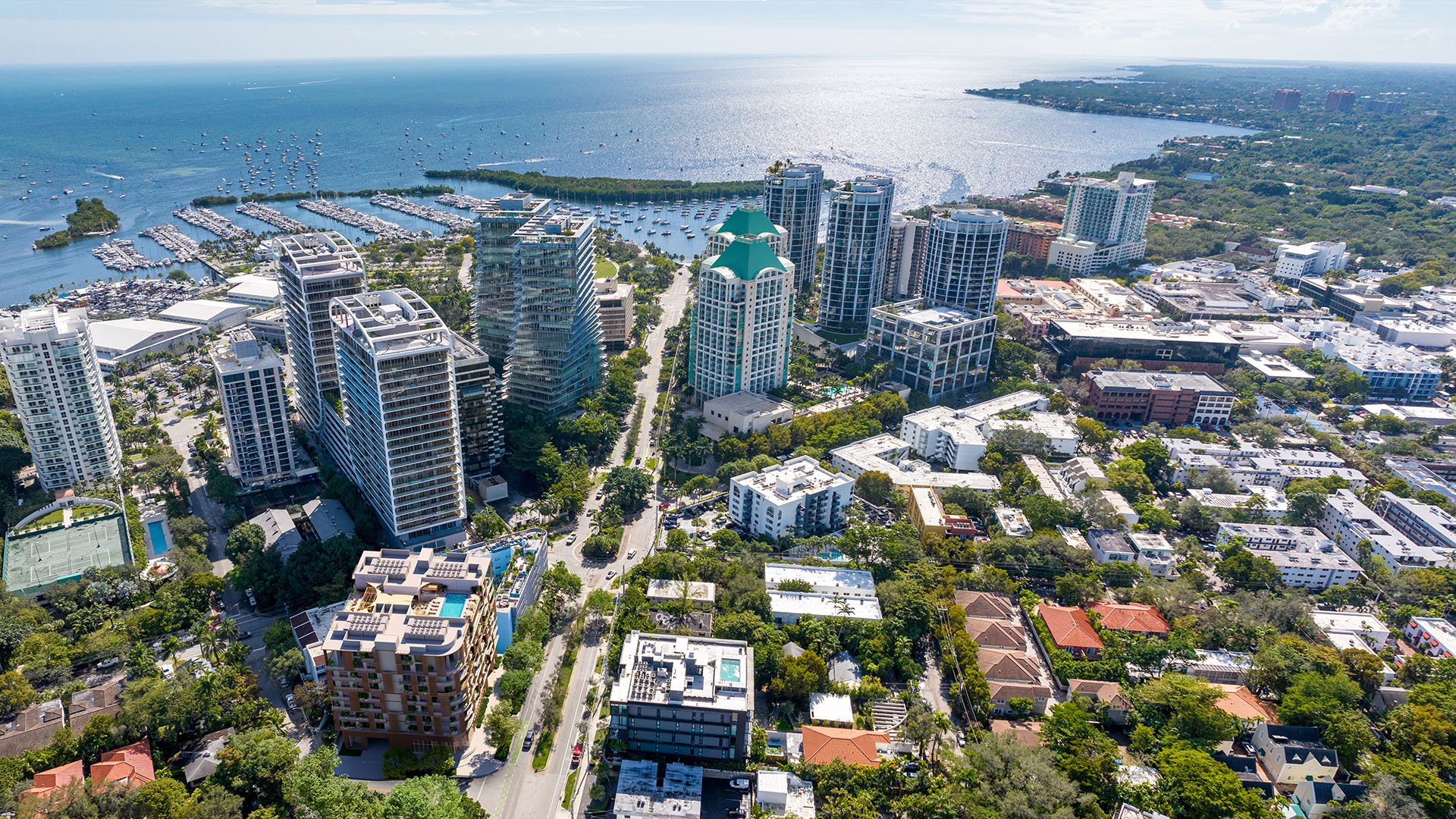
For the internationally mobile buyer, the strongest Miami residence is not simply the most photogenic address. It is the one that works cleanly at 11:30 p.m. after a long-haul flight, during a weekend of guest arrivals, or on a morning when staff, luggage, drivers, and family members all need to move without friction.
That is why 888 Brickell by Dolce & Gabbana and The Lincoln Coconut Grove should be compared less as a style contest and more as an operations study. Both speak to affluent buyers, but they solve different movement patterns. One leans into Brickell’s dense, vertical, business-district energy and a hospitality-driven tower model. The other belongs to Coconut Grove’s lower-density bayfront rhythm, where privacy and water access are central to the daily experience.
The core dividing line is simple: 888 Brickell is stronger for owners whose Miami life is dominated by air and ground movements, while The Lincoln is stronger for owners whose routine includes marina logistics, waterfront arrivals, chase boats, or yacht-adjacent planning.
At 888 Brickell, the appeal is its urban base. A buyer who flies in frequently, uses chauffeured arrivals, expects high-touch service, and values immediate access to Miami’s business core is likely to see the branded tower model as an advantage. It is organized around polished arrival, recurring guest turnover, and a service culture that feels closer to a hotel operating environment than a quiet residential enclave.
The Lincoln reverses the priority. Its identity is boutique, private, and waterfront-oriented rather than supertall and hotel-like. For a buyer who thinks in terms of bay access, discreet movement, and a softer arrival sequence, the Grove setting becomes part of the logistics. In practical search language, Coconut Grove signals quieter waterfront living rather than the intensity of the Brickell grid.
Marina planning is the clearest divider between the two. 888 Brickell’s strength is not private marina integration. Its marine-logistics limitation is that owners rely on nearby marina options rather than a direct private dock program. That does not make it weak for global travelers. It simply means the building is better aligned with a lifestyle where the yacht is occasional, scheduled, or supported elsewhere.
The Lincoln is the more natural fit when water access is not a secondary amenity but a lifestyle requirement. Buyers who expect yacht movements, chase boats, waterfront pickups, or a more discreet bayfront pattern will likely find its Coconut Grove position more compatible. The value is not volume. It is privacy, proximity to the water, and the ability to keep movement quieter.
This is where a buyer should be exacting. If the household’s weekly choreography begins with aircraft, SUVs, luggage carts, security, staff handoff, and guest reception, 888 Brickell has the more scalable urban logic. If the week is shaped by tides, marina coordination, and waterfront discretion, The Lincoln deserves closer attention. Nearby Grove addresses such as Four Seasons Residences Coconut Grove may also enter the conversation for buyers focused on the area’s bayfront character, but the central comparison remains about how movement is handled.
Guest arrival is often where ultra-luxury buyers discover the difference between a beautiful residence and a workable one. The question is not whether guests can arrive. It is whether the building can absorb arrivals repeatedly without making the owner feel exposed or operationally burdened.
888 Brickell is better suited to higher-capacity arrival patterns. Think late-night flights, multiple SUVs, visiting family, friends rotating through Miami, and staff coordinating bags, keys, vehicles, and timing. Its hospitality-oriented model is the advantage: it fits buyers who expect service to anticipate complexity and manage it visibly but smoothly.
The Lincoln’s guest-arrival advantage is different. It is not about large-scale throughput. It is about discretion. A quieter arrival sequence, lower-density setting, and waterfront privacy will matter more to buyers who do not want the energy of a branded supertall every time someone comes home. Boutique living is less about spectacle and more about editing out unnecessary exposure.
In Brickell, buyers comparing 888 with other vertical luxury addresses, including The Residences at 1428 Brickell, should pay close attention to the arrival experience, not only the residence itself. The driveway, lobby choreography, valet culture, staff routing, and elevator experience can matter as much as views.
Back-of-house flow is the part of the purchase decision many buyers underestimate. It includes luggage movement, staff access, grocery and package coordination, driver timing, service elevator logic, valet communication, and the privacy of movement between car, lobby, elevator, and residence.
For frequent international travelers, 888 Brickell’s branded, hospitality-driven model is likely to feel more operationally scalable. It suits the owner who needs a Miami base that can handle recurring arrivals and departures with little emotional friction. The building’s logic is urban, staffed, and prepared for velocity.
The Lincoln’s likely tradeoff is that it may not offer the same intense 24/7 hotel-grade operating infrastructure associated with a branded supertall. But for many buyers, that is precisely the point. Less intensity can mean fewer eyes, less traffic, and a more residential sense of control. The back-of-house question becomes whether the owner wants a machine that can absorb volume or an environment that preserves quiet.
Choose 888 Brickell if your Miami life is driven by international flights, business-district access, frequent chauffeured transfers, guest turnover, and a preference for visible service infrastructure. The building works best for buyers who want the residence to function as a polished urban command center.
Choose The Lincoln if your Miami life is shaped by the bay, the marina, lower-density privacy, and discreet arrivals. It is the stronger match for owners who want the daily feeling of waterfront withdrawal rather than the tempo of a vertical urban core.
Neither choice is universally superior. The better fit depends on whether the owner’s movement pattern is air-and-ground heavy or marine-heavy. The most sophisticated buyer will walk through a normal travel day in detail, from touchdown to luggage handoff to guest reception to the next morning’s departure, then select the building that makes that sequence feel effortless.
Is 888 Brickell better for frequent international travelers? It is the stronger fit when airport transfers, chauffeured arrivals, and urban connectivity matter more than direct dockage.
Is The Lincoln better for yacht owners? It is better aligned with buyers who prioritize marina logistics, water access, and discreet bayfront movement.
Which building is more private on arrival? The Lincoln has the privacy advantage because its boutique, lower-density setting favors quieter arrival sequences.
Which building handles more guest turnover? 888 Brickell is better suited to high-capacity patterns such as recurring guests, multiple SUVs, and staff coordination.
Does 888 Brickell have the stronger marina profile? No. Its strength is air-and-ground logistics, while marine needs are handled through nearby marina options.
Does The Lincoln feel more hotel-like? No. Its identity is more private and waterfront-oriented, rather than supertall and hospitality-driven.
Which is better for business-district access? 888 Brickell is the clearer fit for buyers who want a base tied to Brickell and Miami’s urban core.
Which is better for a quieter daily routine? The Lincoln is more compatible with buyers who value waterfront privacy and a calmer residential setting.
What is the key back-of-house question? Buyers should ask whether they need scalable service capacity or a quieter environment with fewer visible movements.
Should the decision be based on brand or lifestyle? Lifestyle should lead, because the right answer depends on the buyer’s actual pattern of air, ground, and water movement.
For a confidential assessment and a building-by-building shortlist, connect with MILLION.
If branded residences are on your mind — as a home or as an allocation — we would be glad to share what we are seeing, privately.
Begin a quiet conversation