For long-term South Florida buyers, flood-zone exposure is not a reason to avoid prime coastal property. It is a due-diligence discipline that shapes insurance, financing, ownership costs, building resilience, daily convenience, and future resale liquidity before capital is committed.

For a buyer building a long-term South Florida base, flood-zone exposure should not be left as an afterthought between contract and closing. It belongs at the front of the conversation, alongside architecture, privacy, views, tax planning, school access, marina proximity, and the rhythm of daily life.
The reason is straightforward: flood exposure can shape the entire ownership experience. It can affect insurance requirements, premium cost, lender approval, future carrying costs, maintenance expectations, association planning, and eventual resale depth. In the ultra-premium market, the question is rarely whether water adjacency is desirable. Waterfront living remains one of South Florida’s defining luxuries. The more sophisticated question is whether the risk has been priced, documented, insured, and managed before signing.
South Florida’s flood profile is not a single hazard. Storm surge, tropical rainfall, high tides, sea-level rise, groundwater behavior, drainage capacity, and hurricane conditions can all interact. A property may look serene on a clear winter afternoon and still require deeper underwriting because of its elevation, access roads, garage configuration, seawall condition, or surrounding municipal infrastructure.
Flood maps are the baseline tool buyers, insurers, and lenders use to identify mapped flood hazards. They help determine whether a property sits within a designated flood zone and whether a federally backed mortgage may trigger flood-insurance requirements. Special Flood Hazard Areas identify locations with elevated flood risk, and buyers using mortgages from federally regulated or insured lenders generally must carry flood insurance when purchasing in a high-risk area.
But a flood-zone designation is not a complete risk profile. Maps are tools, not static guarantees. They can be updated as better data becomes available, as development patterns evolve, and as coastal conditions change. Two residences in the same neighborhood can have different elevations, different designations, different insurance costs, and different mitigation options.
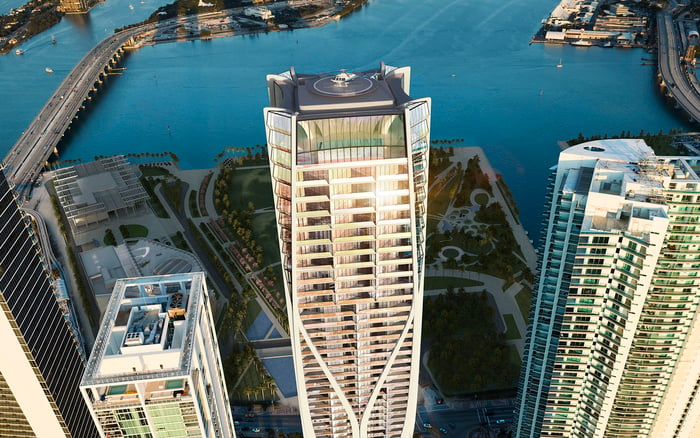
This is why a buyer comparing a Brickell residence such as Una Residences Brickell with a Miami Beach address such as The Perigon Miami Beach should avoid broad assumptions about submarket risk. The relevant review is parcel-specific, building-specific, and contract-specific.
Flood insurance should be analyzed before signing, not after the emotional commitment has formed. Premium cost and availability can influence monthly carrying costs, lender comfort, and long-term feasibility. Current flood-insurance pricing considers property-specific factors beyond the older zone-based framework, making early quotes even more important.
For cash buyers, the absence of a lender requirement does not eliminate the economic question. A family office, principal, or advisor still needs to understand whether coverage is available, whether limits are sufficient, how deductibles function, and whether private or public-market options align with the buyer’s risk tolerance.
For financed buyers, insurance can become a practical gating item. If a lender requires coverage, the policy must be obtainable and acceptable. For long-term owners, the key issue is not merely the first-year premium. It is how insurance affordability may influence carrying costs over a decade, and how a future buyer’s financing may be affected when the property returns to market.
An elevation certificate can document a building’s elevation characteristics and may be useful for insurance rating, compliance, and due diligence. For single-family estates, the review should extend to finished-floor elevation, garage placement, mechanical systems, generator location, drainage paths, hardscape slope, seawalls, docks, and landscape design.
For condominiums, the analysis is more layered. A private residence may sit high above grade, yet shared assets can remain exposed. Garages, lobbies, elevators, electrical rooms, mechanical areas, pool decks, seawalls, loading zones, and association insurance all deserve review. The premium buyer is not only acquiring a view; the buyer is also joining a building ecosystem.
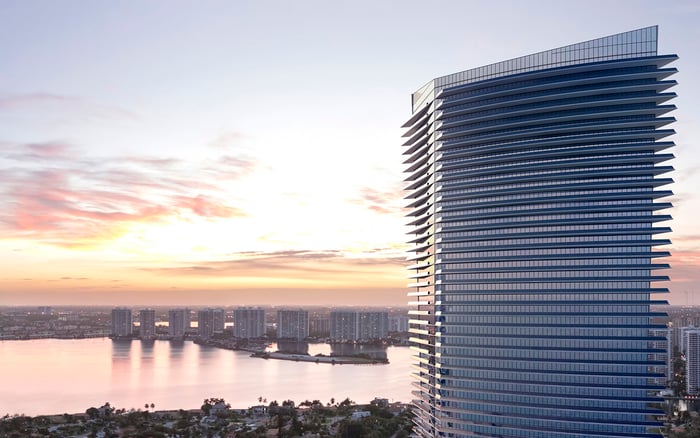
That distinction matters in coastal and bayfront markets. A buyer considering Sunny Isles Beach, including projects such as Bentley Residences Sunny Isles, should evaluate not only the residence itself but also the arrival sequence, garage design, backup systems, association planning, and how surrounding streets behave during heavy rain or high-tide events.
Some South Florida flooding is dramatic, tied to hurricanes and storm surge. Some is quieter. High-tide flooding can occur without storms, especially in low-lying coastal areas and along vulnerable access routes. This type of nuisance flooding may not damage a residence, but it can affect day-to-day convenience, valet operations, deliveries, school runs, staff access, and the usability of garages or streets.
Groundwater adds another layer. In parts of Miami-Dade and nearby areas, the Biscayne Aquifer’s highly permeable character helps explain why water can move in ways that complicate traditional drainage and mitigation. Raising a seawall or improving a driveway may be useful, but it may not fully resolve neighborhood-level drainage behavior.
Long-term buyers should also look beyond the property line. Municipal resilience planning, roadway improvements, drainage projects, and sea-level-rise priorities can influence the durability of a neighborhood’s value proposition. The most elegant residence still relies on the infrastructure around it.
The strongest South Florida opportunities often sit near water: oceanfront, bayfront, Intracoastal, riverfront, and lakefront settings. The point is not to avoid these locations. The point is to underwrite them with precision.
In Bal Harbour, for example, a buyer studying Rivage Bal Harbour is not simply evaluating views and finishes. A complete review also considers elevation context, insurance structure, association exposure, access roads, utility placement, and long-term liquidity. In West Palm Beach, buyers looking at waterfront-adjacent corridors near Alba West Palm Beach should apply the same discipline to parcel conditions and surrounding infrastructure.
This is where a buyer’s-guide mindset becomes invaluable. Waterfront, Brickell, Miami Beach, Sunny Isles Beach, and other prime markets can all support compelling long-term ownership. The better buyer simply refuses to let lifestyle obscure risk pricing.
A purchase contract should leave enough time to verify flood-zone status, obtain insurance quotes, review elevation information, inspect drainage and seawall conditions where relevant, and understand association or municipal resilience planning. The due-diligence period should match the complexity of the asset.
For a condo, request clarity on association insurance, reserves, prior water intrusion issues, building systems, garage exposure, elevator protection, generator placement, and any planned capital projects related to water management. For a single-family home, review elevation documentation, site drainage, prior flood history, flood vents if applicable, seawall age and condition, dock exposure, utility locations, and the relationship between the property and surrounding streets.
Florida’s statewide flood-disclosure framework has made flood history and risk more central to residential transactions. Disclosures are useful, but they are not a substitute for independent review. A seller’s disclosure, an insurance quote, a map, an inspection, and an elevation certificate each answer different questions.
A long-term base is still an investment in future optionality. Flood exposure can influence future buyer psychology, insurance affordability, financing conditions, and the depth of the buyer pool. Even if the current purchaser is comfortable with the risk, the next buyer may use a different lender, face different insurance pricing, or apply a more conservative view of climate and carrying costs.
That does not mean a flood-exposed property cannot be an excellent acquisition. It means the purchase price, contract terms, insurance plan, building quality, and exit strategy should all reflect the exposure. In luxury real estate, resilience is not only a technical issue. It is part of value preservation.
Does being in a flood zone mean a property should be avoided? No. It means the buyer should price the risk, confirm insurance, and understand mitigation before committing.
Why does flood-zone status matter before signing a contract? It can affect required insurance, financing, monthly carrying costs, and the buyer’s ability to close comfortably.
Are flood maps enough for due diligence? No. They are a starting point, but elevation, insurance quotes, infrastructure, and building systems also matter.
Can two nearby properties have different flood exposure? Yes. Elevation, construction, drainage, and mapped designation can vary even within the same neighborhood.
Do cash buyers need to care about flood insurance? Yes. Even without a lender requirement, insurance cost and availability affect risk management and future resale.
Why are condos different from single-family homes? A high-floor residence may be elevated, while shared garages, lobbies, elevators, and mechanical rooms remain exposed.
What is an elevation certificate used for? It documents elevation characteristics and can support insurance rating, compliance review, and buyer due diligence.
Can high-tide flooding happen without a storm? Yes. Low-lying coastal areas can experience routine flooding from tides, even on otherwise calm days.
Should buyers review streets and access routes? Yes. Daily-use infrastructure, including roads, garages, utilities, docks, and evacuation routes, is part of the risk profile.
How does flood exposure affect resale? It can influence insurance affordability, lender requirements, buyer confidence, and the size of the future buyer pool.
If you'd like a private walkthrough and a curated shortlist, connect with MILLION.
If branded residences are on your mind — as a home or as an allocation — we would be glad to share what we are seeing, privately.
Begin a quiet conversation