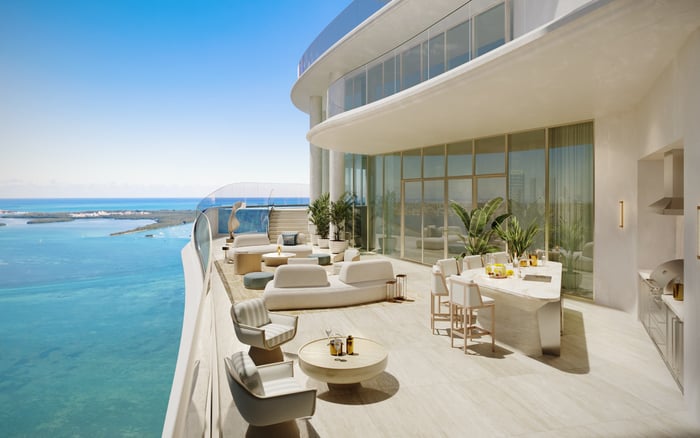
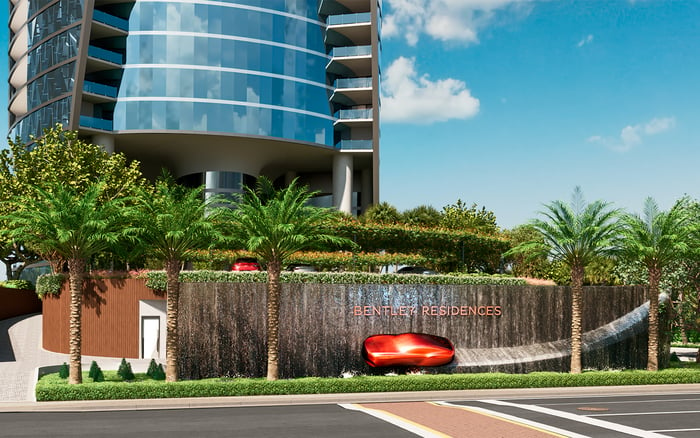
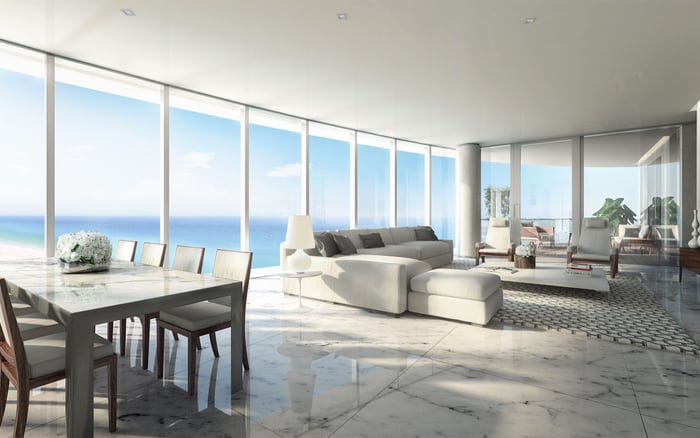
A buyer-focused comparison of how daily ownership may feel across 619 Residences by Foster + Partners + Nobu Hospitality, St. Regis® Residences Sunny Isles, and The Ritz-Carlton Residences® Sunny Isles, with emphasis on service culture, arrival sequence, privacy, amenities, and long-term livability.
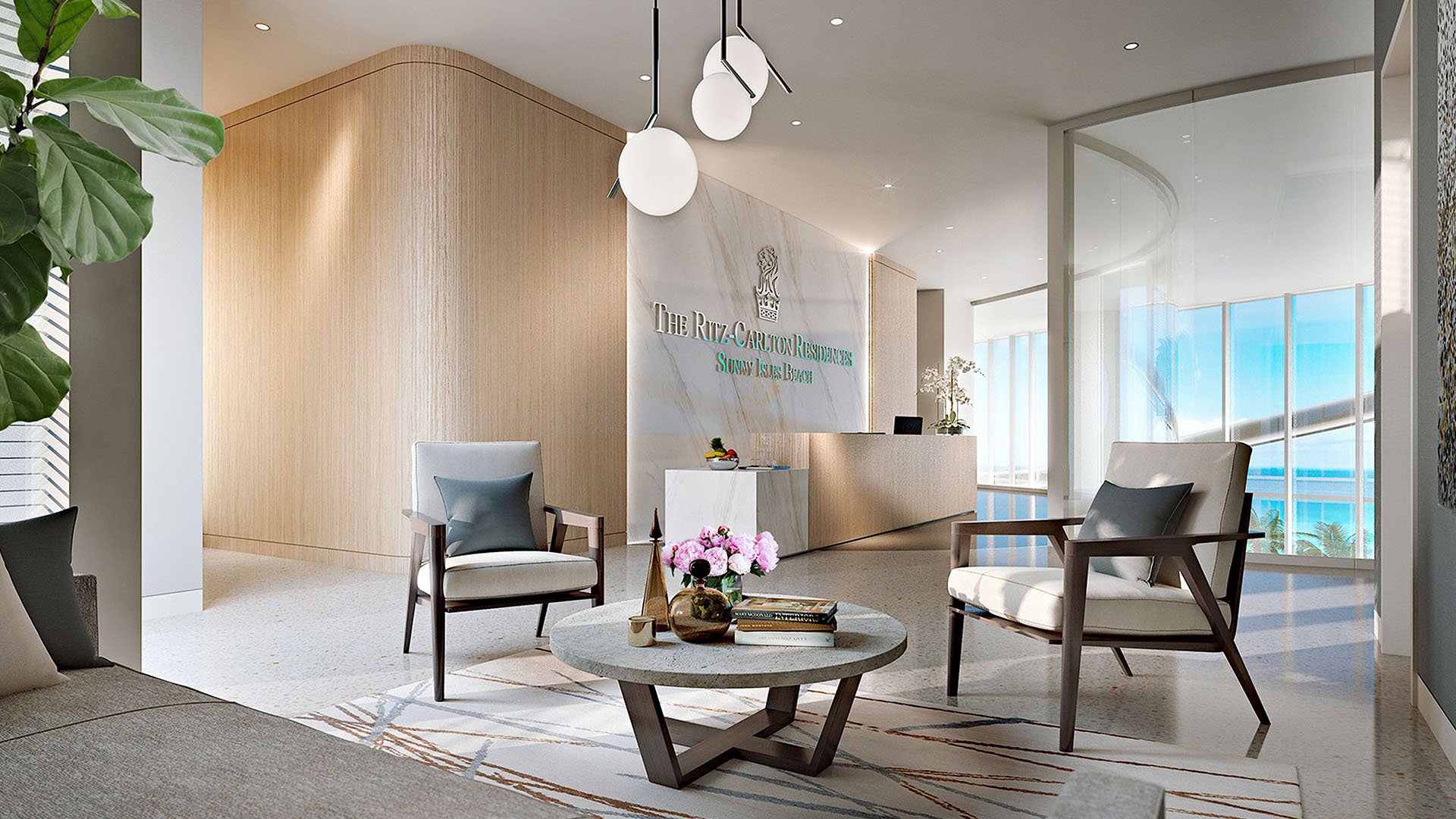
At the highest end of South Florida residential real estate, the question is no longer whether a tower has a pool, spa, private dining room, or concierge desk. Serious buyers expect luxury amenities. The more useful question is how those amenities are staffed, sequenced, protected, and felt during an ordinary week.
That is the frame for comparing 619 Residences by Foster + Partners + Nobu Hospitality, St. Regis® Residences Sunny Isles, and The Ritz-Carlton Residences® Sunny Isles. Each name carries a distinct set of expectations. Yet daily ownership is shaped less by a logo than by arrival choreography, staff memory, elevator flow, guest handling, family use, beach movement, food-and-beverage access, privacy, and the tone of service when nothing dramatic is happening.
For a buyer considering an Oceanfront, Second-home, or New-construction purchase in Sunny Isles, the distinction is practical. A residence can feel grand, relaxed, cinematic, or hotel-like depending on how it receives you at 5 p.m. on a Tuesday, how smoothly it handles a visiting guest, and whether the service culture still feels intuitive after the first month.
St. Regis® Residences
Sunny Isles is best understood through the lens of formal, high-touch living. Its ownership proposition is not primarily about casual resort energy. It is about a grand-residence sensibility: the sense that arrivals, requests, and follow-through are handled with polished structure.
For the right buyer, that structure is the luxury. Staff recognition matters. The way a resident is greeted matters. Concierge handling is not a secondary amenity; it becomes part of the household rhythm. The appeal is strongest for owners who value consistency, discretion, and a service culture that feels anticipatory rather than improvised.
This is where St. Regis separates itself from a more casual beachfront residence. The experience is closer to an orchestrated private address, where the lobby, valet, elevator bank, and concierge touchpoints are expected to maintain a certain cadence. On ordinary weekdays, that can matter more than a longer amenity inventory. Formal luxury either feels natural in daily use, or it becomes ceremonial only in marketing. St. Regis is positioned for buyers who want that ceremony to be real.
The Ritz-Carlton Residences® Sunny Isles is a different daily proposition. It should be evaluated through the warmth and operational familiarity associated with a resort-inflected residential lifestyle. The mood is less about grand-residence formality and more about ease, approachability, family use, and beachfront routine.
That distinction matters for owners who plan to use the residence actively. Pool and beach movement, guest arrivals, valet handling, casual concierge requests, and multigenerational stays become the ownership test. A family arriving with children, relatives, beach bags, and dinner plans may value a service tone that feels warm, capable, and unfussy.
The Ritz-Carlton comparison is strongest when judged through repeated use. How quickly does the staff understand patterns? How comfortable does the property feel when guests are visiting? Does the pool environment feel welcoming without becoming chaotic? Does the beach experience feel managed rather than transactional? For many buyers, that blend of ease and reliability is precisely the point.
619 Residences by Foster + Partners + Nobu Hospitality brings a different buyer question into the comparison. The name suggests an architectural and hospitality conversation rather than a purely traditional branded-residence one. Still, the daily ownership experience should be evaluated through confirmed residential operations, not brand aura alone.
For a buyer, the important questions are specific. How will arrival be handled? What will the service tone be: formal, relaxed, culinary, private-club-like, or something else? How will food-and-beverage access interact with residential privacy? Will circulation separate owners, guests, staff, and amenity users with enough clarity? Will the building feel calm on a weekday and equally composed during peak seasonal use?
Foster + Partners and Nobu Hospitality create expectations around design discipline and lifestyle, but ownership value depends on execution. In a luxury residence, architecture can choreograph privacy, light, procession, and views. Hospitality can influence mood, memory, and social energy. The buyer’s task is to determine whether those components form a coherent residential routine rather than a beautiful concept.
The first five minutes of arrival often reveal more than a tour of the amenity deck. At St. Regis, the ideal arrival feels recognized, formal, and controlled. The resident should sense that staff know the household, understand preferences, and move requests forward without visible friction.
At The Ritz-Carlton, the best arrival feels warm and familiar. It can be less ceremonial while still being highly attentive. For residents who entertain family and friends frequently, that approachable tone may be more valuable than heightened formality.
At 619, the key will be how architecture and hospitality are translated into the arrival sequence. A beautiful porte cochere or lobby is not enough. The question is whether the transition from car to residence feels private, intuitive, and protected, especially when dining, guests, or branded hospitality elements are part of the broader experience.
At this level, buyers should resist comparing buildings by amenity count alone. The more revealing questions are operational. Who staffs the amenity? When is it busiest? How are guests handled? Is the beach experience seamless? Is the pool environment quiet, social, family-forward, or formal? Is private dining genuinely convenient, or simply impressive on paper?
St. Regis is likely to appeal to buyers who prefer amenity areas that feel composed, polished, and consistent with a formal service culture. The Ritz-Carlton will resonate with buyers who want a resort-like rhythm that can accommodate family, guests, and casual daily use with ease. 619 should be tested against how its hospitality promise interacts with residential privacy, particularly if food, design, and social atmosphere are central to the identity.
This is also where the Sunny Isles context matters. The area’s luxury buyer is often choosing among highly amenitized towers with oceanfront positioning, dramatic views, and brand credibility. The separator is not whether a project is luxurious. It is whether the building’s daily rhythm matches the owner’s actual life.
St. Regis is the clearest fit for buyers who want formality, ceremony, staff continuity, and a grand-residence atmosphere. It suits owners who appreciate quiet choreography and expect the property to behave like a polished private address every day.
The Ritz-Carlton is compelling for buyers who want the comfort of a resort-informed residence without sacrificing residential permanence. It suits families, seasonal owners, and hosts who want service to feel warm, reliable, and easy to use.
619 Is most interesting for buyers drawn to the intersection of architecture and lifestyle hospitality, but disciplined enough to ask operational questions before making assumptions. Its strongest potential distinction lies in the possibility of a more design-led, hospitality-inflected experience, provided the residential systems support that promise.
For ultra-premium buyers, the best comparison is not brand versus brand. It is personality versus routine. A highly formal building can be extraordinary for one owner and too structured for another. A resort-oriented residence can feel liberating to one family and too active for a buyer seeking quiet ceremony.
The correct choice begins with a private audit of daily life. How often will the owner be in residence? Will children, parents, guests, staff, or business associates use the home? Is the residence primarily a retreat, a social base, a family beach home, or a polished primary address? Once those answers are clear, the difference between St. Regis, The Ritz-Carlton, and 619 becomes less abstract.
The best residence is the one whose service culture disappears into daily life because it fits so precisely.
Which residence feels most formal in daily ownership? St. Regis® Residences Sunny Isles is best framed as the most formal option, with emphasis on ceremony, structure, and polished service follow-through.
Which residence is more resort-oriented? The Ritz-Carlton Residences® Sunny Isles is better understood as warmer, more casual, and more resort-inflected in day-to-day use.
Is the comparison mainly about amenities? No. At this level, the stronger comparison is how amenities are staffed, shared, programmed, and experienced during ordinary ownership.
How should buyers evaluate 619 Residences? Buyers should focus on confirmed service operations, privacy planning, arrival sequence, and how hospitality elements support residential life.
Who is the St. Regis buyer? The St. Regis buyer typically values discretion, staff consistency, formality, and a grand-residence atmosphere.
Who is the Ritz-Carlton buyer? The Ritz-Carlton buyer often values warmth, family usability, beachfront routine, and operational ease.
Why does arrival matter so much? Arrival reveals staff recognition, privacy, valet discipline, guest handling, and the overall tone of the residence within minutes.
What should seasonal owners prioritize? Seasonal owners should prioritize service memory, guest protocols, ease of return, and how well the residence handles peak-use periods.
Does a stronger brand always mean a better daily experience? Not necessarily. The best daily experience is the one whose service culture matches the owner’s lifestyle and expectations.
What is the best way to shortlist comparable options for touring? Start with location fit, delivery status, and daily lifestyle priorities, then compare stacks and elevations to validate views and privacy.
For a tailored shortlist and next-step guidance, connect with MILLION.
If branded residences are on your mind — as a home or as an allocation — we would be glad to share what we are seeing, privately.
Begin a quiet conversation