Outdoor recovery terraces are becoming a sharper test of wellness credibility in South Florida luxury real estate, where buyers increasingly distinguish atmospheric amenity language from spaces that genuinely support daily restoration.
In South Florida luxury real estate, wellness has moved well beyond the spa menu. Buyers have become fluent in the difference between a polished amenity rendering and a place that can meaningfully change the rhythm of daily life. The outdoor recovery terrace now sits at the center of that distinction.
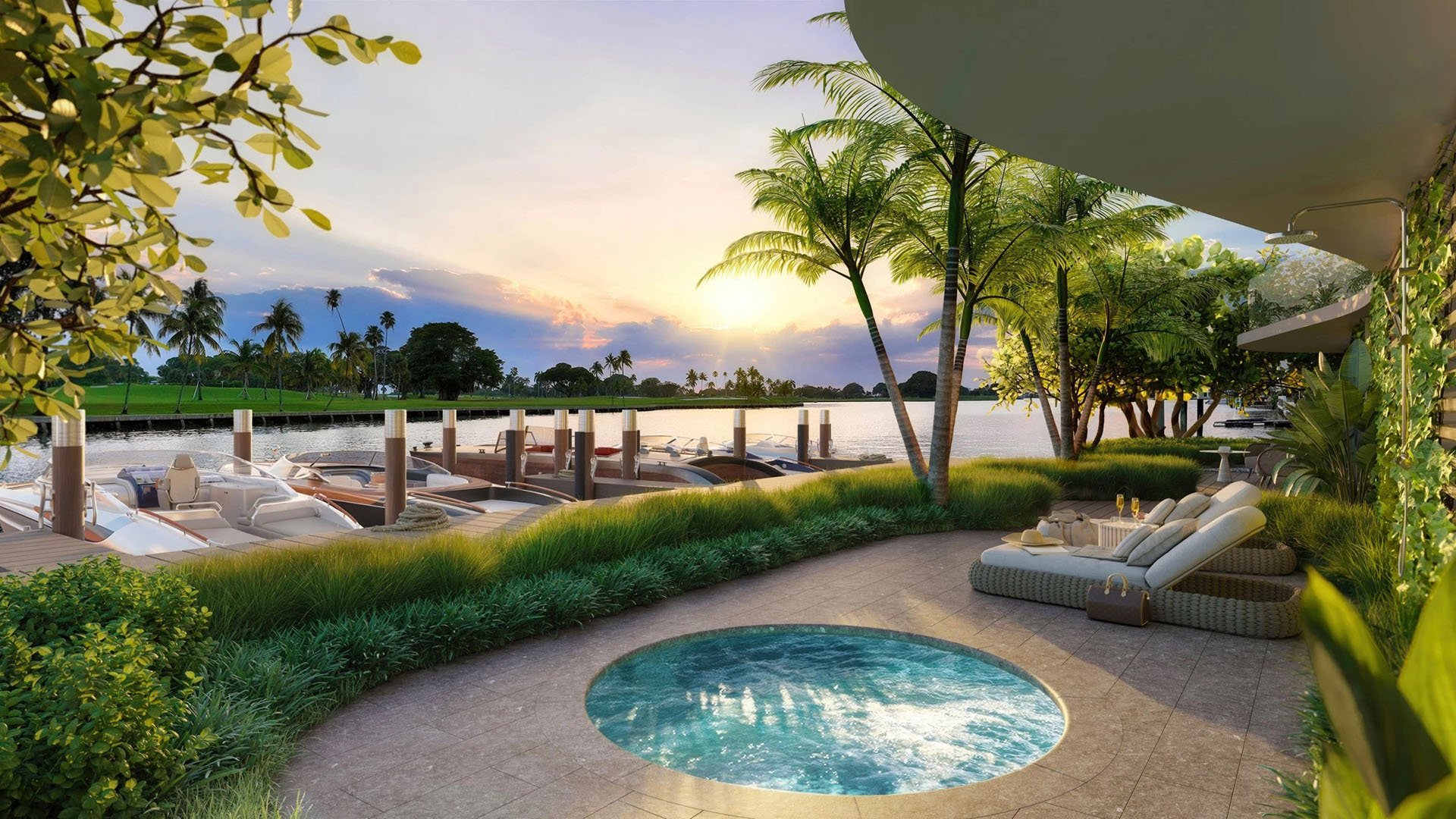
A true recovery terrace is not simply a landscaped deck, a pretty balcony, or another lounge arranged toward the water. It is an exterior room designed for decompression after training, swimming, travel, meetings, or the overstimulation of urban life. Its purpose is quieter and more exacting: to help residents move from effort to ease.
That distinction matters in a market where wellness language appears everywhere. The test is not whether a building offers greenery, a pool, or a view. The test is whether the outdoor environment has been planned as part of a resident’s actual recovery sequence, with privacy, shade, air movement, access, materials, and capacity considered together.
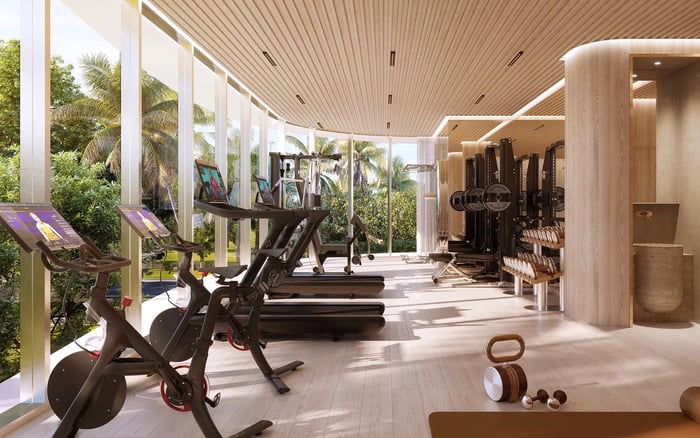
A recovery terrace begins with intention. It should be close enough to wellness areas to feel natural in daily use, but not so exposed that the experience becomes performative. A resident leaving a fitness room, treatment suite, sauna, pool, or morning swim should be able to move outside without crossing a busy social zone or feeling placed on display.
The strongest versions feel calm before they feel impressive. They manage sun without eliminating light. They invite airflow without creating a wind tunnel. They use planting to soften the edge of the building, not as a decorative substitute for comfort. They provide seating that supports rest, not just photography.
This is why a terrace can be more meaningful than an oversized amenity count. Properly scaled, programmed, and maintained, it becomes part of a daily ritual. Poorly oriented or overly public, it becomes marketing square footage that residents admire from a distance but rarely use.
South Florida gives developers a rare opportunity: recovery can happen outdoors for much of the year. Ocean air, bay breezes, tropical planting, winter light, and long shoulder seasons make exterior wellness especially compelling. But the same climate also exposes weak design quickly.
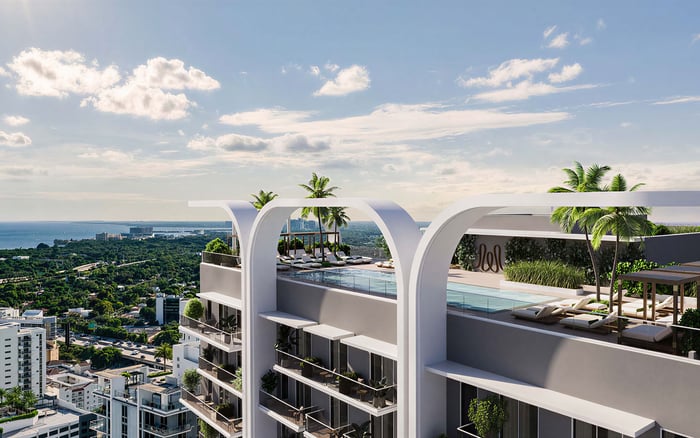
Heat, glare, humidity, salt air, and afternoon storms require discipline. A terrace that looks serene at sunset may be uncomfortable at midday. A roof deck that photographs beautifully may feel too windy for quiet use. A planted area that appears lush in a sales gallery may require ongoing care to remain restorative rather than merely ornamental.
For oceanfront residences, the promise is even more powerful, and more demanding. Water views can create emotional calm, but exposure and wind still need to be managed. In Miami Beach, buyers comparing communities such as 57 Ocean Miami Beach and The Perigon Miami Beach should look beyond the view corridor and ask how the exterior experience is actually used before and after wellness routines.
A serious buyer should evaluate an outdoor recovery terrace with the same scrutiny they would bring to a floor plan. First, study adjacency. Is the terrace connected to the spaces where recovery begins, or is it isolated as a social deck? If the route requires a long elevator ride, a lobby crossing, or a public transition, daily use becomes less likely.
Second, assess privacy. Recovery is not the same as entertaining. A terrace that faces a crowded pool, bar, or neighboring tower may be socially valuable but therapeutically weak. Privacy can come from elevation, planting, screens, recessed seating, or simple spatial separation.
Third, visit at different times if possible. Morning light, midday heat, late-afternoon glare, and evening wind can create entirely different experiences. Renderings rarely reveal this. The best terraces feel usable across more than one perfect hour.
Fourth, look for operational logic. Who maintains the planting? How is furniture selected and replaced? Is the area quiet by design, or merely quiet in the rendering? Are there enough places for residents to pause without turning recovery into a reservation system?
In Brickell, where density and pace are part of the appeal, the question becomes especially sharp. A buyer considering 2200 Brickell should think about how outdoor calm is protected within an energetic neighborhood context. The more urban the address, the more intentional the recovery sequence must be.
Amenity marketing often focuses on nouns: spa, garden, pool, lounge, terrace. Real wellness focuses on behavior. What can a resident do there, and how often will they do it?
The answer depends on design restraint. A terrace meant for recovery should not be overfilled. Too many functions can dilute the experience. If the same deck is expected to host social gatherings, family activity, private rest, fitness overflow, and cocktail-hour photography, it may perform none of those roles with conviction.
The strongest wellness environments are often quieter. They allow solitude without isolation. They make nature present without theatrical excess. They encourage residents to stay for ten restorative minutes, not because the setting is branded as wellness, but because the body understands the cue.
That is why projects with explicit wellness positioning, including The Well Bay Harbor Islands and The Well Coconut Grove, belong in the broader conversation about how buyers evaluate claims. The question is not whether the language is attractive. The question is whether the architecture, landscape, and resident flow support the promise.
The most discerning buyers increasingly ask whether wellness extends into the private residence itself. A shared terrace can be valuable, but a private outdoor room changes the equation. It lets a resident cool down after a workout, take a quiet call, stretch in the morning, or read before dinner without entering the social life of the building.
Here, proportion matters more than size alone. A deep terrace with usable shade may outperform a larger but exposed outdoor area. The connection to the primary suite, living room, or kitchen can determine whether the space becomes habitual. Flooring, drainage, lighting, rail height, and acoustics all affect whether it feels like an extension of home or a leftover exterior ledge.
Luxury buyers should also consider whether private outdoor space complements the building’s shared wellness program. The ideal arrangement is layered: a resident can use communal wellness amenities when desired, then retreat to a private exterior space for quiet recovery. That layering is where wellness begins to feel residential rather than hotel-like.
The clearest sign of a serious outdoor recovery terrace is not spectacle. It is repeat use. Residents return to spaces that respect the body’s need for shade, air, quiet, and ease. They avoid spaces that feel exposed, overheated, crowded, or ambiguously programmed.
For developers, this means wellness cannot be treated as a label applied at the end of design. It must be embedded in circulation, landscape, operations, and the lived choreography of the building. For buyers, it means the best question is simple: would I use this when no one is watching?
If the answer is yes, the terrace may be more than an amenity. It may be one of the rare features that genuinely improves the experience of home.
What is an outdoor recovery terrace? It is an exterior space designed for rest and decompression, usually connected to wellness, fitness, pool, or private living areas.
How is it different from a regular terrace? A regular terrace may be primarily social or decorative, while a recovery terrace is planned for comfort, privacy, shade, and calm use.
Why does privacy matter so much? Recovery is personal. If a space feels exposed or overly social, residents are less likely to use it for genuine restoration.
Should buyers prioritize size or design quality? Design quality usually matters more. Shade, depth, orientation, seating, and access can make a smaller space more useful than a larger exposed one.
Are outdoor recovery terraces only valuable in oceanfront buildings? No. Water views can enhance the experience, but thoughtful outdoor recovery can work in urban, bayfront, garden, and low-rise settings.
What should I ask during a sales presentation? Ask how the terrace is used daily, how it connects to wellness areas, how privacy is handled, and who maintains the landscape and furniture.
Can a balcony function as a recovery terrace? Yes, if it has enough depth, comfort, privacy, and connection to daily routines. Many balconies are too narrow or exposed for true recovery.
Why is Brickell a special case for outdoor wellness? Brickell offers energy and convenience, so successful outdoor recovery spaces must create a deliberate contrast to the neighborhood’s pace.
Do wellness-branded projects automatically offer better recovery spaces? Not automatically. Buyers should evaluate the actual design, circulation, privacy, and usability rather than relying on branding alone.
What is the simplest test of authenticity? Ask whether you would use the space regularly when no one else is there. If the answer is yes, the wellness promise is more credible.
If you'd like a private walkthrough and a curated shortlist, connect with MILLION.
If branded residences are on your mind — as a home or as an allocation — we would be glad to share what we are seeing, privately.
Begin a quiet conversation