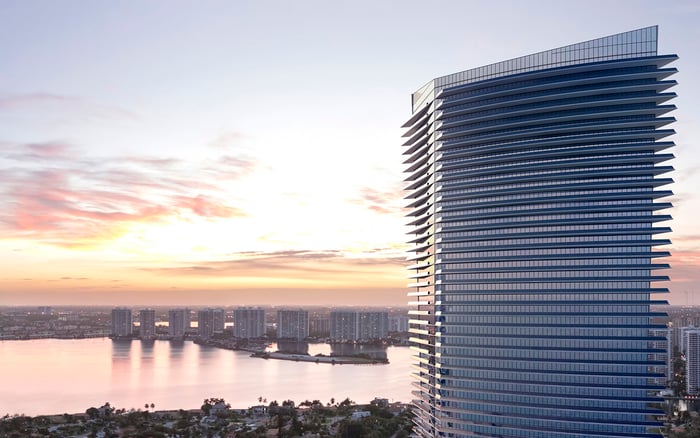
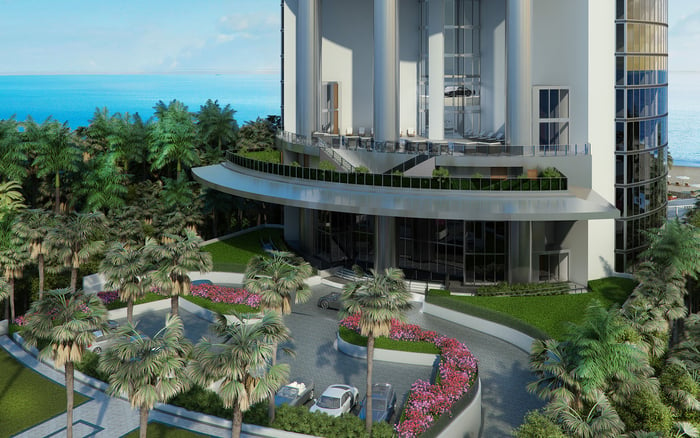
A practical luxury buyer’s guide to evaluating predictive maintenance in South Florida residences, with emphasis on security, daily convenience, ownership continuity, and long-term resale positioning.

In South Florida’s luxury market, the most desirable homes are judged not only by views, finishes, and address, but by how gracefully they operate. Predictive maintenance belongs in that conversation. For a buyer comparing a waterfront condominium, a branded tower, or a private residential enclave, the question is no longer whether technology exists behind the walls. The sharper question is whether that technology protects the lifestyle, reduces friction, and strengthens future marketability.
Predictive maintenance uses monitoring, alerts, operating history, and service protocols to anticipate problems before they become visible disruptions. In a premium residence, that can touch security systems, elevators, garage access, HVAC, water detection, lighting controls, backup systems, and other shared or private infrastructure. The value is not in the gadgetry. It is in continuity.
A buyer considering The Residences at 1428 Brickell, for example, should evaluate not simply the elegance of the residence, but the discipline of the building’s operating culture. In Brickell, where vertical living is part of the daily rhythm, performance behind the scenes can be as meaningful as design in the foreground.
Security is often discussed through visible markers: staffed entries, access points, cameras, and privacy. Predictive maintenance adds a quieter layer. It asks whether those systems are monitored for performance drift, outages, delayed response, battery life, software health, and integration issues.
For a luxury buyer, the evaluation should begin with redundancy. If an access system fails, what is the backup protocol? If a camera, gate, garage reader, or elevator control experiences a fault, who receives the alert, how quickly is it addressed, and how is the event recorded? A strong building does not rely on a single point of control. It has an operating plan.
This matters especially for part-time owners, frequent travelers, and households with staff or guests. Predictive maintenance can help support privacy by identifying weak links before they compromise routine. The best systems are discreet, permission-based, and professionally managed. The goal is not surveillance for its own sake. The goal is a residence that feels composed because its risk points are actively supervised.
Convenience in an ultra-premium home is often mistaken for amenity count. The more important measure is how often life is interrupted. Predictive maintenance can improve convenience by reducing surprise repairs, preventing avoidable shutdowns, and giving management teams clearer information when service is needed.
Ask how residents are notified. A sophisticated system should not overwhelm owners with technical noise. It should route information appropriately: urgent matters to management, unit-specific issues to the owner or authorized representative, and routine service items to the proper vendor. The experience should feel calm, not complicated.
In Miami Beach, buyers comparing design-forward residences such as The Perigon Miami Beach may naturally focus on architecture, water, and arrival experience. Yet daily luxury also depends on elevators arriving, climate systems behaving, access points functioning, and service teams anticipating needs. The technology is valuable only when it disappears into reliability.
Resale value is shaped by confidence. A future buyer wants to know that the building has been cared for, that systems have not been neglected, and that management has a credible maintenance record. Predictive maintenance can support that confidence when it produces clear documentation rather than vague promises.
For an investment-minded purchaser, request a practical explanation of what is monitored, how records are retained, and how service decisions are made. Are recurring issues tracked? Are vendors accountable to response standards? Are system upgrades budgeted with discipline? These questions can reveal whether the technology is ornamental or operational.
In Sunny Isles, where buyers may evaluate high-profile residential offerings such as Bentley Residences Sunny Isles, the long-term ownership story matters. Sunny Isles purchasers often think in terms of prestige, views, and lifestyle, but the next resale buyer may also ask how well the property has been managed. Predictive maintenance can become part of the asset narrative when supported by orderly records.
The most useful questions are direct. What systems are monitored? Who sees the alerts? What happens after an alert is triggered? Is the information reviewed by building management, an outside vendor, or both? How are residents protected from unnecessary data exposure? How often are systems tested? What is the protocol during storms, power interruptions, or peak occupancy periods?
Also ask whether the system applies only to common areas or whether owners may integrate private residence components. In larger homes, water detection, HVAC performance, smart shades, lighting, pool equipment, and backup power may each warrant separate attention. In condominium settings, the boundary between association responsibility and owner responsibility should be understood clearly before closing.
New-construction buyers should be particularly precise. A newly delivered building may have advanced systems, but the strength of predictive maintenance depends on commissioning, staff training, vendor continuity, and governance. New does not automatically mean mature. It means the buyer has an opportunity to understand the operating platform from the beginning.
A predictive system is only as strong as the people responsible for it. Review the management structure, staffing expectations, service contracts, and decision-making process. A board or ownership association that treats maintenance as a strategic priority can preserve both lifestyle quality and asset perception. One that treats technology as a decorative selling point may not realize its full value.
In boutique or lower-density environments, such as Vita at Grove Isle, the appeal often includes privacy and a more intimate residential rhythm. Predictive maintenance should support that feeling by helping staff act before issues become visible. The best result is not a louder technology experience. It is a quieter ownership experience.
For single residences, the same logic applies. A private homeowner should evaluate service partners, remote access permissions, system compatibility, and long-term support. Technology that cannot be serviced easily can become a liability. Technology with clear ownership, documentation, and vendor accountability can become an advantage.
A strong predictive maintenance program should satisfy five tests. First, it should protect essential systems tied to safety, access, climate, water, and mobility. Second, it should have human accountability, with named parties responsible for alerts and follow-up. Third, it should produce understandable records. Fourth, it should respect privacy. Fifth, it should be financially coherent, with costs that make sense relative to the residence and building scale.
The buyer should also distinguish between convenience features and critical infrastructure. A smart thermostat is useful. A building-wide alert protocol for water intrusion or access control may be more consequential. Luxury due diligence means separating what is enjoyable from what is essential.
Predictive maintenance is not a replacement for inspection, insurance review, reserve analysis, legal review, or experienced representation. It is an added lens. In South Florida, where weather, salt air, seasonal occupancy, and vertical living can place demands on properties, that lens can be especially valuable.
What is predictive maintenance in a luxury residence? It is the use of monitoring, alerts, service records, and operating protocols to anticipate maintenance needs before they become disruptive.
Why does it matter for security? It helps identify faults in access, surveillance, elevator, garage, or related systems so management can respond before daily routines are affected.
Can it improve convenience for owners? Yes, when alerts are routed properly and service teams can address issues before residents experience avoidable interruptions.
Does predictive maintenance help resale value? It can support buyer confidence when the property has clear records, responsible governance, and evidence of consistent care.
What should I ask a condominium association? Ask what systems are monitored, who receives alerts, how follow-up is documented, and how resident privacy is protected.
Is this only relevant for new-construction properties? No. Existing residences can also benefit if systems are well integrated, serviceable, and supported by capable vendors.
Should private in-unit systems be included? They can be, especially for water detection, HVAC, lighting, shades, and other systems important to absentee or seasonal owners.
How do I know if the system is more than a sales feature? Look for operating protocols, staff training, vendor accountability, and records that show how alerts become action.
What privacy questions should buyers raise? Ask what data is collected, who can access it, how long it is stored, and whether permissions can be limited.
What is the simplest way to evaluate value? Judge whether the system reduces risk, preserves convenience, supports documentation, and makes the residence easier to own.
When you're ready to tour or underwrite the options, connect with MILLION.
If branded residences are on your mind — as a home or as an allocation — we would be glad to share what we are seeing, privately.
Begin a quiet conversation