
Open concept is not disappearing in 2026 luxury real estate, but it is being refined. Across design forecasts, the direction is clear: selectively separated rooms, better acoustics, dedicated workspaces, and wellness-forward suites that prioritize how a residence lives day to day. For South Florida buyers weighing New-construction versus Resale, the most enduring value is increasingly found in layouts that balance social flow with privacy, storage, and discretion.
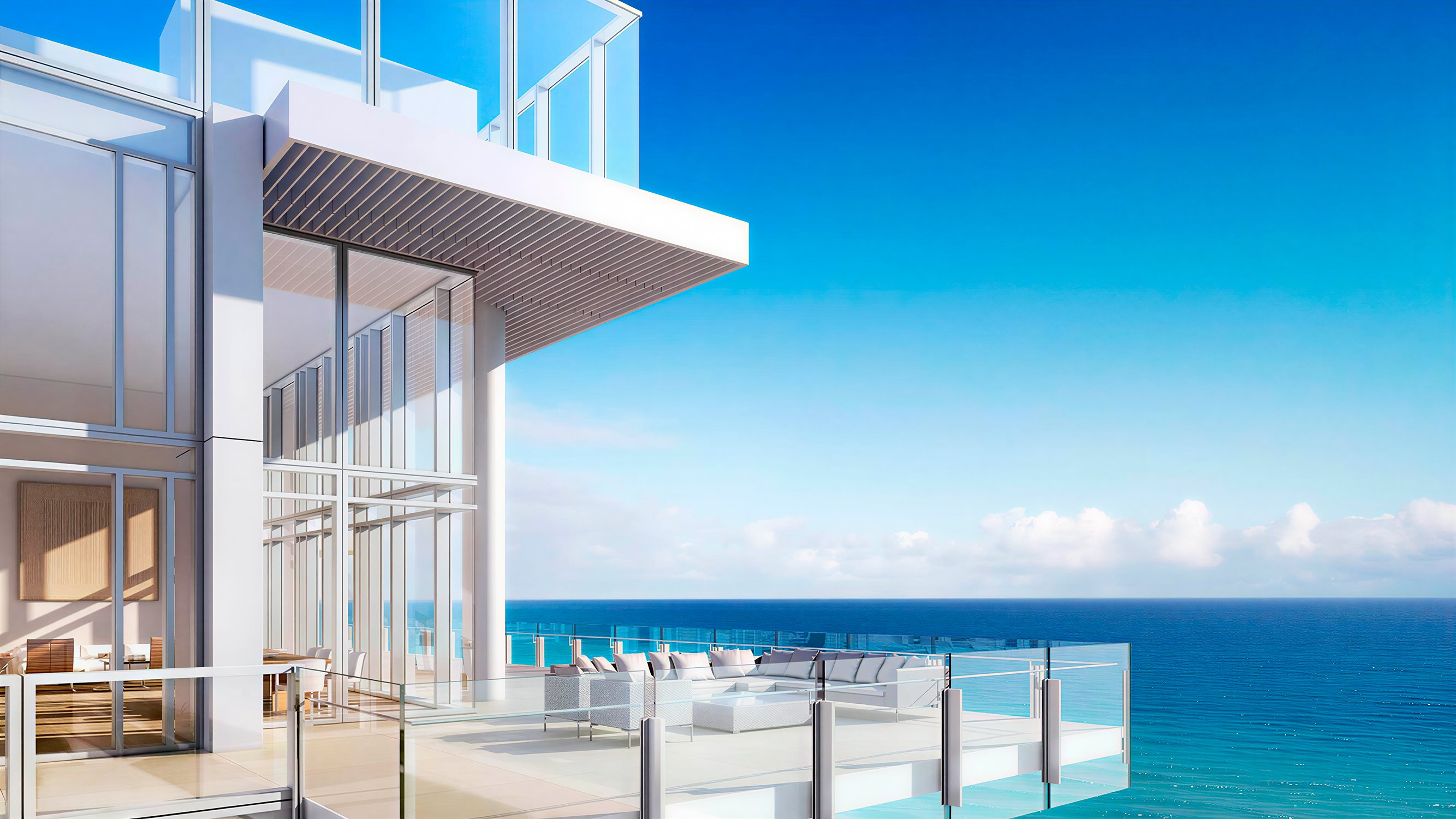
For years, the shorthand for luxury was the sweeping great room: kitchen, dining, and living arranged as one dramatic volume, optimized for entertaining and ocean views. In 2026, the conversation is more nuanced. The strongest design coverage points to a move away from fully open-concept living toward zoned, broken-plan, or selectively separated spaces. The goal is not to close a home off. It is to refine openness so it performs better: sightlines where you want them, doors where you need them.
In practice, this looks like wide cased openings, partial walls, interior glass, and subtle shifts in ceiling height or flooring that define distinct areas without shrinking the sense of scale. The result is still cinematic, but more controllable. A residence can feel expansive and bright, while also capable of going quiet when work calls, guests linger, or multiple generations share the same address.
In South Florida, where indoor-outdoor living and entertaining remain central, this evolution feels especially natural. The best layouts are becoming less about one grand moment and more about a sequence of moments, each tuned to a different rhythm of daily life.
Luxury buyers in 2026 are described as valuing how a home lives, not only how it photographs. You can feel that shift during walk-throughs. Echo-prone volumes and exposed corridors feel less persuasive. Thoughtful places to retreat, work, and reset feel more valuable.
Remote and hybrid work continues to shape high-end floor plans, increasing demand for dedicated offices and rooms with true acoustic control, rather than one continuous open zone. A well-resolved plan now protects three essentials.
First, conversation. In an open great room, activities compete in the same sound field: cooking, calls, television, music. Zoned planning reduces that friction without breaking flow.
Second, privacy. Not every guest needs a direct view into the primary suite corridor, children’s rooms, or service areas. Buyers increasingly respond to the subtle choreography of a layout that reveals the glamorous spaces and conceals the operational ones.
Third, resale. Remodeling guidance for 2026 emphasizes designing with resale value in mind and choosing practical function over pure visual impact. Even at the top of the market, the most compelling homes tend to be effortless to live in. “Effortless” often means small, high-impact separations: a real foyer, a door on the office, a media room that can close, and storage that does not intrude on the main rooms.
In Miami Beach, where residences are often second homes, these details matter even more. Arriving for a long weekend should feel like stepping into calm, not into a recurring project of tidying and staging.
Trend reporting still places the kitchen at the center of social life in 2026, with oversized islands and seating designed for gathering as much as cooking. What is changing is the supporting cast.
In the most desirable layouts, the public kitchen is composed and guest-ready, while the harder work happens elsewhere. The renewed interest in defined-purpose rooms includes sculleries and pantries that protect the main kitchen from clutter, noise, and visual spill. The entertaining kitchen can stay luminous and minimal, while prep, cleanup, and storage remain discreet.
This matters in high-rise living, where every visual axis counts. An elegant island may still anchor the plan, but buyers increasingly want a clear strategy for keeping it clear during a party. If you have toured Setai Residences Miami Beach, you will recognize the appeal of hospitality-caliber ease: spaces that feel composed even when the home is actively in use.
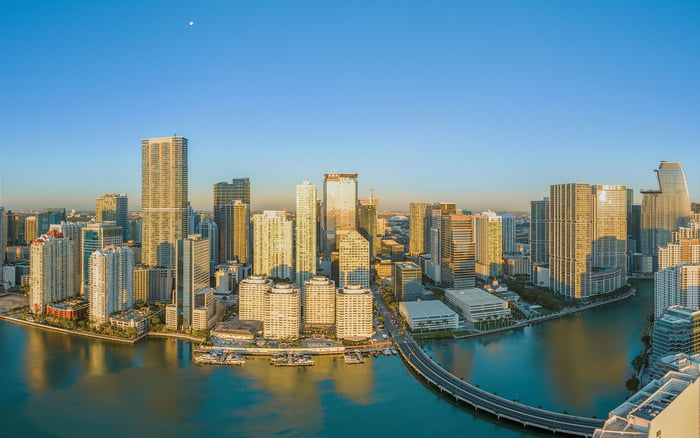
In Brickell, the same principle reads in a more urban register. A kitchen can be open to the living area without surrendering control. Selective openness is the luxury move: openness where it amplifies light and view, separation where it preserves calm.
Wellness-forward primary suites and spa-like bathrooms are repeatedly cited as defining luxury priorities for 2026. This is not simply about larger bathrooms. It is about a daily ritual space that feels restorative.
Within zoned floor plans, the primary suite is less a door off the main corridor and more a private wing. The strongest plans treat the bedroom, dressing area, and bath as a layered sequence. Each layer adds quiet and privacy, and makes the suite feel like a true retreat instead of an afterthought.
This is also where “quiet luxury” is widely discussed as evolving in 2026 coverage, with designers moving toward more character, warmth, and personalization rather than uniform minimalism. A wellness suite does not need to be stark to be serene. Warm neutrals and nature-inspired palettes are increasingly preferred over cooler gray-white schemes, and natural materials with tactile finishes continue to signal quality.
For South Florida buyers, the right suite becomes a counterpoint to the climate and pace outside: cool without feeling cold, indulgent without feeling ornate.
Indoor-outdoor flow remains a hallmark of luxury, but 2026 discussions increasingly pair it with privacy-minded zoning and curated outdoor rooms. The subtext is clear: outdoor living is no longer just a single large terrace with furniture. It is a sequence, much like the interior.
A balcony can be more than an accessory. In a refined plan, it extends specific functions: morning coffee off the kitchen, reading off a den, sunset cocktails off the living room. Buyers are also more sensitive to exposure and noise, so having an outdoor area that feels sheltered can be as valuable as raw square footage.
In Surfside and other coastal enclaves, this reads as discreet luxury: outdoor spaces designed for real use, not only for an aerial photograph.
Homes that execute this well often feel like boutique hotels, but with residential cadence. Consider how a building such as Faena House Miami Beach can sit within the Miami Beach narrative of artful living, with a residence that is open to the view while still protected from commotion.
Another quiet shift embedded in 2026 design forecasts is the move from cool, high-contrast minimalism toward warmer, nature-inspired palettes. Warm neutrals are gaining ground, and the overall mood is more layered: stone, wood, textured surfaces, and a preference for tactile comfort over pristine showroom perfection.
This is not a return to traditionalism. It is a refinement of modern living that reads as more personal. For buyers, there is also a practical benefit. Warmer palettes and textured materials tend to wear gracefully. They can help a Resale property feel current with fewer drastic interventions, and they can help New-construction avoid feeling generic.
If quiet luxury once meant removing visual noise, the emerging version is about curating visual interest: depth, material honesty, and rooms that feel lived in rather than staged.
Home tech in luxury builds is increasingly framed as “invisible.” The status signal is no longer the number of visible gadgets. It is seamlessness: integrated lighting, discreet controls, and systems that reduce clutter rather than add to it.
Sustainability features are also frequently positioned as an expectation in 2026 high-end trend reporting, and energy-efficiency upgrades are often discussed alongside smart systems as part of comfort and operating cost control. In South Florida, where climate and comfort are non-negotiable, the most convincing upgrades are felt rather than seen: quieter interiors, steadier temperature consistency, and an effortless sense of control.
For buyers evaluating a Resale purchase, these improvements can modernize daily life without turning a home into a technology showroom. For New-construction, the benchmark is integration: sustainability and smart comfort as baseline, not as a menu of add-ons.
In the current cycle of luxury decision-making, the floor plan is becoming a primary differentiator. Style can be refreshed. A poorly resolved layout is harder to fix.
As you tour, pay attention to how many activities the home asks you to perform within one acoustic zone. If every function collapses into a single space, the property may still impress, but it may also feel less livable.
Look for:
In Miami Beach, branded hospitality has helped shape expectations for service, discretion, and calm. Buildings such as The Ritz-Carlton Residences® Miami Beach echo the broader 2026 direction: residences that privilege ease, quiet, and a sense of retreat.
And for buyers who prioritize an oceanfront rhythm, 57 Ocean Miami Beach belongs in the conversation as a reminder that the most compelling luxury today is not only the view. It is the way the home lets you live with that view, without surrendering privacy.
Ultimately, the 2026 “return” is not to smaller rooms. It is to better rooms: spaces with purpose, proportion, and control.
Is open concept out in 2026? 2026 trend coverage suggests it is being refined, with more zoning and selective separation rather than fully open great rooms.
What is a broken-plan layout? It preserves flow and sightlines while using partial walls, openings, or subtle level changes to define distinct zones.
Why are doors and separations trending again? Privacy and noise control matter more, especially with remote and hybrid work influencing daily routines.
Will zoned layouts hurt resale value? Current guidance emphasizes function for resale, and well-zoned plans can read as more livable, adaptable, and broadly appealing.
What rooms are buyers asking for most? Dedicated offices, studies, media rooms, and stronger pantry or scullery-style support spaces are frequently highlighted.
Are kitchens still meant to be open? Often yes, but many luxury layouts include ways to keep prep, cleanup, and mess out of the main entertaining view.
What is changing in luxury interiors beyond layouts? Warmer neutrals and nature-inspired palettes are replacing cooler gray-white schemes, alongside a renewed focus on tactile natural materials.
What does “invisible tech” mean? Integrated systems that minimize visual clutter, such as discreet lighting controls and automation that blends into the architecture.
How does indoor-outdoor living evolve in 2026? The trend favors curated outdoor rooms paired with privacy-minded zoning, not just one oversized terrace.
What is the simplest way to evaluate a floor plan during a tour? Notice whether quiet activities and social activities can be separated without sacrificing light, view, and flow.
For tailored guidance on South Florida luxury residences, explore MILLION Luxury.
If branded residences are on your mind — as a home or as an allocation — we would be glad to share what we are seeing, privately.
Begin a quiet conversation
.jpg&width=700&height=438&fit=cover)