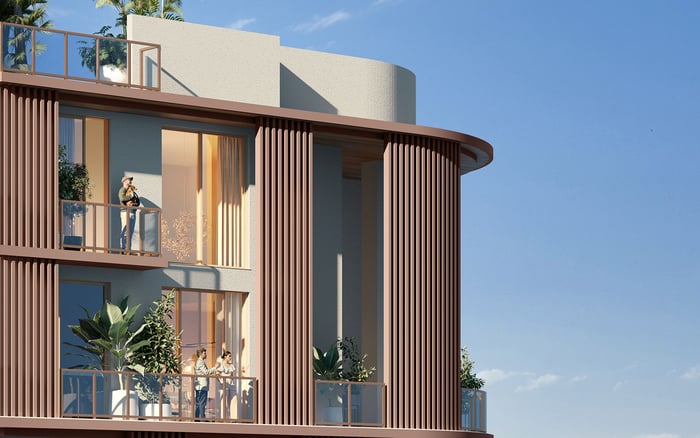
A buyer-oriented framework for evaluating property-tax reassessment at Ziggurat Coconut Grove, with emphasis on privacy value, service durability, and future resale discipline.

Ziggurat Coconut Grove calls for a precise kind of buyer discipline. The decision is not only about architecture, privacy, service, or the cachet of Coconut Grove living. It is also about what happens to the ownership cost after closing, when the property-tax basis may be reassessed.
For a luxury buyer, property-tax reassessment is never a footnote. It shapes the true annual cost of ownership, affects how value feels over time, and can influence how a future buyer underwrites the same residence. In an ultra-premium setting, the question is not simply, “Can I afford it?” The sharper question is, “Does the full carry cost remain elegant after the tax reset?”
That distinction matters. Privacy and service are among the most coveted qualities in boutique Coconut Grove real estate, but they should be evaluated alongside tax exposure, association obligations, insurance considerations, and the likely behavior of future buyers.
A tax reassessment analysis should begin with the purchase scenario, not the current owner’s tax bill. A prior bill may reflect an older assessed value, exemptions, caps, or ownership history that will not necessarily transfer to a new purchaser. The relevant exercise is to estimate the likely post-closing annual property-tax obligation, then fold it into a complete ownership budget.
This is especially important for buyers comparing residences across different building types. A boutique building may offer a quieter ownership experience, fewer neighbors, and more intimate service. Those qualities can carry real value, but they do not replace the need to understand the reset in assessed value.
A prudent buyer should review the estimated taxable value after purchase, the local millage assumptions used in any projection, the timing of reassessment, and whether any exemptions or portability benefits may apply. The objective is not false precision. It is to avoid anchoring a luxury acquisition to a tax number that belongs to someone else’s ownership story.
Privacy is often discussed emotionally: fewer arrivals, less corridor traffic, quieter amenity spaces, and a stronger sense of residential calm. At Ziggurat Coconut Grove, privacy should also be evaluated financially. If the premium paid for privacy is meaningful, the recurring cost structure must remain aligned with that premium.
A buyer should ask how the residence preserves discretion in daily life. Consider elevator experience, arrival sequence, amenity placement, exposure to neighboring residences, service circulation, and the ability to host without compromising personal privacy. These details may influence value more than generic amenity counts.
Then pair that lifestyle assessment with tax sensitivity. A residence that feels serene but becomes meaningfully more expensive to carry after reassessment may appeal to a narrower resale audience. Conversely, a residence with privacy, a sensible service model, and a comprehensible tax profile can feel more durable to the next buyer.
Privacy is not just about being unseen. In luxury real estate, it is about reducing friction. The strongest underwriting treats privacy as a utility, then tests whether the carrying costs support that utility over a multiyear hold.
Service is one of the central promises of high-end condominium living. The challenge is determining whether the service experience is durable. Buyers should distinguish between visible service, such as hospitality and amenities, and structural service, such as staffing logic, maintenance discipline, building governance, and operational consistency.
A refined building does not need to be overprogrammed to feel luxurious. Some Coconut Grove buyers prefer restrained service that is polished, personal, and unobtrusive. The key is whether the service model supports the building’s identity without creating an ownership cost profile that feels excessive relative to the residences.
Property-tax reassessment belongs in this equation because buyers rarely evaluate costs in isolation. Taxes, association dues, insurance, reserves, and special maintenance expectations all compete for the same mental budget. A buyer may accept a higher association cost if service quality is exceptional and taxes remain well understood. A buyer may also accept a tax increase if the building’s privacy and service justify the total annual obligation.
The most sophisticated approach is to model the full carry cost under several scenarios, then ask whether the service experience still feels proportionate. Luxury should feel effortless, but the underwriting behind it should be exacting.
Resale value is often described through design, location, scarcity, and view quality. Those factors matter, but the next buyer will also study the same tax reset question. If future purchasers perceive the post-closing tax obligation as unclear or burdensome, they may discount their offers or move more slowly.
For Ziggurat Coconut Grove, the resale lens should begin with buyer pool depth. Who is the likely next buyer: a primary resident seeking privacy, a downsizer prioritizing service, a second-home owner wanting a quiet Miami base, or an investor evaluating long-term hold value? Each buyer type will interpret property taxes differently.
Primary residents may focus on lifestyle utility and daily convenience. Second-home buyers may focus on the total cost of an asset used seasonally. Investors may emphasize yield, exit liquidity, and predictable carry. The more the residence appeals across several profiles, the more resilient the resale case may be.
This does not mean every residence should be valued the same way. Larger or more distinctive homes often require a more specialized buyer. But if the tax impact, service obligations, and privacy premium can be explained cleanly, the resale narrative becomes easier to defend.
Before committing, buyers should request a complete cost picture. That includes an estimate of property taxes after closing, association dues, insurance expectations, reserve posture, and any known capital obligations. The goal is to understand not only the first year of ownership, but the pattern of costs over time.
Ask whether the current tax bill is representative of what a new owner might pay. Ask how the residence compares with similar luxury alternatives in the Grove. Ask whether the building’s service model is likely to remain consistent as ownership evolves. Ask whether the association budget supports the lifestyle being presented.
It is also useful to stress-test the purchase across different hold periods. A buyer planning a long-term residence may weigh privacy and service more heavily. A buyer considering a shorter hold should be more sensitive to transaction costs, tax reset visibility, and how easily the next buyer can understand the same ownership equation.
The point is not to make the acquisition feel clinical. It is to protect the emotional decision with enough financial architecture to support it.
Begin with lifestyle fit. Does Ziggurat Coconut Grove deliver the privacy, scale, and neighborhood rhythm you want? If the answer is no, tax analysis will not rescue the decision. If the answer is yes, move to the second layer.
Next, establish the true carrying cost. Use conservative tax assumptions, then combine them with all recurring building costs. Do not rely on the seller’s current tax bill as the basis for your lifestyle budget.
Third, evaluate service quality relative to cost. A service-rich environment can be worthwhile when it is well governed and consistent. A smaller, quieter building can be equally compelling when service is refined rather than excessive.
Fourth, test resale logic. Imagine presenting the same residence to a future buyer. Would the tax story be straightforward? Would the service model make sense? Would the privacy premium feel tangible from the moment they arrive?
Finally, decide whether the property still feels graceful after the numbers are complete. The best luxury purchases do not require a buyer to ignore cost. They make the cost feel coherent.
Why does property-tax reassessment matter for Ziggurat Coconut Grove? It may change the annual ownership cost after purchase, affecting budgeting, lifestyle comfort, and future resale positioning.
Should I rely on the seller’s current property-tax bill? No. A current tax bill may reflect the seller’s ownership history and may not represent what a new owner will pay after reassessment.
How should privacy be valued in this analysis? Privacy should be treated as a daily-use benefit, then tested against the total carrying cost to determine whether the premium remains justified.
Can strong service offset higher carrying costs? It can, if the service is durable, well governed, and aligned with the building’s identity rather than merely decorative.
What costs should be reviewed with taxes? Review association dues, insurance assumptions, reserve posture, maintenance expectations, and any known capital obligations.
Does reassessment affect resale? Yes. Future buyers will evaluate the post-closing tax exposure when deciding whether the residence feels fairly priced.
Is a boutique building always less expensive to own? Not necessarily. Boutique ownership can offer privacy and intimacy, but the full cost structure still needs careful review.
Who should help evaluate the tax impact? Buyers should consult qualified tax, legal, and real estate advisors before relying on any ownership-cost projection.
What is the best first step before making an offer? Build a conservative annual carry-cost estimate that reflects a post-closing tax reset, not only the current owner’s figures.
What makes the purchase feel financially elegant? The residence should combine privacy, service, and resale logic with a carrying cost that remains coherent after reassessment.
When you're ready to tour or underwrite the options, connect with MILLION.
If branded residences are on your mind — as a home or as an allocation — we would be glad to share what we are seeing, privately.
Begin a quiet conversation