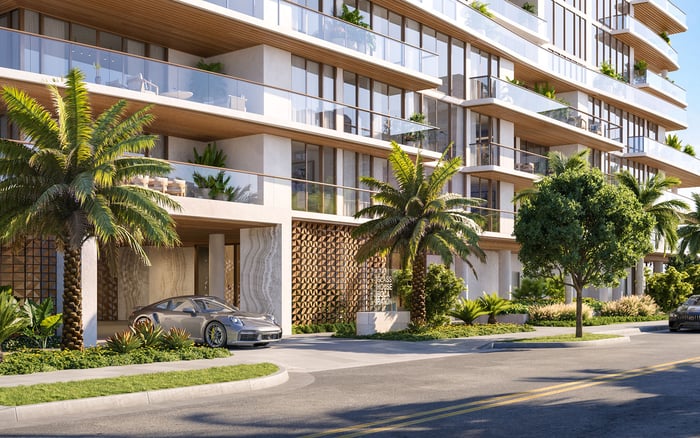
A practical buyer guide to evaluating package-room capacity at The Lincoln Coconut Grove as a signal of service quality, daily ease, and resale-minded luxury living in 2026.

At the ultra-premium end of Coconut Grove living, buyers tend to focus first on architecture, privacy, light, views, finish quality, parking, and the sense of arrival. Yet by 2026, one of the most revealing questions may sit far from the show kitchen: can the building absorb the daily rhythm of modern deliveries without creating friction?
For The Lincoln Coconut Grove, package-room capacity should be viewed as a practical buyer test, not a minor back-of-house detail. The issue is not simply where boxes are stored. It is whether the building’s operations can support a lifestyle shaped by e-commerce, grocery delivery, travel schedules, dry cleaning, wine shipments, meal kits, and frequent arrivals that do not always fit neatly into a standard mailroom routine.
That is especially relevant in Coconut Grove, where the residential ideal is not tower-like intensity but quiet, seamless, low-friction living. A buyer looking at The Lincoln Coconut Grove is not only assessing design and location. The same buyer is also assessing whether everyday service systems feel calm, discreet, and well considered.
A boutique condominium can appear simpler to operate because it has fewer residences. That assumption can be misleading. Fewer homes do not necessarily mean fewer deliveries per household. In fact, luxury households may generate higher delivery frequency because residents travel often, entertain regularly, order specialty groceries, receive temperature-sensitive items, and rely on staff or concierge coordination to simplify daily life.
This is where package capacity becomes more than square footage. The real question is how the building handles volume, timing, accountability, and resident access. A beautiful lobby can feel less impressive if the resident experience is interrupted by missing notifications, congested pickup areas, unplanned overflow, or uncertainty around perishable items.
For a buyer, the package area is a proxy for operational sophistication. If a building cannot handle the predictable arrival of boxes, groceries, and oversized deliveries, it is reasonable to ask how it will handle subtler service details. Luxury is often measured by the absence of small problems.
The most useful inspection is not a single question such as, “Is there a package room?” A stronger buyer approach is to ask how the entire delivery chain works. Where do delivery drivers enter? Is there a defined loading procedure? How are packages logged? Who has custody before the resident retrieves them? Are there cameras in the relevant areas? How are residents notified? What happens after hours?
The answer should cover more than boxes on shelves. Buyers should ask about shelving logic, overflow planning, staff workflow, delivery access, notification software, pickup protocols, and security oversight. If the building accommodates temperature-sensitive deliveries, the process should be clear. If it does not, buyers should understand the practical implications before closing.
Oversized deliveries deserve separate attention. Furniture accessories, luggage, sports equipment, wine, art-related shipments, dry cleaning, and specialty grocery orders can create operational pressure. The building should have a process that avoids improvisation, protects resident privacy, and minimizes disruption to common areas.
The package-room test is most revealing during peak periods. Holidays, seasonal occupancy changes, and weeks when residents are traveling can turn a tidy storage area into a service challenge. Buyers should ask how the building plans for these moments before they arrive.
A strong operational answer will address capacity, staffing workflow, communication, and overflow. The point is not to demand unlimited storage. It is to understand whether the building has thought through predictable stress points. A luxury condominium should not be surprised by December delivery volume, weekend grocery surges, or the arrival patterns of residents who split time between homes.
For second-home owners, this question becomes even more important. A resident who is away for several weeks may need confidence that packages are secured, logged, communicated, and retrieved under a clear policy. The package room becomes part of the owner’s relationship with the building, even when the owner is not physically present.
One of the most delicate aspects of package handling is the treatment of perishables. Grocery delivery, meal kits, floral deliveries, medications, wine, and specialty food items do not behave like standard parcels. They create questions around timing, refrigeration, liability, staff alerts, and pickup expectations.
Buyers should not assume that a luxury building automatically has cold storage or a dedicated refrigerated system unless that detail is confirmed in project materials or by the sales team. The more precise question is: what is the procedure for temperature-sensitive items, and what is the resident expected to do?
A clear answer may be more valuable than a vague promise. The best buildings tend to define what they can handle, how quickly residents are notified, and what happens if a delivery arrives outside expected hours. In 2026, clarity is part of luxury.
Package operations may not appear on a floor plan, but they can shape satisfaction over time. For resale-minded buyers, daily operational friction matters because resident experience influences building reputation. A condominium with elegant finishes but inconsistent service can lose some of its emotional advantage once owners begin living with the details.
The investment lens is similar. Buyers considering long-term value should evaluate whether the building’s service infrastructure matches the expectations of future luxury purchasers. In a market where buyers compare lifestyle, privacy, convenience, and management quality, package handling becomes one more signal of whether a property feels current.
This does not mean package-room capacity should outweigh architecture, residence design, or location. It means it belongs in the same due-diligence conversation. The Lincoln Coconut Grove should be compared not only on aesthetics, but also on how confidently it supports the logistics of everyday life.
During a sales visit or due-diligence conversation, buyers can use a simple script. Ask where deliveries arrive, who receives them, how they are recorded, where they are stored, and how residents are notified. Then ask what happens with oversized items, perishables, dry cleaning, wine, and after-hours deliveries.
Next, ask about peak conditions. How does the building handle holiday volume? What happens when multiple residents are away? Is there designated overflow space? Are common areas protected from temporary clutter? Is there a documented pickup protocol?
Finally, listen to the confidence of the answer. The strongest responses are specific without being theatrical. They describe a system, not a hope. In the new-construction luxury market, buyers increasingly expect the unseen parts of a building to be as thoughtfully planned as the visible ones.
For The Lincoln Coconut Grove, the package-room question should be treated as a quiet but serious measure of readiness for 2026 luxury living. It touches security, privacy, service, staffing, communication, and the resident’s daily experience.
The right test is not whether the building has a place for deliveries. The right test is whether package operations feel proportionate to the expectations of its buyers. In Coconut Grove, where discretion and ease are central to the lifestyle, the difference between a storage room and a service system can be meaningful.
Buyers do not need to overstate the issue. They simply need to ask better questions. A well-run package operation will disappear into the rhythm of the day. A poorly planned one will announce itself repeatedly, box by box.
Why should package-room capacity matter to buyers at The Lincoln Coconut Grove? Because it reflects how well the building supports daily logistics, privacy, security, and service expectations.
Is package capacity only about room size? No. It also includes shelving, overflow planning, staff workflow, delivery access, notifications, and pickup protocols.
Should buyers assume The Lincoln Coconut Grove has refrigerated package storage? No. Buyers should confirm any refrigeration or cold-storage detail directly before relying on it.
What delivery types create the most operational pressure? Oversized packages, groceries, meal kits, wine shipments, dry cleaning, and temperature-sensitive items require clear procedures.
Why is this especially relevant for a boutique building? Smaller scale does not automatically reduce delivery intensity, especially when each household may receive frequent shipments.
How does package handling affect the resident experience? Smooth handling reduces daily friction, while poor communication or overflow can make a luxury building feel less refined.
What should buyers ask during a tour? Ask about delivery access, logging, security cameras, chain of custody, after-hours retrieval, and resident notifications.
Does package-room planning matter for second-home owners? Yes. Owners who travel need confidence that packages are secured, communicated, and managed under a clear policy.
Can package operations influence resale appeal? Yes. Persistent service friction can affect resident satisfaction and the reputation of a building over time.
What is the best way to shortlist comparable options for touring? Start with location fit, delivery status, and daily lifestyle priorities, then compare stacks and elevations to validate views and privacy.
To compare the best-fit options with clarity, connect with MILLION.
If branded residences are on your mind — as a home or as an allocation — we would be glad to share what we are seeing, privately.
Begin a quiet conversation