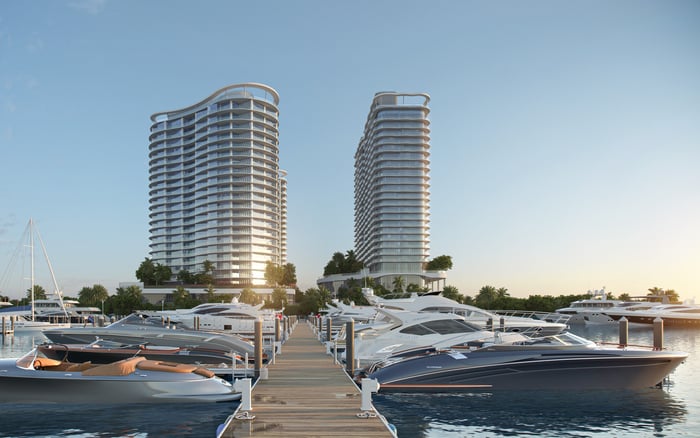
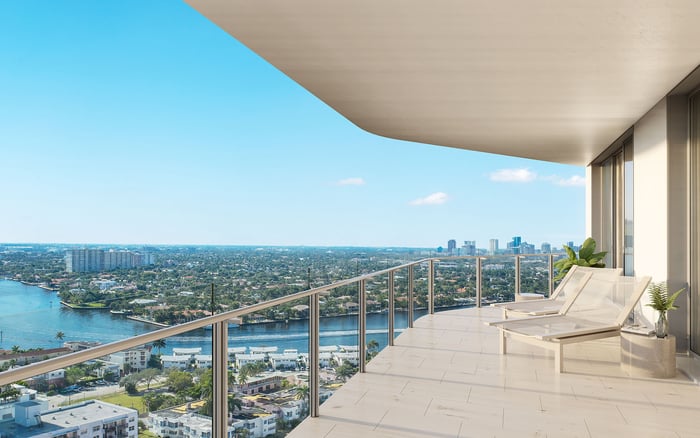
For yacht owners considering Riva Residenze, the decisive questions extend beyond the residence. Route constraints, vessel compatibility, dock rights, storm protocols, and discreet arrivals should all be validated before purchase.

For a yacht owner, Riva Residenze Fort Lauderdale is more than a luxury residential consideration; it must also be evaluated as marine infrastructure. The defining question is not whether the property is waterfront, but whether the complete journey from berth to the Intracoastal Waterway and Atlantic Ocean works for the owner’s specific vessel, schedule, crew, and privacy expectations.
That distinction should shape due diligence from the outset. A residence may be compelling on land yet present operational compromises on the water. Bridge restrictions, tidal conditions, wake exposure, shallow areas, speed zones, and traffic bottlenecks can complicate an apparently straightforward departure. These issues are best resolved before a residence is selected-not after contracts and berthing expectations have taken form.
A proper marine review begins with the intended yacht’s maximum air draft, then accounts for every fixed or movable bridge along the outbound route. Published or represented clearances should not be treated as universal constants. Buyers should assess them under realistic tidal and operating conditions, with appropriate margins determined by qualified marine professionals.
Movable bridges demand another layer of scrutiny. Opening schedules, restricted periods, queuing, marine traffic, and practical wait times can materially affect an owner’s routine. A route that is technically navigable may still prove inconvenient for an early departure, a tightly timed guest arrival, or a return during a high-traffic period.
Ideally, a licensed captain should trial the route aboard the intended yacht. Where that is not practical, the captain can review current measurements, operating restrictions, depths, and turning conditions. The objective is a door-to-ocean operating picture, not a generalized assurance of water access.
Slip length is only one measure of vessel compatibility. Governing limits for length, beam, draft, and displacement should be confirmed in writing. Buyers should also determine whether restrictions apply to tenders, personal watercraft, boarding equipment, service access, provisioning, fueling arrangements, or professional crew.
Physical inspection is equally important. A marine surveyor should examine the seawall, dock construction, tidal exposure, currents, wake conditions, and how the yacht would sit through ordinary changes in water level and traffic. Maneuvering room should be evaluated with neighboring vessels in place, not under idealized empty-dock conditions.
Utilities require a vessel-specific audit. Electrical service, water, and any other operational connections should be matched to onboard requirements. Dock rights, assignment procedures, marina rules, insurance obligations, and city, county, state, and federal requirements should be reviewed alongside the condominium documents. In Broward, as elsewhere, physical fit alone does not establish a durable right to dock.
Storm diligence should address the residence, docks, and seawall as a connected system exposed to wind, flooding, and storm surge. The buyer should obtain the formal hurricane plan and determine who activates it, how notice is delivered, and what owners and captains must do as a storm approaches.
The pivotal question is whether vessels may remain onsite or must relocate. If relocation is required, the owner should understand the timing, destination planning, crew availability, insurance conditions, and consequences of delayed compliance. Written procedures should be compared with the yacht’s own storm plan so responsibilities are clear well before an advisory creates competition for labor, dockage, or haul-out capacity.
Yacht-arrival privacy should be tested, not inferred from architectural renderings or a luxury address. Dock visibility from neighboring residences and public viewpoints, access control between berth and building, staffing patterns, guest handling, and the exposure of owner names or schedules all shape discretion.
The arrival sequence warrants a practical walk-through at different times. A secure dock can still feel conspicuous if passengers wait at a controlled door, luggage remains visible, or crew and vendors share a narrow access point. Likewise, an elaborate protocol can undermine privacy if delays make an arrival more noticeable.
For many owners, lifestyle quality is defined by seamless transitions. The best procedure is both discreet and efficient, allowing family, guests, crew, and service personnel to move along separate or carefully managed paths without unnecessary disclosure.
The diligence framework should remain consistent across a Fort Lauderdale shortlist. Buyers considering Four Seasons Hotel & Private Residences Fort Lauderdale or Auberge Beach Residences & Spa Fort Lauderdale should distinguish residential appeal from verified compatibility with their own boating program.
The same discipline applies when reviewing St. Regis® Residences Bahia Mar Fort Lauderdale and The Ritz-Carlton Residences® Fort Lauderdale. Each option should be assessed on its route, rules, physical conditions, storm procedures, and arrival controls. Prestige cannot substitute for written rights or a captain-tested passage.
A disciplined buyer’s file should combine route findings, current measurements, governing documents, written dock-use terms, insurance requirements, utility specifications, inspection results, and the formal hurricane plan. A licensed captain, marine surveyor, and maritime attorney can address distinct parts of the same risk picture.
For Riva Residenze Fort Lauderdale, this approach aligns the residence with the yacht rather than forcing the yacht to adapt later. The result is a more precise acquisition decision, grounded as firmly in daily operations as in design, views, and service.
Why is a waterfront designation insufficient for a yacht owner? It does not establish that the full route to the Intracoastal Waterway and Atlantic Ocean is compatible with a specific vessel.
What yacht measurement is most relevant to bridge clearance? Maximum air draft should be compared with every bridge clearance under realistic tidal and operating conditions.
Do movable bridges eliminate clearance concerns? No. Opening schedules, restricted periods, traffic, and wait times can make a technically passable route operationally inconvenient.
Is slip length enough to confirm dock compatibility? No. Permitted length, beam, draft, and displacement should all be verified in writing.
What should a dock inspection cover? It should address seawall condition, dock construction, tidal exposure, currents, wake, maneuvering room, and utility suitability.
Which dock documents deserve legal review? Dock rights, assignment terms, marina rules, condominium documents, insurance requirements, and applicable governmental rules should be reviewed together.
What is the central storm-planning question? Determine whether the yacht may remain onsite or must relocate, then confirm notice timing, responsibilities, and insurance conditions.
How should arrival privacy be evaluated? Review dock visibility, access control, staffing, guest handling, and any process that may expose an owner’s identity or schedule.
Who should participate in marine due diligence? A licensed captain, marine surveyor, and maritime attorney can test route practicality, physical condition, and legal rights.
When should this diligence begin? It should begin before purchase so bridge, dockage, storm, or privacy limitations do not emerge after the residence is chosen.
For a confidential assessment and a building-by-building shortlist, connect with MILLION.
If branded residences are on your mind — as a home or as an allocation — we would be glad to share what we are seeing, privately.
Begin a quiet conversation