A buyer-oriented guide to assessing wellness capacity, practitioner access, licensing, and guest privileges at Broward oceanfront residences, with an emphasis on written operating terms rather than amenity promises.
For a buyer considering a residence on the Broward coast, wellness is more than a beautifully finished treatment room or an inviting pool deck. Its practical value depends on whether services are available when wanted, a preferred practitioner can enter discreetly, and visiting family can participate without ambiguity.
A rigorous evaluation separates three questions: physical capacity, practitioner access, and user eligibility. An extensive amenity collection does not, on its own, establish appointment availability or guest privileges. Before assigning value to that collection, request the operating terms that translate architecture into a dependable routine.
Privacy belongs in the same conversation. A shared treatment suite, an appointment inside a private residence, and a poolside afternoon require different arrangements. They are not interchangeable expressions of wellness.
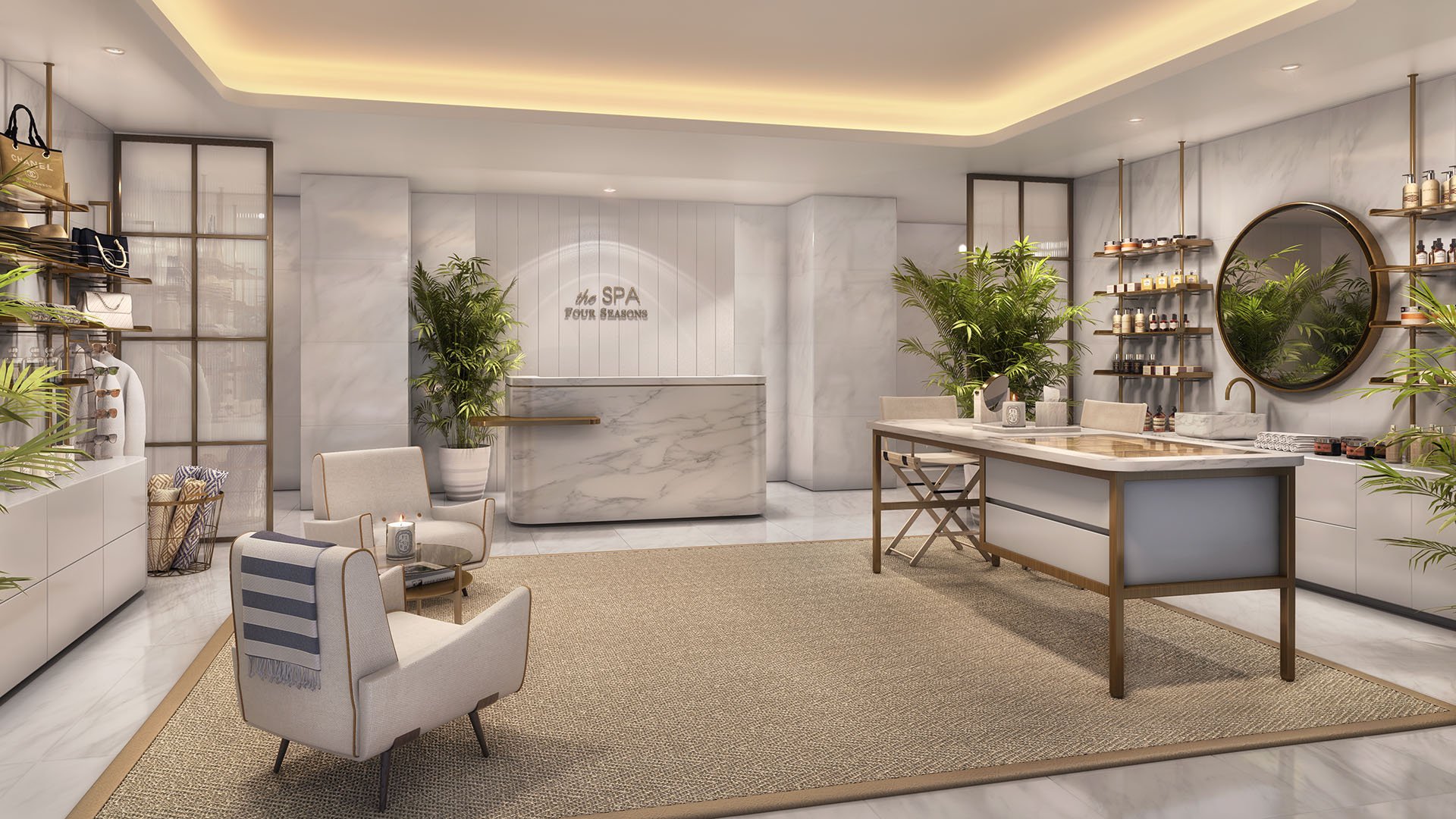
At Four Seasons Hotel & Private Residences Fort Lauderdale, the advertised spa includes six treatment rooms. That provides a useful local benchmark for physical treatment capacity-not a recommended minimum for another residence or evidence of six simultaneous appointments.
Actual availability depends on staffing, appointment length, room turnover, and privacy requirements. Ask how many rooms are routinely staffed, which treatments can run concurrently, and whether particular rooms serve specific functions. Then establish how bookings are allocated among eligible users and whether any resident priority is documented.
Request separate capacity schedules for treatment rooms, fitness facilities, pools, and wet areas. Each should specify operating hours, applicable occupancy limits, reservation requirements, and closures. A generous pool deck does not resolve a shortage of treatment appointments; an available massage suite does not establish comfortable sauna access.
There are no established utilization rates, wait times, or practitioner-to-room ratios to apply across these properties. Ask the operator for recent booking patterns, peak-period availability, and cancellation practices. Treat the response as property-specific, not as a coastal market standard.
The word spa deserves clarification. Selene Oceanfront Residences' amenity descriptions include an elevated deck with two outdoor pools and a spa, alongside a resort-style pool and a 75-foot fitness lap pool. These descriptions support a pool-and-leisure discussion but do not, by themselves, establish staffed treatment services or practitioner access.
Poolside relaxation and beach concierge service are likewise distinct from appointment-based wellness. Ask what each amenity provides, who operates it, and whether separate fees or reservations apply. Assess treatment access, recreational access, and hospitality services separately.
At Auberge Beach Residences & Spa Fort Lauderdale, the dedicated Spa by Auberge is marketed with beauty and relaxation treatments inspired by the local environment. The operational questions are precise: which services are currently available, who may book them, and under what terms?
An amenity description establishes neither a contractual entitlement nor a booking guarantee. Obtain current written confirmation before treating a service as part of the ownership experience.
A hospitality brand can frame expectations, but buyers still need to understand the relationship between residence management and the wellness operator. Identify who controls reservations, approves outside practitioners, handles charges, and resolves access disputes.
Owners' access at the Four Seasons project was described in 2018 as including hotel services, including spa services, a residential concierge, and a director of residences. That historical service description provides context, not confirmation of today's scope, charges, or reservation priorities. Current arrangements require separate review.
When comparing another coastal option, such as Rosewood Residences Hillsboro Beach, apply the same questions without assuming equivalent facilities or privileges. Compare documented operating terms, not brand names alone.
First, establish whether the practitioner may enter the property and use the intended space. Second, determine whether the proposed service arrangement meets applicable licensing requirements. Building approval is not a substitute for regulatory compliance.
Florida law requires a massage establishment to be licensed before operating. Whether a particular in-residence arrangement qualifies requires a case-specific determination; resident-only use should not be assumed exempt. Massage-establishment owners are also subject to background-screening requirements.
Massage-therapist licensure requires a board-approved course of study and passage of a designated examination, among other qualifications. Applicable inspection requirements include a current, conspicuously displayed establishment license and each therapist's current license displayed with a 2-by-2-inch photograph taken within the preceding two years. Employees providing massage treatments must be duly licensed, with applicable identification available for verification.
For visiting practitioners, proposed operating controls should include advance registration, verified licenses, photo identification, insurance documentation, appointment confirmation, and logged arrival and departure. These are recommended access safeguards, not a claim that every item is mandated statewide. Clarify separately whether treatment may take place inside the residence or only in designated rooms.
Do not automatically extend massage rules to esthetics, acupuncture, physical therapy, or medical services. Each proposed activity requires review appropriate to its scope.
A visiting relative, an overnight guest, a tenant, and an unaccompanied day visitor should not be assumed to have identical privileges. Governing documents and operator policies should define who may enter, book, receive treatments, use wet areas, and incur charges.
Ask whether guest access requires an owner to be present, whether overnight guests can reserve independently, and whether tenants receive the same privileges as owners. Distinguish permission to receive a treatment from permission to use pools, fitness facilities, or relaxation areas.
Accompaniment requirements, overnight-guest booking privileges, and approval for outside clients are operating-policy questions, not universal Florida rules. If you intend to host frequent visitors, obtain the applicable conditions before purchase rather than relying on an informal assurance.
Request the applicable governing documents, current amenity rules, treatment booking terms, practitioner-access procedure, and guest policy. Ask management to identify which terms it administers and which belong to a separate operator. Where an answer affects the purchase decision, seek written confirmation.
Then test the rules against your actual routine: a preferred practitioner visiting privately, a family member booking without you, or a treatment followed by pool access. Each scenario should have a clear approval path, cost structure, and responsible contact.
The most compelling wellness offering is not necessarily the longest amenity list. It is the one whose capacity, access controls, and guest privileges align with how you intend to live-with no essential assumption left unresolved.
Explore Broward coastal residences with MILLION and make wellness operations part of your buying brief.
If branded residences are on your mind — as a home or as an allocation — we would be glad to share what we are seeing, privately.
Begin a quiet conversationAsk about staffing, appointment length, turnover, privacy, and booking allocation. Room count alone does not establish appointment availability.
The advertised spa includes six treatment rooms. This is a local capacity benchmark, not a minimum requirement or a guarantee of simultaneous appointments.
Evaluate them separately because their operating constraints differ. Request hours, occupancy limits, reservations, and closure information for each amenity category.
No. Clarify whether the description refers to treatment facilities, a pool-related amenity, or another offering, and confirm current service availability.
Do not assume an exemption. Florida requires massage establishments to be licensed before operating, and a particular in-residence arrangement needs case-specific review.
Verify current massage-therapist licensure and applicable identification. Recommended building-access controls also include insurance documentation and appointment confirmation.
Applicable inspection requirements call for a current, conspicuously displayed establishment license. Therapist licenses must also be displayed with a 2-by-2-inch photograph taken within the preceding two years.
That depends on the property's governing documents and operator policies. Obtain written confirmation of independent booking privileges and any owner-accompaniment conditions.
Do not apply massage requirements automatically to esthetics, acupuncture, physical therapy, or medical services. Review each activity under the rules appropriate to its scope.
Request governing documents, amenity rules, booking terms, practitioner-access procedures, and guest policies. Confirm which responsibilities belong to management and which belong to a separate operator.