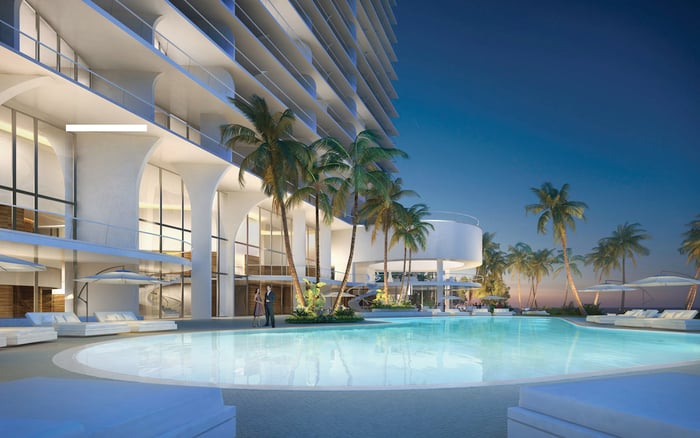
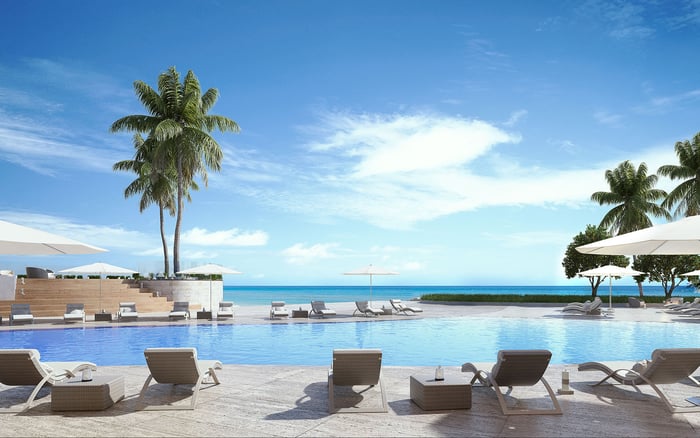
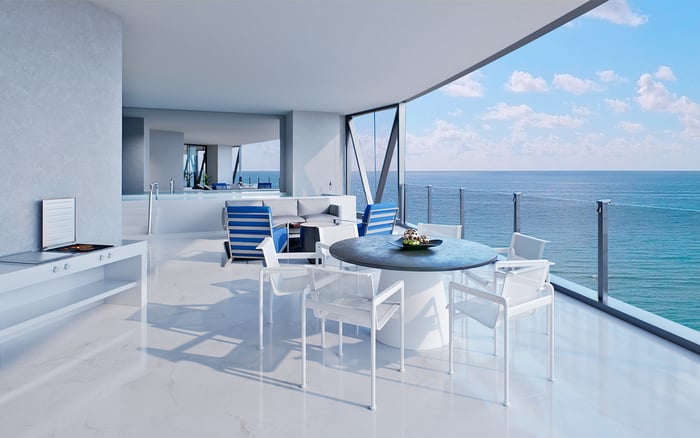
A buyer-focused look at why The Estates at Acqualina is compelling for Sunny Isles Beach owners who value comfort, service, and operational depth during adverse weather.
For South Florida buyers, hurricane resilience has long been a baseline consideration. The more sophisticated question, however, is no longer simply whether a residence is compliant. It is whether life remains composed, comfortable, and operational when the beach is closed, the sky turns gray, and movement outside the building becomes inconvenient or inadvisable.
That is the lens through which The Estates at Acqualina Sunny Isles deserves attention. The property is an oceanfront luxury residential community in Sunny Isles Beach, and its relevance for discerning buyers does not depend on any claim of being storm-proof. The stronger argument is more measured: it combines structural resilience, building systems, indoor amenities, and service culture into a storm-relevant ownership experience.
The most meaningful oceanfront decisions increasingly include new-construction thinking, lifestyle continuity, and the quality of management when conditions are less than perfect. For a high-end owner, that difference can define whether a coastal residence feels merely secure or genuinely livable.
Sunny Isles Beach has one of South Florida’s most recognizable oceanfront skylines, with towers lining Collins Avenue and the Atlantic just beyond the sand. For buyers focused on storm-day livability, the comparison set is not limited to prestige, views, or square footage. It also includes the age of the building, the depth of its systems, the indoor amenity program, and the discipline of the resident-service culture.
The Estates at Acqualina is positioned as a recent-construction option when compared with older legacy oceanfront towers along Collins Avenue. That matters because buyers often expect newer buildings to reflect modern Miami-Dade hurricane-resilience expectations, a meaningful consideration in coastal ownership. The point is not that every newer building is equal, nor that every older building is deficient. Rather, newer construction can give buyers a clearer framework for evaluating the envelope, systems, and operational standards that shape day-to-day confidence.
Within the broader Sunny Isles luxury conversation, buyers may also look at branded or design-forward properties such as Bentley Residences Sunny Isles, St. Regis® Residences Sunny Isles, and The Ritz-Carlton Residences® Sunny Isles. The most disciplined comparison is not simply which name is most recognizable. It is which ownership environment feels best prepared for days when residents may prefer to remain inside.
Storm-day livability begins with the expected fundamentals: a building designed for the South Florida coastal environment and managed with an awareness of tropical weather. For an ultra-premium buyer, however, the standard moves beyond the technical minimum.
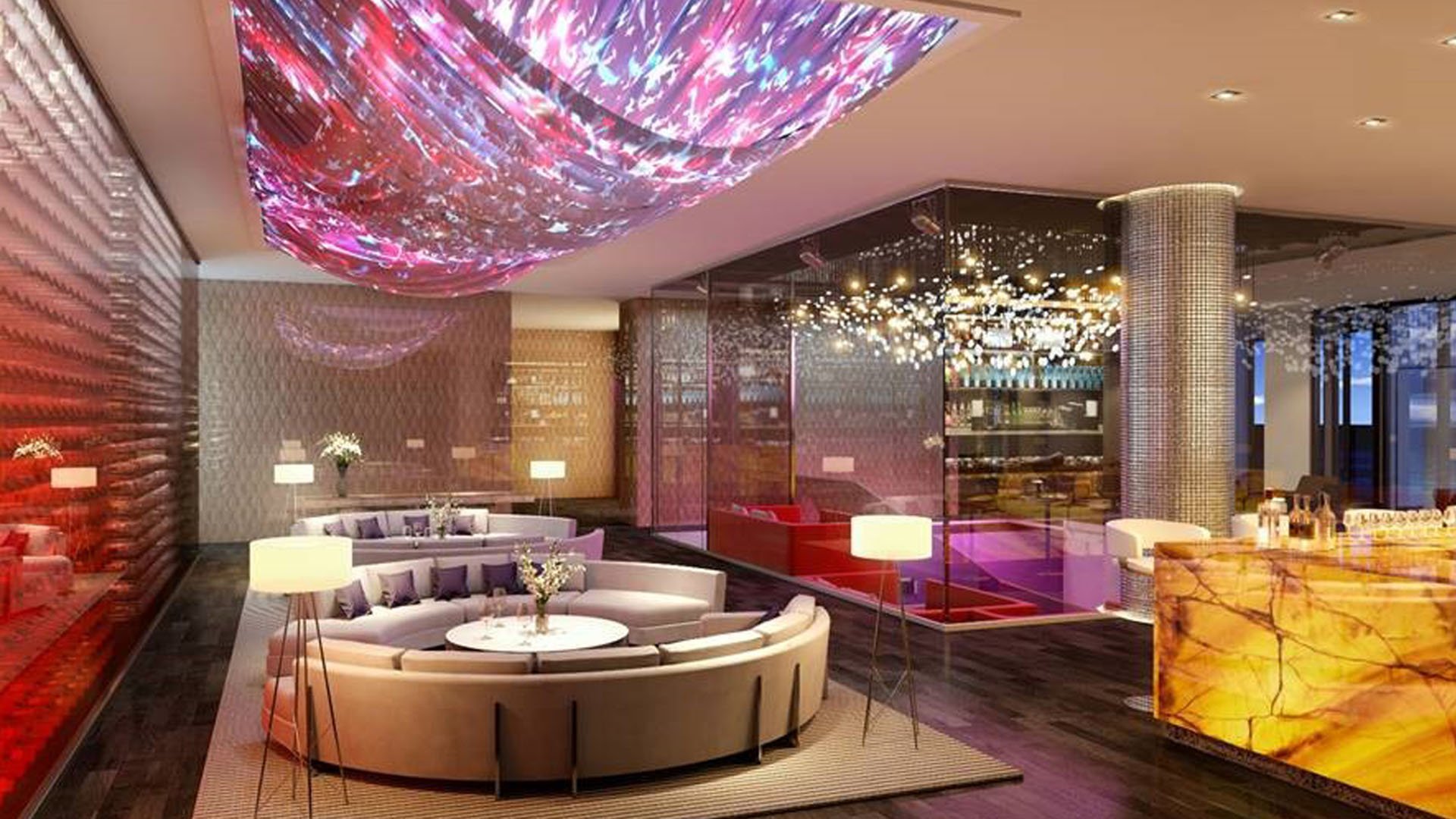
Livability means essential services feel continuous. It means interior spaces remain usable and inviting when terraces, pools, beaches, and outdoor lounges are not. It means the building team communicates clearly, prepares common areas, and maintains a sense of order. It also means residents have the psychological comfort of being in a managed environment rather than improvising in isolation.
This is where the resort-style positioning of The Estates at Acqualina becomes relevant. Indoor amenities and services are attractive on any ordinary day, but they become more valuable when outdoor living is temporarily limited. A building that can still feel serene, serviced, and socially functional during adverse weather offers a form of luxury that is less visible in photography but highly meaningful in ownership.
The distinction matters. No responsible buyer should approach any oceanfront residence as storm-proof. South Florida ownership requires practical caution, insurance awareness, building due diligence, and respect for official guidance. The better phrase for The Estates at Acqualina is shortlist-worthy for buyers prioritizing storm-day livability.
Its appeal is strongest for the owner who wants to remain secure, comfortable, entertained, and serviced without leaving the building during adverse weather. That owner may be a full-time resident, a second-home buyer, or a family that wants less disruption during tropical-storm watches, temporary shutdowns, or grid instability.
The property’s luxury proposition is therefore not only about views and finishes. It is about continuity. Can daily life remain graceful when the weather changes? Can residents still access usable indoor spaces? Does the service culture reinforce calm? Is the building’s modern context aligned with the expectations of coastal South Florida ownership?
For buyers also considering high-service oceanfront addresses such as Turnberry Ocean Club Sunny Isles, the question becomes less about a single amenity and more about the full experience. Storm-day livability is cumulative. It is created by architecture, systems, staffing, preparation, and the atmosphere of the building when everyone is looking inward.
A polished sales presentation is not a substitute for technical review. Buyers should ask direct questions about building operations during severe weather while avoiding assumptions about specifications that are not clearly documented. The most relevant topics include emergency procedures, communication protocols, service continuity, common-area readiness, elevator operations, access control, and how amenities are managed when outdoor areas are closed.
It is also reasonable to ask how the building prepares residents before a storm and how quickly it returns to normal afterward. In the luxury tier, the post-storm experience often matters as much as the day itself. Residents want to know whether the lobby, indoor amenities, staff communications, and practical services feel organized once the immediate event has passed.
The best buyers will evaluate The Estates at Acqualina with both architectural curiosity and lifestyle realism. They will not rely on vague assurances. They will want to understand how the building behaves as a living environment, not just as a structure.
The Estates at Acqualina belongs on the shortlist because it speaks to a refined version of coastal preparedness. It is not merely about resisting weather. It is about preserving a sense of normalcy, comfort, and service when the outside world temporarily narrows.
For Sunny Isles Beach buyers, that is a practical luxury. The oceanfront setting is part of the allure, but the true test comes when the oceanfront lifestyle is temporarily paused. A residence that still feels calm, serviced, and complete during those moments offers something beyond spectacle. It offers confidence.
Is The Estates at Acqualina storm-proof? No building should be described as storm-proof. The better framing is hurricane-resilient and shortlist-worthy for buyers focused on storm-day livability.
What is storm-day livability? It is the ability to remain secure, comfortable, serviced, and meaningfully occupied inside the building during adverse weather.
Why does newer construction matter in Sunny Isles Beach? Recent-construction properties may align more closely with modern Miami-Dade hurricane-resilience expectations than some older legacy towers.
Does storm-day livability only mean structural strength? No. It also includes building systems, indoor amenities, service culture, communication, and operational readiness.
Why are indoor amenities important during storms? When beaches, pools, and terraces are unavailable, interior spaces become central to comfort and routine.
Who is the ideal buyer for this type of property? The fit is strongest for owners who expect lifestyle continuity during tropical-storm watches, temporary shutdowns, or grid instability.
Should buyers compare The Estates at Acqualina with older Collins Avenue towers? Yes. The relevant comparison includes envelope age, systems, amenities, and management depth, not only views or location.
What should buyers ask before purchasing? They should ask about emergency procedures, service continuity, resident communication, access control, and post-storm operations.
Does resort-style living help during adverse weather? It can, because service, indoor amenities, and managed spaces become more valuable when residents remain inside.
Why does The Estates at Acqualina belong on the shortlist? It combines oceanfront luxury, modern resilience expectations, indoor lifestyle depth, and service-oriented ownership in Sunny Isles Beach.
When you're ready to tour or underwrite the options, connect with MILLION.
If branded residences are on your mind — as a home or as an allocation — we would be glad to share what we are seeing, privately.
Begin a quiet conversation