
A discreet guide for international buyers weighing South Florida walkability against the privacy, arrival control, and calm expected at the ultra-premium level.
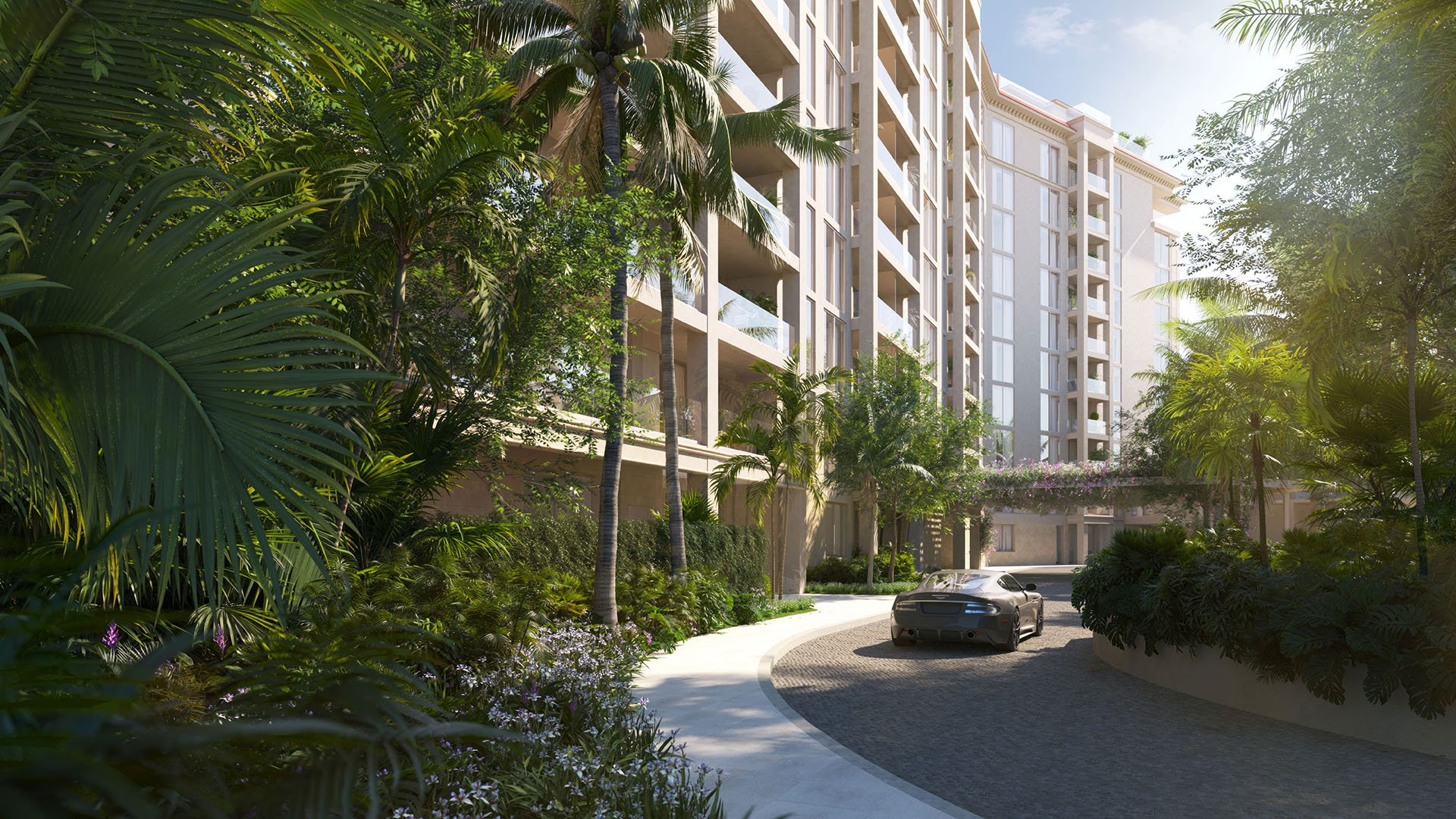
For a buyer arriving from Mexico City, walkability is rarely just a question of sidewalks. It is a way of living: stepping out for coffee, meeting friends without planning an entire outing, and moving between school, dining, wellness, culture, and home with ease. South Florida offers several versions of that life, but the privacy equation changes sharply from one address to the next.
This is one of those buyer’s guides where the correct answer is not a single neighborhood. It is a hierarchy of priorities. If privacy is non-negotiable, the home must be evaluated from the outside in: arrival, visibility, building scale, service movement, guest access, elevator experience, terrace exposure, and the feeling of returning home after a public day. Walkability matters, but in the ultra-premium market, it should never come at the expense of composure.
Fisher Island sits at one end of the spectrum for buyers who want separation as a lifestyle value. Brickell sits at another, for those who want the city at the door. Coconut Grove, Miami Beach, Bay Harbor, and nearby waterfront enclaves offer intermediate answers, each with its own balance of pedestrian convenience and discretion.
The first mistake is to ask, “What can I walk to?” The better question is, “What do I actually want to walk to every week?” A South Florida home should be chosen around repeated rituals, not hypothetical convenience. Morning coffee, a trainer, a pilates class, a marina, dinner, private school drop-off, a favorite market, a quiet park, or a hotel lobby where friends gather all create different geographic needs.
A Mexico City buyer may be used to neighborhoods where the street functions almost like a living room. In South Florida, the best version may be more selective. Some owners want a five-minute stroll to restaurants but prefer to drive to the beach. Others want the beach close at hand but do not need retail density. Some want a village feeling; others want only enough walkability to avoid feeling isolated.
This is where Brickell can be compelling for the buyer who wants a vertical city rhythm. A residence such as 2200 Brickell belongs in the conversation when the goal is daily urban access without abandoning the discipline of a private residential address. The key is to look beyond the neighborhood label and study how the building separates residents, guests, deliveries, staff, and vehicles.
Privacy is often described as a feature, but it is better understood as a sequence. It begins before the front door. How does a car approach? Is the entry legible without being exposed? Can guests be received without making the residence feel public? Does the elevator create calm, or does it feel like a hotel corridor? Are terraces positioned for views without inviting too much visual contact from neighboring buildings?
For condominium buyers, vertical privacy can be as important as geographic privacy. A home on a highly walkable corridor may still feel serene if the building choreographs movement well. A more secluded address may feel less private if its arrival is awkward, its amenity spaces are too visible, or its outdoor areas face directly into another residence.
This distinction matters in Miami Beach, where lifestyle access and privacy can vary block by block and building by building. A project like The Ritz-Carlton Residences® Miami Beach should be considered through the lens of how one enters, circulates, receives guests, and retreats, not only through brand recognition or shoreline appeal.
If Fisher Island is on the shortlist, the buyer is usually asking for something more precise than privacy. The request is for controlled separation: a home close enough to Miami’s social and cultural life, yet psychologically removed from it. That is a different proposition than walkability in the urban sense.
The question becomes whether the owner wants walkability inside a private environment, rather than walkability to the city itself. For some families, that is ideal. It creates a slower daily rhythm, with the public city accessed intentionally rather than continuously. For others, it may feel too insulated, particularly if they are moving from a city where spontaneity is part of the pleasure of ownership.
A Fisher Island option such as The Residences at Six Fisher Island belongs in the discussion for buyers who place discretion ahead of street-level immediacy. The evaluation should focus on whether the address supports the desired social rhythm: quiet weekdays, hosted weekends, seasonal use, family stays, or a more permanent base.
Coconut Grove often appeals to buyers who want walkability with a residential temperament. The ideal Grove buyer is not usually chasing intensity. The goal is to be near dining, greenery, waterfront moments, and a neighborhood cadence without feeling surrounded by constant movement.
That makes the due diligence more subtle. A buyer should visit in the morning, late afternoon, and evening. The same street can feel entirely different depending on school traffic, restaurant energy, and weekend patterns. Privacy may come from tree cover, setback, building scale, or simply from the fact that the neighborhood does not announce itself as loudly as more vertical districts.
For those considering the Grove, Four Seasons Residences Coconut Grove frames the question well: can a home deliver the ease of a village-like setting while preserving the service, arrival, and residential formality expected by an international buyer?
Miami Beach can offer proximity to sand, dining, clubs, wellness, and culture, but privacy depends on micro-location and building execution. The correct residence may be one block quieter, one exposure more discreet, or one arrival sequence better resolved. Buyers should be careful not to equate neighborhood fame with livability.
Bay Harbor offers another kind of middle ground. It can feel more residential than the city core while keeping access to nearby shopping, dining, schools, and waterfront settings within a manageable daily orbit. A project such as The Well Bay Harbor Islands fits a buyer who wants calm as part of the purchase brief, not as an afterthought.
The broader lesson is that walkability in South Florida is not one category. It can mean city energy, beach convenience, village life, or private-island ease. The sophisticated buyer chooses the version that matches the household’s true tempo.
Begin by ranking five priorities: privacy, walkability, waterfront or view orientation, school or family logistics, and social access. Then assign each property a score based on lived experience, not presentation materials. Walk the route you imagine using. Arrive as a guest would. Stand on the terrace at different times of day. Notice whether the address feels calm after dinner, during school hours, and on weekends.
Next, decide what kind of privacy you need. Visual privacy protects the eye. Acoustic privacy protects rest. Arrival privacy protects identity and routine. Operational privacy protects staff, deliveries, and hosting. Social privacy protects the family from overexposure. The best homes often solve several of these at once.
Finally, be honest about seasonality. A second-home owner may tolerate a less walkable setting if each arrival feels exceptional. A full-time resident may need greater daily ease. A family relocating from Mexico City may prefer a transitional address that preserves urban rituals while adding the privacy South Florida can provide.
Is Fisher Island the best choice if privacy is the top priority? It can be a strong fit for buyers who value controlled separation, but the right choice depends on how much daily walkability you expect.
Can Brickell feel private enough for an ultra-luxury buyer? Yes, if the building handles arrival, elevators, service routes, and amenity access with discipline and discretion.
What should Mexico City buyers clarify before touring homes? Define the daily rituals you want to preserve, then decide which can be walked, driven, or handled within the residence.
Is walkability more important for full-time residents than second-home owners? Often, yes. Full-time residents usually feel small conveniences more intensely because they shape the entire week.
How should I compare Miami Beach and Coconut Grove? Think about pace. Miami Beach can feel more social, while Coconut Grove may offer a softer residential rhythm.
Does a private building matter more than a private neighborhood? Both matter, but a well-composed building can make a busy location feel surprisingly calm and controlled.
What is the biggest privacy mistake buyers make? They focus on the residence itself and overlook arrival, guest flow, terrace exposure, and service logistics.
Should Bay Harbor be considered by privacy-minded buyers? Yes, especially for buyers seeking a quieter residential mood with practical access to nearby lifestyle conveniences.
Can walkability and waterfront living coexist? They can, but the balance depends on the exact address, building orientation, and how the household uses the area.
What is the best way to shortlist comparable options for touring? Start with location fit, delivery status, and daily lifestyle priorities, then compare stacks and elevations to validate views and privacy.
If you'd like a private walkthrough and a curated shortlist, connect with MILLION.
If branded residences are on your mind — as a home or as an allocation — we would be glad to share what we are seeing, privately.
Begin a quiet conversation
.jpg&width=700&height=438&fit=cover)