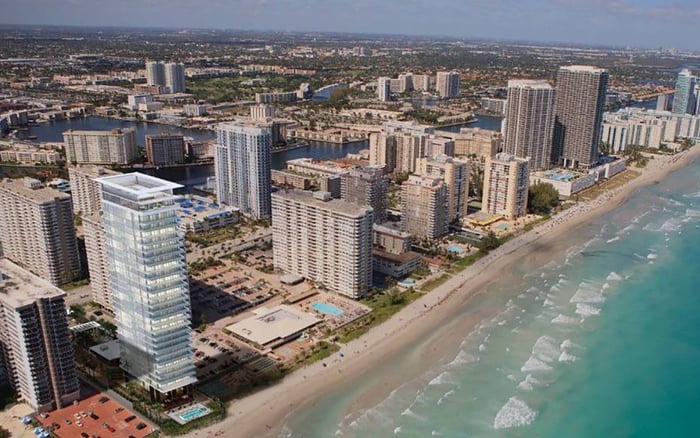
Sunny Isles Beach speaks to luxury buyers who want water-oriented living, privacy, and lock-and-leave simplicity without taking on the daily obligations of an estate.

Sunny Isles Beach has long attracted buyers who want the water to feel close, visible, and usable. For a certain kind of owner, the draw is not only the beach or the skyline view. It is the possibility of living near boating culture without taking on the daily complexity that can accompany a private waterfront estate.
That distinction matters. A single-family waterfront home can be magnificent, but it can also require a constant operating mindset: grounds, exterior maintenance, dock considerations, staffing, security, storm preparation, and the unglamorous coordination that follows every luxury asset. Many affluent buyers are not rejecting that lifestyle because they cannot afford it. They are choosing against it because time, predictability, and discretion have become more valuable.
Sunny Isles Beach offers a compelling alternative: a residential rhythm that can feel coastal and elevated, yet more manageable. For buyers who divide time between cities, travel often, or prefer professional building operations to private household logistics, the appeal is clear. The residence can function as a polished base for beach days, boating weekends, entertaining, and restorative downtime without asking the owner to supervise an estate.
For many buyers, boating access is less about owning a dock behind the house and more about removing friction from the experience. They want proximity to marinas, service providers, waterways, and the broader nautical ecosystem of South Florida. They want to plan a day on the water without turning the property itself into a second operating company.
This is where Sunny Isles Beach becomes interesting. The buyer can prioritize residence quality, views, security, amenities, and ease of ownership while keeping boating as a lifestyle layer rather than a maintenance burden. In practical terms, that may mean selecting a condominium with convenient access to nearby boating infrastructure, working with a captain or concierge-style service, or keeping a vessel where it can be professionally managed.
The best match is rarely accidental. Buyers should be precise about the kind of water life they actually lead. A weekend cruiser, a sportfishing enthusiast, and an owner who wants occasional sunset outings have very different requirements. One may care most about marina proximity, another about a boat-slip arrangement, and another about simple car-to-boat convenience. The residence should support the real pattern of use, not an imagined one.
One of the strongest arguments for Sunny Isles Beach is the lock-and-leave quality of high-end condominium living. When executed well, this model gives owners a refined home base with professional oversight, controlled access, amenity support, and less need for personal property management.
For second-home buyers, this can be decisive. A residence that can be left for weeks or months, then returned to with minimal friction, carries a different emotional value than a property that demands constant attention. This is why second-home buyers often look closely at building services, staff responsiveness, maintenance standards, parking logistics, pet policies, guest protocols, and how a property functions when the owner is away.
The broader search vocabulary often reflects the same priorities: Sunny Isles for location, oceanfront for setting, marina for water orientation, boat-slip for boating utility, second-home for ownership pattern, and resale for flexibility. These terms may look simple, but behind them is a sophisticated brief: access without overexposure, service without fuss, and lifestyle without excess administration.
Estate living is horizontal. Sunny Isles Beach condominium living is often vertical. That shift changes the experience of privacy. Instead of gates, hedges, driveways, and landscape buffers, privacy is created through controlled entries, elevators, building staffing, elevation, floor plan separation, and a degree of anonymity that some owners prefer.
This can suit buyers who are visible in business, finance, entertainment, technology, or international circles. They may not want a residence that announces itself from the street. They may prefer a home that delivers a strong arrival sequence, impressive views, and hotel-like efficiency without the exposure and operational footprint of a large house.
The estate alternative is especially persuasive when family usage is intermittent. If children, guests, or relatives use the residence only at certain times of year, a condominium can make the calendar easier to manage. Amenity spaces absorb some of the entertaining function. Building staff can help smooth arrivals and departures. The owner does not need to maintain a full private compound to enjoy a high level of comfort.
The most elegant purchase decision begins with use cases. How often will the owner be in residence? How often will boating be part of the week? Will the vessel be owned, chartered, captained, or stored elsewhere? Is the priority speed to open water, ease of provisioning, guest convenience, or the ability to keep the residence calm while the boating life happens off-site?
Buyers should also study association rules, parking arrangements, service access, storage possibilities, pet policies, renovation limitations, rental restrictions where relevant, and the building’s approach to security and operations. These details are not secondary. They determine whether the property supports a fluid lifestyle or becomes a source of small, recurring inconveniences.
View orientation also deserves attention. Some owners want the drama of open water; others prefer a calmer outlook or a residence that feels protected from the most active exposures. The right answer is personal. What matters is that the home supports the owner’s daily rituals: morning coffee, evening arrivals, guest weekends, time on the beach, and departures for the water.
Sunny Isles Beach is particularly well suited to the buyer who wants water to shape the lifestyle, but not dominate the maintenance calendar. This buyer may own in multiple markets. They may want an elegant South Florida base that performs beautifully during peak season and remains manageable the rest of the year. They may value a residence that feels private, serviced, and immediately usable.
For these owners, boating is part of the pleasure of place. It is not necessarily the organizing principle of the property. That subtle difference explains the appeal. The buyer can enjoy proximity, views, hospitality, and coastal rhythm while relying on a more efficient ownership structure than a waterfront estate usually permits.
Sunny Isles Beach does not replace the estate experience. It refines a different proposition: live near the water, access the boating lifestyle, preserve privacy, and reduce the obligations that can dilute enjoyment. For the right buyer, that balance is not a compromise. It is the point.
Is Sunny Isles Beach a good fit for buyers who want boating access? It can be, especially for buyers who value proximity to South Florida’s boating lifestyle without wanting a private estate to manage.
Does boating access always require owning a waterfront house? No. Many buyers prefer condominium living while arranging boating through nearby marinas, professional services, or separate vessel management.
Who benefits most from this kind of purchase? Frequent travelers, seasonal owners, and buyers with multiple residences often appreciate the lock-and-leave simplicity of a well-run condominium.
What should buyers ask before purchasing? They should clarify boating habits, building rules, parking, storage, guest access, service standards, and any limitations that affect daily use.
Why not simply buy a waterfront estate? An estate may offer direct control, but it can also require more oversight, staffing, exterior care, and ongoing property coordination.
Is oceanfront living compatible with boating priorities? Yes, when the buyer treats the residence as a coastal home base and evaluates how easily boating can be integrated into the weekly routine.
Should a buyer prioritize a boat-slip? Only if it matches the intended boating pattern. Some owners need dedicated arrangements, while others prefer professional storage or charter flexibility.
How important is building management? Very important. The quality of operations often determines whether the residence feels effortless when the owner arrives, leaves, or hosts guests.
Can resale opportunities make sense in this segment? They can, particularly when the building, floor plan, view, and service model align with the buyer’s long-term lifestyle goals.
What is the best way to shortlist comparable options for touring? Start with location fit, delivery status, and daily lifestyle priorities, then compare stacks and elevations to validate views and privacy.
For a confidential assessment and a building-by-building shortlist, connect with MILLION.
If branded residences are on your mind — as a home or as an allocation — we would be glad to share what we are seeing, privately.
Begin a quiet conversation