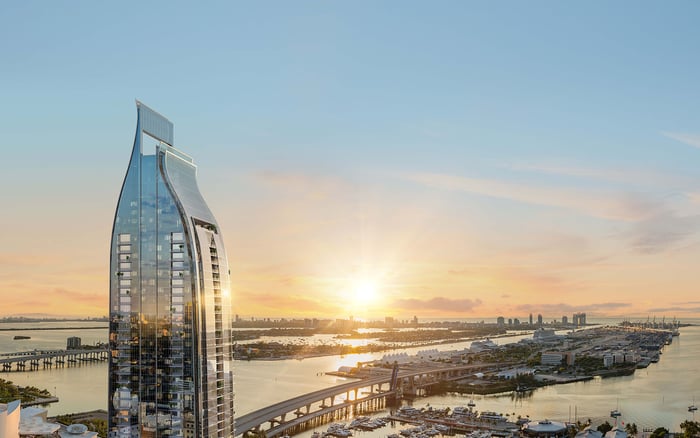
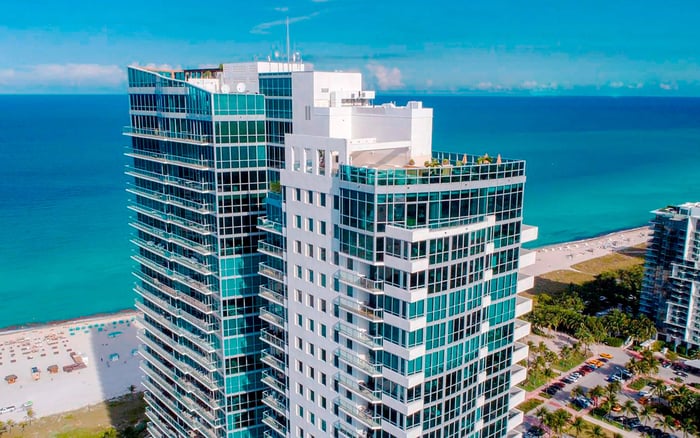
A finance-minded look at Setai Residences Miami Beach, where oceanfront appeal and hotel-style service must be measured against recurring ownership costs.

Setai Residences Miami Beach occupies a rare category in South Florida luxury: a Miami Beach condominium property where Atlantic-view appeal, hospitality identity, and resort-style service shape the ownership experience. For many buyers, that combination is the draw. The residence is not simply a private apartment by the water. It is a way of living in Miami Beach where convenience, amenities, and brand recognition are part of the ownership conversation.
Yet the most sophisticated buyers are rarely persuaded by the horizon alone. They want to understand what the monthly and annual obligations actually buy. At Setai Residences Miami Beach, the conversation naturally moves from views and prestige to the structure of carrying costs: maintenance fees, property taxes, insurance, and hospitality-related charges. The better question is not whether the lifestyle is expensive. It is whether the recurring cost profile aligns with the owner’s actual use, expectations, and long-term plan.
For Miami Beach buyers comparing the top end of the market, that distinction matters. Oceanfront living can carry an emotional premium, but service-heavy ownership requires financial clarity.
Carrying costs are the quiet architecture of luxury ownership. They shape the real cost of a primary residence, define the economics of a seasonal home, and influence the patience required for an investment strategy. At Setai, those costs should be understood as part of a broader exchange: recurring obligations in return for a hospitality-driven setting, amenity value, service infrastructure, and a prime Miami Beach location.
The most visible categories are familiar. Maintenance fees support the common elements and the operational standard expected in a luxury condominium. Property taxes reflect assessed value and ownership structure. Insurance is especially relevant in coastal South Florida, where coverage should be treated as a core line item rather than an afterthought. Hospitality-related charges may also belong in the practical review, particularly in a property that combines private residences with a resort-style environment.
The key is to analyze the full ownership stack before falling in love with a floor line or exposure. A residence with extraordinary views may still feel mispriced to an owner who uses it only occasionally and does not value the full service platform. Conversely, an owner who prizes immediate access, brand atmosphere, and effortless arrivals may find that the same costs are justified by daily convenience.
Luxury buyers often blend lifestyle and financial logic, but they are not the same lens. Lifestyle value asks how the residence improves time: mornings by the Atlantic, a polished arrival experience, amenities close at hand, and a hospitality cadence that reduces friction. Investment value asks a different question: how ownership costs, rental potential, resale appeal, and market position interact over time.
Setai’s appeal is strongest when both lenses are acknowledged rather than confused. The branded, service-led environment may support desirability among luxury renters, particularly those who respond to hotel-style services and the familiarity of a recognized name. That does not automatically make the purchase a purely yield-driven asset. Rental-oriented ownership still depends on use rules, expenses, timing, management, taxes, insurance, and actual demand.
For a buyer seeking a second home, the calculation may be less about maximizing income and more about reducing the psychological cost of absence. If the property is easy to use, easy to arrive at, and desirable to return to, ownership may feel more rational than a lower-cost residence that lacks the same pull. For a resale-minded buyer, the question becomes whether the attributes that justify costs today will remain compelling to the next buyer.
At Setai Residences Miami Beach, the right answer depends heavily on how the buyer intends to use the residence. A primary resident experiences services and amenities more frequently, which can make recurring costs feel more connected to daily life. A seasonal owner may place greater value on reliability, security, and the ability to arrive without friction. A rental-oriented owner will scrutinize costs against potential income while recognizing that brand recognition and hotel-style service may help support demand from luxury renters.
This is why a single monthly number, viewed in isolation, can be misleading. The more precise exercise is to map carrying costs against actual usage. How many nights will the owner occupy the residence? How often will guests use it? Will rental income be part of the plan, or merely a possibility? Is the buyer seeking convenience, prestige, income offset, or long-term positioning?
A condo-hotel style mindset may be useful when the legal and operational details require careful review. The owner is not only acquiring space. The owner is entering a service ecosystem, and that ecosystem has a cost.
Cost-conscious luxury buyers should compare Setai not only against other Miami Beach residences, but also against the broader category of service-intensive South Florida towers. The correct comparison is not simply price, view, or lobby impression. It is cost per unit of value received.
That value may include staffed amenities, brand halo, convenience, privacy, location, and the intangible comfort of a building that feels managed as an experience rather than merely maintained as an asset. The challenge is that some benefits are subjective. A buyer who rarely uses amenities may see the structure as expensive. A buyer who expects a resort level of polish may view the same structure as essential.
Practical due diligence should include current association materials, recent budgets, insurance information, tax estimates, rules affecting rentals, and any hospitality-related charges that may apply. Buyers should also ask how costs have changed over time and what future obligations could affect ownership. The goal is not to avoid high costs at all costs. In the ultra-luxury market, the goal is to avoid poorly understood costs.
Setai is best suited to a buyer who wants Miami Beach with a high-service overlay and is comfortable treating recurring obligations as part of the lifestyle purchase. This buyer cares about Atlantic views, but not in isolation. They want amenities, branded atmosphere, and a location that supports both personal use and broader market recognition.
The least comfortable buyer is often the one who stretches for the prestige but resents the operating model. Service-heavy buildings do not behave like low-touch condominiums, and they should not be evaluated that way. The more honest framing is simple: every dollar of carrying cost should connect to something the buyer values, whether that is convenience, amenity access, potential rental appeal, or confidence in future marketability.
In that sense, Setai Residences Miami Beach is not just a view purchase. It is a recurring decision about how much service, location, and brand identity should matter in the private ownership equation.
Is Setai Residences Miami Beach a luxury condominium property? Yes. It is positioned as a luxury condominium property in Miami Beach with oceanfront appeal and Atlantic-view desirability.
Why do carrying costs matter so much at Setai? The property’s service-heavy, hospitality-driven model can make monthly and annual ownership costs central to the purchase decision.
What carrying costs should buyers review? Buyers should review maintenance fees, property taxes, insurance, and any hospitality-related charges tied to ownership and use.
Is the view enough to justify the purchase? The view is important, but financially sophisticated buyers should also measure what each recurring dollar buys in service, amenities, and convenience.
Can Setai work as a primary residence? Yes, especially for buyers who will use the service platform frequently and value a prime Miami Beach location as part of daily life.
Can Setai work as a seasonal home? Yes. Seasonal owners may find value in the ease of arrival, branded setting, amenities, and reduced friction of resort-style living.
Is rental potential part of the equation? It can be. Brand recognition and hotel-style services may support demand from luxury renters, but buyers should review rules and costs carefully.
How should buyers compare Setai with other buildings? They should compare not only views and prestige, but also the full cost structure and the services received in return.
Does a higher carrying cost always mean poor value? No. Higher costs may be rational if they support services, amenities, convenience, and resale or rental appeal that the buyer genuinely values.
What is the best way to shortlist comparable options for touring? Start with location fit, delivery status, and daily lifestyle priorities, then compare stacks and elevations to validate views and privacy.
For a tailored shortlist and next-step guidance, connect with MILLION.
If branded residences are on your mind — as a home or as an allocation — we would be glad to share what we are seeing, privately.
Begin a quiet conversation