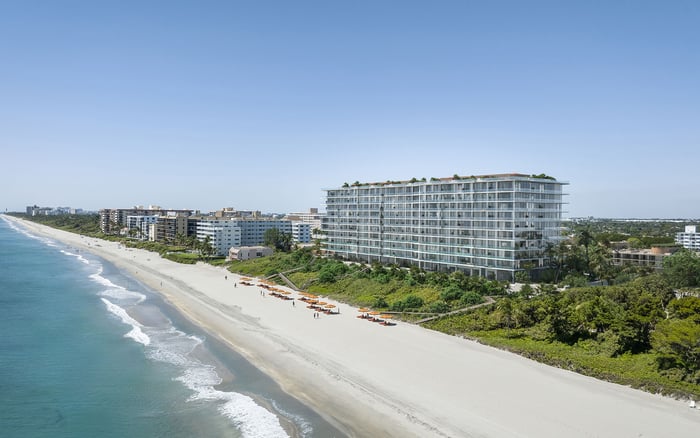
A discreet look at why South Florida’s most selective luxury buyers increasingly value quieter beachfront settings, lower-density living, and private daily rituals over sheer amenity scale.
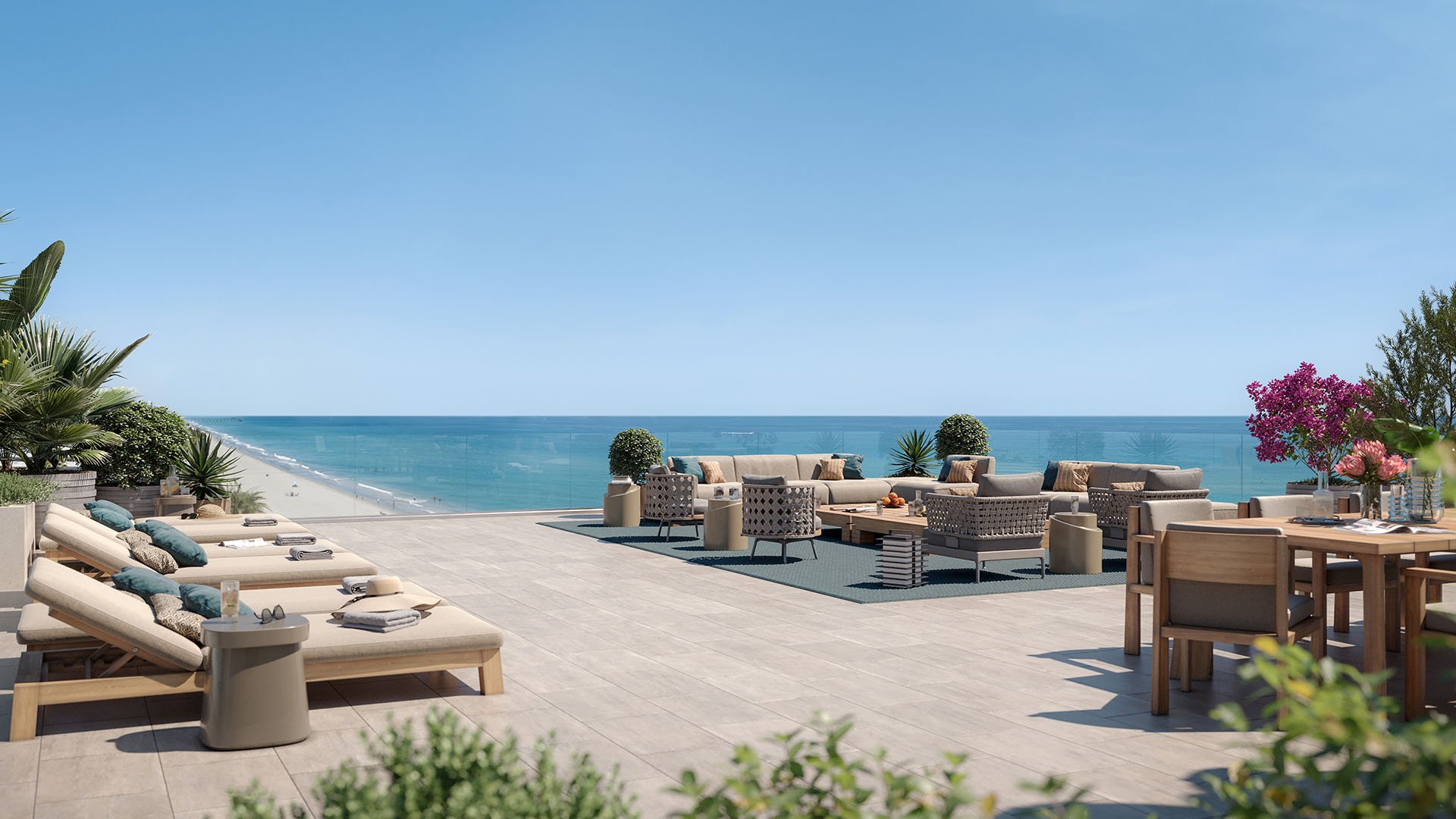
In South Florida luxury real estate, bigger is not always better. A dramatic amenity deck can be compelling: resort pools, lounges, cabanas, wellness rooms, and programmed social spaces all photograph beautifully. Yet another buyer is increasingly willing to place greater value on something less theatrical: a quieter beach, a calmer arrival, and a residential rhythm that feels removed from the crowd.
This is not an anti-amenity position. It is a more refined hierarchy of priorities. For certain buyers, the defining feature is not how many spaces a building offers, but how consistently those spaces feel private, composed, and effortless to use. The value proposition shifts from abundance to control.
The appeal of a quieter beach is emotional before it is financial. It shapes the first five minutes of every morning, the final walk before dinner, and the way a second home settles the nervous system after a flight. A large amenity deck can entertain. A quiet shoreline can restore.
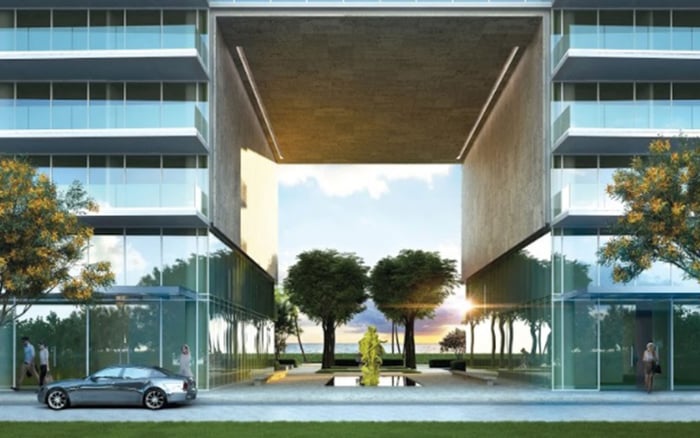
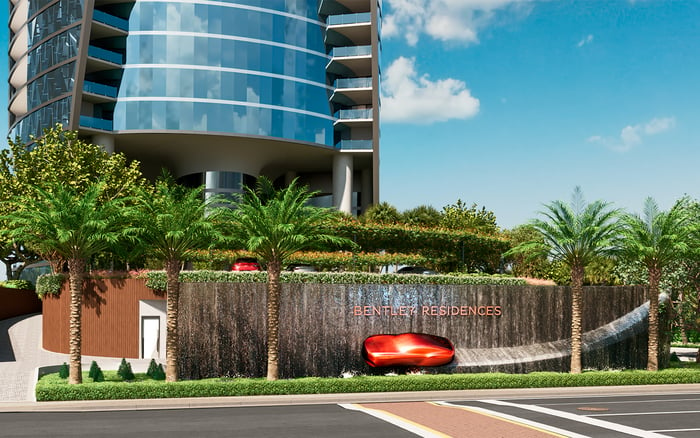
For ultra-premium buyers, privacy is rarely a single feature. It is a sequence. The approach to the building, the volume of the lobby, the elevator experience, the number of neighbors encountered, the way the pool terrace meets the sand, and the sound level on a Saturday all determine whether a residence feels like a retreat or a hotel.
That is why projects in more residential beachfront settings can resonate so strongly. A buyer considering The Delmore Surfside is not simply comparing interior finishes against another tower. They are weighing the character of Surfside itself, the sensation of a more measured beachfront, and the possibility of daily life that feels elegant without becoming performative.
Amenity decks became a language of luxury because they address real desires. Buyers want places to swim, train, host, work, entertain children, and gather without leaving the building. In dense urban markets, those shared environments can make vertical living feel expansive.
The question is whether the amenity deck supports the lifestyle or becomes the lifestyle. A buyer who entertains frequently may value a large pool scene and generous social programming. A buyer who uses the residence as a private coastal base may prefer fewer encounters, quieter circulation, and a beach experience that does not require strategy.
This distinction is visible across Miami Beach and its surrounding enclaves. At The Perigon Miami Beach, the conversation naturally centers on the relationship between architecture, ocean, and residential privacy. At 57 Ocean Miami Beach, the appeal sits in the broader idea that beachfront living can be wellness-oriented without feeling crowded or overly staged.
Low-density living has particular power in the luxury mind. It suggests fewer shared decision points: fewer waits, fewer pass-bys, fewer moments where private life brushes against the building’s social life. Even within a fully serviced condominium, buyers may still want the feeling of a private home.
This is where the quiet-beach premium becomes more nuanced. It is not only about the sand. It is about the ratio between residents and experience. A smaller or more restrained environment can make every amenity feel more personal, even when the amenity list is shorter. The lap pool that is often empty may matter more than the spectacular deck that is always in use.
Oceanfront buyers often speak in shorthand: exposure, light, views, terraces, service, privacy. But the unspoken word is ease. Ease is the ability to leave the residence for a walk without planning around crowds. Ease is inviting guests without feeling as if the entire building is hosting at the same time. Ease is knowing that the beach still feels like a personal ritual.
South Florida offers very different versions of beachfront luxury. Some buyers want the energy of a landmark address. Others want a quieter village atmosphere, a tucked-away coastal pocket, or a setting that feels deliberately less obvious.
Bal Harbour, Surfside, Miami Beach, Hillsboro Beach, and select stretches farther north all speak to different interpretations of the same desire: proximity to the water without surrendering privacy. A residence at Rivage Bal Harbour may appeal to buyers who want an established luxury setting with a polished coastal identity. Rosewood Residences Hillsboro Beach can enter the conversation for those drawn to a more discreet beachfront posture.
For search-minded buyers, the words Oceanfront, Boutique, and Beach-access are useful filters, but they are only the beginning. The true evaluation happens in person, at different hours, with attention to sound, movement, and the building’s daily cadence.
The strongest comparison begins with use. A primary resident may care deeply about weekday calm, school-day routines, dog walks, and the building’s service consistency. A seasonal owner may prioritize arrival ease, turnkey maintenance, and the feeling of instant decompression. A frequent host may need expansive shared spaces, while a privacy-driven buyer may prefer fewer amenities with greater control.
Buyers should also separate visual luxury from livable luxury. A large deck may look exceptional in renderings, yet the quieter building may deliver the better Tuesday morning. Conversely, a restrained beachfront setting may disappoint someone who wants the energy of a social club. Neither is universally better. The right answer is tied to temperament.
The most sophisticated buyers ask simple questions. Will I use this amenity when others are using it? Does the beach feel calm at the times I care about? Does the building make privacy effortless, or does it require negotiation? Does the residence feel restorative when the city is at full volume?
Status in South Florida was once easily expressed through address, height, view, and amenity scale. Those signals still matter. But at the top of the market, discretion has become its own form of status. A quiet beach says the owner has chosen selectivity over spectacle.
That shift is especially important for buyers who already have access to clubs, yachts, private travel, and full-service hospitality. They may not need their condominium to replicate every resort experience. They may want it to deliver the one thing that is harder to outsource: peace at home.
This is why some buyers pay more for quieter beaches than for bigger amenity decks. They are not paying for less. They are paying for a different kind of more: more calm, more privacy, more control, and a daily relationship with the ocean that feels genuinely personal.
Is a quieter beach always more valuable than a larger amenity deck? No. The value depends on how the buyer lives, how often they host, and whether privacy or social energy matters more.
Why do luxury buyers care so much about low-density living? Low-density settings can reduce friction, preserve privacy, and make shared spaces feel more personal.
Can a building have both strong amenities and a quiet atmosphere? Yes. The best examples balance service and shared spaces with careful circulation, privacy, and restraint.
Should second-home buyers prioritize quiet differently than primary residents? Often, yes. Second-home buyers may place a higher premium on immediate decompression and ease of use.
What should buyers observe during a property tour? They should notice sound, crowding, elevator flow, beach access, lobby traffic, and how the building feels at different times.
Are boutique buildings always quieter? Not always. A smaller building can still feel busy if its amenities, services, or setting encourage constant activity.
Does Oceanfront living guarantee privacy? No. Oceanfront access is only one part of privacy; building density, beach traffic, and design all matter.
Is Beach-access more important than amenity programming? For some buyers, yes. Direct and easy beach access can shape daily life more than a long list of shared spaces.
How should buyers compare Surfside with larger beachfront markets? They should focus on daily rhythm, surrounding scale, beach character, and how discreet they want the setting to feel.
What is the simplest way to identify the right fit? Choose the property that best matches your real routine, not the one with the longest amenity description.
To compare the best-fit options with clarity, connect with MILLION.
If branded residences are on your mind — as a home or as an allocation — we would be glad to share what we are seeing, privately.
Begin a quiet conversation