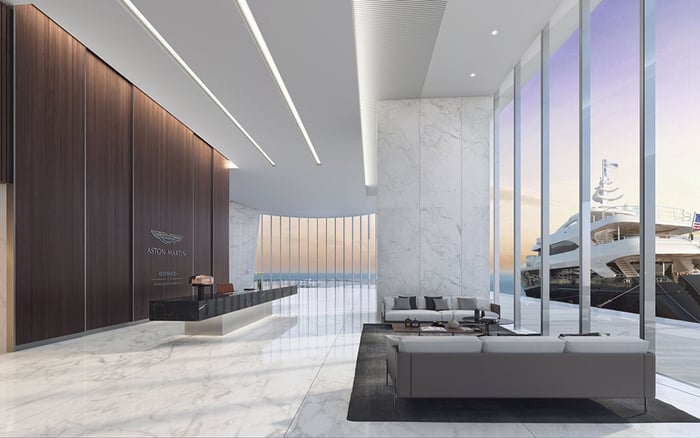
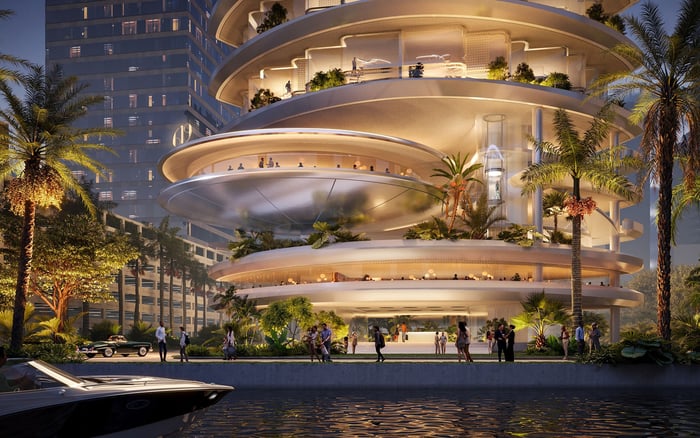
A buyer-oriented look at the hidden service choreography behind Aston Martin Residences Downtown Miami, from arrival and valet flow to amenity support, staff routes and privacy-sensitive vertical circulation.
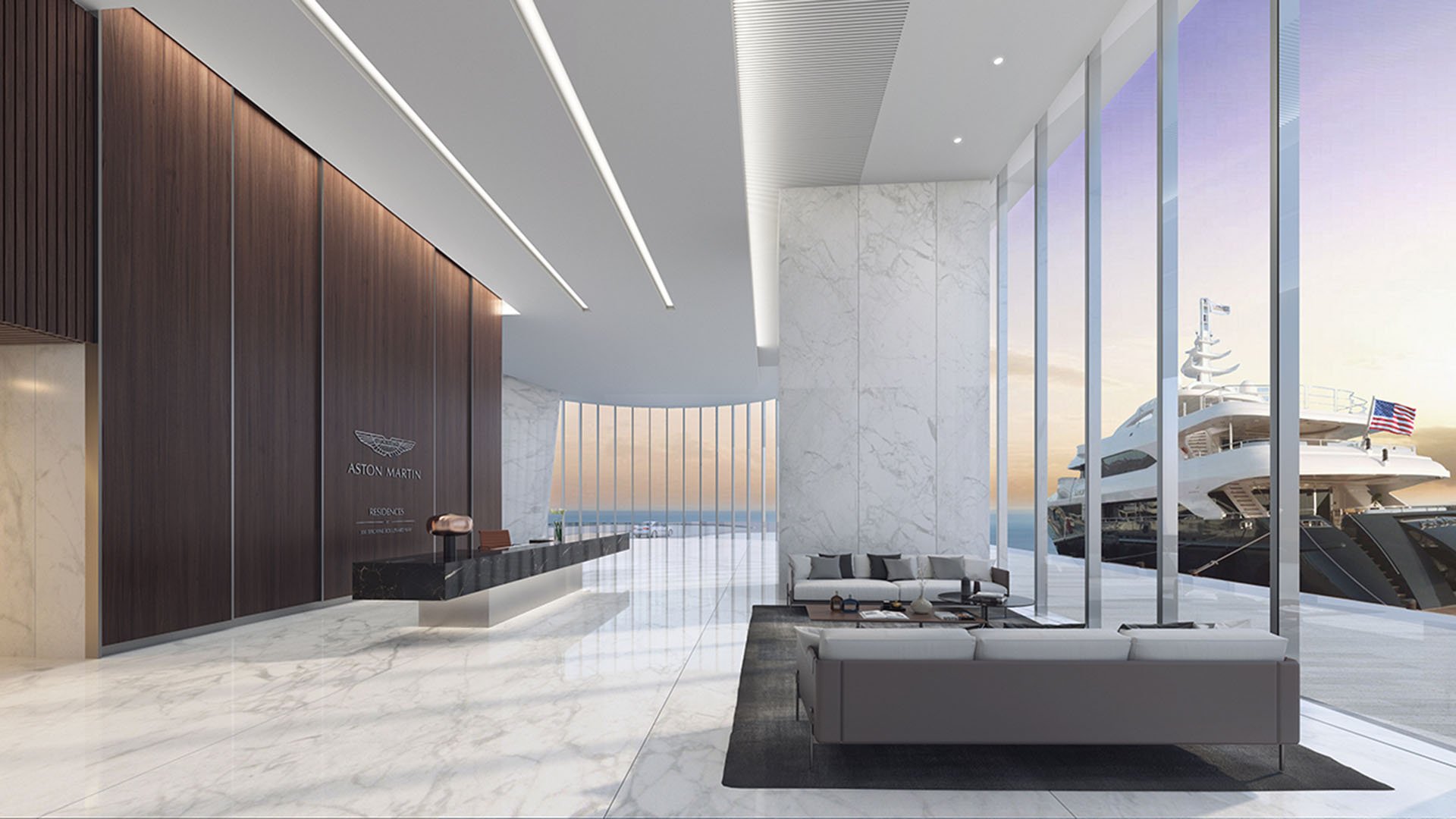
At Aston Martin Residences Downtown Miami, the most visible story is the one buyers expect: a branded luxury residence associated with one of the world’s most recognizable automotive names. The more revealing story is quieter. It sits behind lobby doors, along staff corridors, in service elevators, loading areas, storage rooms and management offices.
That hidden city is not incidental. In a high-service Downtown Miami condominium, luxury depends on logistics. The better the back-of-house works, the less residents notice it. Valet arrivals feel calm. Packages appear without drama. Amenity spaces are refreshed before anyone has to ask. Vendors enter without crossing ceremonial resident paths. Waste, freight, housekeeping and maintenance move through the building without interrupting the social theatre of arrival.
For buyers, this is a useful lens. Finishes, views and brand identity matter, but the long-term daily experience in a large luxury condominium is often shaped by circulation discipline.
Aston Martin’s identity makes automotive arrival more than a convenience. It becomes part of the building’s personality. Valet, porte-cochère flow, structured parking access and security sequencing must support the same sense of polish as the interiors.
In practical terms, arrival logistics have to separate several movements happening at once. Residents arrive by car. Guests wait for access. Valets stage vehicles. Building staff support luggage and packages. Vendors and deliveries need a different path. On a dense urban site, those movements cannot compete for the same front-of-house space.
This is where Downtown conditions matter. Traffic, curb pressure and proximity to other high-demand Miami corridors place real value on disciplined arrival choreography. Comparable luxury buildings, including Baccarat Residences Brickell and Waldorf Astoria Residences Downtown Miami, illustrate why the prestige of an entrance is inseparable from what happens just out of sight.
A buyer should look beyond the porte-cochère image and ask how the building absorbs peak-hour friction. Where do private drivers pause? How are rideshare arrivals managed? How are deliveries diverted? The answers determine whether branded glamour feels serene or strained.
South Florida buildings have to manage more than a formal lobby sequence. Heat, rain, seasonal traffic, visitor demand and frequent service activity all influence how a luxury tower performs. A beautiful arrival experience can feel compromised if staff circulation, loading activity or maintenance movement is forced into resident-facing areas.
Operational intelligence is often found in transitions: from car to secured interior, from outdoor areas to conditioned spaces, from amenity decks to storage rooms, and from service access to private residential levels. Those transitions require planning, allowing staff to support the experience without making the mechanics visible.
For buyers accustomed to South Florida’s high-service lifestyle, the question is not only whether a building looks composed. It is whether the building is operationally intelligent. Secure thresholds, discreet staff access and clean handoffs between public, private and service zones distinguish a polished image from a durable lifestyle.
The amenity program at Aston Martin Residences Downtown Miami is central to its luxury positioning, and amenities are where back-of-house design becomes especially consequential. Any serious amenity environment requires support infrastructure that residents rarely see.
Pool operations are a clear example in South Florida luxury buildings. Towels, cushions, cleaning supplies, safety equipment and movable furniture all need concealed storage nearby. If storage is too remote, staff lose time and service becomes visible. If service routes cross resident seating areas, the resort atmosphere weakens.
Spa, fitness and wellness spaces create a different set of needs. Product storage, laundry handling, staff preparation, treatment-room support and changing-area circulation all affect the smoothness of the experience. A beautiful wellness space can feel compromised if staff must improvise around inadequate service access.
Private dining and resident lounges introduce more pressure. Receiving, service support, dishwashing, ventilation, waste handling and storage must be close enough to function but discreet enough to preserve the residential tone. Family-oriented amenity areas add frequent cleaning requirements, secure storage and durable housekeeping routes.
This is why the modern luxury tower increasingly behaves like a private residential club. Projects such as St. Regis® Residences Brickell make the broader point clear: service is no longer a background amenity. It is part of the architecture of value.
In a luxury tower with varied residence sizes, vertical circulation is a privacy issue. Elevators are not just mechanical systems. They are social filters.
Residents, guests, private staff, building employees, vendors, deliveries, maintenance teams and housekeeping crews all move vertically every day. The task is to protect the calm of residential corridors while allowing service to happen efficiently. That requires clear separation between public-facing elevators, service elevators and controlled back-of-house routes.
The most successful buildings do not make service feel hidden in a careless way. They make it feel intentionally absent. A housekeeper can reach a residence without parading through the lobby. A vendor can access the correct level without drifting into amenity zones. A maintenance team can respond quickly without disrupting a private dinner or spa appointment.
For owners who entertain frequently or rely on private staff, these details matter. Privacy is not only about access control. It is also about avoiding accidental encounters created by poor circulation.
Most buyers cannot inspect detailed back-of-house drawings during a casual tour, and many operational details are not marketed with the same enthusiasm as skyline views. Still, a sophisticated buyer can observe clues.
Start at arrival. Watch how valet traffic is staged and whether service vehicles visibly compete with resident cars. Study where packages appear to move. Notice whether staff seem to have direct paths or must pass through social zones. In amenity areas, look for signs of nearby support: towel stations, concealed doors, service access points and housekeeping responsiveness.
Ask practical questions. How are large deliveries coordinated? How does the building manage catering for private events? What is the protocol for vendors serving residences? How are outdoor furnishings handled during weather shifts? How are frequently used amenity areas cleaned throughout the day?
The answers do not need to be theatrical. In fact, the best answers are usually calm and procedural. A well-run building can explain how daily flows are organized without overexposing its private operating systems.
For buyers comparing Bentley Residences Sunny Isles with Aston Martin’s Downtown proposition, the automotive branding may invite comparison, but the operational context is different. Sunny Isles, Brickell and Downtown each impose distinct demands on arrival, parking and staff circulation.
The defining promise of Aston Martin Residences Downtown Miami is not a single spectacular arrival. It is the repetition of seamlessness, day after day. A tower of this nature must absorb thousands of small movements: residents going to work, guests arriving for dinner, children using amenity spaces, private staff entering homes, deliveries coming in, towels going out, waste disappearing, elevators cycling and security monitoring transitions.
When back-of-house design succeeds, residents experience continuity. The building feels composed even when it is busy. The brand’s automotive associations of precision, control and elegance translate into residential operations.
That is why staff logistics should be part of any serious luxury evaluation. In high-end South Florida real estate, beauty sells the first impression. Operations protect the second, third and thousandth.
Why do staff logistics matter at Aston Martin Residences Downtown Miami? They shape how cleanly residents move through valet, lobby, amenities and private residential areas without intersecting with service traffic.
Is back-of-house design visible to residents? Ideally, no. Its success is measured by how quietly deliveries, housekeeping, maintenance, waste and amenity support occur.
How do South Florida conditions affect operations? Heat, rain, traffic and high service expectations make protected transitions and discreet staff routes especially important.
Why is valet flow so central here? The Aston Martin identity places automotive arrival at the heart of the experience, so parking and porte-cochère choreography carry unusual weight.
What amenity areas create the most service demand? Pools, wellness spaces, lounges, dining areas, family areas and terraces can all require storage, cleaning and staff access.
Do larger residences need different logistics? Larger homes often bring more entertaining, private staff and deliveries, making privacy-sensitive service circulation especially valuable.
What should buyers ask during a tour? Ask how vendors, packages, catering, valet overflow, housekeeping and maintenance are routed during busy periods.
Is Downtown different from Brickell operationally? Yes. Both are dense urban markets, but each site has its own traffic, arrival and circulation constraints.
Does a branded residence require more staff coordination? A luxury brand raises expectations for consistency, which makes concierge, valet, security and amenity support more important.
What is the best way to shortlist comparable options for touring? Start with location fit, delivery status, and daily lifestyle priorities, then compare stacks and elevations to validate views and privacy.
When you're ready to tour or underwrite the options, connect with MILLION.
If branded residences are on your mind — as a home or as an allocation — we would be glad to share what we are seeing, privately.
Begin a quiet conversation