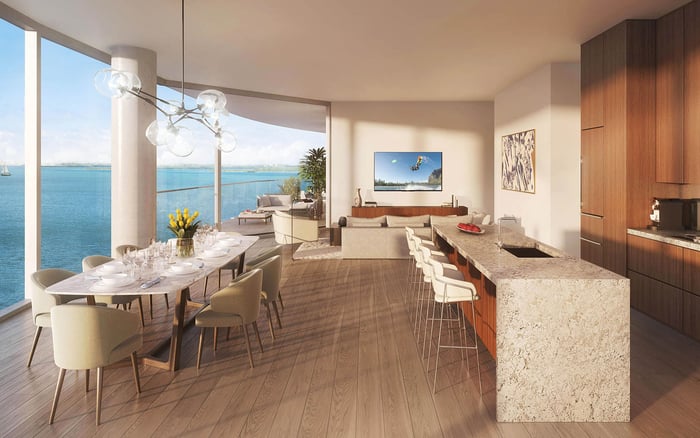
Seasonal ownership changes the performance brief for a residential wine room. In South Florida, the most elegant solution is not simply a beautiful cellar, but a stable, serviceable, remotely legible environment designed to behave predictably while the owner is away.
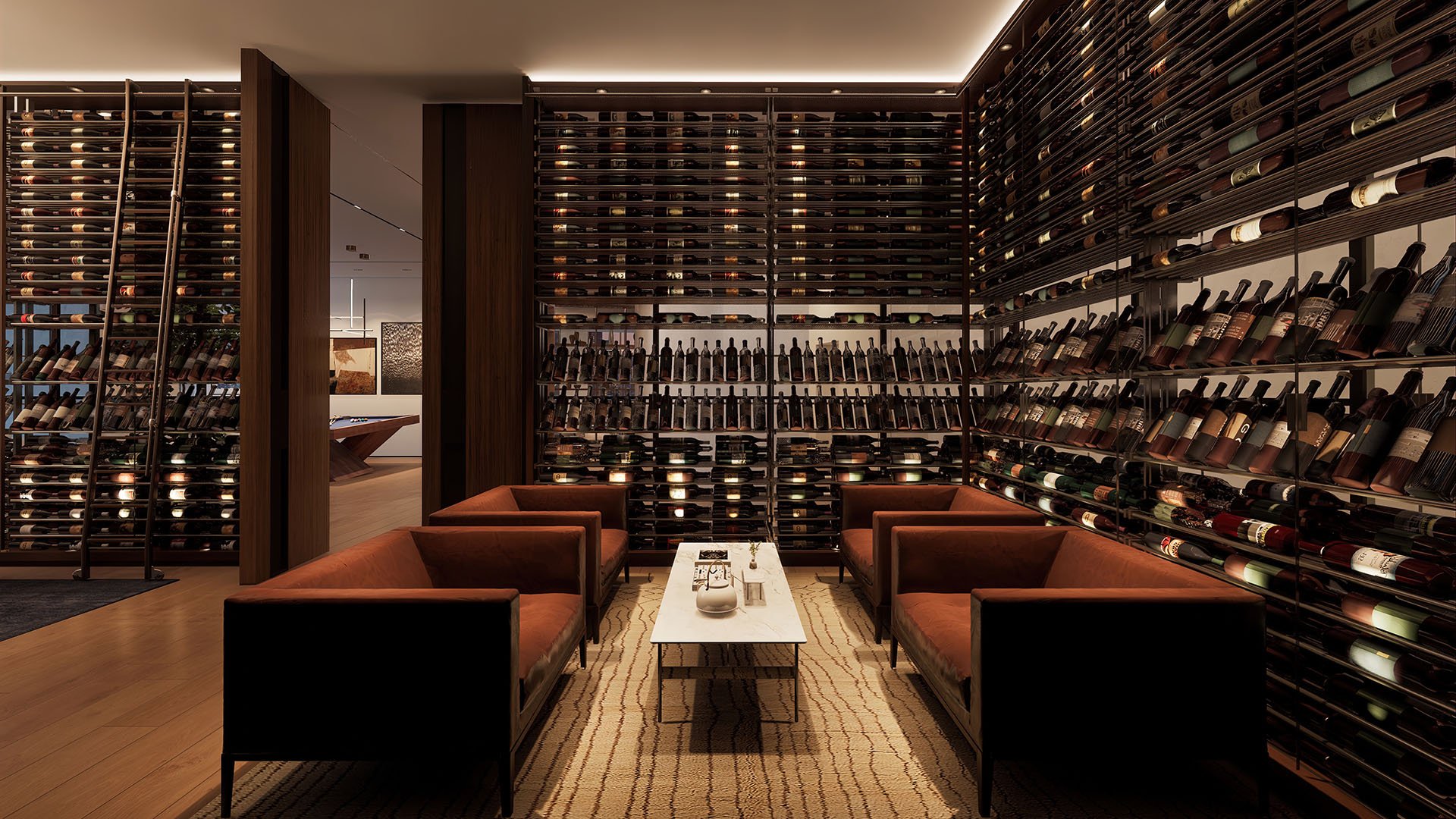
A wine room in a primary residence is judged every day. A wine room in a seasonal residence is judged during absence. That distinction is why humidity requires a different standard for buyers who divide their lives between South Florida and another home.
In a full-time residence, a subtle change in door behavior, condensation, air movement, or equipment sound is often noticed quickly. In a seasonal property, the first person to detect an issue may be a caretaker, house manager, service technician, or guest. By then, the question is no longer only whether the wine is comfortable. It is whether the room has remained stable, whether surrounding finishes have stayed protected, and whether the system can be understood without the owner standing in front of it.
For the ultra-premium buyer, the conversation should therefore move beyond the cellar’s appearance. Glass, lighting, millwork, and display racking are visible luxuries. Humidity control is the quieter luxury: the invisible discipline that allows the room to preserve value while the residence is closed, lightly occupied, or prepared for an arrival on short notice.
Humidity sits at the intersection of wine preservation, interior architecture, and building operations. Too much moisture can make a room feel unsettled and stress adjacent materials. Too little can create a different preservation concern. For seasonal owners, the issue is not simply the level on a display panel, but the consistency of the environment over time.
South Florida homes often combine strong indoor cooling, sun exposure, large expanses of glass, coastal air, and periods of vacancy. Those elements demand coordination. A wine room should not be treated as an isolated decorative enclosure if its door opens into a gallery, kitchen, club room, or entertainment salon with different temperature and moisture behavior.
The better standard is not a vague assurance that the room is conditioned. It is a documented operating range, a clear explanation of how the system responds when the home is unoccupied, and a maintenance plan that does not depend on improvisation. Seasonal buyers should think like stewards, not merely collectors.
A beautiful wine room can still be operationally incomplete. During diligence, buyers should ask how the room is conditioned, where sensors are placed, how often the system is serviced, and whether the equipment is accessible without disrupting finished spaces. The answers should be specific enough for a future house manager to follow.
Door seals deserve close attention, as do transitions between the wine room and the adjoining interior. A glass wall may be dramatic, but the surrounding assembly must support the performance expected from the room. Lighting should be considered not only for atmosphere, but also for heat contribution and serviceability. Racking should allow air movement rather than turning storage into a series of stagnant pockets.
Monitoring is especially important for the seasonal owner. A discreet alert system, a simple log, and a routine for checking readings before departure can turn a wine room from a design feature into a managed asset. The most useful systems are legible. If only one technician knows how to interpret the room, the owner is dependent on that person’s availability.
In South Florida, many luxury residences are designed around arrival. The elevator opens, the water view appears, the bar is stocked, the terrace is ready, and the wine room glows as part of the evening sequence. Yet the better question is what happens before arrival, during the weeks or months when the home is quiet.
For buyers comparing Brickell, Miami Beach, Sunny Isles, Palm Beach, oceanfront, and second-home options, wine storage should be discussed with the same seriousness as private elevator access, security, parking, and building services. A seasonal residence is a choreography of systems. The wine room is one of the systems most likely to be admired, but it is also one of the systems most vulnerable to benign neglect.
This is where property type matters. A staffed building may offer a different service rhythm than a single-family estate. A penthouse wine room may interact differently with sunlight and glazing than an interior room on a lower level. A home designed for frequent entertaining may have the wine room opened often, while a collector’s room may be accessed sparingly. Each scenario calls for a humidity strategy that reflects behavior, not simply square footage.
For seasonal buyers, the most elegant wine-room standard is a written protocol. It does not need to be theatrical. It should explain the intended operating range, what to check before departure, who receives alerts, who is authorized to service the system, and what steps should be taken if readings move outside the agreed range.
The protocol should also address arrival preparation. A home that has been closed for a period may be cooled, cleaned, stocked, and staged quickly. The wine room should not be forced into abrupt performance changes because the rest of the residence is being readied for guests. Preservation prefers calm.
Buyers should request that any handover include equipment manuals, service history where available, contact information for qualified technicians, and a walkthrough with the person who will manage the home. The point is not to make ownership more complicated. It is to make the complicated parts disappear into a reliable routine.
The most successful wine rooms in seasonal homes do not announce their technical sophistication. They feel serene. The glass is clear, the lighting is warm, the labels are legible, and the room contributes to the architecture. Behind that ease, however, is a careful hierarchy: preservation first, display second.
This hierarchy can influence everything from the placement of a tasting counter to the choice of adjacent materials. If the wine room is intended as a focal point near entertaining spaces, the enclosure must perform without becoming visually heavy. If it is a private collector’s room, access control and inventory management may matter as much as the experience of the room itself.
Seasonal buyers should avoid treating humidity as a number to be checked once. It is a behavior to be observed. The right standard is a wine room that remains steady when the owner is away, legible when staff checks it, and gracious when the owner returns.
Why does a seasonal wine room need a different humidity standard? Because it must perform reliably during long periods when the owner is absent, not only when the home is occupied.
Should buyers focus on a single humidity number? No. The more useful focus is a stable operating range, proper monitoring, and a service plan that supports consistency.
What is the first question to ask during a showing? Ask how the wine room is conditioned and who is responsible for monitoring it when the residence is unoccupied.
Are glass wine rooms risky in seasonal homes? They can be excellent when the enclosure, seals, lighting, and conditioning are designed as one coordinated system.
How important are remote alerts? They are highly practical for seasonal owners because they allow a caretaker or service team to respond before a minor shift becomes disruptive.
Should the wine room have its own maintenance protocol? Yes. A concise written protocol helps staff understand readings, contacts, service intervals, and departure checks.
Does a building staff replace the need for a wine-room plan? No. Building staff can be valuable, but the owner still needs a clear room-specific standard and response procedure.
What should be reviewed before closing on a property? Review equipment access, sensor placement, door seals, service records if available, and the handover process for the home manager.
Can humidity affect more than the wine collection? Yes. A poorly managed room can also create concerns for nearby finishes, cabinetry, flooring, and decorative materials.
What is the luxury standard for seasonal ownership? The standard is quiet reliability: a wine room that preserves, monitors, and reports with minimal drama while the owner is away.
If you'd like a private walkthrough and a curated shortlist, connect with MILLION.
If branded residences are on your mind — as a home or as an allocation — we would be glad to share what we are seeing, privately.
Begin a quiet conversation