Seasonal buyers in South Florida should evaluate walkability after dark with a higher standard than daytime convenience, focusing on lighting, staffing, route quality, valet flow, and the ease of returning home from dinner, beach clubs, marinas, and cultural evenings.

For a seasonal buyer, walkability is often judged too quickly. A buyer arrives in bright weather, tours a polished lobby, walks to lunch, sees palm shadows on the sidewalk, and concludes that the address is convenient. In South Florida, that first impression has value, but it is not enough. The more revealing question is how the same route feels after dark.
A winter residence is lived in differently from a primary home. It carries peak social months, late dinners, visiting family weeks, cultural evenings, waterfront weekends, and spontaneous returns from the beach or marina. The owner may not want to drive for every errand, but neither should privacy, lighting, comfort, or ease feel compromised. This is why seasonal buyers need a different standard for walkability. It is not simply about how many restaurants appear nearby. It is about whether the path between the building and the life around it feels effortless at 9:30 p.m.
The strongest night-walkable locations create continuity from residence to destination. That continuity includes well-lit sidewalks, intuitive crossings, visible building entrances, comfortable arrival zones, and a sense that the route remains active without feeling chaotic. A neighborhood can be vibrant in the abstract yet uneven in daily use. One block may feel gracious, while the next introduces noise, traffic pressure, poor lighting, or an awkward gap in the pedestrian rhythm.
Seasonal buyers should look beyond the map. A five-minute walk can be ideal when it is direct, pleasant, and legible. The same five minutes can feel burdensome if it requires crossing heavy traffic, passing service areas, navigating dim corners, or waiting at intersections that are not timed for pedestrians. After dark, the body reads details the brochure does not. Light level, sound, curb activity, and the presence of other walkers matter.
A year-round resident often adapts to a neighborhood. A seasonal owner usually expects the home to perform immediately. Guests arrive, dinner plans shift, a driver is delayed, and a short walk becomes part of the evening. If that walk feels uncertain, the residence loses a measure of its usefulness.
This is especially true for a second-home buyer who may not discover the small frictions of a district until after closing. The apartment can be exquisite, the terrace view compelling, and the amenities refined, yet the ownership experience may be shaped by the last 600 feet between the front door and the preferred restaurant. A seasonal residence should not require constant explanation. It should make daily life feel composed.
That higher bar also applies to multigenerational households. Older parents may prioritize smooth crossings and short waits. Teenagers may want nearby dining or coffee after sunset. Owners with young children may care less about the absolute number of restaurants and more about whether the route home is calm, well-lit, and simple.
In Brickell, the question is not whether there is activity after dark. The question is whether the owner can move through that activity with grace. High energy can be an asset, but only if the walk from lobby to restaurant, market, or waterfront path feels controlled. Buyers should test both weekday and weekend evenings because the character of the streets can shift quickly.
For Miami Beach and South of Fifth buyers, proximity can be deceptive. A residence may sit close to acclaimed dining, sand, and private-club rhythms, but the ideal route is rarely just the shortest route. The better test is whether the walk feels elegant on the return, when the evening is over and the owner wants quiet, security, and a sense of retreat.
Sunny Isles buyers often focus on oceanfront living, views, and resort-level amenities. After-dark walkability there can mean something more selective: the ability to reach a nearby dinner, spa, or shoreline routine without losing the sense of residential privacy. The absence of dense street life is not automatically a weakness if the building provides a seamless arrival sequence and the necessary destinations are comfortably accessible.
In Fort Lauderdale, the walkability conversation often intersects with boating, restaurants, beach access, and valet flow. A seasonal buyer should consider how the building connects to evening waterfront life and whether a short outing requires a car, a driver, or simply a pleasant stroll.
A serious buyer should visit the building area after sunset, not only during a scheduled daytime showing. The first test is the dinner walk. Choose the restaurant or private-club route you are most likely to use, then walk it at the time you would naturally go. Notice lighting, crossings, curb cuts, storefront activity, valet congestion, and the mood of the return.
The second test is the practical walk. This may be a pharmacy, gourmet market, coffee stop, fitness studio, marina, beach entrance, or dog route. A residence feels more complete when small tasks do not require a full logistics plan. Seasonal living becomes more luxurious when errands remain optional rather than operational.
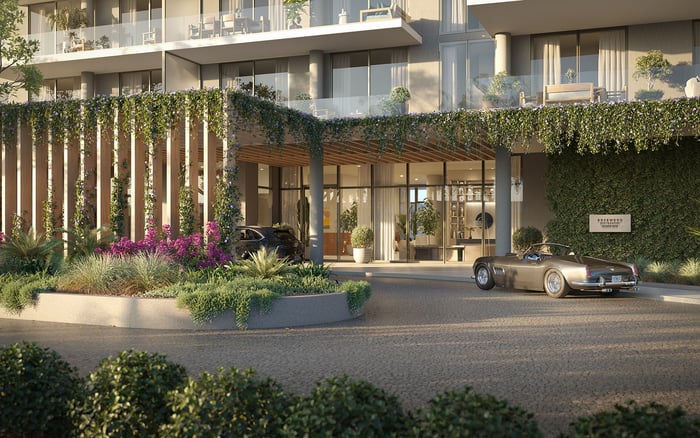
The third test is the arrival test. Pull up at night. Watch how cars, valet, rideshare, pedestrians, and building staff interact. The entrance should feel obvious and calm. If the curb is confusing or crowded, that friction will repeat every time guests arrive.
Finally, test the route in reverse. Buyers often walk outward with curiosity and return with fatigue. The return is more revealing. A truly walkable address brings you home with less effort than expected.
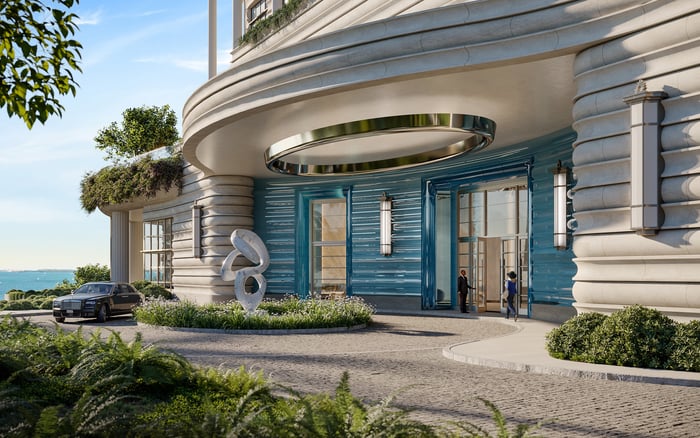
After-dark walkability does not begin at the sidewalk. It begins inside the building. A staffed lobby, clear sightlines, gracious porte cochere, well-managed valet, and direct elevator sequence can transform the feel of a neighborhood. The best buildings make the transition between private residence and public city feel intentional.
Buyers should ask how the building handles evening peaks. Are arrivals separated from service activity? Does the valet area feel composed when multiple guests arrive? Is there a comfortable place to wait for a car or driver? Does the lighting flatter the architecture while still serving safety and visibility? These are not minor operational questions. They shape the nightly experience of ownership.
A beautiful apartment can disappoint if the building does not manage the threshold well. Conversely, a slightly longer walk can feel excellent when the building, sidewalk, and destination form a coherent sequence.
Luxury buyers sometimes assume walkability means maximum exposure to activity. For seasonal owners, the better standard is selective access. The ideal address lets the owner participate in the city without being consumed by it. The walk to dinner should feel easy. The return should feel discreet. Guests should be able to find the entrance without the residence feeling publicly exposed.
Privacy also affects how often a buyer uses the neighborhood. If every outing feels like a performance, many owners default to cars and drivers. If the building offers an elegant, low-friction connection to its surroundings, walking becomes part of the pleasure of the home.
This is where South Florida differs from older pedestrian cities. The luxury experience is often a blend of walking, valet, waterfront movement, and private amenities. A strong address does not have to replicate Manhattan or Paris. It must perform for the way owners actually live here.
For the seasonal buyer, walkability after dark is not a lifestyle slogan. It is a due diligence category. It measures whether the residence supports the evenings that define the season: dinner reservations, art events, visiting friends, marina plans, beach walks, and quiet returns.
The right standard is both practical and emotional. Can you leave without planning? Can guests arrive without confusion? Can you return home feeling more relaxed than when you left? Does the neighborhood still feel like an asset after the sun goes down?
When those answers are yes, walkability becomes more than convenience. It becomes a form of confidence. For South Florida’s luxury buyer, that confidence is often what separates an attractive address from a residence that is genuinely easy to live in.
Why is night walkability different from daytime walkability? After dark, lighting, activity patterns, traffic behavior, and building operations become more important than simple distance.
Should seasonal buyers walk the area before making an offer? Yes. A night visit reveals the real rhythm of dinner routes, valet zones, crossings, and the return home.
Is the shortest route always the best route? No. A slightly longer route may feel better if it is brighter, calmer, and more intuitive.
How does building staffing affect walkability? Staffing shapes the transition between the private residence and the street, especially during evening arrivals and guest visits.
What should buyers watch for at the curb? Look for valet congestion, rideshare confusion, poor lighting, awkward turns, and unclear pedestrian paths.
Does a quieter neighborhood mean weaker walkability? Not necessarily. For some luxury buyers, selective access and privacy are more valuable than constant street activity.
How should buyers evaluate beach or marina access at night? They should test the route after sunset and consider lighting, visibility, comfort, and ease of returning home.
Do guests change the walkability equation? Yes. A strong seasonal residence should be simple for guests to find, enter, and leave without repeated instructions.
Can valet service replace walkability? It can reduce friction, but it does not replace the value of being able to step out comfortably when plans are nearby.
What is the best sign of true after-dark walkability? The best sign is a return home that feels calm, direct, and discreet after an active evening.
To compare the best-fit options with clarity, connect with MILLION.
If branded residences are on your mind — as a home or as an allocation — we would be glad to share what we are seeing, privately.
Begin a quiet conversation