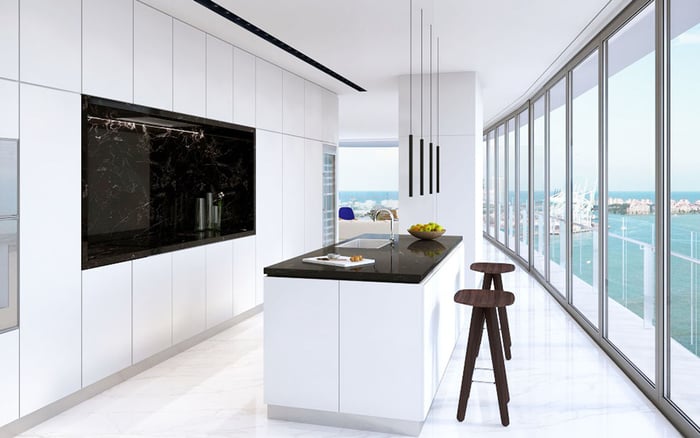
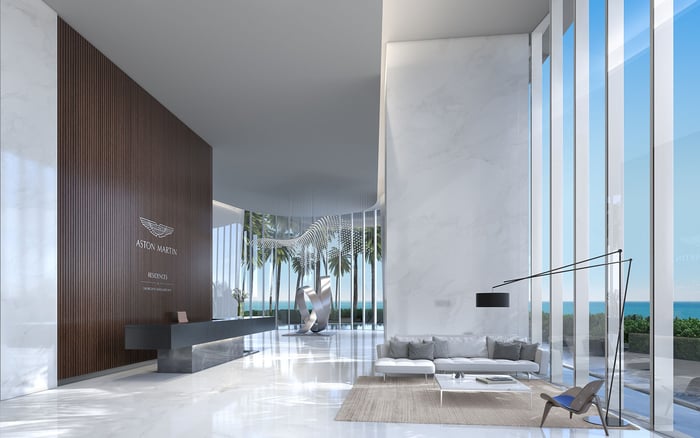
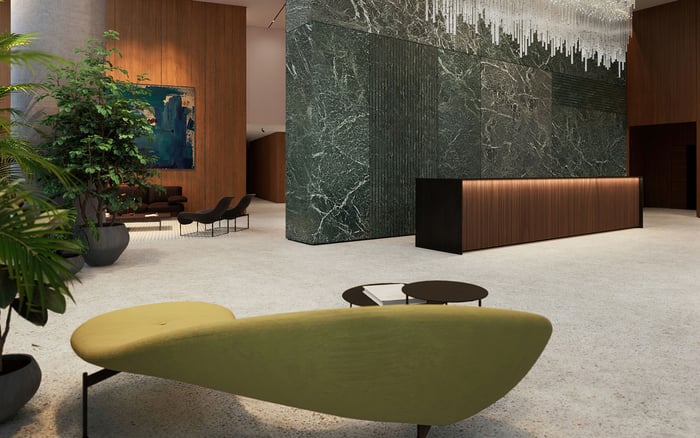
Aston Martin Residences Downtown Miami provides a useful lens for a quieter definition of ultra-luxury: one centered on privacy, efficient movement, service design, and the ability to move between home, work, leisure, and travel with less resistance.
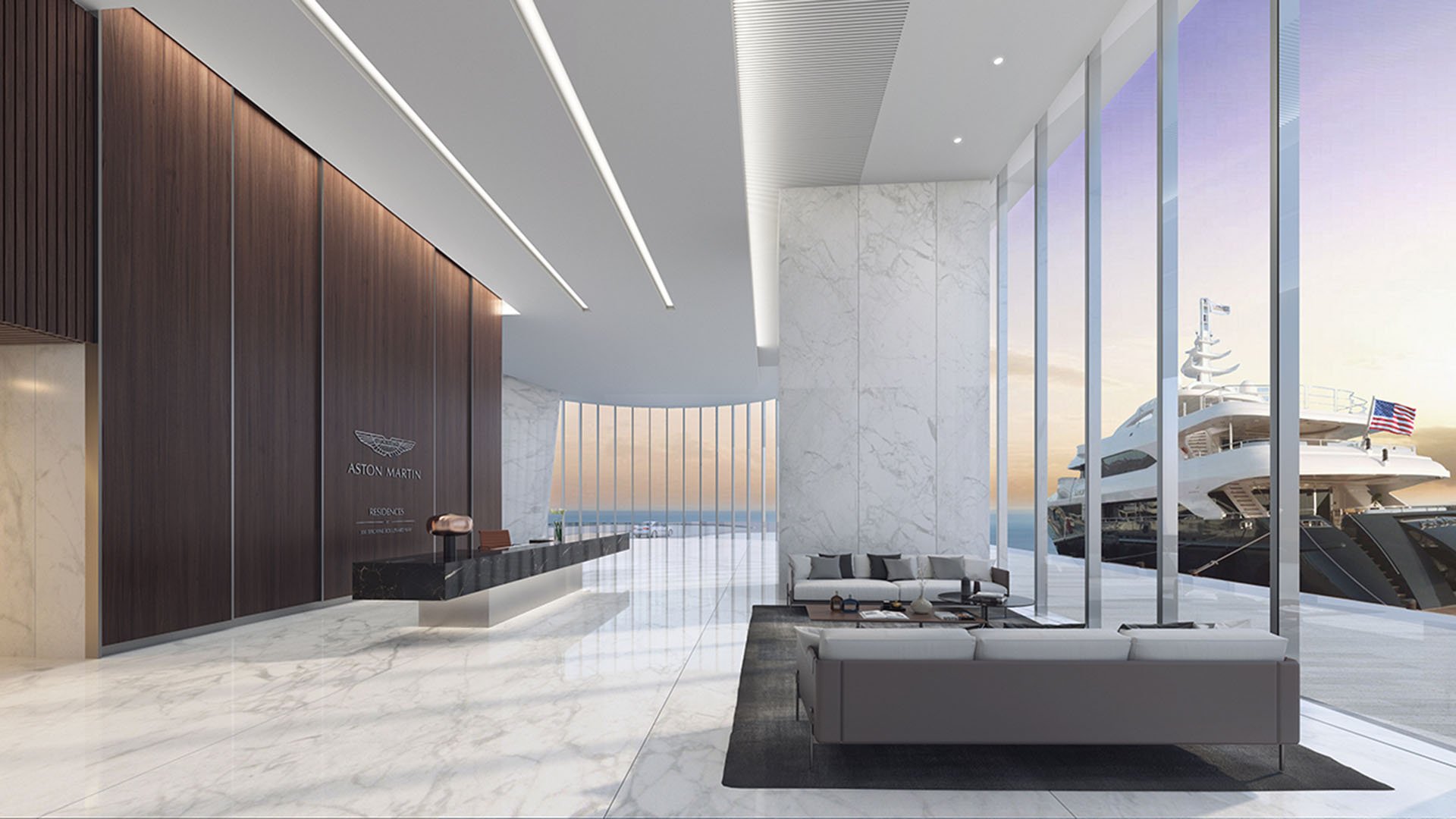
In Downtown Miami, the most compelling luxury conversation is no longer only about spectacle. Views, finishes, scale, and brand prestige still matter, but the sharper question for ultra-premium buyers is more personal: how easily does the residence allow life to move?
That is where Aston Martin Residences Downtown Miami enters the discussion. Rather than treating luxury only as a visual statement, the low-friction lens asks whether a residence can help the day feel more composed, more private, and easier to manage.
Low-friction luxury is best understood as an editorial framework rather than a formal product category. It describes a residence that reduces resistance across the day. Physical friction includes arrival, parking, security, elevators, and access to the home or amenities. Cognitive friction involves the effort required to coordinate services, reservations, building systems, and household logistics. Social friction concerns privacy, hospitality, staff interactions, and hosting guests. Temporal friction appears when a resident’s schedule and a building’s operations do not align.
For buyers who live globally and move quickly, these frictions are not minor inconveniences. They shape the difference between an impressive residence and one that truly performs.
Downtown Miami is increasingly part of a broader South Florida conversation about full-time luxury living. The strongest residential addresses now need to support more than skyline value. They must help compress distance between work, dining, cultural access, leisure, and travel patterns.
Aston Martin Residences Downtown Miami fits this context because the buyer conversation around the project is not limited to brand recognition. It also touches on ease, timing, privacy, and how a building can support a highly mobile lifestyle.
For buyers comparing the Downtown-to-Brickell corridor, the conversation can naturally include properties such as Baccarat Residences Brickell and Cipriani Residences Brickell. Each belongs to a broader shift in which luxury towers are evaluated not only by visual identity, but by how well they organize the resident’s day.
At the highest end of the market, the value of an address is increasingly tied to how calmly it supports movement. That can mean the movement between private and public life, between hospitality and discretion, or between the demands of a busy schedule and the quiet expected at home.
Within the larger field of Branded Residences, Aston Martin’s identity carries specific meaning. The brand suggests precision, refinement, and performance, qualities that translate naturally into a residential context when handled with restraint.
This is the distinction between trophy luxury and operational luxury. Trophy luxury asks whether the asset impresses at first glance. Operational luxury asks whether it keeps impressing after the resident has arrived home late, hosted guests, scheduled services, used the amenities, moved through security, and returned to the city again the next morning.
Other Downtown Miami projects, including Waldorf Astoria Residences Downtown Miami and Casa Bella by B&B Italia Downtown Miami, also sit within this maturing urban luxury landscape. The defining buyer question is not simply which brand is most recognizable. It is which residential experience feels most composed once the door closes and ordinary life resumes.
For a buyer evaluating branded residential options, this matters because brand alone is not the complete answer. The more meaningful test is whether the identity, design, service model, and location logic work together in a way that feels effortless.
Physical friction is the easiest to see during a tour. It appears in the choreography of arrival, the clarity of parking, the discretion of security, the elevator experience, and the path from street to private residence. In a dense urban setting, these moments are fundamental to comfort.
Cognitive friction is less visible, but often more consequential over time. Luxury residents do not want to manage the building. They want building systems, service coordination, reservations, and household logistics to feel intuitive. A residence that reduces decision fatigue becomes more valuable with every repeated use.
Social friction becomes apparent in the way a building handles privacy and hospitality. The most refined residences make staff interactions feel polished, not intrusive. They allow hosting to feel effortless, guest arrival to feel dignified, and private life to remain private.
Temporal friction is about timing. A luxury building should work with the resident’s schedule, not against it. Delays, mismatches, or rigid operating patterns can erode the experience even when the architecture is extraordinary.
This is why low-friction luxury is a practical buyer lens. It shifts attention from the brochure moment to the lived moment.
Luxury value in Miami has often been framed through view, frontage, amenities, and prestige. Low-friction luxury adds another layer: the sense that a residence can make movement, privacy, and decision-making feel more integrated.
That is the core Lifestyle proposition. A resident may be drawn initially to the brand or the architecture, but the lasting value is the ability to move through a complex urban environment with less drag. The residence becomes a private command point, not simply a beautiful perch.
For South Florida’s ultra-premium buyer, this distinction is increasingly important. Many buyers in this segment compare homes through the lens of travel, entertaining, privacy, service, and convenience. They are not looking for luxury that requires constant management. They are looking for luxury that anticipates the day and quietly removes obstacles.
Aston Martin Residences Downtown Miami fits that conversation because its brand vocabulary of precision and refinement aligns with a residential idea Miami continues to define: luxury as seamless operation.
The buyer considering Downtown Miami today is evaluating a more sophisticated market than in previous cycles. The district is no longer judged only by proximity to offices, entertainment, or the bay. It is being judged by whether it can sustain luxury living with the privacy, polish, and predictability expected in competitive urban residential markets.
Aston Martin Residences is part of that broader discussion. Its relevance is not only that it is recognizable. Its low-friction appeal lies in the way buyers can evaluate brand, design, service, and location through the practical question of daily ease.
For the right buyer, the question is not whether the tower is memorable. It is whether the experience feels calibrated to a life in motion.
What is low-friction luxury? It is a buyer-focused way to describe luxury that reduces daily resistance across arrival, service, privacy, scheduling, and access.
Is low-friction luxury an official category? No. It is an editorial framework for evaluating how smoothly a high-end residence supports everyday life.
Why does Aston Martin Residences Downtown Miami fit this discussion? The project offers a useful lens for discussing precision, privacy, brand identity, and ease in a Downtown Miami residential context.
What makes Downtown Miami relevant to low-friction living? Downtown Miami places luxury buyers in an urban environment where timing, access, privacy, and movement can strongly shape daily life.
Why does the Aston Martin brand matter in a residence? The brand brings associations of precision, refinement, and performance into the residential conversation.
How is operational luxury different from trophy luxury? Trophy luxury emphasizes visual impact, while operational luxury emphasizes how well the building works every day.
What should buyers watch for during a tour? Arrival, parking, security, elevator flow, privacy, service coordination, and amenity access are all important signals.
Why are nearby branded residences part of the comparison? They help buyers understand how different luxury projects organize brand identity, service expectations, and daily convenience.
Is low-friction luxury only about amenities? No. Amenities matter, but the broader idea includes privacy, timing, staff interaction, access, and the ease of daily routines.
Who is the ideal buyer for this type of residence? The strongest fit is a buyer who values brand, privacy, service, and seamless movement through the city.
For a confidential assessment and a building-by-building shortlist, connect with MILLION.
If branded residences are on your mind — as a home or as an allocation — we would be glad to share what we are seeing, privately.
Begin a quiet conversation