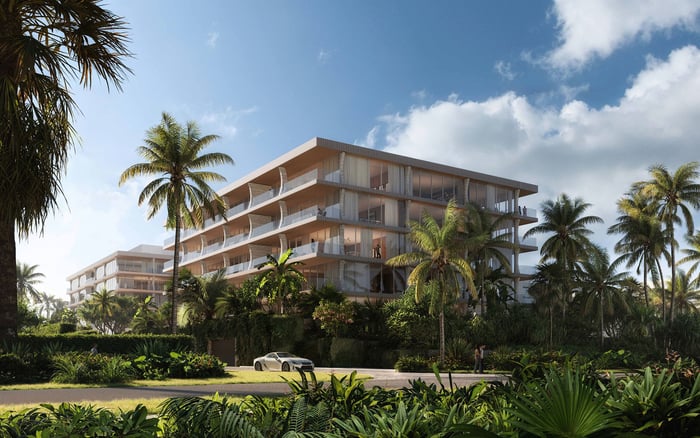
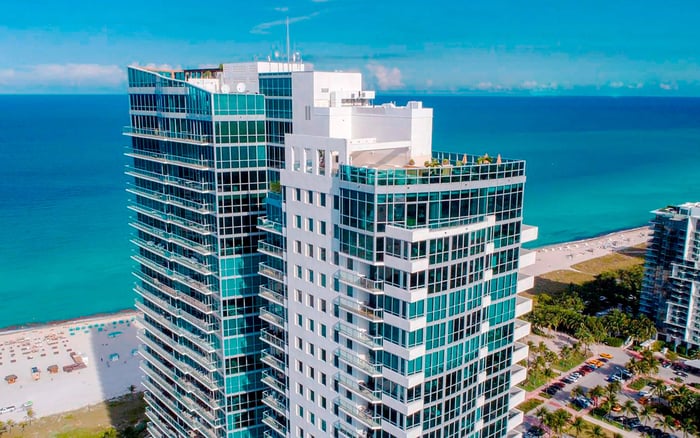
Seasonal ownership changes how terrace drainage should be evaluated. For South Florida luxury buyers, the right standard is less about cosmetic finish and more about resilient design, easy maintenance, and confidence during months away.
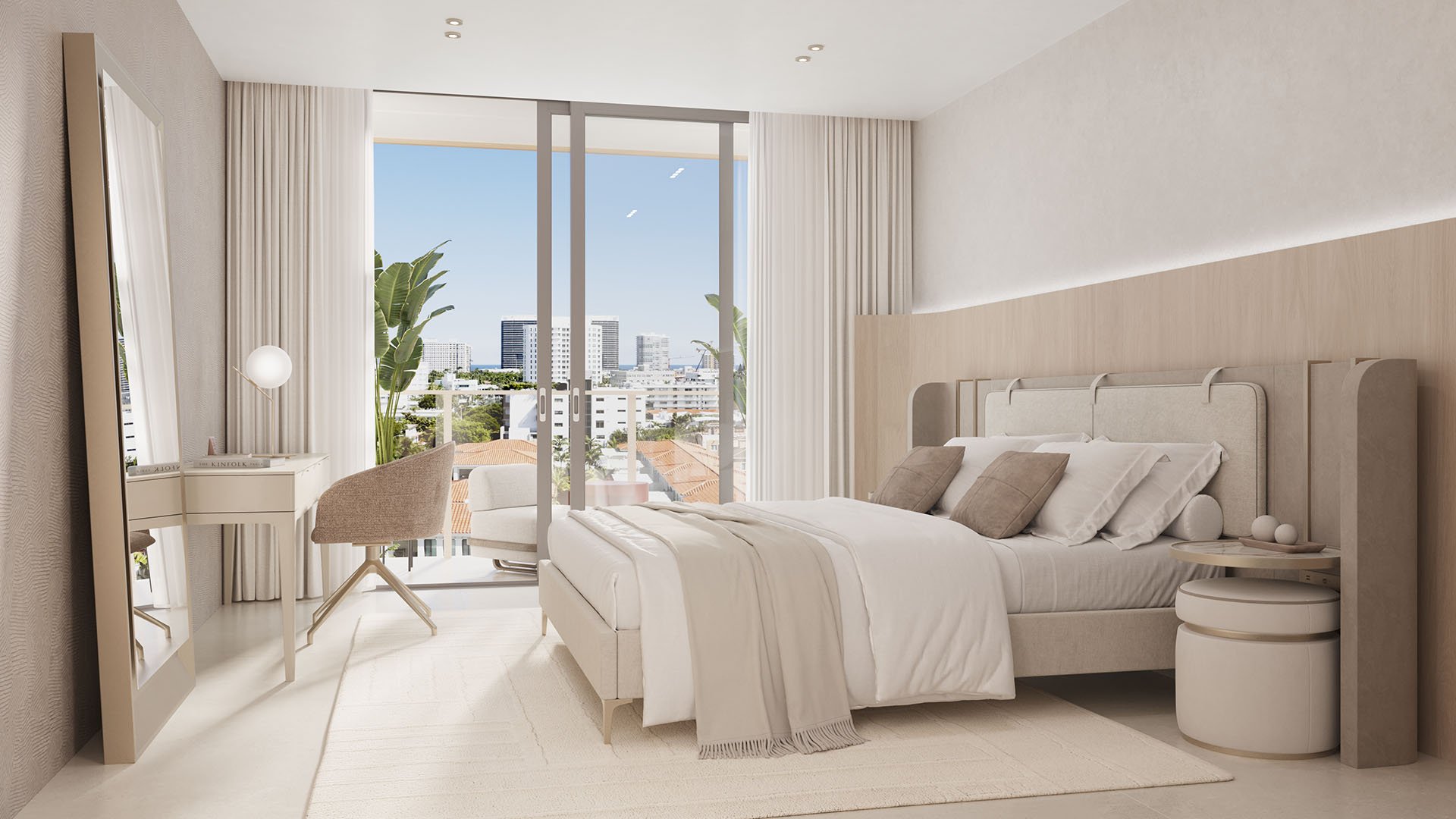
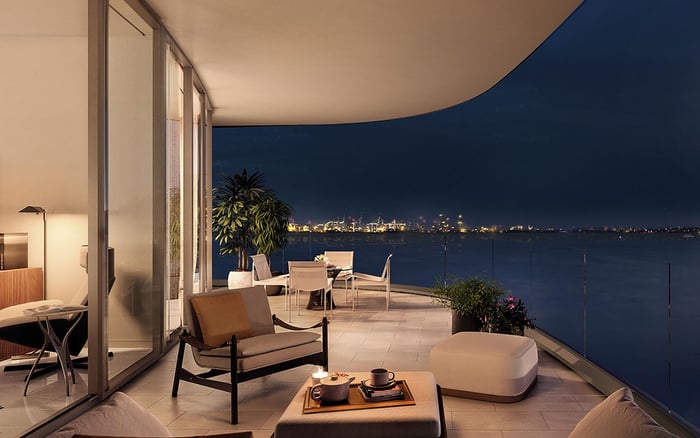
In South Florida luxury real estate, the terrace is often treated as an extension of the salon, dining room, and primary suite. It frames the morning view, softens the line between interiors and water, and gives a residence a sense of privacy and atmosphere that square footage alone cannot convey. For seasonal buyers, however, the terrace deserves a more exacting review than it often receives.
A year-round owner sees a terrace in motion. They notice standing water after rain, leaves gathering near a drain, a paver that has settled slightly, or a door threshold that feels too exposed. A seasonal owner may not. The residence can sit closed for weeks or months while the terrace absorbs weather, salt air, wind-driven rain, and ordinary debris without daily observation. That distinction changes the standard.
For a second-home buyer comparing oceanfront inventory in Miami Beach or Sunny Isles, terrace drainage is not a minor technical note. It is part of ownership quality. A beautiful exterior space should not require the owner’s presence to protect it. It should be designed, maintained, and inspected with absence in mind.
Seasonal ownership introduces a simple but consequential gap: the buyer may not be present when the terrace is most tested. Water that a full-time resident would notice quickly can remain unaddressed. A blocked drain can become a recurring issue before anyone steps outside. Outdoor furnishings, planters, rugs, and decorative objects can interrupt water flow when they are not placed with drainage in mind.
That is why the seasonal standard should go beyond asking whether the terrace has drains. The stronger question is how the terrace behaves when the owner is away. Does water have a clear path off the surface? Are drain locations visible and accessible? Can maintenance teams inspect them without moving heavy furniture? Are thresholds, exterior walls, and built-in features positioned in a way that respects water movement?
Luxury buyers are accustomed to reviewing finishes, views, ceiling heights, and privacy. Drainage belongs in that same conversation because it protects the experience those attributes create. A terrace that performs quietly is part of the architecture of ease.
A terrace review should begin visually, then become practical. The surface should be observed for low points, staining, uneven settlement, or areas where water appears likely to collect. Drain locations should be obvious, not hidden beneath furniture or covered by decorative elements. If pavers, decking, or pedestal systems are present, the buyer should understand how water passes through or beneath them and how those areas are maintained.
Door thresholds matter as much as drains. The transition between interior floor and terrace floor is one of the most important details in any luxury residence. A seamless look can be beautiful, but the buyer should understand how water is managed near openings. The same standard applies to large sliding glass systems, outdoor kitchens, planters, and built-in seating.
For any balcony or terrace, the owner should ask for a plain-language explanation of routine care. Who checks drains before and after extended absences? What is the building’s protocol for terrace access if the owner is not in residence? Are there restrictions on outdoor rugs, planters, or furniture placement? These questions are not fussy. They mark the difference between aesthetic ownership and informed ownership.
The most elegant seasonal residences are planned around lock-and-leave confidence. That does not mean nothing ever requires attention. It means the owner understands what must be checked, who is responsible, and how often exterior living areas are reviewed.
A strong maintenance standard should include clear drain access, periodic visual inspections, and a furniture plan that does not obstruct water paths. Planters should be considered carefully because soil, leaves, and decorative stone can migrate. Outdoor rugs can be inviting, but they should not conceal drains or create areas where moisture lingers. Even small design choices can affect performance over time.
Seasonal buyers should also think about communication. If a property manager, building team, or caretaker is involved, terrace drainage should be part of the normal checklist rather than an occasional concern. The goal is not to make ownership feel mechanical. The goal is to preserve the quiet, effortless quality that premium South Florida living promises.
There is sometimes a misconception that practical drainage review interrupts the romance of buying a refined residence. In reality, the opposite is true. The best outdoor spaces are both beautiful and disciplined. Their slopes are subtle. Their drains are positioned with intention. Their furnishings are arranged so the terrace feels composed while still allowing water to move.
Buyers should be wary of judging a terrace only on a dry, staged afternoon. Outdoor rooms are dynamic spaces. They respond to weather, use, cleaning, furniture movement, and seasonal absence. A terrace can photograph beautifully and still require a more careful operational review.
For designers and owners, the opportunity is to treat drainage as part of the composition. A clear path for water can coexist with sculptural furniture, potted greenery, and generous seating. In the finest residences, technical performance disappears into the atmosphere. The owner feels the result without seeing the machinery behind it.
A discerning buyer does not need to turn a showing into an engineering inspection, but a few precise questions can reveal whether the terrace has been considered properly. Ask where water is intended to go. Ask how drains are accessed and maintained. Ask whether furniture placement has been planned around drainage. Ask how the building handles terrace inspections when residents are away.
If the residence is resale, ask whether any terrace drainage concerns have been addressed during ownership. If it is new construction or recently completed, ask how the exterior areas are delivered, maintained, and explained to residents. The answer should be clear and confident. Vague reassurances are less useful than a practical walkthrough.
The seasonal buyer’s advantage is selectivity. A terrace is not merely a view platform. It is a private exterior room attached to a valuable residence. It should be judged with the same care given to glazing, millwork, stone, and appliance selection.
South Florida’s luxury market has trained buyers to value air, light, privacy, and outdoor living. The next level of discernment is performance. Seasonal buyers, in particular, should want a terrace that remains composed when they are elsewhere.
That mindset changes the purchase conversation. Instead of asking only how large the terrace is, ask how it drains. Instead of asking only whether the view is unobstructed, ask whether the surface is easy to inspect. Instead of asking only where the dining table will sit, ask whether that placement preserves water movement.
The result is not a less glamorous purchase. It is a more complete one. A well-drained terrace protects finishes, reduces uncertainty, supports maintenance, and allows the owner to return with confidence. In a market where outdoor space is central to the luxury proposition, that is not a technical detail. It is part of the standard.
Why should seasonal buyers focus more on terrace drainage? Seasonal buyers may be away when heavy rain or debris affects the terrace, so performance and maintenance access matter more.
Is terrace drainage only an issue for older residences? No. Any exterior space should be reviewed, whether the residence is new, recently renovated, or resale.
What is the first thing to look for on a terrace? Look for visible drains, clear water paths, accessible corners, and any areas that suggest water may collect.
Can outdoor furniture affect drainage? Yes. Furniture, planters, and rugs can block drains or alter the way water moves across the surface.
Should a buyer ask building management about terrace care? Yes. Seasonal owners should understand inspection access, routine maintenance, and any rules for terrace setup.
Does a seamless indoor-outdoor floor require extra review? Yes. A flush visual transition can be elegant, but buyers should understand how water is managed near doors.
Are planters a concern on luxury terraces? They can be. Soil, leaves, and decorative materials should not be allowed to migrate toward drains.
What should be included in a seasonal owner checklist? Drain visibility, furniture placement, post-absence inspection, and regular terrace cleaning should be included.
Is drainage part of design quality? Yes. In a refined residence, technical performance should support the beauty of the outdoor room.
When should drainage questions be raised? Raise them during showings, due diligence, and before finalizing furniture or landscape plans.
When you're ready to tour or underwrite the options, connect with MILLION.
If branded residences are on your mind — as a home or as an allocation — we would be glad to share what we are seeing, privately.
Begin a quiet conversation