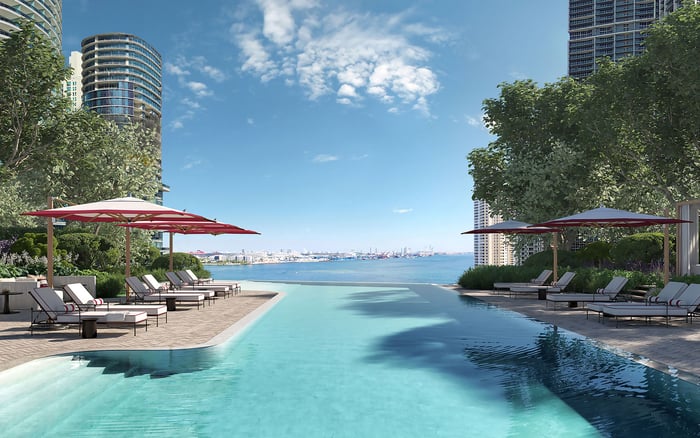
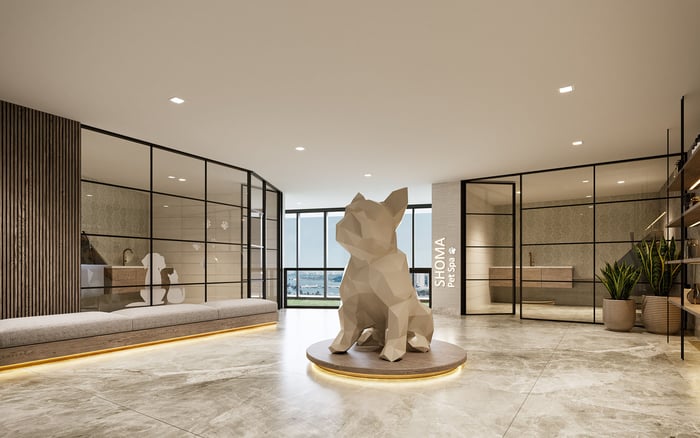
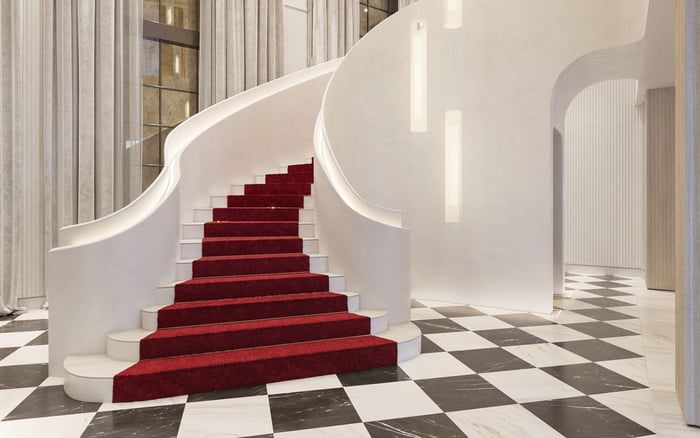
For luxury buyers evaluating Baccarat Residences Brickell, grill access is more than a small house-rule detail. It can shape how well a high-rise residence supports outdoor dining, family entertaining, and the South Florida lifestyle buyers often expect from a waterfront or urban Miami address.
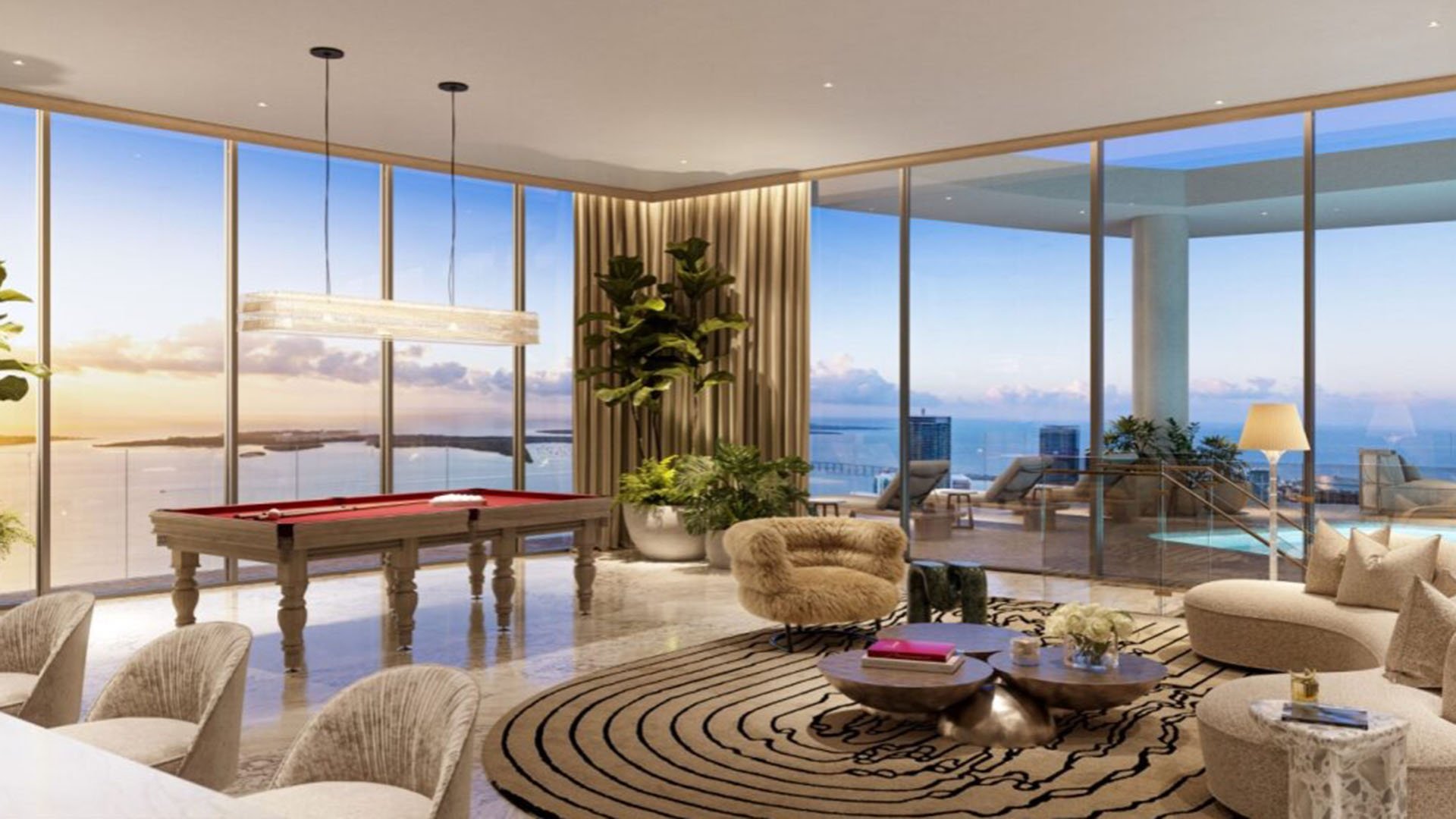
Baccarat Residences Brickell sits at the center of one of Miami’s most vertical luxury conversations: the choice between an urban high-rise lifestyle and the open-air rituals that define South Florida living. For many buyers, the initial focus is naturally on views, finishes, services, parking, wellness amenities, and proximity to dining or the financial district. Yet one practical question can quietly reshape the decision: where, how, and whether a resident may grill.
That question may sound modest in a market defined by branded residences and waterfront towers. It is not. For high-net-worth buyers who entertain often, outdoor cooking is not simply a weekend habit. It is part of how a home lives. A sunset dinner, a family gathering, a casual Sunday meal after time by the Pool, or a chef-led evening with friends can all depend on rules buried in condominium documents, house rules, or property-management policies.
The key is not to assume. In an urban tower, private outdoor space and shared amenity space are governed differently. A Balcony may offer privacy and drama, while a Terrace or amenity deck may offer a controlled environment designed for hosting. The buyer’s task is to understand which lifestyle each setting actually permits before contract execution.
Brickell offers a particular kind of luxury: walkability, water views, skyline energy, dining, services, and the convenience of living close to Miami’s business core. Baccarat Residences Brickell is relevant because it represents that urban condominium option for buyers comparing Brickell with other South Florida submarkets.
The comparison often extends beyond other towers. A buyer may be choosing between a Brickell residence and a home in Coconut Grove, Coral Gables, Key Biscayne, Miami Beach, or another neighborhood where private outdoor cooking feels more intuitive. In that context, grill policy becomes a proxy for a larger issue: can a high-rise condominium replicate the informal ease of a South Florida home?
For some buyers, the answer may be yes if the amenity program provides elegant shared spaces that support dining and entertaining. For others, the absence of private-balcony grilling, if restricted by the applicable rules, may feel like a meaningful compromise. The point is not that one format is superior. It is that the residence must match the buyer’s actual pattern of living.
This is especially important for purchasers moving from single-family homes into a condominium. They may be accustomed to controlling the entire outdoor environment, from the timing of dinner to the type of gathering. In a tower, that control is exchanged for services, security, maintenance ease, and a more curated amenity setting. Grill access is one of the details that reveals whether that trade feels graceful or limiting.
The most important distinction is between private outdoor grilling and shared amenity-area grilling. A private Balcony, even a generous one, is part of a high-rise building with neighbors above, below, and beside it. A shared Terrace or amenity deck, by contrast, may be specifically managed for resident use, scheduling, safety, cleaning, and building operations.
Buyers should not treat these two categories as interchangeable. If a resident imagines walking onto a private terrace and preparing dinner at will, the rules must be clear. If the building instead directs outdoor cooking to a shared amenity area, the buyer should understand how that space is reserved, how often it is available, whether guests are permitted, and how the experience feels at peak times.
For a luxury buyer, the issue is not merely access to a grill. It is the quality of the ritual. Is the setting private enough for family? Formal enough for entertaining clients? Convenient enough for a weeknight meal? Does it support the way the buyer hosts, or does it turn a spontaneous lifestyle into a scheduled event?
These questions matter in Brickell because the condominium experience is often purchased as a complete lifestyle system. The residence, amenities, staff, arrival sequence, water views, and neighborhood all contribute to the sense of ease. A grill rule that conflicts with the buyer’s expectations can interrupt that system in a surprisingly personal way.
It would be too simplistic to say that grill restrictions create a specific discount or premium. Without property-specific market data, that claim would overreach. The more precise framing is that grill rules can influence perceived value and buyer fit.
For a purchaser who rarely cooks outdoors, the policy may be almost irrelevant. For a buyer who hosts regularly, travels with family, or sees Miami as a place for informal outdoor living, it can be central. Two buyers may tour the same residence, admire the same view, and reach different conclusions because their expectations for entertaining are different.
This is where luxury real estate becomes more nuanced than a checklist. A residence can be objectively beautiful and still be the wrong match for a particular household. Conversely, a building with clearly defined shared grilling areas may satisfy a buyer who values services and convenience over complete autonomy. The best decision is not necessarily the most permissive one. It is the one where the rules and the lifestyle align.
At Baccarat Residences Brickell, the broader buyer lesson is to evaluate lifestyle rules as carefully as finishes or floor plan. The ability to host, cook, dine, and gather outdoors belongs in the same conversation as exposure, ceiling height, parking, storage, and service culture.
A sophisticated buyer should request clarity before signing, not after closing. The relevant answers may live in condominium documents, house rules, management policies, or sales materials. They should be reviewed in writing and understood in practical terms.
Start with the obvious question: is private outdoor grilling permitted in the residence’s outdoor area? If the answer depends on grill type, location, building approval, fuel source, or future management policy, those conditions should be understood. If private grilling is not permitted, the next question is whether shared amenity grilling is available and how it functions.
The buyer should also ask how amenity areas are reserved, whether guest limits apply, what hours govern use, who handles cleaning, and whether private events are treated differently from casual use. The most elegant policy on paper can feel very different if access is difficult, crowded, or overly formal for the buyer’s lifestyle.
Another important question is whether rules can change. Condominium living always involves shared governance and building-wide standards. Buyers should understand not only what is allowed today, but also how house rules are administered and modified over time. That does not require alarm. It requires maturity about the nature of high-rise ownership.
Grill policy is really a lifestyle signal. It tells a buyer how the building balances privacy, safety, neighbor comfort, amenity programming, and resident autonomy. In a luxury tower, rules are not necessarily a negative. They can preserve quiet, cleanliness, and a refined atmosphere. But they must be compatible with the buyer’s priorities.
For some households, the ideal Miami life is a lock-and-leave residence with serviced amenities, dining nearby, and no concern for maintaining a yard. For others, the dream includes the sensory details of outdoor cooking: the preparation, the gathering, the informality, and the easy movement between kitchen, terrace, and view.
That is why the topic deserves attention at the beginning of the search, not at the end. If outdoor cooking is essential, it should be part of the initial brief. If it is merely a preference, the buyer can weigh it against other strengths. Either way, the rule should not arrive as a surprise.
In the Brickell context, this is particularly relevant because buyers are often comparing very different versions of luxury. A waterfront tower may offer services and views that a house cannot. A house may offer control and outdoor autonomy that a tower cannot fully reproduce. The grill question helps clarify which version of Miami living the buyer is truly seeking.
The best luxury decisions are not driven by slogans. They are made through a precise understanding of how a property will perform in daily life. Baccarat Residences Brickell is a useful case study because it brings a seemingly small lifestyle rule into the center of the decision-making process.
For buyers who value entertaining, outdoor dining, and family gatherings, grill access should be discussed with the same seriousness as the view corridor or amenity offering. It is not a minor afterthought. It is part of the emotional architecture of the home.
In the end, the right residence is the one whose rules support the life the buyer intends to live. In Brickell, where vertical luxury meets South Florida’s outdoor culture, that alignment can be decisive.
Why do grill rules matter at Baccarat Residences Brickell? They can affect how well the residence supports outdoor cooking, dining, and entertaining, especially for buyers accustomed to South Florida’s open-air lifestyle.
Is private Balcony grilling always allowed in luxury condos? No. Buyers should verify the specific condominium documents, house rules, and management policies before contract execution.
How is private grilling different from amenity-area grilling? Private grilling relates to a residence’s own outdoor space, while amenity-area grilling is typically shared and may involve reservations, rules, and building oversight.
Can grill restrictions affect resale value? The more careful view is that restrictions may affect perceived value and buyer fit, particularly for purchasers who prioritize entertaining.
Should buyers ask about grill rules before making an offer? Yes. The question should be part of early due diligence, especially if outdoor cooking is central to the buyer’s lifestyle.
Are grill policies only relevant to Brickell buyers? No. They matter across luxury high-rise markets, but Brickell makes the issue especially visible because buyers often compare tower living with private-home alternatives.
What should a buyer review in writing? Buyers should review condominium documents, house rules, and property-management policies that address Balcony, Terrace, amenity, and guest use.
Do shared grilling areas solve the issue for every buyer? Not always. Some buyers are comfortable with curated shared amenities, while others want the spontaneity and privacy of their own outdoor space.
Why compare Baccarat Residences Brickell with homes in other areas? Buyers may be choosing between urban convenience in Brickell and more private outdoor living in places such as Key Biscayne, Coral Gables, or Miami Beach.
What is the main takeaway for luxury buyers? Grill rules are lifestyle rules, and they should be evaluated as part of the overall fit of the residence.
To compare the best-fit options with clarity, connect with MILLION.
If branded residences are on your mind — as a home or as an allocation — we would be glad to share what we are seeing, privately.
Begin a quiet conversation