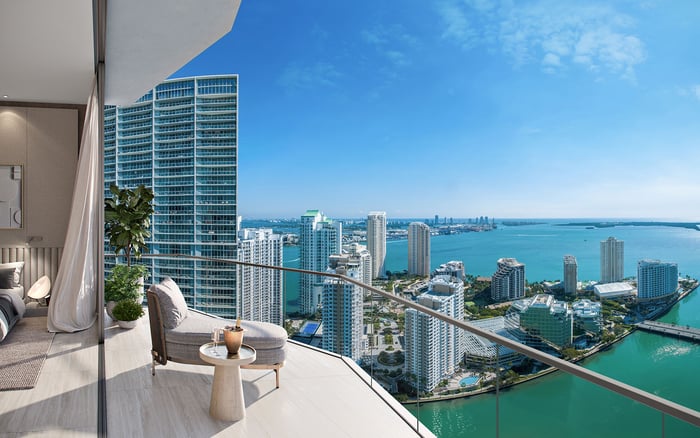
Seasonal buyers should treat grill approvals as a lifestyle, compliance, and resale issue, not a minor amenity question. The right review looks beyond whether grilling is permitted and focuses on equipment type, placement, storage, association discretion, and timing before the season begins.

For a seasonal buyer, a grill is rarely just a grill. It can be the difference between arriving for a long weekend and feeling immediately at home, or discovering that one of South Florida’s most casual rituals requires permission, paperwork, equipment changes, or cannot happen at all.
That is why seasonal buyers need a different standard for grill approvals. A full-time resident may have the patience to work through an association request over several meetings. A second-home owner often does not. The approval has to be understood before closing, before furniture is ordered, before a property manager is instructed, and before family and guests arrive for the season.
In luxury property, the issue is more nuanced. The higher the finish level, the more a building tends to protect its architecture, life-safety protocols, insurance posture, and neighbor experience. What feels like a simple lifestyle preference can become a meaningful test of how a residence is governed.
Seasonal ownership compresses decision-making. Buyers may tour in spring, close in summer, furnish in fall, and expect to entertain by winter. If grill approval is treated as a casual post-closing question, it can collide with board calendars, management response times, vendor coordination, and building rules that are more specific than expected.
A better standard begins earlier. Before contract contingencies expire, a buyer should understand whether grilling is allowed, where it is allowed, what type of grill is acceptable, whether prior written approval is needed, and whether the rule has been applied consistently. The answer should not rest on a quick verbal assurance. In a premium building, the operative detail often lives in the governing documents, house rules, architectural guidelines, or management procedures.
This matters in Brickell as much as it does along an oceanfront corridor. Vertical living brings proximity, shared systems, and heightened sensitivity to smoke, heat, fuel storage, and aesthetics. A buyer who entertains only a few months a year still has to operate within the building every month of the year.
One of the most common mistakes is assuming that all outdoor space receives the same treatment. Balcony rights can be narrower than terrace privileges, and a large private deck may still be subject to strict limitations. The distinction is not only about square footage. It is about location, ventilation, enclosure, access, fire-safety concerns, and how the space interacts with neighboring residences.
In new-construction condominiums, expansive outdoor areas are often central to the sales narrative. Yet even in buildings designed for indoor-outdoor living, there may be rules around open flames, electric equipment, fixed installations, built-in kitchens, propane storage, charcoal, ventilation, cleaning, and hours of use. The luxury buyer should not assume that a spectacular terrace automatically means unrestricted cooking.
The more refined approach is to ask a layered question: what is permitted today, what requires approval, what has historically been approved, and what would be prohibited even if professionally installed? That framing separates marketing language from operational reality.
For seasonal buyers, grill approval should be reviewed in four parts.
First, the documents. The governing language should be checked for direct grill rules and indirect restrictions. Some properties address equipment, fuel, smoke, nuisance, alterations, storage, or balcony use without using the word grill as the primary heading.
Second, the equipment. Electric, gas, propane, charcoal, portable, and built-in equipment may be treated differently. A buyer should confirm not only what is allowed, but whether the exact model, size, placement, and installation method would be acceptable.
Third, the process. If approval is required, the buyer needs to know who approves it, how long it typically takes, what drawings or specifications are needed, and whether work must be performed by an approved vendor. Seasonal owners should also clarify whether their property manager can coordinate the submission while they are away.
Fourth, the enforcement culture. Rules exist on paper, but buildings also develop patterns. A discreet conversation with management, counsel, or an experienced advisor can help determine whether the community treats grill use as routine, exceptional, or sensitive.
Grill approvals also touch resale. A future buyer may see the outdoor lifestyle as a core value driver, especially in a residence with generous private exterior space. If the current owner has clear approval for compliant equipment, the next owner inherits a cleaner story, even if approvals do not automatically transfer.
Guest use adds another layer. Seasonal homes are often enjoyed by family, visitors, and household staff. The owner may understand every rule, while a guest may not. If grill use is permitted, the owner should create simple operating instructions that address fuel, cleaning, storage, weather, building quiet hours, and who to call if there is an issue.
The goal is not to make ownership feel restrictive. It is to preserve ease. The best seasonal homes feel effortless because the friction has been handled in advance.
The luxury standard is not merely asking, “Can I have a grill?” It is asking whether the property’s rules support the way the owner intends to live. That includes spontaneous dinners, visiting grandchildren, private chefs, catered evenings, and the quiet pleasure of cooking outside after a day on the water.
A buyer comparing residences should place grill permissions alongside other lifestyle criteria: parking convenience, elevator privacy, pet policies, pool access, marina logistics, beach service, and staff coordination. None of these details is glamorous in isolation. Together, they determine whether a South Florida residence functions beautifully.
This is especially true for owners who will not be present year-round. A seasonal property must be legible. The rules should be clear enough that an owner can arrive, entertain, and depart without administrative drag. If the answer is uncertain, the buyer should resolve it before closing or treat the uncertainty as part of the property’s practical profile.
Before purchasing, seasonal buyers should ask for the current rules governing outdoor cooking, including any recent amendments. They should request confirmation of whether the intended grill type is allowed and whether written approval is required. If the home already has a grill, they should confirm whether it was approved, whether the approval is documented, and whether it remains compliant under current rules.
They should also ask how equipment must be stored during storms, extended absences, or building maintenance. In South Florida, outdoor furniture and appliances are part of the larger seasonal preparation plan. A grill that is acceptable in daily use may still create logistical questions during prolonged vacancy.
Finally, buyers should evaluate tone. If answers are vague, slow, or inconsistent, that does not always mean the grill will be denied. It does suggest that the buyer needs stronger documentation before relying on the amenity.
Should seasonal buyers ask about grill rules before making an offer? Yes. Grill rules can affect how a residence is used, especially when outdoor entertaining is central to the purchase.
Is a verbal confirmation from an agent or manager enough? No. Buyers should look for written rules, written approvals, or a clearly documented process before relying on the answer.
Are electric grills usually easier to approve than gas grills? They may be, but every building can treat equipment differently. The exact model and placement should be confirmed.
Can a large terrace guarantee grill permission? No. A large outdoor area can still be subject to restrictions related to safety, smoke, storage, or building aesthetics.
What if the seller already has a grill in place? The buyer should verify whether it was approved and whether that approval remains valid under current building rules.
Why does this matter more for a second-home owner? Seasonal owners have less time to solve approval issues after arrival, so uncertainty can disrupt the most valuable weeks of use.
Can a property manager handle grill approval? Often, a manager can coordinate paperwork, but the owner should confirm the building’s requirements and authorization process.
Do grill rules affect resale value? They can affect perceived lifestyle value, particularly when buyers place a premium on outdoor entertaining.
Should grill use be included in guest instructions? Yes. Clear instructions help guests follow building rules and protect the residence while the owner is away.
What is the best way to shortlist comparable options for touring? Start with location fit, delivery status, and daily lifestyle priorities, then compare stacks and elevations to validate views and privacy.
For a confidential assessment and a building-by-building shortlist, connect with MILLION.
If branded residences are on your mind — as a home or as an allocation — we would be glad to share what we are seeing, privately.
Begin a quiet conversation