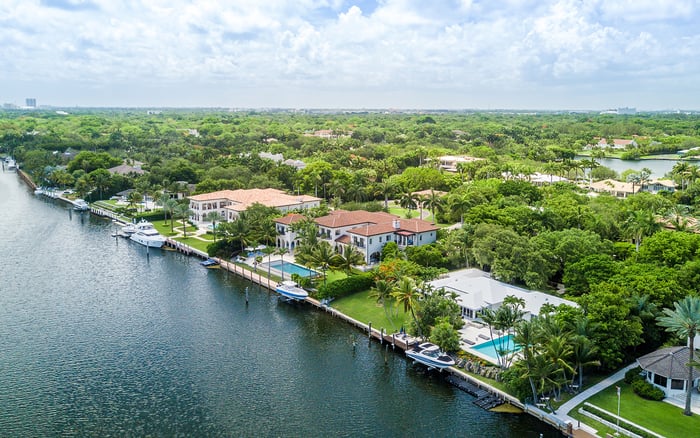
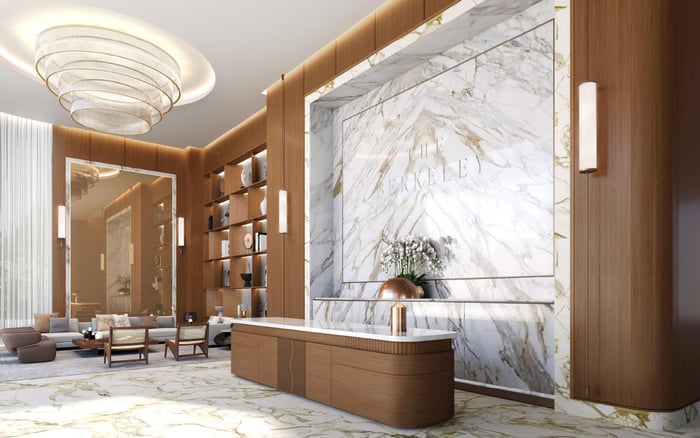
For many high-net-worth buyers in South Florida, luxury is being redefined around discretion, design quality, privacy, and long-term livability rather than sheer size. This shift is elevating architectural pedigree, curated finishes, private in-home amenities, and historically grounded neighborhoods above raw square footage as the sharper measure of value.
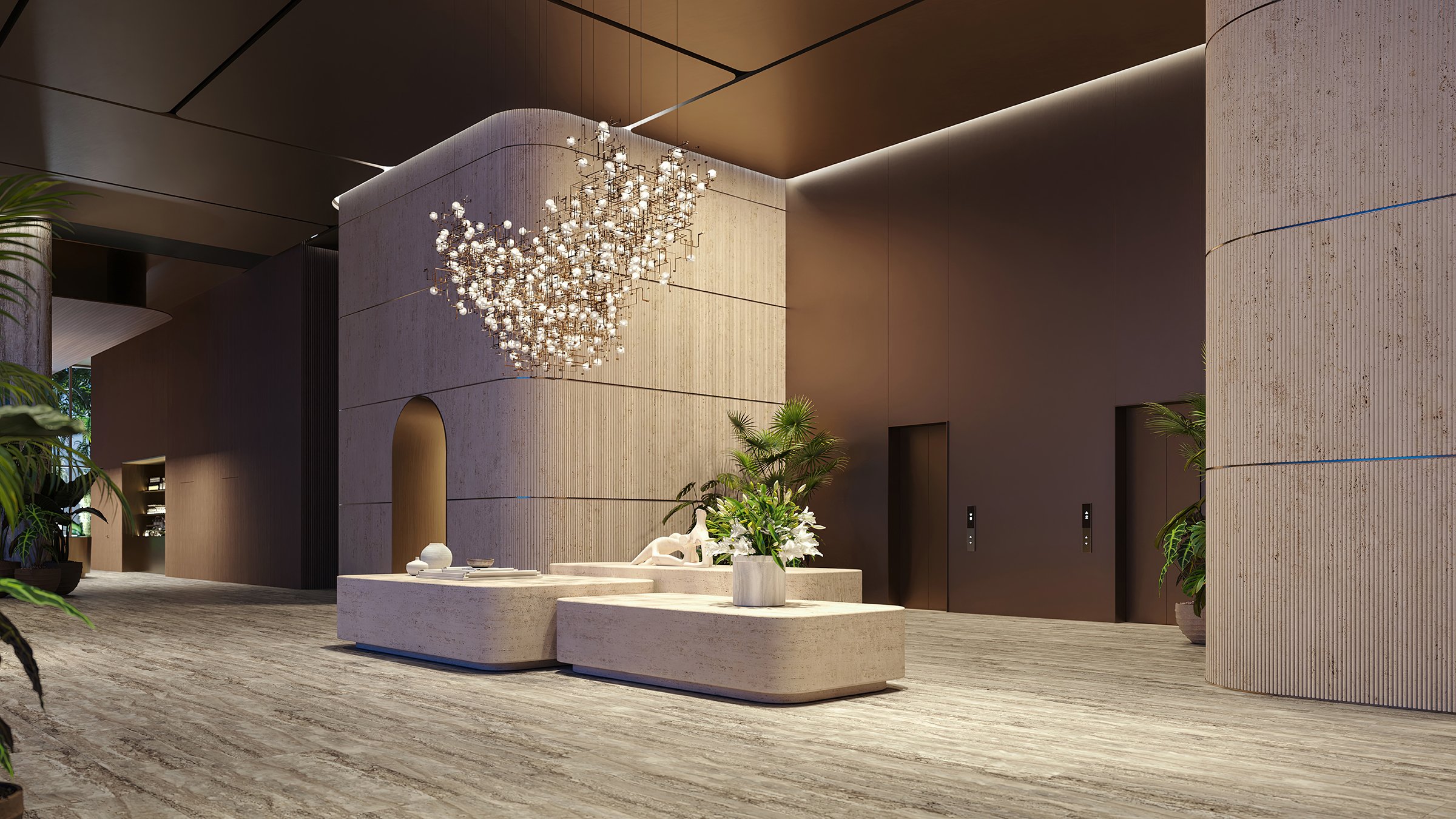
In South Florida, grandeur has long been easy to spot. Towering ceilings, oversized entertaining rooms, expansive amenity decks, and a visible sense of arrival once served as the clearest shorthand for wealth. That language still has a market, but for many high-net-worth buyers, the more incisive question is no longer how much space a residence offers, but how intelligently, privately, and beautifully that space lives.
Quiet luxury is not anti-luxury. It is luxury refined to its most persuasive essentials. Instead of rewarding square footage for its own sake, buyers are paying closer attention to restraint, exclusivity, architectural coherence, and the quality of experience within the home. A residence can feel deeply elevated without telegraphing excess. For a growing segment of affluent purchasers, discretion itself has become part of the appeal.
That shift matters particularly in South Florida, where the market has historically celebrated a more visibly expansive, resort-forward expression of prestige. Today, the sharper expression of value often lies in subtler signals: a protected bayfront position, bespoke millwork, a primary suite that functions as a private retreat, or a wellness system that disappears into the architecture rather than announcing itself.
Bigger is no longer an automatic proxy for better. At the upper end of the market, excess rooms that are rarely used can read less as luxury and more as inefficiency. Buyers with multiple residences are often more exacting about utility. They want homes that support entertaining, family life, work, recovery, and privacy, but without wasteful duplication.
That is one reason flexible layouts now carry more weight than sheer scale. A well-resolved home office, a media room that genuinely invites use, and living areas that transition gracefully between formal and informal modes often matter more than oversized guest wings or symbolic trophy rooms. The most desirable homes feel composed, not inflated.
This is also why primary-suite quality has become such a decisive filter. Buyers are increasingly evaluating whether the principal bedroom and bath deliver true sanctuary: acoustic privacy, generous dressing areas, layered lighting, tactile materials, and a sense of separation from the public areas of the home. A residence with a superb suite and impeccably calibrated common spaces can outperform a much larger property that simply adds secondary rooms without improving day-to-day life.
Quiet luxury poses a more demanding standard than size because it is harder to fake. Anyone can add square footage. Far fewer developments or homes can deliver convincing material integrity.
At the luxury level, buyers are scrutinizing stone selection, joinery, hardware, cabinetry, and the provenance of finishes with greater seriousness. Bespoke millwork, limited-edition furnishings, and well-integrated natural materials signal curation rather than accumulation. These choices do not necessarily increase a footprint, but they can significantly deepen perceived value.
That sensibility is visible across several parts of the region. In Brickell, for instance, projects such as The Residences at 1428 Brickell and 2200 Brickell speak to buyers who want design, privacy, and finish quality to do the heavy lifting rather than relying solely on spectacle. In these conversations, luxury is less about visual noise and more about precision.
One of the clearest forces behind the quiet-luxury shift is privacy. For affluent buyers, prestige is increasingly tied to low visibility rather than high exposure. The ideal property is often one that offers security, seclusion, and social insulation without feeling defensive or performative.
That preference extends across housing types. In single-family settings, leafy neighborhoods, mature landscaping, and controlled development patterns heighten a sense of retreat. In condominium settings, privacy appears through fewer residences, more discreet circulation, private elevators, and in-home amenities that reduce dependence on heavily trafficked shared spaces.
This is where South Florida’s established enclaves become especially compelling. In Coral Gables, neighborhoods shaped by historical character and limited supply can feel more aligned with quiet luxury than areas defined by relentless newness. Developments such as Ponce Park Coral Gables and The Village at Coral Gables fit naturally into this conversation because character, setting, and discretion carry as much emotional weight as scale.
Another sign of the shift is the growing preference for private amenities over communal extravagance. Buyers still appreciate service and resort-level convenience, but many now place greater value on what can be controlled within the residence itself.
A private wine room, spa suite, screening room, fitness space, or dedicated elevator offers a different kind of luxury than a crowded amenities deck. It is quieter, more personal, and often more consistent with how affluent owners actually use their homes. The same is true of environmental systems. Advanced climate control, air quality management, lighting scenes, and smart-home functions are increasingly desirable when integrated discreetly and without dominating the visual language of the interiors.
That helps explain the appeal of wellness-oriented and design-led residences in places such as Coconut Grove and the waterfront corridor. The Well Coconut Grove reflects a broader appetite for homes where well-being, privacy, and livability feel embedded rather than marketed as excess.
In South Florida, price behavior continues to reinforce a truth seasoned buyers already understand: position can outrank proportion. Waterfront and bayfront homes often command stronger value on a price-per-square-foot basis than larger inland properties, another way of saying that context matters more than bulk.
This logic is central to quiet luxury. Buyers are often willing to trade some size for a superior site, a more protected view, a walkable yet insulated neighborhood, or an address with enduring architectural credibility. The right setting compresses risk and expands lifestyle value.
That is why a carefully planned residence in Miami Beach or along a refined waterfront edge can compete so effectively against a much larger home in a less resonant location. The premium is not just for water. It is for atmosphere, access, and permanence. Homes that feel difficult to replicate, whether because of geography, pedigree, or neighborhood controls, increasingly stand apart from properties whose main distinction is simply more square feet.
There is also a cultural shift underway. For many buyers, status is moving away from obvious scale and toward connoisseurship. Architectural pedigree, historical resonance, and design authorship communicate discernment in a more understated way.
This helps explain the enduring power of Mediterranean Revival homes, carefully preserved historic districts, and residences where the design language feels rooted rather than generic. A home with mature landscaping, proportion, and architectural memory can feel more luxurious than a larger property built around visual impact alone. The same holds true in newer developments when architecture and interiors present a fully resolved point of view rather than a collection of luxury signifiers.
For the buyer who has already owned large homes, this distinction can be decisive. The question becomes not how much house there is, but what kind of life that house quietly supports.
In practice, quiet luxury is a combination of livability and selectivity. Buyers want enough room, but they want every room to matter. They want finishes with substance, privacy without isolation, and technology that improves comfort without cluttering the aesthetic. They are also more attuned to stewardship. Wellness and sustainability markers increasingly function as signs of quality because they suggest long-term thinking rather than short-term display.
For South Florida, this is not a rejection of glamour. It is a refinement of it. The most compelling luxury today is often the kind that reveals itself slowly: a floor plan that works impeccably, a primary suite that feels hotel-grade yet personal, a waterfront setting with lasting scarcity, or a residence where silence, shade, texture, and proportion have been considered as carefully as the view.
For many HNWI buyers, that is the sharper question. Not how large a property appears on paper, but whether it delivers a rarer combination of beauty, privacy, and usefulness once the door closes.
What does quiet luxury mean in real estate? It refers to homes defined by restraint, privacy, craftsmanship, and curated design rather than overt size or showy excess.
Why are affluent buyers caring less about square footage? Many now value livability, flexibility, and finish quality more than rooms that add scale but little daily usefulness.
Does quiet luxury mean smaller homes? Not necessarily. It means size is no longer the primary measure of value when design, privacy, and utility are stronger elsewhere.
What features matter most in this trend? Buyers are focusing on premium materials, private in-home amenities, superior primary suites, and discreet smart-home systems.
Why is privacy so important in this segment? Privacy supports security, comfort, and exclusivity, and many HNWI buyers now view low visibility as a form of prestige.
How does location affect quiet-luxury value? Prime waterfront, bayfront, and historically protected neighborhoods often outperform larger homes in less distinctive locations.
Are shared building amenities becoming less important? They still matter, but many buyers increasingly prefer amenities they can control privately within the residence.
Why do historic neighborhoods appeal to quiet-luxury buyers? They offer character, mature landscaping, controlled development, and a sense of permanence that newer sprawl may not provide.
Is wellness part of quiet luxury? Yes. Wellness, air quality, environmental controls, and sustainability features now signal quality without visual excess.
How should buyers evaluate a home through this lens? Look beyond square footage to privacy, layout efficiency, craftsmanship, architectural pedigree, and how the home performs day to day.
For a discreet conversation and a curated building-by-building shortlist, connect with MILLION Luxury.
If branded residences are on your mind — as a home or as an allocation — we would be glad to share what we are seeing, privately.
Begin a quiet conversation