A discreet 2026 buyer test comparing Mr. C Tigertail Coconut Grove and Bay Harbor Towers through arrival privacy, lobby volume, and valet choreography rather than finishes alone.
For the ultra-premium South Florida buyer, the most revealing part of a building may not be the kitchen finish, the primary bath, or even the view line. It is the arrival sequence. In 2026, sophisticated buyers are increasingly asking how a residence performs before the front door opens: where the car pauses, who sees a guest step out, how the lobby sounds at 7 p.m., and whether valet feels composed or improvised.
That is the sharper lens for comparing Mr. C Tigertail Coconut Grove and Bay Harbor Towers. One is the Coconut Grove option, shaped by a more hospitality-inflected residential mood. The other is the Bay Harbor Islands alternative, quieter and more bay-oriented in spirit. This is not simply a matter of taste. It is a test of operational luxury.
Operational luxury is the difference between a building that looks impressive and one that makes daily life feel frictionless. A dramatic lobby can create theater. A calmer entry can preserve anonymity. For some buyers, the right answer is the one that welcomes guests with presence. For others, it is the one that lets family, staff, and visitors move with minimal exposure.
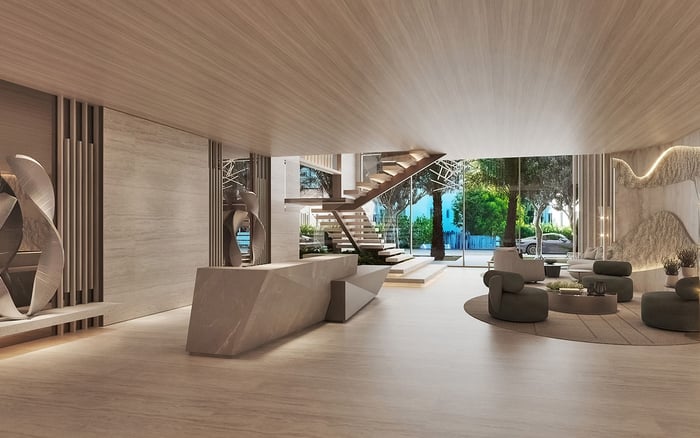
Lobby volume is often discussed visually, but buyers should experience it physically. Walk in at a quiet hour, then return during a busy arrival window. Listen to the sound. Notice whether conversations travel. Observe whether guests pause and look around, or move naturally through the room.
At Mr. C Tigertail Coconut Grove, the lobby experience matters because Coconut Grove is socially active by nature. The question is not whether a hospitality-inflected setting is desirable. Many buyers will prefer that sense of polish, recognition, and arrival. The question is whether the scale and visibility match the buyer’s personal threshold for being observed.
A larger or more theatrical lobby can create confidence when entertaining. It can signal that the building has presence and that a dinner guest has arrived somewhere considered. Yet the same quality may feel too public to an owner who wants to move from car to elevator with little interruption.
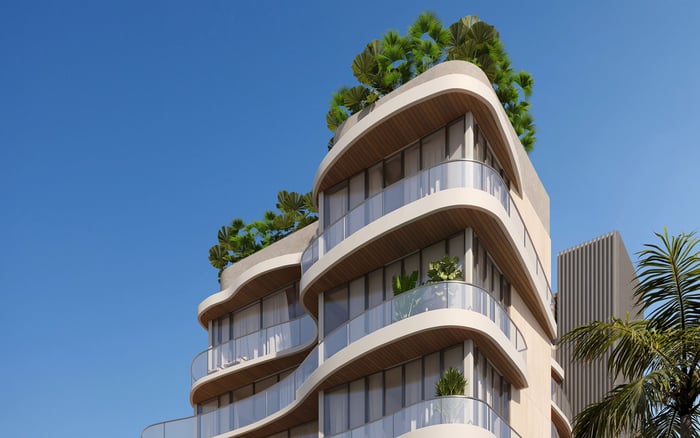
Bay Harbor Towers invites a different reading. Its Bay Harbor Islands context supports a quieter residential rhythm, where lobby volume may be judged less by drama and more by calm. For a buyer prioritizing discretion, the ideal lobby may be one that never feels empty, but also never feels staged.
This is where boutique sensibility becomes important. Boutique does not have to mean small, and it should not be reduced to unit count. In a buyer test, it means asking whether the public room feels legible, controlled, and personally scaled.
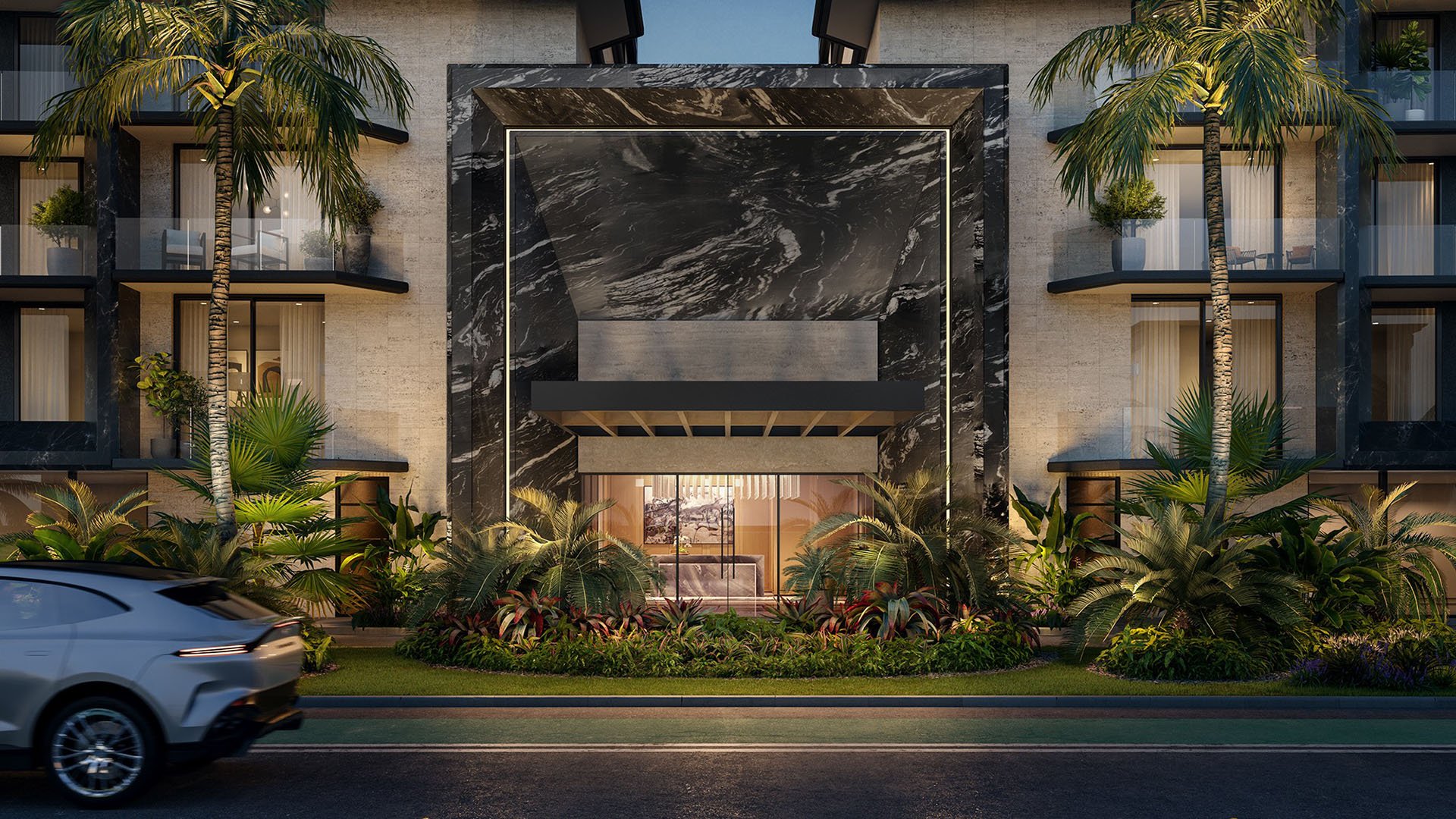
The porte-cochère is not a decorative feature. It is a privacy device. It mediates the shift from street exposure to residential discretion, especially in neighborhoods where restaurants, errands, guests, and rideshare traffic are part of daily life.
For Mr. C Tigertail, buyers should study how the arrival moment relates to the Grove’s social energy. Is the drop-off visible from the street? Can a guest step out under cover without feeling displayed? Where does a second car wait? If a family member arrives with children, luggage, or staff, does the sequence still feel composed?
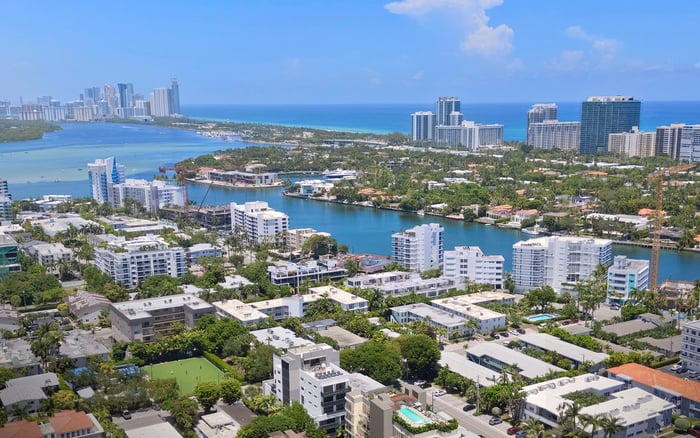
For Bay Harbor Towers, the question is whether the calmer Bay Harbor Islands setting translates into a more discreet daily threshold. Bay Harbor buyers often value the sensation of being close to the water and residential quiet without sacrificing access to the broader Miami lifestyle. The arrival should reinforce that preference.
Do not evaluate the porte-cochère from a rendering alone. Stand where a driver would stop. Look toward the street. Look back toward the lobby. Ask whether the sequence protects the owner from unnecessary exposure or simply photographs well.
Valet is where lifestyle promises become operational facts. The polished greeting matters, but choreography matters more. Buyers should ask how vehicles flow during peak hours, where they stack, how rideshare is handled, and whether waiting guests block arriving residents.
The most revealing test is the dinner-hour return. Imagine two owners arriving at once, a guest being dropped off, a rideshare waiting, and a service vehicle in the mix. Does the entry absorb that complexity, or does it turn into a small performance of congestion?
At Mr. C Tigertail, the hospitality-inflected experience may appeal to buyers who appreciate staff presence, a sense of welcome, and a more visible arrival culture. The test is whether that energy is choreographed enough to feel effortless rather than busy.
At Bay Harbor Towers, the quieter proposition may suit buyers who define luxury as less interaction, fewer eyes, and less explanation. But quiet does not automatically equal efficient. The buyer should still test wait times, queuing logic, and the path from car to elevator.
This is especially relevant for new-construction buyers comparing plans, expectations, and brand language against lived routines. A beautiful arrival concept should be interrogated with practical questions: how many cars can queue under cover, where does a driver wait, and what happens when weather turns?
The Mr. C Tigertail buyer may be drawn to a more expressive residential experience in Coconut Grove. This buyer may entertain often, appreciate a hotel-like sense of polish, and want guests to feel a deliberate arrival. For that profile, lobby volume is not a drawback. It is part of the identity.
Still, that buyer should be honest about visibility. If the owner travels frequently, receives private guests, or prefers not to be noticed during routine arrivals, the social character of the setting should be tested carefully.
The Bay Harbor Towers buyer may be more focused on quiet arrival, bay-oriented living, and the subtlety of moving through the building without ceremony. Waterview priorities may be part of the emotional draw, but the operational question remains at ground level: does the building protect calm from curb to elevator?
For families, the test becomes even more specific. Can children be unloaded safely? Can staff coordinate without crossing guest paths awkwardly? Can grandparents or visitors arrive without confusion? A building that handles these small movements well often feels more luxurious after six months than one that simply made the stronger first impression.
The comparison between Mr. C Tigertail Coconut Grove and Bay Harbor Towers is ultimately a question of temperament. Do you want the arrival to announce the residence, or to conceal it? Do you want the lobby to impress guests, or to disappear into the background of daily life?
Neither answer is inherently superior. The best purchase is the one that aligns the architecture of arrival with the buyer’s real routine. A highly social owner may find privacy in predictability and staff confidence. A more discreet owner may find luxury in silence, lower visibility, and fewer transitional moments.
The most important tour is not the staged visit. It is the practical one. Arrive during a busy period. Bring the people who will actually use the building. Ask where every car goes. Watch how staff communicate. Then decide which building feels less like a presentation and more like home.
What is the main difference between Mr. C Tigertail Coconut Grove and Bay Harbor Towers? Mr. C Tigertail reads as the more hospitality-inflected Coconut Grove option, while Bay Harbor Towers is framed as a quieter Bay Harbor Islands alternative.
Why does lobby volume matter to luxury buyers? Lobby volume affects sound, visibility, guest impression, and whether daily arrivals feel public or private.
Is a dramatic lobby always better? Not necessarily. A dramatic lobby can impress guests, but a quieter lobby may better support anonymity and ease.
What should buyers test at the porte-cochère? Buyers should observe street visibility, covered queuing, rideshare placement, and the path from car to lobby.
Why is valet choreography important? Valet flow affects wait times, congestion, privacy, and the ease of everyday departures and returns.
Which building may suit a more social buyer? Mr. C Tigertail may suit buyers who value a polished, hospitality-style arrival and a more expressive lobby experience.
Which building may suit a more discreet buyer? Bay Harbor Towers may appeal to buyers who prioritize a calmer residential setting and less performative arrival.
Should buyers visit only during a scheduled sales appointment? No. Buyers should also observe peak arrival windows to understand how the building behaves under real pressure.
Does the best view determine the best purchase? Views matter, but the daily arrival sequence can be equally important for privacy, security, and convenience.
What is the smartest 2026 buyer question? Ask how residents, guests, staff, rideshare, and vehicles move through the building on a busy evening.
For a discreet conversation and a curated building-by-building shortlist, connect with MILLION.
If branded residences are on your mind — as a home or as an allocation — we would be glad to share what we are seeing, privately.
Begin a quiet conversation