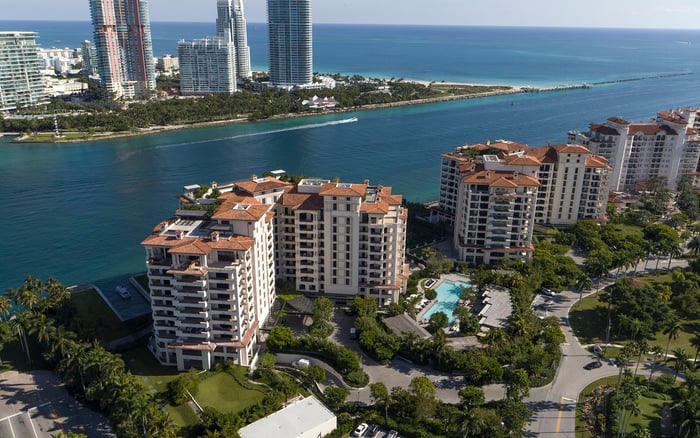
South Florida luxury condo fees are being reshaped by insurance, reserve planning, staffing, amenities, and the true cost of preserving a high-service residential lifestyle.

For many South Florida buyers, the monthly HOA fee now carries nearly as much weight as the purchase price. In casual conversation, owners often call it an HOA fee; in many condominium documents, it appears as an association assessment. Either way, it is the recurring cost of operating the building, maintaining the lifestyle, protecting the asset, and preparing for future capital needs.
In the luxury segment, rising fees should not be viewed automatically as a red flag. In many cases, they reflect prudent governance, stronger reserves, better staffing, and a more realistic budget. The more important question is whether the fee aligns with the building’s service promise, physical condition, insurance obligations, and long-term capital plan.
Across Brickell, Miami Beach, Sunny Isles, Surfside, and other premier coastal markets, the conversation has shifted. Buyers still compare views, floor plans, finishes, and privacy. Increasingly, they also compare balance sheets, reserve philosophy, building age, and how each association defines service.
Luxury condominium fees tend to rise when several operating categories move at the same time. Insurance is often one of the most visible pressures, particularly for waterfront and high-rise properties. Buildings must also budget for routine maintenance, mechanical systems, elevators, security, life-safety systems, landscaping, pool operations, and common-area care.
Then there is the human side of luxury. A full-service building is not sustained by finishes alone. Door staff, valet teams, maintenance personnel, management, housekeeping, security, and amenity attendants all shape the daily experience. When a building promises hotel-caliber service, its budget must support trained people, consistent coverage, and clear accountability.
Amenities also carry recurring costs. Pools, spas, fitness centers, lounges, wine rooms, private dining spaces, screening rooms, beach services, marinas, dog amenities, and wellness areas require cleaning, staffing, utilities, supplies, repairs, and replacement cycles. The more ambitious the lifestyle, the more disciplined the operating budget must be.
Reserves are one of the least glamorous parts of condo ownership, but they are central to asset preservation. A well-run association plans for future repairs rather than treating every major project as a surprise. Roofs, façades, windows, mechanical equipment, waterproofing, elevators, garages, and common-area refurbishments all have useful lives.
In older buildings, rising fees may reflect an effort to catch up with deferred work or bring budgets in line with realistic replacement costs. In newer buildings, fees may feel elevated from the start because the association is attempting to preserve a high standard of service while anticipating the full life cycle of the property.
For buyers, the key is not simply whether reserves exist. It is whether they appear appropriate for the building’s age, scale, systems, exposure, and maintenance history. A low monthly fee can be appealing at first glance, but if it is paired with chronic underfunding, the owner may face special assessments or diminished building quality later.
The South Florida luxury market includes established oceanfront icons, boutique waterfront buildings, and new-construction towers designed around wellness, hospitality, and privacy. Each has a different fee profile.
Older towers may carry larger capital-planning obligations. Their locations can be exceptional, and their residences may offer scale, privacy, or legacy prestige. Still, the building itself must be assessed with precision. A buyer should ask how the association handles façade work, elevators, mechanical systems, waterproofing, and common-area modernization.
Newer buildings often present a different equation. Fees may include expansive amenities, elevated staffing, sophisticated technology, and hospitality-style services. The question becomes whether the budget remains realistic after the developer transitions control and the association begins operating independently over time.
Neither category is inherently superior. A mature building with excellent governance may be more financially stable than a new building with an underpriced operating model. Conversely, a newer building with thoughtful planning may reduce near-term uncertainty for owners who prefer contemporary infrastructure and a turnkey lifestyle.
HOA fees should be studied as part of a broader due diligence package. The monthly number alone is not enough. Buyers should review the current budget, reserve schedule, recent meeting minutes, pending projects, insurance line items, litigation disclosures if applicable, special assessment history, and the cadence of fee increases.
The tone of board communication matters as well. Strong associations tend to be transparent about maintenance, timelines, vendor selection, owner communication, and long-range planning. Weak governance can turn even a modest issue into a prolonged and expensive owner concern.
In the luxury market, discretion is valuable, but opacity is not. A serious buyer should understand what the fee covers, what it excludes, which projects are anticipated, and whether the building’s lifestyle promise is financially supported. When the answers are vague, more diligence is warranted.
Higher monthly fees can affect buyer psychology and resale liquidity. Some buyers place a hard ceiling on monthly carrying costs, especially if they own multiple homes. Others are comfortable paying more for a building that delivers privacy, service, maintenance, and long-term confidence.
The strongest buildings tend to justify their fees with visible quality and invisible competence. Visible quality includes clean common areas, attentive staff, maintained amenities, strong security, and refined design. Invisible competence includes adequate reserves, careful contracts, responsive management, and a board willing to make disciplined financial decisions.
For oceanfront residences, the fee must also be understood as part of preserving exposure-sensitive assets. Salt air, wind, sun, humidity, and waterfront use create maintenance demands that inland owners may not experience in the same way. A building that budgets honestly for these realities can better protect the ownership experience.
A useful way to evaluate rising HOA fees is to divide the monthly assessment into four categories: operations, service, reserves, and risk management. Operations keep the property functioning. Service supports the lifestyle. Reserves protect the long-term asset. Risk management addresses insurance, compliance, security, and contingencies.
When all four categories are supported, a higher fee may be rational. When one category is missing, the apparent savings may be temporary. The most elegant building in South Florida can still become frustrating if the budget is unrealistic.
Buyers should also compare fees on an apples-to-apples basis. A building with valet, beach service, private dining, attended amenities, and extensive common areas cannot be compared directly with a smaller boutique building offering limited staffing. The question is not which fee is lower. The question is which fee is appropriate for the product.
Rising HOA fees are part of a broader maturation of the South Florida luxury condo market. Buyers are no longer evaluating residences only by skyline, view corridor, or designer finish. They are studying how buildings are financed, governed, maintained, and staffed.
For the best buyers, this is an advantage. A fee increase can reveal whether an association is confronting reality, preserving quality, and planning ahead. It can also expose buildings where past budgets were too lean for the lifestyle being promised.
In a market where privacy, service, and waterfront living carry real operating costs, the most sophisticated ownership decision is not to seek the lowest fee. It is to identify the building where the fee, service level, physical asset, and governance culture are all in alignment.
Why are HOA fees rising in South Florida luxury condos? Fees are rising as buildings budget for insurance, staffing, reserves, maintenance, amenities, and long-term capital needs.
Are higher HOA fees always a bad sign? No. A higher fee can indicate responsible planning if it supports reserves, service, maintenance, and risk management.
What should buyers review before purchasing a luxury condo? Buyers should review the budget, reserves, meeting minutes, insurance costs, assessment history, and pending building projects.
Can a low HOA fee be risky? Yes. A low fee may be attractive, but it can signal underfunding if reserves and maintenance obligations are not properly addressed.
Do newer buildings have lower fees? Not always. Newer luxury buildings may have higher fees because they often include expansive amenities, staffing, and service programs.
Why do oceanfront buildings often require careful fee review? Waterfront exposure can increase maintenance demands, so buyers should understand how the association budgets for long-term upkeep.
How do HOA fees affect resale value? Fees influence carrying costs and buyer perception, but well-supported fees can help preserve building quality and confidence.
What is the difference between operating costs and reserves? Operating costs cover daily building needs, while reserves prepare for future repairs, replacements, and major capital projects.
Should investors avoid buildings with rising fees? Not automatically. Investors should determine whether the increases are tied to prudent planning or unresolved financial stress.
What is the best way to shortlist comparable options for touring? Start with location fit, delivery status, and daily lifestyle priorities, then compare stacks and elevations to validate views and privacy.
When you're ready to tour or underwrite the options, connect with MILLION.
If branded residences are on your mind — as a home or as an allocation — we would be glad to share what we are seeing, privately.
Begin a quiet conversation